Saturday December 6, 2025
Local Connection
 Weather
 Traffic
 @LouisvilleDispatch
 @LouisvilleDisp
 Subscribe
 Gov. Matt Bevin has issued an executive order expanding the Work Ready Kentucky Scholarship to include Kentuckians who do not have a high school diploma but are working to achieve their GED concurrent with skills education.
“The central idea of the Work Ready Kentucky Scholarship is to get thousands of adults to the first or second rung of a high demand career ladder,” said Education and Workforce Cabinet Secretary Hal Heiner. “It’s extremely important that we remove as many barriers as possible to this process, and for thousands of Kentuckians, that barrier is not having a high school diploma.”
The Work Ready Kentucky Scholarship Program was designed to meet the increasing demand for skilled workers in five of Kentucky’s fastest-growing workforce industries:
- Advanced Manufacturing
- Business and IT
- Construction Trades
- Healthcare
- Transportation and Logistics
The scholarship provides tuition for up to 32 credit hours for eligible Kentuckians who have not yet earned at least an associate’s degree and are seeking certificates or diplomas in one of these five industries.
Those wishing to pursue their career certification in tandem with obtaining a GED can do so through the Accelerating Opportunity Kentucky program offered through the Kentucky Community and Technical College System.
You can learn more about the Work Ready Kentucky Scholarship through helpwantedky.com, including eligibility requirements, participating colleges and universities, and certificates and diplomas available in each of the five industries.
“Helpwantedky.com, as well as the Help Wanted Kentucky Facebook and Twitter pages are channels for adults in Kentucky, regardless of age, to learn about jobs that pay well and are in high demand,” said Heiner.
 As the current fiscal year ends, Attorney General Andy Beshear today announced that his office has returned nearly $8 million to the state’s General Fund from a variety of civil settlements over the last 12 months.
Included in that amount is $574,000 Beshear returned today to the state’s General Fund from a settlement with a Johnson & Johnson subsidiary. Combined with Beshear’s Bryant Heating and Cooling Co. Inc. settlement, the AG’s office has secured more than $1 million for the state this week.
The Johnson & Johnson settlement resolves allegations that McNeil Consumer Healthcare Division, which is now a division of Johnson & Johnson Consumer Inc., promoted over-the-counter drugs as complying with federally mandated manufacturing standards even though the U.S. Food and Drug Administration found that some of its manufacturing facilities were not in compliance with federal standards between 2009 and 2011.
The drugs include Tylenol, Motrin, Benadryl, St. Joseph Aspirin, Sudafed, Pepcid, Mylanta, Rolaids, Zyrtec and Zyrtec Eye Drops – all manufactured and distributed by McNeil Consumer Healthcare Division.
“At a time when the state is facing a projected current fiscal year budget shortfall of $113 million, I’m proud my office is doing its part to secure millions of dollars for our state coffers,” Beshear said.
These civil settlements include Mortgage Electronic Registration Systems Inc. (MERS), Volkswagen, Hyundai-Kia, Bristol-Myers Squibb, Western Union, Target, Bryant Heating and Cooling Co. Inc. and Johnson & Johnson Consumer Inc.
Beshear is currently in civil litigation against Johnson & Johnson and its medical device unit, Ethicon, for its deceptive marketing of surgical transvaginal mesh.
 Louisville’s resilience efforts will initially focus on strengthening education, racial equity, economic development and sustainability throughout the city — challenges identified in partnership with more than 200 citizens, Mayor Greg Fischer announced today.
Louisville is a member of 100 Resilient Cities – Pioneered by The Rockefeller Foundation, which seeks to build resilience to economic, social and physical challenges in cities worldwide. Each city is tasked with identifying its own “shocks” — sudden events such as natural disasters — and long-term challenges, or “stresses.”
“Louisville is on a rapid trajectory, with 63,000 new jobs and $11 billion in capital investments since 2011,” Mayor Fischer said. “That’s all the more reason we need to be strengthening ourselves against the stresses and shocks that could slow or even halt our momentum – be it a natural disaster, like a flood, or economic distress, like a major employer leaving the city. We can do this by working with partners to build resilience in education, racial equity, economic development and sustainability.”
Louisville identified education, racial equity, economic development and sustainability as the initial focus of the resilience efforts during a workshop in January that included city leaders and representatives from dozens of local agencies, nonprofits and businesses. A full report on the Agenda Setting Workshop was released today and can be read at https://louisvilleky.gov/sites/default/files/asw.pdf
Eric Friedlander, who was named the city’s chief resilience officer in April, will use the Agenda Setting Workshop report as he leads the crafting of a resilience strategy — an outline for how the city will strengthen itself against shocks and stresses that could disrupt or slow the city’s momentum. This begins the process of identifying, with the larger community, and preparing for, the most impactful shocks and stresses that Louisville will need to address.
(Learn more about Resilient Louisville)
“For Louisville to thrive as an entire community, we must be able to respond to inevitable shocks and address and minimize stresses,” Friedlander said. “That will be accomplished by examining how to build on our ongoing initiatives in the areas of education, racial equity, economic development and sustainability, and to launch new efforts that will lead to as stronger, more resilient Louisville.”
Mayor Fischer will discuss the city’s resilience efforts at 6 p.m. Thursday, July 6, at the Ali Center during the community conversation Capturing Ali’s Spirit: Creating a City of Peace.
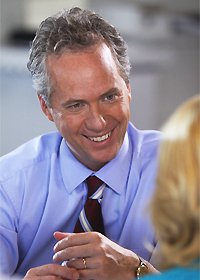 Louisville is already experiencing a negative economic impact from California’s decision last week to ban state-funded travel to Kentucky, Mayor Greg Fischer said today.
In a news conference at the Waterfront, Mayor Fischer, Karen Williams, President and CEO of the Louisville Convention and Visitors Bureau; and Sarah Davasher-Wisdom, COO for Greater Louisville Inc.; and other business and community leaders outlined concerns about the ban’s impact on the city’s tourism industry.
Williams said two conventions, one for 2018 and another for 2021, decided this week not to come to Louisville, citing concerns about the travel ban. Together, those conventions had an expected economic impact of $2 million.
“That’s $2 million that would have covered the salaries of waiters, waitresses, hotel staff, museum workers and hundreds more people who work downtown but live all over this community,” the Mayor said.
He added that any lost convention also means less money for the Tax Increment Financing district that helps fund the KFC Yum! Center and the new Omni Hotel.
And the potential economic impact extends beyond downtown, he said, noting that the 24 million tourist visits Louisville sees each year translate to about $3.5 billion in economic impact for the city and $14.5 billion for the state. And overall, Louisville tourism generates about $1.5 billion tax revenue for the state.
Williams added that Louisville’s commitment to compassion, fairness and equality “is a boost to our city’s economic development efforts, given that cities that are inclusive are increasingly winning in the competition for residents, businesses and employees.”
Sarah Davasher-Wisdom, C.O.O. of Greater Louisville Inc., also spoke during the news conference, noting, “Compassion and diversity are consistently embraced by Greater Louisville’s business, civic, and community leaders as keys to economic development and community building. We continue to market these and other assets to the world as we work toward advancing our mission of growing the regional economy.”
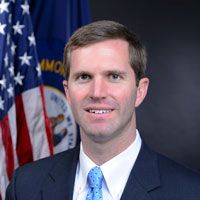 Attorney General Andy Beshear announced his office has entered into a settlement with Louisville-based Bryant Heating and Cooling Co. Inc., to resolve alleged violations of the Kentucky Consumer Protection Act.
In the assurance of voluntary compliance filed in Franklin Circuit Court today, Bryant agreed to provide more than 7,100 customers a one-year extended warranty on their HVAC unit. Bryant, headquartered at 4531 Bishop Ln. in Louisville, with offices in Lexington, Northern Kentucky and Evansville, Indiana, also agreed to strengthen future customer protections and pay a penalty.
Beshear said the agreement was reached following an investigation into the company’s business practices after complaints were made to the Office of the Attorney General and the Better Business Bureau of Kentucky.
“While these allegations are serious, I want to commend Bryant for taking responsibility and working with my office to come to a good resolution,” said Beshear. “My office will continue to work with Bryant to ensure the agreement is carried out in the best interest of Kentucky customers.”
Under the terms of the customer restitution agreement, Bryant will provide approximately 7,100 consumers who purchased furnaces, air conditioners, air handlers and heat pumps between Jan. 1, 2014, and June 22, 2017, a one-year warranty extension on ancillary parts and labor.
Beshear said Bryant customers receiving the extended warranty should expect a letter from his office and warranty information from Bryant in the next 30 days. Eligible customers will not need to do anything further to be included in this warranty extension.
Bryant also agreed to maintain the appropriate state licenses for all their HVAC installers and technicians, and provide customers with a detailed, written contract prior to work commencing.
In settling the allegations, the Office of the Attorney General also secured more than $500,000 for the General Fund of the Commonwealth of Kentucky.
Beshear said his office is committed to protecting Kentucky families and encourages Kentuckians who have a complaint regarding any business to file a consumer complaint with the Office of the Attorney General online.
Citing a resurgence in the auto industry, Forbes magazine has named Louisville as the No. 1 city in the U.S. where manufacturing is thriving. Since 2011, manufacturing employment in the Louisville-area has grown 30.2 percent, bringing the employment total to 83,300 jobs, representing 12.41 percent of jobs in the local economy.
“Louisville continues to lead the way with our long-standing tradition of excellence in manufacturing. And that tradition provides the foundation necessary to be a global leader as we shift into a new era of flexible, advanced manufacturing,” said Mayor Greg Fischer. “This No. 1 ranking is an affirmation of the strength, quality and dedication of Louisville’s outstanding manufacturing workforce.”
Louisville’s diverse manufacturing economy includes such major manufacturers as Ford, GE Appliances, Clariant Corporation, Faurecia and Raytheon. Louisville also is home to FirstBuild, an innovative makerspace dedicated to designing, engineering, building and selling the next generation of home appliances.
To ensure that Louisville remains competitive in the manufacturing sector, the city is partnering with the Kentucky Manufacturing Career Center (KMCC) and the Kentucky Federation of Advanced Manufacturing Education (KY FAME) to create a pipeline of highly skilled employees who provide employers with the workforce they need.
KMCC and KY FAME offer workforce development programs to participants at no cost. KY FAME has a 98 percent job placement rate for graduates and has more than 125 member companies, while KMCC has awarded more than 3,000 certificates and credentials, and recently celebrated its 1,000 job placement.
To learn more about manufacturing workforce development programs, visit http://kcc.kentuckianaworks.org/JobSeekers/KMCC.aspx or http://kyfame.com/about/
Building on Louisville’s economic momentum, Ford Motor Company last week announced a $900 million investment in its Kentucky Truck Plant to build the all-new Expedition and Navigator.
“To be globally competitive in manufacturing, you have to have strong partners willing to collaborate with you and shape a common vision. We are proud to have Louisville as our partner, and congratulate them on being named No.1,” said Curt Magleby, Vice President, U.S. Government Relations, Ford Motor Company.
Ford’s new investment is in addition to the $1.3 billion investment and 2,000 jobs created at the plant in late 2015. According to Census figures, the auto industry alone accounts for 27,000 jobs in the Louisville area.
Louisville continues to be a place where locally grown manufacturers can establish themselves as global competitors. Louisville Plate Glass, founded in 1911, exemplifies the potential for long-term success in Louisville. The company recently opened a new $4 million production facility, more than doubling the company’s employment with 65 new jobs.
“After more than 100 years of continued operations, we chose to reinvest in Louisville with a new state-of-the-art glass production facility that will further strengthen our position as a leader in our market,” said Bill Stone, President, Louisville Plate Glass. “We feel confident that Louisville, with its central location and high quality of life, is the best place to invest in our employees and in our new production lines.”
The Forbes ranking is based on employment in the manufacturing sector over time, short-, medium- and long-term trends dating to 2005, plus variables that measure persistence and momentum.
To read the full article, visit https://www.forbes.com/sites/joelkotkin/2017/06/12/where-manufacturing-is-thriving-in-the-u-s/#5ab452ab1ff7
 The Kentucky Transportation Cabinet (KYTC) today released a data-driven list of statewide transportation projects that will help guide development of the next Highway Plan.
Over the past several months, KYTC evaluated and scored more than 1,100 projects across the state using the new Strategic Highway Investment Formula for Tomorrow (SHIFT). The formula is an objective approach that uses data on safety, congestion, asset management, economic growth and cost-benefit ratios.
At the direction of Gov. Matt Bevin, state transportation leaders created SHIFT as a data-driven tool to help prioritize spending of limited transportation dollars, estimated at $2.6 billion over the next six year cycle (FY 2018-FY 2024) based on current funding sources. Kentucky’s current six-year Highway Plan has nearly $6 billion in unfunded transportation projects.
“With limited dollars to spend, we must make wise investments that improve safety for our citizens, increase mobility and drive the state’s economy,” said Transportation Sec. Greg Thomas. “SHIFT is a tool to help us propose a prioritized and balanced Highway Plan to present to the governor and lawmakers.”
The first step in narrowing funding priorities was to identify and rank projects with statewide significance – interstates and highways that move people and goods from one Kentucky region to another and to other states.
The statewide list identifies 70 projects, which are part of the National Highway System, as projects of statewide significance. These projects will be considered for funding through a statewide funding pool, which will be designated in the recommended Highway Plan later this year.
The next step in the SHIFT process will focus on ranking regional projects, transportation improvements within geographical sections of the Commonwealth.
Over the coming weeks, local transportation leaders (Area Development Districts, Metropolitan Planning Organizations and KYTC District Offices) across the state will meet to decide which projects to prioritize for consideration for Highway Plan funding. The groups will consider more than 1,000 projects that have been scored using SHIFT including those National Highway System projects that were determined not to have statewide significance.
KYTC has grouped the state’s 12 highway districts into four geographic regions – North, South, East and West – consisting of three districts each. Leaders in each region will be asked to prioritize spending on projects in their areas.
Greater Commitment to Repair Existing Roads, Bridges
Thomas also announced yesterday that the recommended Highway Plan will set aside an additional $205 million annually in the next highway plan to repair or replace aging bridges and roads across the Commonwealth.
Kentucky has more than 1,100 structurally deficient bridges and more than 3,700 miles of roads that need significant repairs. The backlog of pavement improvements alone totals approximately $1 billion and is growing at a rate of 500 miles of roadway each year.
“We must take better care of the roads and bridges that motorists depend on today,” Thomas said. “The backlog of deteriorating infrastructure is significant and we must invest more resources to preserve our existing system.”
Later this fall, the statewide and regional lists developed under SHIFT scoring will guide development of the Highway Plan, a six-year outline for transportation spending. The plan will also include funding for priorities outside of SHIFT, including projects already underway and federally designated programs such as the Transportation Alternative Program and the Congestion Mitigation Air Quality program funded through the Office of Local Programs.
For more information about SHIFT and to view the statewide projects list, visit http://transportation.ky.gov/SHIFT.
