Sunday December 7, 2025
Local Connection
 Weather
 Traffic
 @LouisvilleDispatch
 @LouisvilleDisp
 Subscribe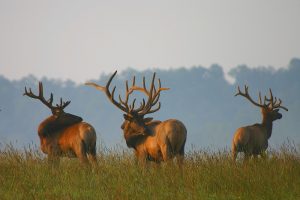
Photo: Kentucky Department Fish and Wildlife
Kentucky marks the 20th anniversary of its wildly successful elk restoration program with a special “Kentucky Afield” television show preceding this year’s drawing for elk permits.
Tune to KET (Kentucky Education Television) at 8:30 p.m. (Eastern) Saturday, May 13, to get a behind the scenes look at how Kentucky’s Commonwealth Office of Technology conducts the annual drawing. “We’re airing this special program so everyone can see how it’s done,” said Kentucky Fish and Wildlife Commissioner Gregory Johnson.
The 30-minute show features Wildlife Division Director Steve Beam answering questions about the drawing process. Beam will also provide guidance to drawn hunters on selecting an area to hunt.
At 9 p.m. (Eastern), following the conclusion of the show, visit the Facebook site of “Kentucky Afield” TV or Kentucky Fish and Wildlife to see a scroll of the names of successful applicants. People may also check the status of their application by selecting the “My Profile” tab on the Kentucky Fish and Wildlife website, located at fw.ky.gov.
Kentucky received more than 78,000 applications this year for the 710 permits available through the drawing. Kentucky has the largest elk herd east of the Rocky Mountains and offers more elk hunting permits than all of the eastern states combined.
Kentucky’s restoration effort began with the release of seven elk in 1997.
Taking your kids to catch some hand-sized bluegill is another great aspect of this time of year in our state.
“A lot of your bigger male bluegill are moving up into the shallows,” said David Baker, Central Fisheries District biologist for the Kentucky Department of Fish and Wildlife Resources. “It is an excellent time to take kids out and get them excited and hooked on fishing.”
Baker took his wife, daughter and son on a trip to a pond on a central Kentucky wildlife management area last weekend. “They caught so many fish; I couldn’t keep up with them,” he said. “My wife and daughter had one on at the same time. It was like that for a solid hour.”
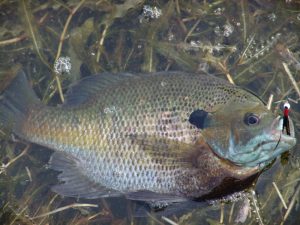
Photo: Kentucky Department Fish and Wildlife
Bluegill in the shallows doing their reproductive dance brings some of the fastest fishing found. “Bluegill are close to spawning and definitely willing to strike bait suspended under a bobber,” Baker said. “I’ve been to several of our central Kentucky lakes recently and received good reports on the bluegill fishing. We manage the smaller state-owned lakes in our district for good panfish populations. Boltz Lake, Corinth Lake, Beaver Lake, Elmer Davis Lake and McNeely Lake are all fishing really well for panfish right now.”
Two of those lakes lie in Grant County, 92-acre Boltz Lake and 96-acre Corinth Lake, and both hold good bluegill populations. “Corinth rebounded from the shad eradication a while back and is doing well for bluegill,” Baker said. “We see them now up 8 ½ inches regularly. We are also seeing redear sunfish up to 10 inches in Corinth.” Redear sunfish are commonly called “shellcrackers” by anglers.
Baker said 158-acre Beaver Lake in Anderson County is full of 8-inch and longer bluegill. “Fish tight to cover and under the cedar trees for bluegill on Beaver Lake,” Baker said. “We also saw redear sunfish up to 12 inches at Beaver. They are out in the middle of coves on the mud flats.”
Elmer Davis Lake covers 149-acres in Owen County near Owenton. The lake is now refilling after a drawdown for repair work on the dam. Kentucky Fish and Wildlife conducted a shad eradication on the lake over the winter that Baker said will improve the bluegill and the redear sunfish populations in the lake over the coming years.
“Another good bluegill lake is McNeely Lake in Jefferson County,” Baker said. “It is right in the back yard of a lot of people in the Louisville area. McNeely also has a healthy population of redear sunfish.”
The smaller state-owned lakes offer excellent bank fishing for bluegill as do the 43 Fishing in Neighborhoods (FINs) lakes scattered throughout Kentucky.
If one has access to a boat, Kentucky Lake is arguably the best bluegill lake in Kentucky. The lake holds fantastic numbers of 6- to 8-inch fish with many larger specimens in the population.
Target the back reaches of coves in May on Kentucky Lake. Those with some flooded timber and an overhead canopy make the best spots. Look for freshly swept depressions in the bottom, indicating bluegill nests. You can catch bluegill all day long from spots like this on Kentucky Lake.
In addition to these lakes, farm ponds and subdivision lakes often hold good populations of bluegill. To check the bluegill population at a lake near you, check the annual Fishing Forecast.
Suspending a wiggling redworm impaled on a size 6 Aberdeen hook under a bobber still works extremely well for bluegill, as it has decade after decade. The rig will also fool any redear sunfish nearby.
Feather jigs tipped with a wax worm or a cricket suspended under a bobber also work well for bluegill. If bluegill get finicky, bottom fish a redworm impaled on an Aberdeen hook near weedbeds. You may also pick off a few redear sunfish with this presentation as well.
The bluegill are in the shallows spawning. For those who want to catch fish after fish, there is no comparison.
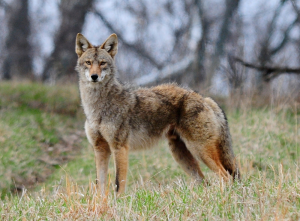
Photo: Kentucky Department Fish and Wildlife
An expansion from its historic range in the interior plains brought the coyote to Kentucky where as recently as the early 1970s sightings of these animals were still considered rare.
Coyotes are now common across the state but their presence in urban and suburban areas can surprise residents.
“People in cities like Los Angeles, Chicago and Denver have grown accustomed to seeing a coyote strolling through a city park,” said Laura Palmer, furbearer biologist with the Kentucky Department of Fish and Wildlife Resources. “In Kentucky, people are still getting used to seeing them in urban areas.”
Reports of coyote sightings in residential areas increase in the spring and early summer as coyotes breed and give birth to pups.
Since total eradication of coyotes is not possible, having a basic understanding about these wild animals, which can range in color from reddish to tan to grizzled gray and black, can ease concerns and limit potential conflicts.
“Coyotes are often misunderstood,” Palmer said. “Most do not bother people. Many times, people do not even know coyotes are living near their homes.”
Coyotes tend to be more active from dusk to dawn when living in close proximity to people. Even in populated areas, nature typically provides ample food. Mice, deer, voles, rabbits, raccoons, fruit and goose eggs can be part of a coyote’s diet.
“Coyotes typically shy away from human activity but they may take advantage of food around homes if natural prey is limiting, a coyote is injured or sick, or young have not learned to hunt effectively,” Palmer said.
Coyotes can lose their fear of humans if conditioned to depend on people for food, and conflicts can arise from people feeding them – either intentionally or unintentionally.
“Do not leave pet food outside and make sure garbage is secured,” Palmer said. “Discourage your neighbors from feeding feral cats, raccoons or coyotes themselves.”
She also recommends bringing bird feeders inside at night and removing seed that has fallen on the ground. Bird feeders attract animals that in turn attract coyotes. Plug any holes under fences, block access to crawl spaces and fence around gardens. Motion-activated lighting around the house can act as a coyote deterrent. Also, consider turning on outside lights and checking the yard for unwanted animals before letting a dog outside at night.
If you are concerned about pets being outside, keep them inside or kennel them when they are unattended, if possible. When walking a dog, use a short, non-retractable leash that is highly visible and vary your walking routine.
A coyote that does not flee upon encountering a person could be sick, injured or habituated to people. Do not panic if you see a coyote or one approaches you, Palmer said.
Coyotes are curious by nature and sometimes follow people or dogs to see what they are doing in their territories or to see that they do not get too close to their dens and pups, she said.
Other suggestions: Don’t approach a coyote or linger to snap photos or take video. Don’t turn your back on a coyote and don’t run. Running away can diminish the coyote’s fear of people and may trigger its chase instinct. Don’t harass a coyote if it is cornered, with pups or seems sick or injured. It’s best to back away slowly or try to scare it away with loud noises. Make yourself look bigger by waving your arms, widening your stance or waving a stick. Take a step or lunge toward the coyote to establish dominance. Throw a rock or a stick in its direction but not directly at it. Pick up small dogs and children. Keep scaring the coyote until it’s out of sight. It’s also a good idea to teach children to recognize coyotes, never approach one and scare them away.
If you happen upon what you suspect is a den, like a hollow tree or brush pile, slowly back away and leave the area. Coyotes are protective of their pups, which stay in the den with the mother for about three weeks and learn to hunt when they are eight to 12 weeks old. Family groups typically break up and disperse in late summer and early fall.
Understanding coyotes can reduce potential conflicts with them.
If your community has a Facebook page, consider sharing tips for coexisting with coyotes and deterring these animals from becoming too bold. One resource Palmer recommends is the website urbancoyoteresearch.com. Kentucky Fish and Wildlife’s website at fw.ky.gov also offers helpful information.
Photo: Kentucky Department Fish and Wildlife
The Kentucky Department of Fish and Wildlife Resources is extending the deadline to apply for a 2017 Kentucky elk hunt due to unexpected technical problems with the state-run computer network that processes applications. The deadline to apply for Kentucky’s elk hunts will now close at 11:59 p.m. (Eastern time) Wednesday, May 3.
Kentucky’s online application system shut down at 9:05 p.m. Sunday, April 30. It remained shut down past the midnight deadline for the elk drawing. Kentucky Fish and Wildlife officials extended the deadline for those who were unable to apply in the waning hours of the application period.
Those who applied prior to the network shutdown were not affected.
The application period normally ends at midnight, April 30. However, state regulation allows for this period to be extended if technical difficulties prevent applications from being accepted.
Hunters may apply only online at the Kentucky Fish and Wildlife website – fw.ky.gov. Those who previously applied for an elk hunt may confirm their application by checking the “My Profile” page on the website.
The elk lottery drawing for an elk permit is open to residents and non-residents.
Anglers with a bit of salt in their hair remember fondly the venerable Sassy Shad, the paddle-tailed, shad-shaped soft plastic wonder that caught practically anything that swims.
In the fishing lure world, what is old oftentimes becomes new again. Over the last decade or so, the soft-plastic swimbait stormed the fishing world, looking remarkably like a Sassy Shad with refinements.
With softer, lifelike soft plastic formulations and more realistic color schemes that closely resemble shad or other baitfish along with salt and scent fused into the lure, the modern swimbait is one of the most versatile lures you can throw.
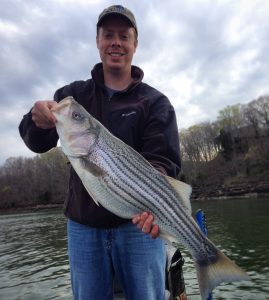
Photo: Kentucky Department Fish and Wildlife
“Anything looking to eat a baitfish will hit a swimbait,” said Chad Miles, host of the “Kentucky Afield” television show and swimbait expert. “I’ve caught everything from crappie to striped bass and all three species of black bass, smallmouths, largemouths and spotted bass on a swimbait.”
Spring through early summer is one of Miles’ favorite times to fish a swimbait for black bass. He had a great trip on Lake Cumberland last spring while filming an episode of “Kentucky Afield.” They caught several quality smallmouth bass, largemouth bass in the 5-pound range and Executive Producer Nathan Brooks caught a 37-inch striped bass.
A 4-inch white and silver swimbait rigged on a 3/8-ounce leadhead fooled them all. They caught most of their fish on secondary points in Difficulty and Harmon creeks.
“The fish are up shallow at this time of year,” he explained. “I downsize the weight of the leadhead to a 1/4-ounce and use no heavier than 3/8-ounce. You do not make a big splash on the cast with a lighter leadhead. It also allows you to keep the lure from getting hung on the bottom.”
Employ a steady retrieve and work a swimbait down sloping banks that fall off into deep water or across points in spring through early summer. These areas draw shad and other baitfish, what the swimbait emulates.
“The good thing about a swimbait is you can adjust your depth and speed, which you really can’t do with a crankbait,” Miles explained. “It is all about getting the right speed on the retrieve and adjusting it according to the aggressiveness of the fish.”
On deeper lakes, such as Dale Hollow, Lake Cumberland and Laurel River Lake, Miles used a nose-weighted swimbait hook and a solid body swimbait for bass. He rigs these swimbaits hook exposed, the way most anglers used to rig a Sassy Shad.
“I use the belly-weighted wide gap swimbait hook and a hollow body swimbait for shallow lakes with more cover such as Kentucky Lake or Lake Barkley,” Miles said. “This setup is weedless and works great over weedbeds or through cover for bass.”
In clear water, the natural shad color is hard to beat for swimbaits. White with silver flakes is also a good color. “In stained water, I like swimbaits with some chartreuse or orange in them,” Miles said. “In murky to muddy water, I don’t throw a swimbait. They are other lures much more effective than a swimbait in those conditions.”
Miles said resisting the temptation to set the hook when you first feel a bite is the most important aspect of fishing a swimbait. “Keep reeling through the strike and let the rod load up a bit before setting the hook,” he said. “If you set the hook immediately, you are pulling the swimbait away from the fish.”
A medium to medium-heavy power fast action baitcasting outfit spooled with 10- to 12-pound fluorocarbon line works well for handling swimbaits.
“You are throwing a good amount of weight with a swimbait,” Miles said. “You need a rod that can handle it.”
As the days lengthen and the water warms, Miles works 5- to 6-inch swimbaits over channel breaks, ledges and submerged humps just above the thermocline for big largemouth bass on Kentucky Lake and Nolin River Lake.
“The swimbait works well in summer for suspended bass that are hard to catch on anything else,” Miles said. He counts the swimbait down in the water column over likely fish holding structures such as ledges, humps or points that extend out into the lake. He retrieves his swimbait deeper on each cast until he finds fish.
In summer, anglers on lakes with flooded timber such as Lincoln County’s Cedar Creek Lake do well working swimbaits slow and deep for largemouth bass suspended in the flooded timber.
After the weather turns cold in fall, Miles falls back to fishing 3-inch swimbaits in the natural shad color for smallmouth and spotted bass.
You can watch Miles employ his excellent swimbait techniques on a productive spring day on Lake Cumberland from a segment filmed last April by clicking on the KY Afield tab at the top of the Kentucky Fish and Wildlife homepage at www.fw.ky.gov. Once on the “KY Afield” page, click on the link “Visit our Youtube channel,” then type “Fishing with Swimbaits on Lake Cumberland” in the search bar.
Photo: Kentucky Department Fish and Wildlife
Twenty years ago this December, seven elk were released atop Potato Knob in Perry County in front of thousands of onlookers. The landmark restoration of a free roaming elk herd in Kentucky was off and running.
Fast forward to present day. There are now more elk in Kentucky than any state east of the Rocky Mountains and each year the prospect of harvesting one compels tens of thousands of hunters to apply for Kentucky’s quota elk hunts.
Those interested in applying for 2017 should not delay. Applications must be submitted online at fw.ky.gov by midnight (Eastern time) April 30.
“For the person who has always wanted to elk hunt but just couldn’t afford to hunt out west, consider applying for a Kentucky elk quota hunt,” said Gabe Jenkins, elk program coordinator for the Kentucky Department of Fish and Wildlife Resources. “Our application and permit costs are low in comparison and our elk hunters enjoy some of the highest success rates in the country.”
Kentucky residents and those living out of state can apply for each of the four permit types – bull or cow firearms and bull or cow archery/crossbow – but can be drawn for one hunting permit only. Each entry costs $10. Applicants for the youth-only hunt can put in for the regular elk quota hunts as well but cannot be drawn for both in the same year.
This year, Kentucky Fish and Wildlife will issue 700 general quota hunt permits and 10 youth permits. The permit breakdown will be 100 bull archery and crossbow permits, 150 bull firearms permits, 160 cow archery and crossbow permits and 290 cow firearms permits. Youth permits are valid for use for either sex during all elk seasons.
At least 90 percent of the available elk quota hunt permits go to Kentucky residents. Last year, Kentucky Fish and Wildlife received almost 75,000 applications from more than 34,000 applicants. Kentucky residents alone submitted 46,365 applications.
Sixty-eight percent of hunters who were drawn and purchased their elk permit for the 2016-17 season filled their tags.
Bull elk hunters enjoyed the highest rate of success among drawn elk hunters last year. Eighty-one percent filled their tags and 70 percent of hunters utilizing archery and crossbow equipment successfully harvested a bull. The success rate for cow elk was 35 percent for archery and crossbow hunters and 67 percent among hunters using a firearm.
“A drawn hunter isn’t guaranteed an elk but a little planning goes a long way,” Jenkins said. “Whether you’re a do-it-yourselfer or hire a guide, putting in the time and effort goes a long way and increases your chances of success.”
The bull firearms season generates the greatest interest at application time, and understandably so. The past two seasons have produced two state records and five of the 10 largest bull elk taken in Kentucky since the species’ reintroduction in 1997.
The bull firearms season consists of two week-long hunts, one starting in September and one starting in October. Likewise, the cow firearms season is broken into two week-long hunts in December.
The bull archery/crossbow seasons open in September and the cow archery/crossbow seasons open in October. Each runs through Dec. 31. However, hunters drawn for a cow or bull elk archery/crossbow permit cannot hunt when an elk firearms season is open.
Applicants’ names will be drawn at random by the Commonwealth Office of Technology (COT) in May and randomly assigned a permit type based on their application choices. Hunters drawn for an elk hunting permit are blocked from re-applying for three years.
While waiting to learn if you’ve been drawn, explore Kentucky Fish and Wildlife’s website. It offers information about the basics of elk hunting in Kentucky as well as a newer featured called Kentucky Elk University. Designed to educate hunters of all experience levels, this online tutorial covers preparations before an elk hunt, what to expect in the field and what to do after the shot.
EARLY RETURNS: The 2017 spring youth turkey season ended April 2 with hunters reporting a harvest of 1,693 birds.
The youth-only weekend precedes the opening of the 23-day general statewide spring turkey season. This year, the general season opens Saturday, April 15.
AN OUNCE OF PREVENTION: With spring now in full bloom across Kentucky, it’s important to remember to guard against tick bites if you plan to be on their turf.
This means minimizing the amount of exposed skin by tucking pants legs into socks or boots and tucking in your shirt, utilizing repellents containing 20 to 30 percent DEET per the directions on the label and checking your clothing and body after being in wooded and brushy areas and areas with tall grass.
Consider treating clothing and boots with a product containing Permethrin, an insecticide that kills ticks, mosquitos and other pests, but allow any articles treated with Permethrin to dry completely before wearing. One treatment can protect through multiple washings.
Should you find a tick attached, grab the tick with tweezers as close to the skin’s surface as possible and steadily pull straight back to remove. Afterward, clean the area around the bite and wash your hands.
Now that the Kentucky-based teams are no longer in the NCAA basketball tournament, the Final Four isn’t nearly as exciting, and somewhat depressing, to watch.
The best cure for any bruised feelings left by March Madness is to get out in early April and chase largemouth bass. A huge largemouth bass shaking its head vigorously trying to throw your white spinnerbait soothes any broken basketball heart.
Water temperatures range from 52 degrees at Lake Cumberland in the east to 58 degrees on Kentucky Lake in the west. In other words, it is prime time.
“With water temperatures in the mid-50s, the big female largemouth bass are staging,” said Jeff Ross, assistant director of Fisheries for the Kentucky Department of Fish and Wildlife Resources. “They are moving from their deeper winter locations to spawning locations in the shallows. They definitely work their way shallow in stages, but a cold front can push them back for a short period.”
At this time of year, the male largemouth bass move shallow first to build nests, followed by the female bass to lay their eggs.
“Recently, I caught a lot of largemouth bass, but they were all small male bass,” said Easton Copley, aquatic education program coordinator for Kentucky Fish and Wildlife. “When you look at their lips, they were roughed up and bloodied. They looked like they had lipstick on them from making spawning beds.”
Copley recommends looking for those staging areas to catch the large female largemouths. Female largemouth bass stage where large mud flats drop-off into deeper water. This is especially true on smaller state-owned lakes.
“At this time of year, I am not looking for numbers of bass,” Copley explained. “I am fishing for big females.”
Ross said to hit the secondary points or ledges near shallow water on the larger reservoirs, such as Kentucky Lake or Barren River Lake. “When the females hit those secondary points in spring, they are pretty close to spawning,” he said.
Copley said when water temperatures climb to 60 degrees, the larger female bass move into their shallow water spawning areas. “I look for rocky banks and transitional banks from rocky to mud,” he said. “If you can find a laydown tree on this kind of bank, all the better.”
Copley throws a variety of lures when spawning bass are up shallow. “I’ve caught a lot of bass on a square-billed crankbait in the Sexy Shad color,” he said. “I also catch quite a few on jigs. Black and blue is my go-to jig color for lakes with some color to the water. In clear water, I like the Cumberland Craw color for my jigs at this time of year.”
White spinnerbaits with a white and chartreuse trailer also draw strikes from shallow spring largemouth bass.
“When the bite gets tough, I pull out a Shakey head with a black and blue 7-inch straight-tailed worm,” Copley said.
Anglers who plan to release their catch need to release the female largemouth bass back to the same area during the spawn. “Take a photo and get them back in the water as soon as possible so they can get back to their spawning,” Copley said. “They are full of eggs.”
Kentucky anglers have oodles of options to catch spring largemouth bass. Check the 2017 Fishing Forecast
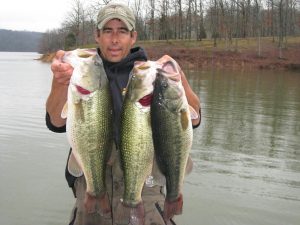
Photo: Kentucky Department Fish and Wildlife
for productive largemouth bass lakes near you.
Copley’s favorite lake is south-central Kentucky’s Green River Lake. He also likes 784-acre Cedar Creek Lake in Lincoln County. “Guist Creek Lake near Shelbyville has lots of big fish, but can be tough to fish because of high fishing pressure,” he said.
Kentucky Lake and Lake Barkley ranked number 4 in the Southeast Region for 2016 on Bassmaster Magazine’s Best Bass Lakes in the Country rankings. These lakes offer arguably the best chance in Kentucky to catch largemouth bass 4 pounds and larger
“We have many lakes where you don’t need a 20-foot bass boat to catch a big bass,” Ross explained. “Our smaller state-owned lakes, such as Kincaid Lake in northern Kentucky and Lake Malone in western Kentucky, are trophy largemouth bass lakes. Both of these lakes have excellent facilities for anglers at Lake Malone State Park and Kincaid Lake State Park. Beshear Lake, mainly located inside Pennyrile State Forest in western Kentucky, is always a big bass producer. Cranks Creek Lake in southeastern Kentucky also has some huge bass in it.”
The Final Four may be a bummer for Kentuckians this year, but warm days and trophy largemouth bass will put the NCAA tournament in the rearview mirror.
Remember to buy your 2017-2018 fishing license if you haven’t already.