Thursday January 29, 2026
Local Connection
 Weather
 Traffic
 @LouisvilleDispatch
 @LouisvilleDisp
 Subscribe
 Today, the Finance and Administration Cabinet announced the results of a nearly year-long audit into financial mismanagement and improprieties under the prior administration involving the Commonwealth’s self-insured Workers’ Compensation Program.
The audit, requested by Personnel Cabinet Secretary Thomas B. Stephens, uncovered over $3 million in claims inappropriately awarded under the direction of the former executive director who served under former Personnel Cabinet secretary Tim Longmeyer who is currently serving 70 months in federal prison for bribery. The Workers’ Compensation Program, part of the Personnel Cabinet, provides medical and disability benefits to employees who may experience a work-related injury or illness.
Auditors found 23 claims improperly paid because of unilateral decisions made by the executive director against the advice of professional adjusters and legal counsel. In many cases, the decision to award death benefits was made over the objections of adjusters and before review of any evidence about the cause of death.
Other findings relate to the former executive director’s selection of private counsel to litigate disputed claims, a duty previously handled by the third party administrator.
Sec. Stephens explained that he and his staff first noticed irregularities in the administration of the Workers’ Compensation Program soon after coming into office. Certain classes of claims appeared to have been given preferential treatment, circumventing the standard review process.
Additionally, concerns came to light about the assignment of outside attorneys handling Workers’ Compensation cases for the program. According to the audit, “the previous executive director received basketball tickets from law firms, as well as a national workers’ compensation research firm, both providing workers’ compensation services.” The audit concluded that this created “a conflict of interest that may have influenced the selection of attorneys as counsel for the Commonwealth.”
In one example, the auditors found that the former executive director, in consultation with the executive director of the Kentucky Fire Commission, made the compensability decision knowing that the claimant had alcohol in his system and a preexisting condition. In another, the former executive director reversed a prior denial decision almost two years later without the benefit of any additional medical or factual evidence supporting reversal. Further, the former executive director requested the program’s third-party administrator to restrict communication with other Cabinet employees who raised questions regarding her preferential handling of certain claims.
“I was glad to have my Office of Policy and Audit work with the Personnel Cabinet on this audit,” said Finance and Administration Cabinet Secretary William M. Landrum III. “I commend our audit team for their work to ensure state resources are used appropriately.”
“This audit brings to the surface yet another example of the prior administration’s lack of oversight and complete disregard for the prudent management of a state program. We thank the Finance Cabinet and its audit team for their detailed and thorough examination of the program and these issues. We have taken their recommendations into account and are implementing policies and procedures to ensure that the program is operated in an ethical, transparent manner and in the best interests of the Commonwealth and taxpayers,” said Secretary Stephens.
A complete copy of the audit is available upon request by calling 502-564-4240.
Additional information is available here http://finance.ky.gov/
 Mayor Greg Fischer, Councilwomen Vicki Welch and Cindi Fowler and other local officials joined staff from Louisville Parks and Recreation and Wilderness Louisville on Saturday, October 21 to unveil the newest addition to Jefferson Memorial Forest and the Louisville Parks and Recreation’s Natural Areas Division’s “Louisville is Engaging Children in Outdoors” (“ECHO”) Program.
The “ECHO Mobile” will take the ECHO Program on the road, allowing programming once held solely at Jefferson Memorial Forest to be available in neighborhoods throughout Louisville.
“In the past, we’ve been fortunate to be able to bring kids from nature poor areas in Louisville to the Forest for ECHO programming,” said Mayor Fischer. “Now, the program has come full circle. We can bring them to the Forest, and we can also bring the Forest to them. The ECHO Mobile is a great addition.”
Louisville ECHO provides youth education and out-of-school-time activities at Jefferson Memorial Forest and other community spaces.
Funded through a $30,000 Meet Me at the Park grant from the National Recreation and Park Association (NRPA) and The Walt Disney Company, the “ECHO Mobile” is a mobile outdoor recreation and nature play unit to bring a bit of the outdoors to relatively nature-poor urban parks.
The ECHO Mobile will bring activities such as biking, archery and fishing, and a variety of natural materials and nature play opportunities to youth throughout the community.
“We’re excited to be unveiling the “ECHO Mobile” at the Wilderness Louisville Forest Adventure, but we’re also ready to hit the road and take it into the community starting in earnest next spring,” said Bennett Knox, Park Administrator. “It’s one more ECHO component that we can use to improve equitable access to nature for Louisville youth and families.”
 Louisville residents are invited to bring unneeded documents and prescription drugs to be shredded and disposed of at a free event on October 28, 2017. The Drug Toss/Shredding Event is a joint operation of Metro Public Works and Louisville Metro Police.
Citizens can protect themselves from identify theft and divert unused medications from the waste stream or misuse by bringing items to:
Kentucky Fair and Exposition Center
Lot W Phillips Lane
Saturday, October 28, 2017
9 a.m. to 1 p.m.
Businesses may not participate in this event. All paper materials will be shredded on site and recycled. Shredding donated by the Louisville Branch of Shred-It Louisville. The Drug Toss will be done as a drive-through event.
Black out all personal information on all medication containers that will be tossed. For safety reasons, we cannot accept sharps, needles, lances, cosmetics, personal care or hygiene items. Medication products should never be flushed down the toilet or drain, burned in the open or thrown in the trash because they can contaminate the environment if they get into the drinking and ground water.
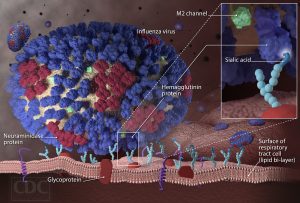
Photo: Centers for Disease Control and Prevention
Officials with the Kentucky Department for Public Health (DPH), within the Cabinet for Health and Family Services (CHFS), announce the availability of an online weekly influenza surveillance report used to gauge current flu activity circulating in Kentucky. This new public service is an example of the Cabinet’s priority to strengthen data collection and analytics and then to make the information more easily accessible.
The Weekly Influenza Surveillance Report is compiled by DPH officials and provided to the Centers for Disease Control and Prevention (CDC) as part of statewide flu surveillance efforts. The weekly report is located at http://chfs.ky.gov/dph/epi/Influenza.htm and will be updated each Friday before noon.
Influenza cases are broken down by specific age groups and counties, the number of deaths resulting from influenza and the current influenza activity level being reported in the state. The report consists of laboratory-confirmed cases of influenza that are defined by molecular virus testing and positive virus culture test results, which are reportable in Kentucky. Rapid positive influenza tests are not included in this report.
DPH relies on sites such as doctors’ offices, hospitals and health departments to help track the level of influenza activity in the state and to identify which strains of the flu are circulating in Kentucky. These voluntary sites collect data and report influenza-like illness (ILI) cases according to age groups each week. This sampling represents only a small percentage of influenza cases for the state, but contributes to the ongoing assessment of flu activity in the Commonwealth and helps determine the weekly level of flu activity.
Kentucky’s current flu activity level is classified as “sporadic,” with 18 confirmed cases of flu being reported. Sporadic activity indicates that small numbers of laboratory-confirmed influenza cases or a single laboratory-confirmed influenza outbreak have been reported, but there is no increase in cases of ILI.
The CDC Advisory Committee on Immunization Practices recommends flu vaccine for all individuals six months of age and older. People who are strongly encouraged to receive the flu vaccine because they may be at higher risk for complications or negative consequences include:
- Children age six months through 59 months;
- Women who are or will be pregnant during the influenza season;
- Persons 50 years of age or older;
- Persons with extreme obesity (Body Mass Index of 40 or greater);
- Persons aged six months and older with chronic health problems;
- Residents of nursing homes and other long-term care facilities;
- Household contacts (including children) and caregivers of children aged ≤59 months (i.e., aged contacts of children aged)
- Household contacts and caregivers or people who live with a person at high-risk for complications from the flu; and
- Health care workers, including physicians, nurses, and other workers in inpatient and outpatient-care settings, medical emergency-response workers (e.g., paramedics and emergency medical technicians), employees of nursing home and long-term care facilities who have contact with patients or residents, and students in these professions who will have contact with patients.
Adequate supplies of flu vaccine are expected to be available for this year’s season. Only injectable influenza vaccine formulations will be distributed in the United States. Vaccination can be given any time during the flu season.
Infection with the flu virus can cause fever, headache, cough, sore throat, runny nose, sneezing and body aches. Flu can be very contagious. For more information on influenza or the availability of flu vaccine, Kentuckians should contact their primary care medical provider or local health department. Influenza information is also available online at https://www.cdc.gov/flu/index.htm.
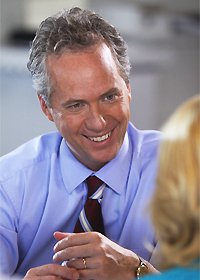 For the third year in a row, Louisville has earned a perfect 100 on the Human Rights Campaign scorecard, which says the city remains a “beacon of hope” in terms of ensuring that all residents are treated equally regardless of their sexual orientation or gender identity.
The Municipal Equality Index (MEI) scorecard measures laws, services and leadership that promote the inclusion of lesbian, gay, bisexual and transgender individuals. Louisville is the only city in Kentucky to receive a perfect score. Lexington scored 96, Covington at 74, Morehead at 59 and Frankfort at 52.
In a news release announcing the rankings, HRC lauded Louisville as being one of 41 “All-Star” cities that are fueling equality despite being in a state that lacks non-discrimination protections.
“This honor exemplifies our commitment to ensuring all residents have the right to fairness and equality, giving them the ability to reach their full human potential,” said Mayor Greg Fischer. “We are a compassionate city, and because of our inclusive nature, a diverse portfolio of companies of choosing to locate in Louisville.”
The Human Rights Campaign began in 1980 and is now the largest civil rights organization working to achieve equality for lesbian, gay, bisexual and transgender Americans
“Today, the MEI serves as a vital tool for business leaders and municipal officials alike when it comes to economic development,” Chad Griffin, HRC president, said in a news release. “CEOs know that in order to attract and retain the best employees, they must grow their companies in places that protect LGBTQ citizens from discrimination and actively open their doors to all communities. The MEI is the best tool to help these businesses make crucial evaluations about the welcoming – or unwelcoming – nature of towns and cities across the nation.”
Mayor Fischer said the impact of Louisville’s commitment to equality goes beyond being recognized as a model city of compassion. The HRC ranking also is a boost to the city’s economic development efforts, given that cities that are inclusive are increasingly winning in the competition for residents, businesses and employees.
“Louisville once again ranks among the best cities in the U.S. for LGBTQ people to live, work, and play, and it is leading the way for other cities in our commonwealth. It’s no surprise Louisville is one of the only cities in the South to score a perfect 100 for LGBTQ inclusion, as we continue the tradition begun in 1999 when Louisville became one of the first cities in the nation to enact a fully-inclusive anti-discrimination Fairness Ordinance,” said Chris Hartman, Director, Fairness Campaign. “We are proud of Louisville and Mayor Fischer for the incredible work to reach this milestone, and we look forward to many more firsts for our city.”
Louisville’s score was higher than some peer cities, including Nashville at 60, Charlotte, N.C., at 73, and Indianapolis at 88.
The Mayor added that Louisville Metro Government has worked to improve even further by implementing plans for implicit bias training for all employees. In addition, LMPD has partnered with Starbucks on the “Safe Harbor” initiative to reduce crimes and bullying against the LGBTQ community.
Earlier this year, the University of Louisville was named a top 25 LGBTQ-friendly university by Campus Pride. This recognition was given to school’s scoring the highest percentages in LGBTQ-friendly benchmarks for policies, programs and practices.
 Jefferson County Attorney Mike O’Connell received The Center for Women and Families’ Public Service Award during the nonprofit’s annual report to the community Wednesday evening.
The award, presented by Kentuckiana’s domestic violence and rape crisis center, recognizes a public figure who has gone above and beyond to aid The Center’s mission.
“This is a real honor for me,” O’Connell said.
The award was first given in 1991 to Mary O’Doherty of The Courier-Journal. Since then, notable individuals receiving the award include Jerry Abramson, David Armstrong, Judi Patton, Anne Northrup and John Yarmuth.
O’Connell’s office has committed resources for a dedicated unit for domestic violence cases and was a founding partner in the city’s 24-hour Domestic Violence Intake Center (DVIC). In 2016, the office prosecuted nearly 4,000 cases domestic violence and sexual assault cases and earned more than a 90 percent conviction rate.
O’Connell also helped secure $150,000 in federal funding for staffing and support of the DVIC in 2016, three times as much federal funding as the DVIC had ever received in a single year.
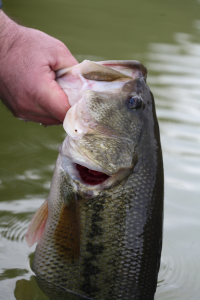
Photo: Kentucky Department Fish And Wildlife
The length of day relative to the time of year never changes. As the nights lengthen slightly with each passing day in fall, the overnight temperatures drop and pull heat from the top layers of lakes.
This development is already underway, but will peak over the next month and make excellent fishing conditions for black bass.
“The cooler, oxygenated water in the shallows draws baitfish and the bass follow to feed heavily,” said Jeff Ross, assistant director of fisheries for the Kentucky Department of Fish and Wildlife Resources. “The shorter days signal to bass that winter is coming and they must feed heavily in fall.”
The shallow movement of black bass, mainly largemouth bass, but a few spotted bass and even smallmouth on lakes that have them, presents the best bass fishing opportunities of the year for bank-bound anglers.
Water temperatures in Kentucky’s major reservoirs are in the mid-70s. When the temperatures drop into the 60s, bank anglers should hit the lower 1/3 of the main lake or major creek arm of our major reservoirs and the dam area of our smaller, state-owned lakes. You will have as good a chance at a 5-pound or better bass as someone with a bass boat that costs as much as many people’s homes.
Bank fishing, like wade fishing streams, returns anglers to a time when all they had was a small, one-tray tackle box and a Zebco 33 combo. You can concentrate on fishing, not fighting wind with a trolling motor or fiddling with a cranky sonar unit. You can bring one rod and one small tackle bag or box and have all you need.
Map study is paramount for finding productive spots to bank fish for bass in fall. Points with the old river or major creek channel running close to them are tops. Most of our major reservoirs have boat ramps and recreational areas in the lower areas of the main lake or a major creek arm that offer public bank access.
Our smaller, state-owned lakes have a 50-foot easement for the public to access the bank for fishing. Visit the Kentucky Fish and Wildlife website at www.fw.ky.gov and click on the “Find a Place To Fish” tab. Many of the state-owned lakes now have 5-foot contour maps and locations of fish attractors featured on this helpful web page.
“You can use a more active bait in fall, especially if you are fishing from the bank,” Ross said. “Crankbaits and spinnerbaits work well in fall. You don’t have to slow things down too much. When they are up shallow, they are pretty active.”
Medium-running crankbaits in shad-colors such as chrome and black work wonders as do white spinnerbaits with skirts of black, silver with touches of blue. “Keep moving and cover water,” Ross said. “You don’t have to be too fancy, just get the bait in front of the bass.”
You will catch mainly largemouth bass, but in the lower sections of lakes such as Lake Cumberland, Barren River Lake or Green River Lake that hold smallmouths, a marauding bronzeback may savage your lure, especially on overcast days. You may also pick up a football-shaped spotted bass. Spotted bass make excellent table fare. It generally benefits the black bass population in the lake if you harvest some spotted bass, one of the reasons they have no minimum size limit.
Boat ramps are another spot to catch bass, especially largemouths and spotted bass. Nearly all boat ramps have a gouge hole at the end of them from the blast of outboards scouring the bottom when trailering a boat. By mid-October, boat ramps get little action from boats, so working a crankbait over the gouge hole at the end of the ramp can produce fantastic action.
The riprap rock that armors the face of most reservoir dams also draws baitfish and bass in fall. “Dams hold those bass when they come shallow in fall and make really good fishing spots for bank anglers,” Ross said.
Crankbaits and spinnerbaits work well for fishing the dam riprap, but a large crappie minnow or small to medium shiner hooked through upper lip with a 1/0-circle hook and a couple of BB-sized split shot weights usually outfishes everything. Keep the outfit moving slowly to avoid hanging the split shot weights in the riprap. Bottom fishing live bait off channel points also works wonders in fall.
Fall is a delightful time to grab a rod, a small tackle bag and hit the bank. The weather is comfortable and the fish hungry.