Weather
 Traffic
 @LouisvilleDispatch
 @LouisvilleDisp
 Subscribe
Facing devastating potential cuts because of an expected $65 million general fund gap over the next four years, Mayor Greg Fischer is proposing to increase the city’s tax rates on home, life, marine and miscellaneous insurance, such as malpractice, title insurance and umbrella coverage, from their current five percent to 12.5 percent in FY20 and FY21, 13.5 percent in FY22 and 15 percent in FY23.
Auto would be excluded from this increase, which overall would generate approximately $63 million by FY23.
“Louisville Metro Government has proven it is an efficient operation, and our city is seeing a good growth in revenue. But that growth is dwarfed by our increased pension requirements from the state,” said Mayor Fischer, noting that the impact of unfunded pension obligations is expected to grow 12 percent each year through FY23.
That amounts to $86 million in FY19, up from $77 million in FY18, and is expected to grow to $97 million in FY20, then to $136 million in FY23. The estimated gap for FY20 is $35 million, which reflects the additional $10 million pension bill for FY19, another $10 million for FY20, along with $15 million from increased healthcare costs and lower-than-projected revenues.
The Mayor last week detailed the specific potential cuts that would, barring new revenue, have to be made to cover the operating gap and ensure a balanced budget, as required by state law. The potential cuts range from staffing reductions in nearly every Louisville Metro Government (LMG) department, including police, fire and ambulance services, as well as closing library branches, fire stations, health clinics, community centers, pools and city golf courses.
Other potential cuts faced by the city without new revenue include eliminating all Metro funding for agencies like Brightside and the Belle of Louisville, making the Louisville Zoo independently operated, turning Youth Detention Services back over to the state, and eliminating all Neighborhood Development Funds allocated by Metro Council and External Agency Funds allocated to local nonprofits for arts, and social and community services.
The potential cuts amount to 317 layoffs in FY20 alone.
“These cuts will damage our city’s momentum,” the Mayor said during a news conference today, “which is why the Council and I worked together to propose this new source of revenue. This is not an easy choice, but under the circumstances, it’s a pretty clear one. Keep the momentum of our city moving forward – or fall back?”
To illustrate the impact, the Mayor’s proposal would increase the average family’s home insurance by about $12 – $13 a month, or around 40 cents per day.
“It’s important to keep in mind that this pension situation is not something that Metro Council or I created,” the Mayor said. “I appreciate the state’s attempts now to position our pension systems to be structurally sound. But those discussions and actions fall short of addressing the revenue needs of local governments. And Frankfort has refused to allow us the tools and flexibility we need to deal with the obligations they’re imposing.
“We are required by law to pay whatever dollar amount the retirement board sets as our pension obligation, and we’re required to balance our city budget every year,” he said. “We believe this recommendation today is the best way to ensure our city continues to thrive and grow.”
Mayor Fischer developed this proposal in consultation with members of the Metro Council, and he was joined at today’s news conference by President David James, Councilman Bill Hollander, who is chair of the council budget committee, and Council members Pat Mulvihill, Barbara Sexton Smith and Marcus Winkler, who are co-sponsoring the ordinance.
“While I have no desire to raise taxes, I also have no desire to let our great city be pushed backwards and see essential city services eroded and our citizens’ safety be put at risk,” said James. “That’s why I’m a sponsor of this ordinance to raise revenue, and I look forward to working together to find efficiencies in our government to balance our budget.”
Hollander said: “This increased pension cost is far too much to deal with solely by expense reductions. The level of service cuts we would need to implement would ripple throughout the community and seriously set us back for many years, as the downward spiral builds on itself. That is not good policy and not acceptable for the people we serve.”
Winkler agreed: “The budgetary challenges our city faces are significant, and there is no easy fix. The only way that we can meet our pension obligations without draconian cuts to services and reduction or elimination of economy-building programs is through this revenue measure. Though not an easy decision, it is necessary if we want to live in a strong, vibrant Louisville, the kind of place where skilled labor and employers want to move. We cannot achieve that by cuts alone. Investments in services like worker retraining, policing, infrastructure and parks are key to winning the competition with cities like Nashville, Columbus, and Indianapolis.”
Mulvihill said: “It’s unfortunate that we are in this place needing to raise revenue due to the lack of funding of pensions for the last 20 years by Frankfort, but we can’t risk losing 250 police officers and having fire stations shuttered and leaving our most vulnerable residents without the necessary social services to immediately help them and get on a path to improve their lives. We need to ensure that all our children have the opportunity for bright futures, and that is not possible if we close libraries, parks and community centers. Lastly, we need to protect our seniors, and closing senior centers and failing to provide programming for them is simply untenable.”
Sexton Smith said: “Raising taxes to generate revenue for our community is always controversial, and it requires political will and courage to do so. Public safety is our top priority, and financial management is our first responsibility. These are difficult times and I am committed to creating safer neighborhoods, more and better jobs in the neighborhoods, and better services for everyone. Together, we can do this!”
To be effective for FY20, the Council must approve the change and the city must file its intent to raise the tax by March 22.
Mayor Fischer asked residents to carefully review the list of specific cuts the city is facing without new revenue, “and if you, like me, find them unacceptable, please reach out to your Metro Council person and urge them to support this revenue.”
Mayor Greg Fischer has indicated that Louisville Metro faces a serious budget situation with an anticipated deficit of $65 million over the next four years.
The potential for serious cuts could include staffing reductions in nearly every city department, as well as the closing of two of the city’s 21 fire stations, four of the five public pools, four of the 10 public golf courses and one of the city’s 18 public library branches.
Councilwoman Paula McCraney (D-7) serves on the Budget Committee and is inviting constituents to join her for a Budget Talk on Saturday, February 23 from 10 a.m. until noon.
“This will be an opportunity for citizens from District 7 to ask questions and make suggestions as we all work to find solutions to the city’s impending budget deficit,” said Councilwoman McCraney. “I’m truly looking forward to hearing from District 7 constituents on this important budget issue.”
The Budget Talk will be held at the St. Matthews Community Center, 310 Ten Pin Lane. Louisville Metro Chief Financial Officer Daniel Frockt will also be on hand to answer questions and receive input regarding the city’s budget.
Premier independent festival producer Danny Wimmer Presents continues to show its love for Louisville with a third addition to a massive fall festival series in the one-of-a-kind city. Hometown Rising, the first-ever Country Music & Bourbon Festival, will make its debut Saturday, September 14 and Sunday, September 15 at Highland Festival Grounds at KY Expo Center, combining two of Louisville’s cultural cornerstones—great music and incredible bourbon.
Hometown Rising’s incredible music lineup will be led by country heavyweights including Luke Bryan, Tim McGraw, Keith Urban, and Little Big Town, with additional appearances from Dwight Yoakam, Brett Young, Jake Owen, Bret Michaels, Frankie Ballard, and many more. In total, more than 30 artists will play on three stages, including two side-by-side main stages, over the course of the weekend.
Hometown Rising exclusive VIP packages, General Admission tickets, camping and hotelpackages, as well as special event tickets go on sale Friday, February 15 at 12:00 PM EDT. Visit www.HometownRising.com for more details.
With three back-to-back festival weekends in Louisville in 2019, Danny Wimmer Presentswants to ensure all fans have the chance to enjoy multiple events with an affordable and convenient ticketing option. New this year, fans can purchase a special “Trifesta” Pass for the discounted rate of only $229.00 plus fees. The pass allows General Admission weekend access to all three DWP fall festivals in Louisville—Hometown Rising (September 14 & 15), Bourbon & Beyond (September 20-22) and Louder Than Life (September 27-29). Check out https://trifestapass.com for more information.
“I am beyond thrilled to be playing the very first year of Hometown Rising, and to have the opportunity to be part of such a prestigious and eclectic lineup of modern country artists,” says performer Alice Wallace.
Adds festival producer Danny Wimmer, “Hometown Rising is a blend of the music and culture I grew up around, in a place I now consider a second home. While DWP is best known for our rock festivals, I was surrounded by country music growing up in Jacksonville, Florida, and I’m excited to be expanding our portfolio with a genre and a place that are both close to my heart. I can’t think of a better location to launch a country music festival than right here in bourbon country. Mayor Fischer and the Louisville community continue to be great partners as we take this next step in the marriage of great music, food and bourbon.”

After months of working together to collect and review more than 400 ideas, residents of Metro Council Districts 6 and 8 will vote on how to spend $200,000.00 in public funds beginning February 15. The Our Money Our Voice participatory budgeting initiative allots $100,000 per district for projects residents identify as improving health, safety and well-being. Residents age 14 and over will have an opportunity to vote at District Voter Expos or online. Each person can vote for up to five projects.
Our Money, Our Voice is being piloted using $100,000 in capital infrastructure funds set aside by Council President David James (District 6) and Councilman Brandon Coan (District 8), $50,000 in funds from Louisville Metro Public Health and Wellness, and $50,000 from the Humana Foundation.
“Our Money, Our Voice empowers neighborhood residents to make decisions about how money is spent in their neighborhoods,” said District 6 Councilman and Council President, David James. “I applaud the many volunteers who knocked on doors to talk with their neighbors to solicit ideas and then vet them for feasibility. It’s exciting that we’re now at the voting phase of the project.”
“The project strengthens democracy by getting people involved in the work of government and in the decisions that effect their lives,” said District 8 Councilman Brandon Coan.“I encourage all residents of Districts 6 and 8 to make sure to vote – either in person or online.”
Projects residents can vote on include alleyway and sidewalk improvements, implementing community center programs, adding street lights, litter bins or drinking fountains, and enhancing playgrounds. Residents can vote in person at “District Voter Expos.” At these expos, residents can meet their neighbors and volunteers who made this opportunity possible and learn more about how the final projects were selected. (See below for more information on District Voter Expos.)
On-line voting will also be available. Residents who wish to make digital absentee votes should sign up with Mobileserve to request a voter access code for an on-line ballot. A link to request a voter access code as well as a sample ballot can be obtained at www.OurMoneyOurVoice.com.
“Participatory budgeting is a way for residents of a community to work together to better meet their needs while having a direct say in government decisions,” said Dr. Sarah Moyer, director of the Louisville Metro Department of Public Health and Wellness and Chief Health Strategist for the city. “Engaging the community is essential for public health and critical for helping us get to our vision of a healthy Louisville where everyone and every community thrives.”
Participatory budgeting has been practiced in the United States since 2009 in such cities as Hartford, CT; Greensboro, NC; New York and Chicago.
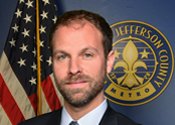
Councilman Brandon Coan (D-8) is encouraging property and business owners along Bardstown Road, Baxter Avenue and the Douglass Loop to attend the next public meeting for the proposed creation of the Highlands Management District on Tuesday, February 12th at HopCat,1064 Bardstown Road beginning at 1:00pm.
“Since the first public meeting in 2018, we have been working to contact each and every property owner in the proposed service area to educate them about our plan,” said Coan. “This meeting is part of a homestretch effort to secure the commitments we need to move forward.”
The Councilman is proposing the creation of the Highlands Management District, a nongovernmental safety and cleanliness workforce, along the Bardstown Road/Baxter Avenue business corridor.
Management districts are funded by special assessments against properties located within service area boundaries, and they are managed by a voting board comprised of district property owners. The proposed Highlands Management District special assessment is $0.1745 per $100 PVA.
Coan’s proposal is the result of months of studies, reports and recommendations by an exploratory committee comprised of property owners and other stakeholders in the corridor, in consultation with the Louisville Downtown Partnership.
For more information about the proposed Highlands Management District, contact Councilman Coan’s office at 574-1108 or visit www.tinyurl.com/BardstownRdBID for more information.
Historic Locust Grove, a National Historic Landmark established c. 1792, is planning a year of programming centering on The Age of Hamilton, the period of time from c. 1770- 1805 that encompasses the American Revolution and the early years of American independence.
Keyed to the arrival in June 2019 of Hamilton: An American Musical, at the Kentucky Center for the Arts, Locust Grove will look at the personalities and events of the era of the American Revolution through the Early National period in depth. Washington, Jefferson, Burr, and Hamilton all were part of the world of William Croghan and George Rogers Clark.
The story of Locust Grove finds its roots in the American Revolution, through the military service of Major William Croghan, who established and lived at Locust Grove from 1792-1822, and his brother-in-law, General George Rogers Clark, who founded Louisville in 1778 and led the Illinois Campaign that brought the western territories under the control of American forces at the same time George Washington commanded the Continental Army in the east. Croghan fought with the Continental Army and was a participant in the battles of Trenton, Princeton, Brandywine, and Germantown. He wintered with Continental forces at Valley Forge and witnessed the British surrender at Yorktown in 1781. Washington, Alexander Hamilton, Aaron Burr, the Marquis de Lafayette were all part of the world of both Croghan and Clark.
“The experiences of the people of the Revolutionary era presented in Hamilton are mirrored in the stories of the people of Locust Grove and early Louisville,” says Carol Ely, Executive Director of Locust Grove. “It’s exciting to have the chance to explore the personalities and ideas of the era in fresh new ways.”
Locust Grove kicks off The Age of Hamilton this month with A Winter’s Ball, just in time for Valentine’s Day. This historical ball will be held on Saturday, February 9 from 7:00 – 10:00 pm, and will feature live music and period dancing. Co-sponsored by The Jane Austen Society of North America—Greater Louisville Region, guests will be asked to wear historical dress from their favorite time period as we capture the atmosphere of the ball where Alexander Hamilton met his bride, Eliza Schuyler in 1780.
Guests should look for a trio of Punch with the President evenings in March, April and May focusing on the lives and libations of presidents George Washington, John Adams, and Thomas Jefferson. Led by visiting historians, including Dr. Matthew Costello of The White House Historical Association, Gwynne Tuell Potts, and historical interpreter Peyton Dixon, these evening programs find connections between the first three presidents, early American history, and Locust Grove, along with period drinks. Locust Grove’s Afternoon Lecture Series, held on the first Wednesday of each month, will focus on revolutionary topics such as African Americans in the Revolution and dueling in Early Kentucky. A subsequent program on June 6, Hamilton: How the Musical Remixes American History, presented by Dr. Richard Bell, will explore the historical origins of the blockbuster musical.
This season of programming at Locust Grove also engages the site’s educational mission, with a professional development opportunity for teachers on February 16, and a student competition where students will perform using historical documents as their inspiration. Thanks to the generosity of the Louisville Theatrical Association/PNC Broadway in Louisville, participants in these programs will have the opportunity to win tickets to see Hamilton when it arrives in Louisville. Members of the public will also have the chance to win tickets for the show.
Finally, Locust Grove’s Age of Hamilton will culminate with The Hamilton Festival on June 16, 2019. This celebration of the Revolution will feature student performances of original pieces, a re-creation of the Hamilton-Burr Duel, a sing-a-long, and presentation on clothing of the period, Aaron Burr’s time in Louisville, and more.
According to Brian Cushing, Locust Grove’s program director, “The site has explored a lot of exciting directions over the years but the contributions to the United States of America by the Revolutionary War veterans connected with Locust Grove, especially George Rogers Clark, remains the cornerstone of our story. Now that Hamilton is shining a spotlight on that era, we’re able to draw our visitors, into the core of our mission of the exploration of history.”
A full calendar of The Age of Hamilton events and more information can be found at www.locustgrove.org/revolution.
Mayor Greg Fischer today outlined specific and “devastating” potential cuts to city services and staff that would, without new revenue, be necessary to cover an expected $65 million budget gap over the next four years, caused by a state-mandated pension increase that grows every year through FY23.
The potential cuts range from staffing reductions in nearly every Louisville Metro Government (LMG) department, including police, fire and ambulance services, as well as closing library branches, fire stations, health clinics, community centers, pools and city golf courses.
Other potential cuts faced by the city without new revenue include eliminating all Metro funding for agencies like Brightside and the Belle of Louisville, making the Louisville Zoo independently operated, turning Youth Detention Services back over to the state, and eliminating all Neighborhood Development Funds allocated by Metro Council and External Agency Funds allocated to local nonprofits for arts, and social and community services.
That all amounts to 317 layoffs in FY20 alone.
“This list of cuts is long, and the impact would be devastating. But we’re required to balance our budget, and without a major source of new revenue, this is what it will take to fill the gap created by the Frankfort-mandated pension obligation,” Mayor Fischer said.
LMG Chief Equity Officer Kellie Watson noted the equity impact of the potential cuts.
“We are working to apply an equity lens to all decisions. Government tends to step in where the private sector falls short. Therefore, it is inevitable that cutting any Louisville Metro Government services will disproportionately impact residents and families who are struggling,” she said.
Louisville Metro is an efficient operation. Citing the city’s strong economy, sound management and budgetary flexibility, the nation’s top credit rating services have continually rated LMG in the top quartile of municipalities, and the city is seeing revenue growth, though it is dwarfed by the increased pension obligation. LMG also has tightened its belt in other ways, including implementing a slow-down in hiring, limiting travel and further reducing expenditures in technology, equipment and office supplies.
The last major tax initiative in the city dates to 1974, when then-Mayor Harvey Sloane spearheaded a referendum to increase the occupational tax to help pay for mass transit, via TARC. The city last increased its insurance premium tax decades ago, from 2.5 percent to the current 5 percent.
Mayor Fischer stressed today that he and his team are working with Metro Council on other options to avoid the cuts, and plan to release information on that early next week.
In the meantime, the Mayor said, he wants to be sure the community understands the severity of the situation.
“While we’ve been discussing this publicly for over a year, there are some people who still don’t seem to realize the seriousness of the situation,” the Mayor said. “I’m sharing this list of specific potential cuts now so that everyone can understand the deep pain they would cause. And if you, like me, find these cuts unacceptable, I urge you to contact your Council member and share your view. My goal is to resolve this situation by mid- to late March.”
“It’s important to keep in mind that this pension situation is not something that Metro Council or I created,” the Mayor said, noting that the city has paid 100 percent of its annual pension bill every year. “It’s a challenge created by Frankfort’s years of inaction, exacerbated by the 2017 pension formula change.”
There are 8 separate Kentucky pension systems. Daniel Frockt, the city’s CFO, said the one that includes Louisville Metro is in relatively strong financial shape. However, the state mandates what the city must pay in.
For more than a year, the Mayor and his team have said that under that change, the city’s pension obligation is expected to grow to a 12 percent increase each year through FY23. That amounts to $86 million in FY19, up from $77 million in FY18, and is expected to grow to $97 million in FY20, then to $136 million in FY23.
The budget situation is especially difficult in the coming FY20, because in addition to the $10 million added to the city’s pension bill for FY19 year and another $10 million for FY20, the city faces a $15 million gap stemming from increased healthcare costs, a structural deficit created in FY19 and lower-than-projected revenues in the current fiscal year, Frockt said.
The city’s FY19 budget has $621 million general fund revenues – the resources that are impacted by the potential service cuts.
Over the past several months, Mayor Fischer, Frockt and other city leaders have been talking with Council members and other stakeholders about cuts that would be necessary without a new revenue stream.
“Many of the Council members we’ve talked with understand the difficult situation we’re in, and the need to make bold moves to ensure that the momentum we’ve built together, as a city, is not derailed by this setback” the Mayor said. “I appreciate that partnership and I look forward to announcing a proposed resolution in the coming days to avoid these devastating cuts.”
“It would be foolish and short-sighted to drastically cut the services and people who got us here,” he added, “especially as many of our peer competitor cities are investing even further in their communities.”