Friday January 30, 2026
Local Connection
 Weather
 Traffic
 @LouisvilleDispatch
 @LouisvilleDisp
 Subscribe
 The Kentucky Arts Council has added two acts to its Performing Artists Directory.
Louisville-based Spanish language theater group Teatro Tercera Llamada and Louisville Irish and bluegrass roots music ensemble Cloigheann join the 76 other Kentucky individuals and groups who make up the arts council’s Performing Artists Directory.
The Performing Artists Directory is an adjudicated online roster of performing artists used by in-state and out-of-state presenters and others as a resource for identifying artists for performance bookings and projects.
Inclusion in the directory represents Kentucky’s recognition of artistic excellence in an individual or group of performers. It also boosts the profile of the region where those artists are from, as well as Kentucky’s profile when those performing groups travel out of state.
Teatro Tercera Llamada, which means Theater Third Call in Spanish and takes its name from the Latin American theater tradition in which third call means lights down, curtain up, is a Spanish language theater group. “Everyone was very excited to learn we’d been added to the directory,” said cofounder Haydee Canovas. “It’s a big deal. It was important that we be recognized as a theater group by Kentucky.”
In addition to the all-Spanish theater productions, the Louisville-based group presents bilingual children’s plays.
“Our largest audiences are for the bilingual children’s plays. You get everyone from grandparents who want to come enjoy the play with their grandchildren to single people because they know it’s going to be entertaining,” Canovas said. “We really want families to come enjoy the theater together.”
The Irish and bluegrass music group Cloigheann, based in Bardstown, has been around for about 30 years, said founding member and guitarist Mark Rosenthal.
“We have several of our members who are part of other bands who’ve already been in the Performing Artists Directory, but we’re excited to be part of it as Cloigheann,” Rosenthal said. “We love sharing our music, and finding a new audience for it is something else we’re excited about. We’ve written a fair amount of new material, but haven’t recorded it yet. Getting in the directory will help breathe some new life into the band.” The arts council endeavors to promote, showcase and provide professional development opportunities to a diverse selection of Kentucky’s finest contemporary and traditional performing artists through the Performing Artists Directory.
For more information on the Performing Artists Directory, contact Tamara Coffey, individual artist director, at 502-892-3121, or tamara.coffey@ky.gov or visit the arts council’s Performing Artists Directory page.
The Kentucky Arts Council, the state arts agency, fosters environments for Kentuckians to value, participate in and benefit from the arts. Kentucky Arts Council funding is provided by the Kentucky General Assembly and the National Endowment for the Arts.
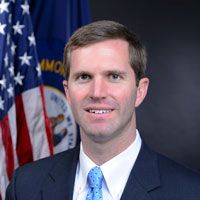 Attorney General Andy Beshear is warning about a scam that claims Kentuckians can receive tax-free, monthly payments from the Tobacco Master Settlement Agreement (MSA).
Beshear said his office has identified misleading online ads and received reports of scam emails claiming Kentuckians can receive monthly payments directly from the multibillion-dollar MSA. The solicitations proclaim Kentuckians, even if they “never used tobacco,” can receive thousands of dollars each month if they pay $5 a month or up to $100 a year to learn how.
Beshear said he does not want Kentuckians to be duped by ads that prey upon the nearly 20 years of positive impact the settlement funds have had in the Commonwealth.
“The ads and emails try to trick Kentuckians into believing something that is simply not true,” Beshear said. “MSA payments are made directly to states and territories, and in Kentucky they are used to boost investments in agriculture and help improve health outcomes.”
Individuals can potentially receive MSA funds through state programs or private lawsuits. Nevertheless, those who respond to the ads ultimately pay for information to learn how to purchase out-of-state bonds.
Beshear said the purchase of a bond is an investment, and Kentuckians should carefully investigate risks and benefits associated with any investment.
The MSA, reached between the four largest tobacco companies in the U.S. and attorneys general from 46 states, provides annual payments to the states ultimately worth more than $208 billion.
The funds help to compensate states for some of the medical costs associated with tobacco-related illnesses.
Since the first payment in 1999, Kentucky has collected over $2 billion, and is on pace to collect nearly $3 billion over the first 25 years of the agreement.
Kentucky’s Tobacco Settlement Agreement Fund Oversight Committee administers the determinations on grant applications from the agricultural fund, which aids farmers and creates sustainable farm-based businesses. Additional MSA revenues support early childhood education, health programs and cancer research.
Better protecting Kentucky families, especially seniors, from fraud is one of the core missions of Beshear’s office.
Kentuckians interested in staying ahead of scammers can sign up to receive Scam Alerts from Beshear’s office by texting the words KYOAG Scam to GOV311 (468311), or visit ag.ky.gov/scams to sign up with your mobile phone number or email address.
To report scams to the Office of the Attorney General call 888-432-9257 or file a consumer complaint online.
 Fostering Success, the summer employment initiative for Kentucky youth who are aging out of the state foster care program, is celebrating the start of its second year. At least 72 young people are expected to be involved in Fostering Success this summer. Last year, 52 completed the Cabinet for Health and Family Services (CHFS) program.
Fostering Success gives older youth in foster care the opportunity to access employment, job training and leadership skills through a collaborative program that places them in entry-level positions with state government agencies.
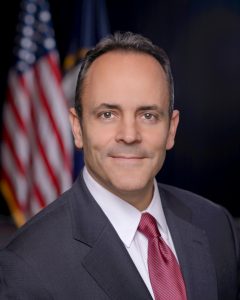
“Very often, children who age out of the foster care system lack the social and financial management skills they need to find jobs and be productive, self-reliant adults,” said Gov. Matt Bevin. “Fostering Success is one of many ways our administration is seeking to correct that. With mentoring from seasoned professionals, and an opportunity to work within state government or with respected, private sector partners, these young adults are given an excellent chance to acquire some of the hands-on experience they need to become future leaders in Kentucky.”
The summer youth employment program serves Kentucky’s foster youth between the ages of 17 and 23. Program participants must have a high school diploma or the equivalent to be selected for the 10-week employment. Half of the youth who participated in last year’s initial Fostering Success collaborative extended their employment to nine months and three of last year’s participants were offered full-time employment with CHFS.
First Lady Glenna Bevin said that foster youth might need extra guidance from a caring community as they mature.
“The transition to adulthood can be more difficult for foster children who have experienced so much instability and trauma that was no fault of their own,” said First Lady Bevin. “Fostering Success gives these youth committed role models and a community of support in addition to the invaluable job training and ‘soft skills’ they will get from a summer of comprehensive career preparation.”
Fostering Success includes summer employment opportunities in several state and CHFS offices – including the Department of Parks and the Department for Community Based Services, the Office of Legal Services and Child Support Enforcement – across the state.
Start dates are staggered during the summer months because of worksite needs and application processing time. Independent Living Coordinators, who assist foster youth who are aging out of care, will continue to recruit young people for the employment opportunity through mid-July. Kentucky Works contractors are facilitating two-day job readiness training for the youth. Facilitators addressed areas like workplace attire, time and attendance, cell phone usage, transportation needs and meal breaks.
The program also features a mentoring component: Department for Community Based Services (DCBS) supervisors and regional Independent Living Coordinators are providing job coaching and guidance. In Jefferson County, the Orphan Care Alliance is working to connect each of the participants in that region with life coaches who will remain connected to the youth after the program ends.
In addition, program partner True-UP, a Louisville-based foster youth support organization that collaborated with the inaugural Fostering Success program in 2016, is expanding its financial literacy and employment retention training to Elizabethtown and Lexington.
“Work readiness skills are so valuable, yet they can be more difficult to obtain for foster children, who may experience many more barriers to independence during their transitional years,” said CHFS Secretary Vickie Yates Brown Glisson. “I am so proud that my agency continues to collaborate with businesses, organizations like True-UP and other state agencies to help our foster youth develop skills to improve their lives.”
Kentucky Labor Cabinet Secretary Derrick Ramsey said Fostering Success is cultivating new talent for the state’s changing workforce.
“For Kentucky to reach its full economic potential, we will need the talents, leadership and hard work that exists currently in our state’s youth,” Labor Secretary Ramsey stated. “Fostering Success is laying the foundation between a trained workforce and employers, and we will continue to seek areas where we can grow this pipeline for industries in need. In the end, this summer program can be a winning formula for everyone involved.”
DCBS Commissioner Adria Johnson said there are more than 8,500 children with active placements in out of home care in Kentucky.
“Foster youth who are aging out of care can face a lot of challenges,” Johnson said. “The transition to adulthood is more complex without a permanent family as a resource. Fostering Success is part of a network that gives these older foster youth connections to get help when they need it and to see a positive future for themselves.”
Courtney Parr, a Fostering Success participant assigned to the DCBS Central Office in Frankfort, said her aspirations for a career in social services are reinforced by her immersion in the summer employment program.
“I wanted to participate in the program because not only was I a former foster youth but I have developed a passion for the social work field and am currently working on my degree in social work,” she said. “I love seeing the other side of the foster care system. After the 10 weeks, I hope to have an opportunity to continue my internship here while I continue my studies at Kentucky State University, where I am currently a junior.”
Tonya Bailey is the Independent Living Coordinator for the 15-county Northeastern Region, which includes Morehead and Ashland, said she was “thrilled” when Fostering Success was established last year – her region had seven youth in the inaugural program.
“This summer, the Northeastern Region’s 12 Fostering Success participants are working in DCBS and other CHFS offices,” concluded Bailey. “The opportunities the youth have been given through the Fostering Success Program is nothing short of amazing.”
Bailey said two youth from last year’s program returned this year, and she envisions a couple of current participants applying for permanent cabinet positions.
Within the DCBS offices, the youth perform clerical tasks similar to an office support assistant, like directing phone calls, filing, preparing documents and assisting administrative assistants. They also get a closer look at how Division of Protection and Permanency staff works to keep children safe and secure.
For more information about Fostering Success and the Kentucky foster care program, call 1-800-232-KIDS (5437).
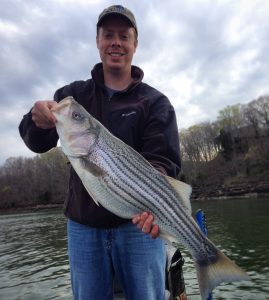
Photo: Kentucky Department Fish and Wildlife
The Kentucky Fish and Wildlife Commission proposed several new fishing regulations at a special called meeting today.
The commission recommends all hunting, fishing and boating regulations for approval by the General Assembly and approves all expenditures by the Kentucky Department of Fish and Wildlife Resources. All recommendations must be approved by legislators before they become law.
If approved by legislators, fisheries regulations proposed at the meeting would take effect March 1, 2018.
In fisheries-related business, commissioners recommended reducing the statewide daily creel limit on crappie to 20 fish per angler per day. They also proposed modifying the statewide daily creel limit on brown trout to one fish per day with a 16-inch minimum size limit. Rainbow trout will be under an 8-fish daily creel limit. Anglers will be able to use dip nets to collect baitfish statewide.
Commission members also proposed changing the way anglers tag jugs, limb lines or trot lines. Instead of using their name and address, anglers using these fishing methods can use the “Customer Identification Number” provided on their fishing licenses to tag their jugs, limb lines or trot lines.
In addition, the commission recommended increasing the crappie minimum size limit to 10 inches on Taylorsville Lake. They also proposed placing channel and blue catfish in Barren River Lake under a 15-fish daily creel limit; only one fish may be longer than 25 inches.
They also proposed removing the 15-inch minimum size limit on largemouth bass on Beaver Lake in Anderson County and placing Benjy Kinman Lake in Henry County under statewide regulations for crappie, bluegill and sunfish.
On Beech Fork Reservoir, also known as Staunton Reservoir, in Powell County, the commission recommended instituting a 15-inch minimum size limit on largemouth bass and a 15-fish daily creel limit on bluegill.
Another proposal recommended placing special regulations on Willisburg Park Pond in Washington County: a 4-fish daily creel limit on channel catfish with no minimum size limit; a 15-fish daily creel limit on sunfish with no minimum size limit; and a 1-fish daily creel limit, 15-inch minimum size limit on largemouth bass.
Recommendations also included restricting the use of live shad for bait on all Fishing in Neighborhoods (FINs) lakes. All restrictions on using shad for bait refer to live shad, not dead or packaged shad, used for bait.
In wildlife-related business, the commission recommended the implementation of a three-tiered classification system for wildlife management areas (WMAs). The system would allow the public to better understand whether an area is actively or passively managed, and the staffing levels for each area.
Finally, commissioners proposed implementation of regulations restricting the movement and rehabilitation of rabies-vector species the U.S. Department of Agriculture surveillance area in eastern Kentucky.
The next Kentucky Fish and Wildlife Commission meeting is currently scheduled for 8:30 a.m. (Eastern time), Friday, Sept. 8, 2017. Meetings are held at Kentucky Fish and Wildlife headquarters, 1 Sportsman’s Lane off U.S. 60 in Frankfort.
Two Kentucky organizations are among 50 finalists for the National Arts and Humanities Youth Program Awards.
The awards, supported by the President’s Council on Arts and Humanities, the National Endowment for the Arts and the National Endowment for the Humanities, recognize outstanding creative youth development programs across the country for their work in providing excellent arts and humanities learning opportunities to young people. The 2017 National Arts and Humanities Youth Program Award Finalists reflect the diversity of disciplines and settings of these exceptional creative youth development programs that are taking place from coast to coast.
Lexington’s Central Music Academy, which has provided free musical learning opportunities to more than 900 financially disadvantaged students since 2005, is one of the Kentucky-based finalists. The academy is also one of the Kentucky Arts Council’s Kentucky Arts Partnership organizations.
“I know what a big honor it is to be named a national finalist for this award, and we were over the moon,” said Erin Walker Bliss, Central Music Academy’s director. “I think we’ve had great results giving students a musical education at CMA. It’s yielded a lot of accomplishments. We’ve had students accepted into SCAPA (Lexington’s School for the Creative and Performing Arts); Central Kentucky Youth Orchestra; and district honor bands, orchestras and choirs.
“We’re also proud of our students’ nonmusical accomplishments. We’ve had 100 percent of our seniors graduate from their respective high schools, and 98 percent have gone on to college,” Walker Bliss said. “That’s a big deal because some of them are first generation college students.”
The Louisville Free Public Library’s English Conversation Club was another Kentucky Finalist for the National Arts and Humanities Youth Program Awards. The club provides a relaxed atmosphere in which non-native speakers practice conversational English. Sophie Maier, the immigrant services librarian at the library system’s Iroquois Park branch, said the club started as a service for adults, but evolved to include children.
“We realized a lot of women couldn’t access the English Conversation Club because they have babies and children they were taking care of,” Maier said. “We got out word that babies and children were welcome. With children came teenagers, and they became vital to the program. Some teens, who came here at a younger age, learned to speak English fluently. Now they serve as helpers to our group’s newcomers.”
For the teens who are using the program as a learning opportunity, Maier says the experience goes beyond the acquisition of English.
“It’s not just language learning,” she said. “We might have them work on questions to push them into critical thought, and in some countries, that’s not part of the education system.”
Since the club’s inception in 2004, it has extended to the Louisville Free Public Library’s main downtown branch and throughout the system.
The award winners will be announced this fall.
To be considered for a National Arts and Humanities Youth Program Award, organizations must:
- Operate as a program for children and youth outside of the school day;
- Use one or more disciplines of the arts or the humanities as the core content of its program(s);
- Concentrate on children and youth who live in family and community circumstances that limit their opportunities — underserved children and youth are the primary participants in the program;
- Involve children and youth as active participants in the arts or humanities experience;
- Provide participants with ongoing, regularly scheduled sessions;
- Integrate arts or humanities education programs with youth development goals (e.g., enhanced leadership skills, self-confidence, and peer relations);
- Have been operational for a minimum of five years;
- Be a nonprofit, tax-exempt 501(c)(3) organization, unit of state or local government, or federally recognized tribal community or tribe; and
- Be in good standing if a federal grant recipient.
The Kentucky Arts Council, the state arts agency, fosters environments for Kentuckians to value, participate in and benefit from the arts. Kentucky Arts Council funding is provided by the Kentucky General Assembly and the National Endowment for the Arts.
Gov. Matt Bevin signed a budget reduction today last week, meeting the Constitutional mandate that the Commonwealth of Kentucky end the fiscal year with a balanced budget. General Fund revenue receipts fell short of budgeted amounts by $138.5 million, requiring today’s action.
The Governor’s veto of a portion of the budget bill allowed an additional $5 million in lottery receipts to be dedicated to scholarships and not lapse to the General Fund. In addition, a lower than expected lapse of debt service raised the total resource requirements to meet the shortfall to $152.2 million.
“This year’s budget shortfall validates the need for conservative spending plans, and it dramatically underscores the critical need for fixing Kentucky’s broken pension systems and modernizing the state’s tax code,” said Gov. Bevin. “A solid financial foundation is essential before the Commonwealth can reach its full potential.”
The actions taken today to close the fiscal year 2017 budget gap included a combination of General Fund appropriation reductions and fund transfers from restricted funds. Also included were one-time savings in Medicaid costs due to the favorable renegotiation of contracts with the managed care organizations (MCOs) and lower than expected pharmacy costs. The Governor’s order to balance the budget does not include any reduction to the state’s Budget Reserve Trust Fund.
“We are expecting an ongoing challenge with revenues in the next fiscal year and the next biennium,” stated John Chilton, the State Budget Director. “Today’s actions by the Governor responsibly preserves the Rainy Day Fund as we prepare for the tight fiscal environment in front of us.”
In anticipation of the budget shortfall, the Office of the State Budget Director directed the Governor’s Cabinet Secretaries to identify a reduction in their General Fund expenditures. These reductions, plus reductions by the Legislative and Judicial branches, amounted to $59.3 million. Fund transfers of various excess restricted funds totaled $77.3 million. General fund lapses and fund transfers in excess of budgeted amounts accounts for the remaining $15.5 million of the total $152.2 million shortfall. Programs funded through coal severance revenues are automatically adjusted when receipts fall short of projections. That resulted in a $17 million reduction in money going to the Local Government Economic Assistance Fund.
The Medicaid portion of the original budget was based on MCO contract rates in effect in 2015. Prior to Governor Bevin taking office, Kentucky ranked number 1 in the nation in profits earned by MCO providers; their profits were more than 4 times the national average for all MCOs. As part of Governor Bevin’s Medicaid transformation, the administration renegotiated these contracts resulting in lower than budgeted cost.
Final fiscal year 2017 General Fund receipts were 1.3 percent less than the official estimate. If the fiscal year 2018 revenue shortfall approximates this year’s amount, significant additional spending reductions will be needed to balance the budget in fiscal year 2018. The current balance of the Budget Reserve Trust Fund, $150.5 million, remains unaffected by today’s action.
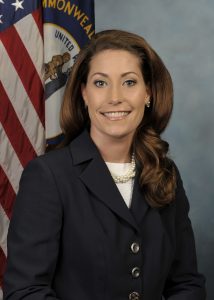
Photo: Secretary of State website
Kentucky Secretary of State Alison Lundergan Grimes on Monday led a unanimous group of her colleagues in reaffirming states’ constitutional rights to administer federal, state, and local elections.
The members of the National Association of Secretaries of State unanimously passed a bipartisan resolution in response to a letter they received from the Presidential Commission on Election Integrity. The resolution reiterates the responsibilities of states to run elections and the secretaries’ collective “commitment to strengthening election cybersecurity and processes, and increasing voter participation
The letter from the presidential commission requested secretaries turn over sensitive voter information, including party affiliation, voting history, and Social Security numbers. More than 40 states have said they will not comply fully with the request.
After many secretaries individually expressed concerns about the request potentially jeopardizing voter privacy and infringing on states’ ability to run elections, Grimes worked with a group of her colleagues at the association’s summer conference to put forth their concerns collectively.
“We each devoutly believe in the Constitutional responsibility states have in running elections, including maintaining voter registration,” Grimes said. “As chief election officials, we are resolute in our shared obligation to ensure our elections are free and fair and engender the trust of our citizens. That means reaffirming the rights of our states to run our elections and protecting voters from unwarranted risks to their personal, sensitive information.”
The National Association of Secretaries of State is the nation’s oldest, nonpartisan professional organization for public officials. Membership is open to the 50 states, the District of Columbia and all U.S. Territories. Forty of its members are their states’ chief election officials.