Monday January 26, 2026
Local Connection
 Weather
 Traffic
 @LouisvilleDispatch
 @LouisvilleDisp
 Subscribe
 Friends of Metro Animal Services (FOMAS), a non-profit organization, announced today the Board of Directors unanimously elected Susanna M. Westerfield as Executive Director, to spearhead fundraising efforts in support of Louisville Metro Animal Services and the much anticipated completion of a new, state-of-the-art shelter in 2019.
“The Board of Directors and LMAS are truly excited to bring Westerfield on board. Her experience, commitment to caring for homeless animals, and progressive vision made her the ideal choice for FOMAS and our community,” Amy Wisotsky, Chairman.
In addition to an extensive background in Business Development and Organizational Learning, Westerfield brings to the board her expertise in non-profit administration, organizational leadership and program development. Westerfield’s new role will also include working with the dedicated, compassionate staff at LMAS to expand community outreach in support of programs critical to caring for the thousands of animals which enter the shelter each year.
“I will help advance LMAS’ progress as the county’s largest and only open-admission animal shelter that provides a temporary home for more than 7,500 animals last year and reached No-Kill Status for the first time ever,” said Westerfield, executive director of FOMAS. “We can make a difference in the lives of those living in our community by providing a state-of-the-art location where healthy, adoptable pets reside waiting for adoption. There is nothing more fulfilling than helping people in our community experience the steadfast love and companionship of a pet.”
Westerfield assumed her role as Executive Director of the Board in April 2018. Westerfield holds an MS degree in Instructional Systems Technology from Indiana University, has served in several leadership roles as Pastoral Council Secretary, Board of Director of the Catholic Athletic Ministry, Hand-in-Hand Ministries and various time and talent activities within her children’s school and church, bringing to FOMAS a wealth of knowledge about boards, volunteerism, and stewardship.
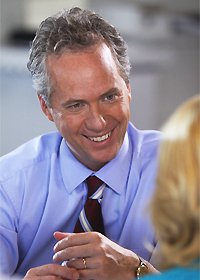 Mayor Greg Fischer announced today that the city plans to move a statue of Confederate officer and President of the Board of Park Commissioners John Breckinridge Castleman from the Cherokee Triangle neighborhood and the George Dennison Prentice statue from outside the Louisville Free Public Library.
The Mayor’s decision comes after a review of recommendations by a Public Art and Monuments Advisory Committee that he appointed late last year to develop a guiding set of principles for evaluating existing and future public art and monuments in the city. Beginning in January, the committee held seven public meetings, gathering hundreds of comments from residents throughout the city before submitting their recommendations to the Mayor on June 30.
The Mayor’s announcement comes days before the one-year anniversary of the horrific display of hatred and bigotry that occurred in Charlottesville, Va., over plans to remove a Confederate statue there. Mayor Fischer said the anniversary is a reminder of the necessity for all citizens to look at our monuments and statues through the eyes of those who have historically been discriminated against.
“Our Public Art and Monuments committee worked very hard, in cooperation with citizens, to develop thoughtful principles to help ensure that our public art and monuments respect our history but reflect the values of today,” he said. “I support those principles, and I used the criteria laid out in their report to make this decision about the Castleman and Prentice statues.
“We all agree with the report’s finding that our city must not maintain statues that serve as validating symbols for racist or bigoted ideology – that’s why we relocated the Confederate statue near the University of Louisville two years ago,” the Mayor said.
“While Castleman was honored for contributions to the community, it cannot be ignored that he also fought to continue the horrific and brutal slavery of men, women and children; heralded that part of his life in his autobiography; and had his coffin draped with both a U.S. and Confederate flag,” he said. “And while Prentice was founder and long-time editor of the Louisville Journal newspaper, he used that platform to advocate an anti-Catholic, anti-immigrant message that led to the 1855 Bloody Monday riot where 22 people were killed.”
The Mayor said he understands that some view Castleman’s life as a story of redemption, given his civic contributions after the Civil War. And others have argued the statue should remain, perhaps with a marker noting Castleman’s complex history.
“But to make no decision and leave the statue in place, or attempt to ‘balance’ it somehow, is to rationalize the suffering still caused to people whose ancestors were bought, sold and bred like animals on a farm. That is the cold reality of the Confederate cause,” the Mayor said. “My threshold question was whether this statue would be appropriate in a predominately African American neighborhood. The answer obviously is no. It would be viewed as disrespectful of a historic and painful past.
“Moving these statues does not erase history. Moving these statues allows us to examine our history in a new context that more accurately reflects the reality of the day, a time when the moral deprivation of slavery is clear.”
Mayor Fischer said appropriate relocations will be explored; the city is, for example, in conversation with Cave Hill Cemetery about moving the statues to their family burial grounds there. There are legal and financial issues to address with any relocation, including, for Castleman, a review by the Cherokee Triangle Preservation District. If no other suitable sites are found, the statues will go into storage.
The goal is to have any issues resolved and the statues moved by the end of the year.
The Mayor thanked Public Art Administrator Sarah Lindgren, the Commission on Public Art, and the Public Art and Monuments committee members, as well as the hundreds of people who participated in public meetings throughout the city over the past year.
“This was a challenging, emotionally charged subject. But as I said when this process began, we can only be a city where all citizens can reach their full human potential if we face our big challenges head-on, and this includes the challenges of race and equity,” the Mayor said. “This process shows that Louisville has developed enough social muscle to have a deep, productive, and sometimes uncomfortable community conversation about these challenges.”
The Mayor echoed the committee’s conclusion in a letter sent to him with the report: “We urge our community to continue the work of open dialogue, not only about public art and monuments, but about all symbols of racism and discrimination and how we as a community can move forward to advance equity, inclusivity and healing.”
The committee’s report can be found at Louisville Metro Public Art’s webpage: https://louisvilleky.gov/government/public-art
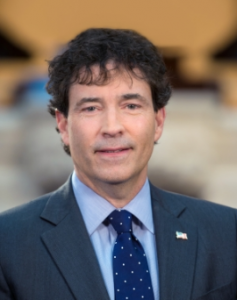 A closely watched special election for a U.S. House of Representatives seat in the state of Ohio was too close to call Wednesday, as Republicans and Democrats weighed the results of that race and primary voting elsewhere in the country looking for signs of how national midterm elections might go in November.
With all precincts reporting, Republican Troy Balderson led Democrat Danny O’Connor by about 1,700 votes. Ohio’s Secretary of State said more than 3,400 provisional ballots and 5,000 absentee ballots were cast, but that under state law officials cannot begin counted them until 11 days after Tuesday’s election.
The winner fills a seat vacated by Republican Pat Tiberi, who announced his resignation in October 2017. He would have been up for re-election in November, meaning voters will again choose between Balderson and O’Connor in three months.
President Donald Trump used Twitter to take credit for what he said was a “great win” for Balderson.
“After my speech on Saturday night, there was a big turn for the better,” Trump said. “Now Troy wins a great victory during a very tough time of the year for voting. He will win BIG in Nov.”
Balderson thanked Trump as he spoke to his supporters late Tuesday and said he was ready to work for the people of Ohio’s 12th Congressional District.
“America is on the right path and we’re going to keep it going that way,” he said. “It’s time to get to work. Over the next three months. I’m going to do everything I can to keep America great again.”
A Republican has represented the district since the early 1980s, and O’Connor told his supporters he had done well in an election pundits did not think he could win.
“We went door to door, we went house to house, we made our case for change,” he said. “We’re gonna make that case tomorrow, we’re not stopping now. Tomorrow we rest and then we keep fighting through to November. Let’s go out there, let’s get it done, let’s change the country.”
In the November election, all 435 House of Representatives seats, 35 of 100 Senate seats, and 36 of 50 governors’ offices will be up for election.
Democrats must win 23 seats in the House and two seats in the Senate to gain control of those chambers.
There have been nearly a dozen special elections since last year, and while Republicans have won far more times than Democrats, the Democratic candidates have generally seen big improvements in their support compared to how the party did in the same areas in the 2016 election.
In the Midwest state of Kansas, the Republican primary for the party’s candidate for governor in November featured a tight race between Secretary of State Kris Kobach and the incumbent Governor Jeff Colyer. Each candidate had about 41 percent of the vote with 88 percent of precincts reporting.
Trump used Twitter to urge people in Kansas to vote for Kobach, noting he was “a strong and early supporter of mine.”
Trump also threw his support behind John James in the Republican primary for a Senate seat representing the state of Michigan. James defeated Sandy Pensler 55 percent to 45 percent in that race Tuesday. James will face incumbent Sen. Debbie Stabenow.
The Democratic race for governor in Michigan tested the electoral power of the party’s progressive wing. But the more moderate former state Senate leader Gretchen Whitmer easily defeated health director Abdul el-Sayed, who was trying to become the country’s first Muslim governor.
In the Republican race, Michigan Attorney General Bill Schuette, another Trump ally, handily won a race that featured Lt. Gov. Brian Calley.
Democrat Rashida Tlaib is set to make history in January as the first Muslim woman in Congress. She won the Democratic primary for Michigan’s 13th Congressional District for the November election in which there will be no Republican challenger.
 Officials from the Olmsted Parks Conservancy, Louisville Parks and Recreation, Mayor Greg Fischer, Council President David James, and many park neighbors celebrated the start of phase two of the Victory Park Revitalization Project at the annual Victory Park Day celebration today.
Olmsted Parks Conservancy and Louisville Parks & Recreation began the project in 2017. Phase two, an $640,000 additional park investment, includes a new playground and sprayground; addition to the lodge to allow a covered picnic area; additional tree planting and new connector walking paths.
After several public meetings with Victory Park neighbors in 2016, Olmsted Parks Conservancy and Louisville Parks and Recreation finalized a Master Plan that outlined work needed for the park. The first phase of the project included relocating the basketball court to the northwest side of the park to create a larger open area for activities; new walking path, more than a quarter mile in length; additional lighting, benches and 35 trees. Phase one was completed this spring.
Financial support for more than $1.1 million revitalization project, came from donors of Olmsted Parks Conservancy’s Campaign for Extraordinary Parks, including Humana Foundation, James Graham Brown Foundation, PNC Foundation and Kosair Charities along with support from City of Louisville, Mayor Greg Fischer, Metro Council President David James and Louisville Parks and Recreation.
“Victory Park is very important part of this neighborhood and Olmsted Parks Conservancy’s wants to complete projects that ensure the surrounding residents can enjoy a beautiful, safe and clean park,” said Layla George, President/CEO, Olmsted Parks Conservancy.
“It has taken the cooperation of a lot of partners, and a lot of hard work to get to phase two of the project in Victory Park,” said Parks and Recreation Director Seve Ghose. “It’s going to be exciting to see it continue and evolve into a true source of pride for the neighborhood.”
“Parks are a community resource, and we have world-class parks because the community comes together to care for them,” said Mayor Greg Fischer. “The Olmsted Parks Conservancy is a critical partner in the effort to maintain parks like Victory, and the relationship they have with Metro Government and Parks and Recreation is so important to this city.”
“The Community appreciates all of the changes we have seen in making Victory Park a true neighborhood park and they look forward to their continued partnership with Metro Parks and the Olmsted Conservancy as we move ahead with Phase II. I want to thank everyone for their commitment to improving Victory Park for the people who live here and the people and families who come to use the park for their enjoyment,” said Metro Council President David James, who represents District 6, where Victory Park is located.
Victory Park is a four-acre parcel of land that was set aside as a park space by the Board of Park Commissioners in 1919 with a design drawn in 1923 by the Olmsted Brothers. The area was noted for its magnificent trees, including gum, oak, osage orange and elm. It was originally called Greenwood Park, but its name was changed to Victory Park, in commemoration of World War I.
Victory Park has historically been the site for band concerts, plays, and gathering space for choral groups, as well as a place for active and passive play. Since its inception, this greenspace has been a focal point and a source of community pride for the surrounding neighborhood.
 The Kentucky Transportation Cabinet (KYTC), in partnership with the Federal Highway Administration (FHWA), are seeking public input regarding the proposed construction of a multi-use path in A.B. Sawyer Park, a public-use recreational resource protected under Section 4(f) of the Transportation Act of 1966.
The general project description is to construct a shared use path through A.B. Sawyer Park from Whipps Mill Road to the Forest Green Greenway. The path will traverse under Hurstbourne Parkway and cross over Middle Fork Beargrass Creek to connect with the existing Forest Green Greenway. The project also provides sidewalk connectivity along Hurstbourne Parkway (KY 1747) from Ormsby Station Road to Tamarisk Parkway. This Hurstbourne connection also provides two access paths to the park. It will provide connectivity to existing paths that tie-in to the Limestone Belt Northeast extension of the Louisville Loop.
The purpose of the project is to enhance the park experience by providing connectivity to and within the park. This connection will allow access to existing recreational activity areas. The need for this project is identified through the limited access to the park today. Currently, the only practical access to A.B. Sawyer Park from the east is by motorized vehicle. There is demand for better connectivity to the developed recreational facilities within A.B. Sawyer Park. A.B. Sawyer Park is approximately 47 acres. The path is anticipated to use approximately 0.381 acre of the park. The alignment proposed is consistent with the path identified in the A.B. Sawyer Park Master Plan which can be found here:
Your comments will be used in determining any potential effects the proposed path could have on A.B. Sawyer Park or affect the activities, features, or attributes that make the park a Section 4(f) eligible property.
Please address any comments regarding potential 4(f) impacts anticipated from this project by Friday, August 10, 2018 to:
Lindsay Ashby
Kentucky Transportation Cabinet
District 5 Environmental Coordinator
8310 Westport Road
Louisville, KY 40242
(502) 210-5400
lindsay.ashby@ky.gov
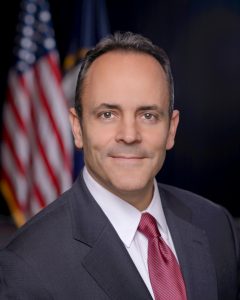 In April 2018, the U.S. Department of the Treasury certified 144 Opportunity Zones in 84 Kentucky counties as recommended by Governor Matt Bevin under a new community development program, the Investing in Opportunity Act, part of the Tax Cuts and Jobs Act of 2017. In Louisville, 19 census tracts are designated as Opportunity Zones.
The Opportunity Zones program is designed to spur economic development and create jobs by encouraging long-term investment in economically-distressed urban and rural areas. The program provides a tax incentive for investors to re-invest their unrealized capital gains into Opportunity Funds that are dedicated to investing in Opportunity Zones.
“The Opportunity Zones program establishes the framework for investors to inject investment into projects in our city that will have a significant social impact. Projects like the redevelopment of the Louisville Gardens, the Track on Ali at Heritage West, and projects from Butchertown to downtown to west Louisville are great examples of developments that could benefit from this program,” said Mayor Greg Fischer. “We look forward to continuing our work with our partners at the state and with local investors to strategically grow our city.”
To assist business owners and investors with identifying Opportunity Zones, the city created an interactive map to show exact addresses and boundaries of Louisville’s designated Opportunity Zones.
To search Louisville-specific addresses, visit https://louisvilleky.gov/government/louisville-forward/opportunity-zones-louisville
To learn more about Kentucky Opportunity Zones, visit www.KYOZ.com
To read more about Opportunity Zones in general, visit https://eig.org/opportunityzones
Third District Congressman John Yarmuth, Metro Councilwoman Cheri Bryant Hamilton and others were on hand Saturday as Louisville Parks and Recreation unveiled a new bicycle pump track in Shawnee Park as part of the West Louisville Appreciation Day festival.
“This pump track is another exciting way for young people in West Louisville and throughout our city to experience the outdoors and have fun in one of the many award-winning parks right here in our community. It was an honor to join Councilwoman Cheri Bryant Hamilton and so many West Louisville residents as we cut the ribbon on this great new addition to Shawnee Park,” Congressman Yarmuth said.
The new pump track was funded with assistance from the Aetna Foundation and built by 12 youths working over the summer who participated in Mayor Greg Fischer’s Summerworks Program and the Louisville ECHO (Louisville is Engaging Children Outdoors) program.
The project has benefitted by support from the National Park Service who provided planning assistance and U.S. Forest Service who has providing funding support for Louisville ECHO.
It’s a feature of the West Louisville Outdoor Recreation Initiative (WLORI), which began nearly a decade ago, and, under which, plans for a new Outdoor Learning Center in Shawnee Park were released last week. Those plans can be viewed on Louisville Parks and Recreation’s website, bestparksever.com.
A pump track is a type of off-road terrain for cycle sport consisting of a circuit of banked turns and features designed to be ridden completely by riders “pumping” – creating momentum by up and down body movements.
The plans were also displayed at an information booth set up by staff from Jefferson Memorial Forest and Louisville Parks and Recreation’s Natural Areas Division on Saturday.
Other components of WLORI include a new boat ramp in Shawnee Park (construction will take place in 2019) and the proposed restoration of the pond in nearby Chickasaw Park for better fishing access.
“Where a person lives has a profound impact on how they live – particularly when it comes to their health,” said Jonathan Copley CEO of Aetna Better Health of Kentucky. “The West Louisville Outdoor Recreation Initiative is an outstanding example of how important progress can be made when communities work together to look at the biggest issues facing their neighborhoods and develop healthy, home-grown solutions. We are pleased to be a contributor to today’s unveiling.”