Wednesday December 17, 2025
Local Connection
 Weather
 Traffic
 @LouisvilleDispatch
 @LouisvilleDisp
 Subscribe
Mayor Fischer joined Councilwoman Marianne Butler to break ground on Bywater Development Group’s rehabilitation of the former Jacob School buildings in south Louisville. The comprehensive, historic redevelopment will create 58 affordable senior apartments.
The two historic school buildings will be completely rehabbed, producing high-quality, energy-efficient apartments as well as the creation of common areas, activity spaces, a library/computer lab and other program areas.
“The seniors living in these units will not only have a safe, affordable place to live but the community will also be glad to know that these historic buildings will be put back to productive use,” Fischer said. “I am proud to see that the former Jacob School, a landmark in in the neighborhood, will be making an impact in the neighborhood once more.”
“This day has been long awaited. I thank Bywater for their perseverance and the neighborhood for their faith that help was coming,” Councilwoman Marianne Butler, District 15, said. “It has been a long journey that is about to begin its second phase of bringing life back to this building and positive vibes for the neighborhood.”
“We are very excited to be starting the rehabilitation of Jacob School. Without the patience and support of Louisville Metro Government and their commitment to the revitalization of this former community anchor, we would not have been able to achieve this great outcome for the neighborhood and for the future senior residents of this great historic property,” Bywater Development Group President Aaron Burnett said. “We are proud to be a part of bringing this property back to its rightful position of prominence in the neighborhood.”
The sustainable development will feature enhanced accessibility measures including an elevator, step less building entry, ADA compliant routes of movement and fully accessible bathrooms so senior residents can live comfortably and conveniently. New energy efficient equipment, such as EnergyStar appliances and lighting fixtures, energy-efficient HVAC heat pumps, a cool reflective roof, water-saving faucets and showers, high R-Value foam roof insulation, and a unique high-performing storm water management plan will help enhance the affordability of the apartments by keeping utility costs low. The site will also maintain the existing tree canopy, include the planting of new shade trees and add community garden plots.
Funding for the project was made available by Louisville Metro, the Kentucky Housing Corporation, and state and federal historic tax credits.
The Charles D. Jacob Elementary School was built in 1912 and added onto in 1932. The school was an anchor for the neighborhood until its closing in 1991. It was placed on the National Register of Historic Places in 2012.
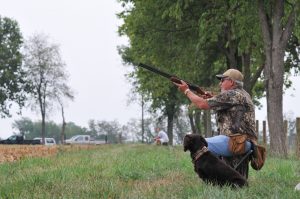 Kentucky farmers can earn some much-needed extra cash by enrolling in the Cooperative Dove Field Program. Enrollment is underway and continues through March 1.
The Cooperative Dove Field Program pays landowners to lease fields on their property for public dove hunting.
“Landowners may earn up to $10,000 in the Cooperative Dove Field Program,” said Wes Little, migratory bird biologist for the Kentucky Department of Fish and Wildlife Resources. “They earn $300 per acre planted.”
Little said the department has accepted fields ranging from six to 40 acres with additional lease payments offered for buffers around planted fields. “Fields generally run from 20 to 30 acres in size,” he explained. “But, we encourage anyone interested to apply.”
Farmers may plant sunflowers, millet or another acceptable crop for a public dove field by working with a Kentucky Fish and Wildlife private lands biologist and following some simple guidelines.
Payment amounts depend on the number of acres enrolled, crop type and fulfillment of the plot management agreement with Kentucky Fish and Wildlife.
The department is especially interested in reaching agreements with property owners who have acreage in underserved areas with significant numbers of dove hunters. In the west, this includes Caldwell, Calloway, Christian, Daviess, Fulton, Grayson, Hardin, Hart, Hickman, LaRue, Logan, Lyon, Simpson, Todd and Trigg counties. In southcentral Kentucky, this includes Boyle, Cumberland, Laurel, Lincoln, Pulaski and Wayne counties.
To get the process started, landowners must contact their Kentucky Fish and Wildlife private lands biologist or Natural Resources Conservation Service liaison. For a listing of biologists, visit the Kentucky Fish and Wildlife homepage at www.fw.ky.gov and search under the keywords, “private lands biologist.” Property owners may also call the department at 1-800-858-1549 for more information.
Five new lakes enrolled in the Fishing in Neighborhoods Program (FINs) will receive stockings of trout in February, a boon to anglers tired of being house bound.
Flemingsburg Old Reservoir, an 11-acre lake in Fleming County, gets 900 trout while Leary Lake, a 5-acre lake on Lloyd Wildlife Management Area in Grant County, gets the same amount of trout. The 9-acre Logan-Hubble Park Lake just south of Lancaster in Garrard County will receive 900 trout as well.
The 2-acre Kess Creek Park Lake in Mayfield in Graves County will get 500 trout as will the Clinton Rotary Park Lake in Clinton in Hickman County. Both of these lakes are in the Purchase Region.
“We are stocking a larger-sized trout in all of our FINs lakes for 2017,” said Dane Balsman, coordinator of the FINs program for the Kentucky Department of Fish and Wildlife Resources. “The larger trout now average about 10 to 11 inches long and one-half pound in weight.”
Kentucky Fish and Wildlife formerly stocked its traditional “stocker” trout of 9 to 10 inches in the FINs lakes. “We wanted to improve angler satisfaction and utilization as well as reducing hooking and handling mortality. These fish won’t be caught as many times and anglers are more likely to harvest a larger trout.”
Balsman cautions anglers fishing on a FINs lake to practice beneficial catch and release tactics when they catch a trout, especially as the water warms. Anglers can purchase inexpensive fish grabbers to prevent touching or squeezing a trout when removing the hook. These devices prove valuable when handling fish that may cause injury, such as a catfish or fish with teeth, such as a muskellunge.
Forty-three lakes across Kentucky are in the FINs program. They offer fantastic fishing for trout, but also excellent fishing for catfish and largemouth bass.
“We will start in March with the catfish stockings in FINs lakes,” Balsman said. “Due to hatchery expansion, we now have the capabilities to raise all of the FINs catfish in house. We will stock about 125,000 catfish in our FINs lakes.”
Largemouth bass anglers usually turn to waters such as Kentucky Lake, Barren River Lake or state-owned lakes, such as Lake Malone or Lake Kincaid, for a chance at a trophy fish.
“We see exceptional largemouth bass in the FINs lakes, many of them big bass,” Balsman said. “We saw a 9.7-pound largemouth bass from Mike Miller Park Lake this past year, my personal best I’ve seen in a FINs lake. We routinely see 6- to 8-pound bass in the spring.” Four-acre Mike Miller Park Lake lies near Draffenville in Marshall County.
Balsman recommends early spring as the time to catch these bruisers. “We stock these lakes with trout and the bass eat them and grow big,” he said. A white spinnerbait with a silver Colorado blade works well for trophy pre-spawn largemouth bass in small lakes, especially when rains colored the water a touch. A large soft-plastic swimbait in trout colors may also work well in these lakes.
Many anglers flock to Kentucky Lake or Lake Barkley each May for the redear sunfish spawn. Anglers do not need to go that far.
“Some of these lakes have really good redear sunfish in them,” Balsman said. “Three Springs Park Lake near Bowling Green and Madisonville City Park Lake South have great populations of redear sunfish. Both lakes offer trophy potential of 10-inch and longer redear sunfish.”
Lake Mingo in Nicholasville, just south of Lexington has moderate numbers of redear sunfish, commonly called shellcrackers. However, Balsman said some of them are true trophies, running 12 inches or more.
“The trout and catfish are for put and take fishing,” Balsman said. “There is trophy potential for redear sunfish and some of these lakes are great bluegill lakes as well.”
The main point of the FINs program is providing a place close to home for folks to go and have a reasonable expectation of catching fish.
“We want people to be able to go fish the FINs lakes after work in spring and summer or take the kids and fish for an hour or two on the weekends and catch fish,” Balsman said. “The convenience factor is whole point of the FINs program.”
Remember, current fishing licenses expire Feb. 28. It is a good idea to buy your fishing license soon.
The Work Ready Skills Advisory Committee, formed to review and select proposals to elevate the Commonwealth’s workforce training capacity, awarded more than $65.5 million to 25 Kentucky projects on Jan. 31 in its first round of funding.
Launched in July 2016, the $100 million Kentucky Work Ready Skills Initiative is aimed at developing a highly trained, modernized workforce to meet the needs of employers, grow the state’s economy and promote sustainable incomes for Kentuckians.
“The response to the Work Ready Skills Initiative has been truly astounding,” said Gov. Bevin. “This important initiative is a key component in our pursuit to make Kentucky the nation’s premier engineering and manufacturing hub of excellence. This historic investment in training our workforce will truly be transformative for the Commonwealth.”
The 25 projects are spread across all 10 local workforce areas, with awards ranging from $30,780 – $15.2 million. The projects include construction and renovation of facilities and the purchase of new equipment aimed at providing workforce training and education in Kentucky’s top five growth sectors of advanced manufacturing, transportation and logistics, business services and information technology, healthcare, and construction trades.
“The Work Ready Skills Initiative has created a tremendous buzz and energy around the whole state among employers, educators and elected officials. Everywhere I go, people are excited about the opportunity to improve their communities through education and careers in technology in high-demand sectors. These great jobs are waiting to be filled by qualified Kentuckians and that’s what this initiative is all about,” said Education and Workforce Development Cabinet Secretary Hal Heiner, who chairs the committee.
“The committee was very impressed with the high quality of applications from across the state. All of the projects are driven by teams of local leaders from high schools, government, postsecondary schools and companies that are working together, some for the first time, to prepare their citizens for careers in high-demand careers. I really can’t imagine a better investment in the future of Kentucky than the Work Ready Skills Initiative,” said Heiner.
In August, the 10-member Work Ready Skills Advisory Committee received 117 pre-applications totaling nearly $565 million in requests. They spent the last six months reviewing proposals and interviewing applicants from across Kentucky to select the recipients. A second round will award about $34 million later this year.
“The committee members have volunteered hundreds of hours of their time and done a remarkable job to select these promising projects. I want to thank them for their commitment to Kentucky’s workforce and economic development and to our citizens,” Heiner said.
The committee selected the following applications and amounts for funding:
- Allen County Career & Technical Center – $328,700
- Barren County Board of Education – $6,840,000
- Bluegrass Community & Technical College – Danville – $2,736,000
- Bluegrass Community & Technical College – Leestown – $3,040,000
- Boone County Schools – $6,840,000
- Bowling Green High School – $77,520
- Brighton Center, Inc. – $227,213
- Caldwell County Schools – $1,520,000
- Corbin Independent Schools – $382,149
- Green County Board of Education – $1,520,000
- Hazard Community & Technical College – $2,888,000
- Jefferson Community & Technical College – $15,200,000
- Jessamine County Schools – $760,000
- KCEOC Community Action Partnership – $1,824,000
- KY Tech – Warren County Area Technology Center – $557,726
- Lee County Area Technology Center – $30,780
- Martin County Area Technology Center – $2,736,000
- MMRC Regional Industrial Development Authority / Maysville CTC – $1,140,000
- Nelson County Area Technology Center – $64,526
- Owensboro Community & Technical College – $2,858,244
- Paducah Public Schools – $3,800,000
- Shelby County Schools – $3,233,049
- Somerset Community College – $3,800,000
- Southcentral Community & Technical College – $179,000
- West Kentucky Community & Technical College – $3,040,000
For more information about the Kentucky Work Ready Skills Initiative, please visit www.KentuckyWorkReady.com.
Mayor Greg Fischer launched his SummerWorks jobs program for 2017 last week by setting a goal for a new record of employers involved, and proclaiming it necessary to ensure “a pipeline of future talent.”
“Summer jobs are critical building blocks for young people, and SummerWorks is crucial for the health of the local economy, because it creates a pipeline of future talent,” Mayor Fischer said. “We want Louisville’s business culture to be one where every company, large and small, hires or sponsors summer jobs for youth.”
A 2016 study confirmed the value of the effort. Young people participating in SummerWorks are more likely to stay in the workforce and pursue postsecondary education, according to an analysis of the program by the Kentucky Center for Education and Workforce Statistics.
Last year, more than 140 companies and organizations hired SummerWorks youth. Mayor Fischer said momentum is already building for this summer, including many employers that will hire youth through the program for the first time, including Coastal Cloud, Hyatt Hotel, McDonald’s local franchises, MSD and the Speed Art Museum. Other companies, including GE and Humana, are doubling the number of young people they hire.
Today’s SummerWorks kickoff was at Kindred Healthcare, which plans to hire 10 youth this summer, after becoming a new SummerWorks employer last year.
The push for a stronger public/private partnership is being enhanced by Greater Louisville Inc., which is encouraging its member businesses to step up and support the program by hiring more young people for summer jobs.
“SummerWorks is an investment in the regional talent pipeline,” said Kent Oyler, president & CEO of Greater Louisville Inc. “Companies that hire young workers this summer are training people who may become their full-time employees. We want to rally our business community, get them involved In SummerWorks and connect our talented young people with the future career opportunities that exist in Greater Louisville.”
Companies and organizations that aren’t able to directly hire youth this summer can instead sponsor jobs. A donation of $2,500 funds a summer job at a non-profit organization or city agency.
Also today, Mayor Fischer announced a “challenge” donation of $250,000 to the SummerWorks program by businessman Paul Diaz and his family. Diaz is a former CEO of Kindred Healthcare and has been a volunteer advisor, donating a “huge amount of time, talent and advocacy” to help grow the summer jobs initiative.
SummerWorks this year will expand its focus on creating job experiences that build entrepreneurial skills in young people. Program organizers will set up six groups of youth to work as a start-up company in collaboration with local tech firms and creative agencies.
SummerWorks also will continue working closely with Jefferson County Public Schools to place students in jobs that match up with what they are learning in school, and jobs in the key business sectors the city is focused on growing, such as technology, healthcare and business services.
“Our students have a chance, through the SummerWorks program, to get out of the classroom and apply the skills they’ve learned at some of our city’s top employers,” said Dr. Donna Hargens, superintendent of Jefferson County Public Schools. “In addition to expanding their learning experiences, our students also gain critical job experience and networking skills that will help them graduate prepared, empowered and inspired to reach their full potential.”
A new partnership with Louisville YouthBuild will bring expertise in helping at-risk youth who register for summer jobs. YouthBuild will provide additional mentoring and job-coaching for youth placed directly by staff, and will provide access to a network of supportive services and resources. SummerWorks and YouthBuild are striving to provide a more positive experience and stronger long-term outcomes for young people involved in the program.
SummerWorks, which is operated by KentuckianaWorks, the workforce development agency for the Louisville area, was recognized by the U.S. Conference of Mayors in 2014 as one of the nation’s best summer jobs programs for young people.
The Mayor launched SummerWorks after taking office in 2011, in response to the elimination of federal funding for summer jobs. In that first year, the effort placed 200 young people in jobs. Last summer, more than 5,100 youth found summer work through the program and its champion employers.
Other businesses that have committed to hiring SummerWorks youth this year include 4th Street Live, Dare to Care, GlowTouch Technologies, Interapt, Kentucky Kingdom, Kroger, Louisville Zoo, Norton Healthcare, Oxmoor Auto Group, YMCA of Greater Louisville and UPS.
Both employers and youth participants can quickly sign up for or donate to the program at www.summerworks.org.
To help guard against the growing threat of tax fraud and identity theft, the Kentucky Department of Revenue (DOR) has taken additional steps that enhance the safety and security of processing taxpayers’ individual income tax returns, including an Identity Confirmation Quiz.
Beginning today, some taxpayers will receive letters from the department asking the taxpayer to take a short online Identity Confirmation Quiz before their tax refund is fully processed. The letter will give specifics as to what the taxpayer must do to take the quiz.
“We have multiple internal procedures in place, along with third party techniques, that assist us in preventing tax fraud,” said Daniel P. Bork, Commissioner of the Kentucky Department of Revenue. “We encourage taxpayers who receive this quiz letter to quickly respond, which will confirm their identities so we can continue processing their returns.”
The identity confirmation quiz will be available for 30 days from the date of the letter at revenue.ky.gov/quiz. Once a taxpayer successfully completes the quiz, the department will continue processing their return. If the taxpayer fails the quiz twice or does not take the quiz, the department will require additional documentation such as the hard copies of W2s or 1099s.
The taxpayer should not ignore this letter. The sooner the quiz is taken and passed, the quicker the Kentucky Department of Revenue can continue processing the return.
The Identity Confirmation Quiz can be taken online anytime or by telephone at (502) 892-3399, during regular work hours (Monday – Friday 8 a.m. to 5 p.m. ET) with an authorized representative to help with the process.
Receiving the Identity Confirmation Quiz letter does not mean the taxpayer has been a victim of identity theft. It only means the Department of Revenue wishes to verify the identity of the person filing before issuing the refund.
If the taxpayer receives this letter and has not yet filed a return, he or she should contact the Kentucky Department of Revenue immediately by email at kyidquiz@ky.gov or telephone at (502) 892-3399.
A short video with more detail about the Identity Confirmation Quiz information is available on the department’s website at revenue.ky.gov/quiz.
Citing $9 billion in investments – ranging from new libraries in Okolona and the east end, to restoration of Colonial Gardens in the south end, to 23 new hotels in and around downtown – Mayor Greg Fischer focused his seventh annual State of the City address on Louisville as “one rising American city.”
“Our city overall has achieved a level of prosperity unlike anything in recent memory,” he said in remarks made during a Downtown Rotary Club luncheon held at the Baxter Community Center at Beecher Terrace.
But there is work yet to do, he said, noting that, “To take our place alongside great global cities, we have to ensure that prosperity spreads throughout our city.”
(Read Mayor Fischer’s entire speech here)
In his six years in office, the Mayor has rotated the location for the State of City address throughout the community. This year’s location was a nod to one of Louisville Metro Government’s biggest recent announcements – a $29.5 million federal grant to redevelop the Russell neighborhood, which Mayor Fischer said is “a tremendous and important opportunity” that will have ripple effects throughout the city.
In a speech that centered on economic and job growth throughout Louisville’s many diverse neighborhoods, the Mayor noted that Russell has a proud past and a promising future.
“I can’t think of a better place from which to examine where we’ve been, where we are, and where we’re going,” he said.
In an overview to open his speech, he said the city has seen:
- Creation of 61,000 new jobs and 2,600 new businesses;
- Our unemployment rate drop from more than 10 percent to 3.5 percent, the lowest in 15 years;
- Our median wage, adjusted for the cost of living, increase every year since 2008. In 2015 alone, more than 10,000 Louisvillians lifted themselves out of poverty, and more than 7,000 Louisville families joined the middle class.
As he took his audience on a virtual tour of the city, the Mayor highlighted the $320 million Omni Louisville Hotel in downtown; new restaurants and businesses in NuLu, Butchertown, Sheppard Square and Portland; and library expansions and construction in south Louisville, St. Matthews and east Jefferson County.
He noted that Louisville has become a top-tier tourist destination, welcoming over 24 million tourist visits a year, largely thanks to Bourbonism, which brings people to the city year-round for restaurant and distillery experiences on our Urban Bourbon trail.
He also highlighted the city’s commitment to affordable housing, as witnessed by a $2.5 million allocation for the Affordable Housing Trust Fund this fiscal year, and $12 million in loans and support from Louisville CARES to develop more affordable units in all corners of our community.
Emphasizing Metro’s focus on jobs and economic development, the Mayor discussed the Global Louisville Action Plan, which lays out strategies to attract, retain and grow our foreign-born population. “A great city must be a global city,” he said. “We need people who can help us think, work, connect and compete globally.”
The Mayor also announced during his speech that:
- He is asking the Metro Council to add hookah and e-cigarettes to the city’s Smoke Free ordinance.
- The Compassionate School Project, which began with three Jefferson County Public Schools in 2015, is expanding to 25 schools next year.
- Metro Government has received a $100,000 grant from the National Endowment for the Humanities to support the Cultural Pass, which provides the city’s children with free access to dozens of our city’s great cultural institutions.
Mayor Fischer closed his remarks by urging Louisville’s residents to take an active part in helping the city succeed.
“The people who have the greatest power to shape the future of Louisville are the people of Louisville,” he said. And, “To make the most of that power, we must face the opportunities and challenges before us together, as one community. Our fates are as connected as our streets and the air we breathe.”