Wednesday January 21, 2026
Local Connection
 Weather
 Traffic
 @LouisvilleDispatch
 @LouisvilleDisp
 Subscribe
 Attorney General Andy Beshear said his office has completed a review of publicly available data and determined that the governor’s Labor Cabinet may have failed to secure a single bond for any mining company operating in the state. Beshear’s review indicates that as many as 30 mining companies should have bonds on file, without which nearly 1,000 mining employees are at risk.
In a five-page report, Beshear said the Labor Cabinet has not only failed to enforce a state law that aims to protect four weeks of employee pay if their company shuts down, they actively tried to repeal it. The law (KRS 337.200) applies to certain businesses, including mining companies who have done business in the state for fewer than five consecutive years.
Beshear began his review following media reports that the cabinet failed to require the now bankrupt Blackjewel in Harlan County to post a bond. After the mine closed July 1, miners’ paychecks bounced and they have not since been paid. Beshear wanted to find out if other miners face the same risk.
“In response to Blackjewel’s closing, the Labor Cabinet claimed ‘there is no mechanism in law for them to figure out when a new company has opened in the state that is supposed to post a bond,’ but my office was able to determine this with publicly available information within a few days,” Beshear said. “The Labor Cabinet has an absolute duty to enforce the law and has utterly failed to do so. They must begin enforcing these bonds to assure no one ever goes through what the Blackjewel miners are going through.”
Beshear’s review included visiting the Energy and Environment Cabinet’s (EEC) website to study a publicly available list of mining licenses and the Secretary of State’s website to view each licensee’s business filing. Beshear’s office then compiled a list of licensed mining companies the EEC has authorized to operate in the state, and which have been doing so for fewer than five consecutive years.
Monday, Aug. 26, after a delay, Beshear received a response to his open records request for a copy of any bonds on file at the Labor Cabinet. Beshear’s office quickly concluded that the cabinet failed to secure any of the required bonds from mining companies.
The office also used the EEC Division of Mine Safety 2018 Annual Report to determine how many miners may be working at the mines operated by the licensees who should have been on file with the cabinet.
Beshear’s letter says the cabinet had various accessible ways to track and enforce the law, including working with other agencies and utilizing the cabinet’s claim to broad subpoena powers to investigate labor law violations.
Instead of enforcing the law, however, the Labor Cabinet took time to unsuccessfully attempt to repeal it, Beshear said.
At the March 1, 2018, meeting of the House Standing Committee on Economic Development and Workforce Investment cabinet officials testified in support of repealing the bond requirements. The bill passed committee, but did not receive a vote on the floor of the Kentucky House of Representatives.
“While the Labor Cabinet may prefer that these laws be repealed, it has a duty to enforce them while they remain on the books,” Beshear said. “The cabinet should use the many public resources we have identified to do so.”
Since Beshear learned of the troubling complaints surrounding the closing of the Blackjewel mine, he has taken action. Beshear previously instructed his office to use all of its powers and resources to seek answers for those who have been harmed.
Beshear has dedicated an investigator to look into complaints of clawed-back paychecks and concerns related to child support deductions and has reached out to local county attorneys on these same child support issues. Devoted mediators from Beshear’s office are available to help employees mitigate debts owed to individuals or businesses as a result of bounced paychecks.
Beshear also joined with Virginia Attorney General Mark Herring to ask for the immediate payment of all wages owed to Blackjewel employees. In their joint request to the Office of the United States Trustee July 16, the attorneys general cite the serious and ongoing financial harm experienced by miners in Kentucky and Virginia following Blackjewel’s haphazard bankruptcy.
Beshear asks anyone with complaints or information related to Blackjewel’s bankruptcy to contact his office at 502-696-5300 and ask to speak with Jan Velez. Beshear’s office will track and route each caller to the appropriate contact.
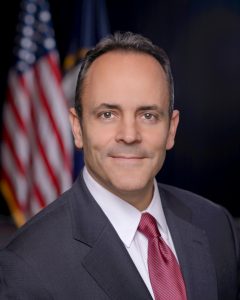 Gov. Matt Bevin released the following statement regarding the Kentucky Supreme Court’s unanimous ruling today that Attorney General Andy Beshear broke the law:
“The Supreme Court today unanimously held that Andy Beshear broke the law in awarding outrageous, uncapped state legal contracts to his friends and campaign donors. As Attorney General, Andy Beshear claimed that he is above the law and attempted to put his campaign donors ahead of the interest of Kentuckians in ongoing cases with opioid manufacturers. If allowed to continue, that practice could take millions of dollars away from Kentuckians who need it most and put it in the pockets of Andy’s largest campaign contributors. With today’s ruling, Andy Beshear can no longer engage in this type of soft corruption and will be subject to the same procurement laws and financial oversight as other state agencies. If Andy Beshear feels that he and his office are not competent to fight against the opioid manufacturers, he can still hire outside counsel, but he must do it legally.”
To view today’s 7-0 ruling by the Kentucky Supreme Court, click here.
See some outstanding artists at the 6th annual Waveland Art Fair Sept. 7-8 at Waveland State Historic Site in Lexington.
Guests can browse and shop with Kentucky artist artwork both days. Then take a walk through the historic home, where costumed staff will greet you. Enjoy lunch from Forage or Rise Up Pizza food trucks and special Kentucky fare from West 6th and Chrisman Mills Winery wine tastings.
The fair will be open Sept. 7 from 10 a.m. to 5 p.m. and on Sept. 8 from 11 a.m. to 5 p.m. Admission is $5 for adults and free for children under 12.
The Kentucky Arts Council will present a folk arts demonstration area and Perfoming Artist music stage, featuring traditional artists from all over the Commonwealth. Children’s activities from Living Arts and Science Center, Explorium and Girl Scouts will be offered throughout the event.
Kentucky folk artists demonstrating are:
- LaVon Van Williams, Lexington, woodcarver
- Art Mize, Lexington, luthier
- Donna Lamb, Lancaster, luthier
- Timmy Walden, Tompkinsville, marble maker
- Justin Roberts, Murray, willow furniture maker
Music on the Kentucky Folk Artists Stage
Saturday, Sept. 7
- Noon – Narrative stage interview with Lewis Lamb, Donna Lamb, LaVon Van Williams and Art Mize
- 1 p.m. – Cari Norris, Louisville
- 2 p.m. – The Partisans, Lexington
- 3 p.m. – Lewis and Donna Lamb, Lancaster, performance and old time jam
Sunday, Sept. 8
- Noon – Narrative stage interview with Timmy Walden and Justin Roberts
- 1 p.m. – A Girl Named Earl, Louisville
- 2 p.m. – Brett Ratliff with Nadia Ramlagan, Lexington
- 3 p.m. – Lewis and Donna Lamb, Lancaster, performance and old time jam
Each day the stage will open with a narrative stage, followed by two music performances, and end with a performance and open jam session hosted by Donna and Lewis Lamb. Art fair attendees will be encouraged to bring their stringed instruments and join in the old time music jam.
Waveland State Historic Site is located at 225 Waveland Museum Lane, near the intersection of Nicholasville Road and Man-O-War. For more information, call 859-272-3611.
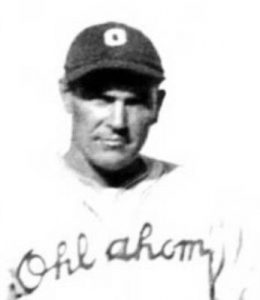 Gov. Matt Bevin today recognized the sacrifice of a Kentucky sailor who died in World War II, but whose remains have just been positively identified.
The Defense POW/MIA Accounting Agency (DPAA) has announced that Navy Machinist’s Mate 1st Class Ulis C. Steely, 25, of Corbin, Kentucky, was officially accounted for on Oct. 15, 2018.
On Dec. 7, 1941, Steely was assigned to the battleship USS Oklahoma, which was moored at Ford Island, Pearl Harbor, when the ship was attacked by Japanese aircraft. The USS Oklahoma sustained multiple torpedo hits, which caused it to quickly capsize. The attack on the ship resulted in the deaths of 429 crewmen, including Steely.
From December 1941 to June 1944, Navy personnel recovered the remains of the deceased crew, which were subsequently interred in the Halawa and Nu’uanu Cemeteries.
In September 1947, tasked with recovering and identifying fallen U.S. personnel in the Pacific Theater, members of the American Graves Registration Service (AGRS) disinterred the remains of U.S. casualties from the two cemeteries and transferred them to the Central Identification Laboratory at Schofield Barracks. The laboratory staff was only able to confirm the identifications of 35 men from the USS Oklahoma at that time. The AGRS subsequently buried the unidentified remains in 46 plots at the National Memorial Cemetery of the Pacific (NMCP), known as the Punchbowl, in Honolulu. In October 1949, a military board classified those who could not be identified as non-recoverable, including Steely.
Between June and November 2015, DPAA personnel exhumed the USS Oklahoma Unknowns from the Punchbowl for analysis.
To identify Steely’s remains, scientists from DPAA used dental and anthropological analysis. Additionally, scientists from the Armed Forces Medical Examiner System used mitochondrial DNA (mtDNA,) analysis.
DPAA is grateful to the Department of Veterans Affairs and the Department of the Navy for their partnership in this mission.
Of the 16 million Americans who served in World War II, more than 400,000 died during the war. Currently there are 72,674 still unaccounted for from World War II, of which approximately 30,000 are assessed as possibly-recoverable. Steely’s name is recorded on the Walls of the Missing at the Punchbowl, along with the others who are missing from WWII. A rosette will be placed next to his name to indicate he has been accounted for.
For family information, contact the Navy Service Casualty office at 800-443-9298.
Steely will be buried Oct. 5, 2019, in his hometown of Corbin, and Gov. Bevin will order flags lowered to half-staff in his honor on that date.
Attorney General Andy Beshear announced today that a Fayette circuit judge has agreed to unseal court documents that reveal data on how one opioid maker accounted for the majority of opioids in grams sold in Kentucky from 2006 to 2014.
The new information allows Kentuckians to see how Pennsylvania-based pharmaceutical manufacturer Teva persuaded physicians to prescribe its drugs, Actiq and Fentora, to treat chronic pain despite the drugs being approved by the Federal Drug Administration (FDA) only for breakthrough pain in cancer patients.
Beshear said during eight years, Teva sold 28% of the total opioid grams in Kentucky, and over six years, sales representatives for Fentora visited and/or called Kentucky healthcare providers more than 3,000 times. Only about 150 of these visits were to actual cancer doctors.
“The actions by Teva directly contributed to the state’s addiction outbreak,” Beshear said. “In asking that these documents be unsealed, I wanted to make sure Kentuckians are able to see just how far this opioid manufacturer went to maximize its profits while preying on our loved ones.”
Previously redacted information in the complaint now available after Beshear’s motion includes:
- Teva internally tracked its sales representatives to ensure that prescribers absorbed their messages.
- In 2004, the FDA met with Teva over concerns of promoting its drug Actiq for off-label use. According to records of the meeting, the FDA told Teva “off-label promotion is illegal, with a drug with a risk profile like Actiq, raises significant public health concerns.”
- Teva targeted non-oncologists in order to boost its sales of Actiq and Fentora. Teva developed a research and publication plan to target doctors outside of the cancer-treating population. “This included focused promotional and educational efforts directed toward pain specialists in order to increase their prescribing of Actiq and Fentora.”
Beshear’s office filed a lawsuit against Teva in October 2018 for deceptively marketing its fentanyl-based drugs across the Commonwealth. At the time, Beshear’s office had access to the Drug Enforcement Agency (DEA) database, but was required to protect the information until that data was released in July as part of a federal opioid case in Ohio.
The DEA database – Automation of Reports and Consolidated Orders System (ARCOS) – tracked about 380 million opioid pill transactions between 2006 and 2012 in the U.S. According to the data, companies flooded Kentucky with more than 1.9 billion pills over a six-year period and Teva manufactured 690 million pills making it one of the top six manufacturers during that time.
Once the database was opened, Beshear’s office requested that the DEA consent to disclosing the information, to which it had no objection, and filed a motion in Fayette Circuit Court.
Beshear has also filed a motion to unseal redacted DEA data in the Mallinckrodt lawsuit, originally filed in July 2018 for allegations that the St. Louis pharmaceutical manufacturer reaped huge profits and falsely claimed its opioids could be taken in higher doses without disclosing the greater risk for addiction.
Last month, Beshear’s office won another fight in Kentucky’s battle with opioid companies by defeating the eighth straight motion to dismiss by an opioid manufacturer or distributor in Kentucky courts.
Beshear’s office transferred $1.5 million of opioid settlement funds to battle Kentucky’s drug epidemic this year adding needed resources for law enforcement and drug treatment. Starting the first statewide opioid disposal program, Beshear’s partnerships have helped communities eliminate more than 2.2 million opioids from Kentucky households.
To date, Beshear has sued nine opioid pharmaceutical and/or distributors, making him the most aggressive attorney general in the nation. Kentuckians can follow the progress of all his opioid cases here.
 Kids can get their hands on 18th century history at Fort Boonesborough State Park’s first Hands on History for Kids event Sept. 7-8.
This event allows children to learn about life in the 18th century. Hands on skills will include churning butter, grinding corn, baking ash cakes, carving on powder horns, carding and spinning and many other pioneer skills.
The displays will be available 9 a.m. to 5 p.m. both days and are free with paid fort admission. Admission is $8 for adults, $5 for children ages 6-12 and children under 6 are free.
There will also be a puppet show featuring Punch and Judy and a demonstration on falconry. The Fort Boonesborough Foundation will have concessions available throughout each day.
Fort Boonesborough State Park marks the site of a fort built by Daniel Boone and other settlers in 1775 along the Kentucky River. The state park near Richmond has a reconstructed fort, a campground, hiking trails, mini-golf, picnic shelters and a gift shop.
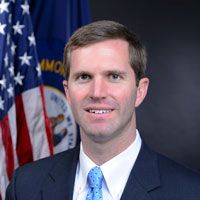 Attorney General Andy Beshear announced today that his office is doubling down on recent, successful efforts with phone companies to stop scam calls by urging the Federal Communications Commission (FCC) to compel more phone companies to join the fight.
Beshear joined a coalition of 51 attorneys general in sending comments to the FCC in support of requiring voice service providers to implement a caller ID authentication framework if they fail to implement the framework voluntarily by the end of 2019 and to provide free, default call-blocking programs to customers.
The comments follow a breakthrough announcement from Beshear, a bipartisan public-private coalition of 51 attorneys general and 12 phone companies last week who reached an agreement to work together to stop illegal and invasive scam calls.
“Working to stop illegal scam calls is a top priority for my office,” Beshear said. “To make sure every Kentuckian is protected, I want to see every phone service provider offer free call-blocking services and implement technology that can block scam calls. If companies won’t voluntarily provide these crucial services, they should be required to.”
In their comments to the FCC, the coalition of attorneys general states that phone service providers should be required to:
- Offer free, automatic call-blocking services to all customers. The call-blocking services should be based on reasonable analytics and should not block important calls, including emergency alerts or automated calls that customers have signed up for, like medical reminders or school notifications.
- Monitor network traffic to identify patterns consistent with scam calls and take action to cut off the calls or notify law enforcement.
- Implement caller ID call authentication technology, which will help ensure that telephone calls are originating from secure, verified numbers, not spoofed sources. The coalition supports the FCC’s proposal to take regulatory action against telecom companies that do not comply with this technology.
- Develop caller ID authentication to prevent robocalls to landline telephones. This is particularly urgent because the people defrauded by scam calls are often elderly Kentuckians who primarily use landline technology.
Attorneys general from all 50 states and Washington, D.C. have joined Beshear in signing these comments.
Since taking office, Beshear has worked on the state and federal level to encourage the implementation of new solutions to help stop scam calls.
Last year, Beshear urged the FCC to adopt rules that allow phone companies to use new technology to block illegal robocalls. In June, the FCC voted unanimously to let phone companies join the fight. Before this change, companies were required by law to complete known scam calls and now they can legally block them before they ever reach your phone.
Beshear has long supported the FCC’s actions to encourage and require service providers to implement a caller ID authentication framework. Some carriers are already helping by identifying a call as “scam likely” or “scam call.”
Earlier this year, Beshear’s office was also part of a national sweep with the Federal Trade Commission and other states that cracked down on nearly 100 illegal call operations. These operations were responsible for more than a billion illegal scam calls.
Kentuckians wanting to block scam calls to their phone should contact their phone carrier or internet service provider to ask about call-blocking technology, which can help stop many scam calls.
Kentuckians can avoid falling victim to scams by signing up to receive new and trending scam alerts from the Office of the Attorney General by texting the words KYOAG SCAM to GOV-311 or visiting ag.ky.gov/scams.
Beshear said Kentuckians should report scams to his office via an online complaint form or by calling 888-432-9257.