 Weather
 Traffic
 @LouisvilleDispatch
 @LouisvilleDisp
 Subscribe
See some outstanding artists at the 6th annual Waveland Art Fair Sept. 7-8 at Waveland State Historic Site in Lexington.
Guests can browse and shop with Kentucky artist artwork both days. Then take a walk through the historic home, where costumed staff will greet you. Enjoy lunch from Forage or Rise Up Pizza food trucks and special Kentucky fare from West 6th and Chrisman Mills Winery wine tastings.
The fair will be open Sept. 7 from 10 a.m. to 5 p.m. and on Sept. 8 from 11 a.m. to 5 p.m. Admission is $5 for adults and free for children under 12.
The Kentucky Arts Council will present a folk arts demonstration area and Perfoming Artist music stage, featuring traditional artists from all over the Commonwealth. Children’s activities from Living Arts and Science Center, Explorium and Girl Scouts will be offered throughout the event.
Kentucky folk artists demonstrating are:
Music on the Kentucky Folk Artists Stage
Saturday, Sept. 7
Sunday, Sept. 8
Each day the stage will open with a narrative stage, followed by two music performances, and end with a performance and open jam session hosted by Donna and Lewis Lamb. Art fair attendees will be encouraged to bring their stringed instruments and join in the old time music jam.
Waveland State Historic Site is located at 225 Waveland Museum Lane, near the intersection of Nicholasville Road and Man-O-War. For more information, call 859-272-3611.
 Attorney General Andy Beshear announced today that a Fayette circuit judge has agreed to unseal court documents that reveal data on how one opioid maker accounted for the majority of opioids in grams sold in Kentucky from 2006 to 2014.
The new information allows Kentuckians to see how Pennsylvania-based pharmaceutical manufacturer Teva persuaded physicians to prescribe its drugs, Actiq and Fentora, to treat chronic pain despite the drugs being approved by the Federal Drug Administration (FDA) only for breakthrough pain in cancer patients.
Beshear said during eight years, Teva sold 28% of the total opioid grams in Kentucky, and over six years, sales representatives for Fentora visited and/or called Kentucky healthcare providers more than 3,000 times. Only about 150 of these visits were to actual cancer doctors.
“The actions by Teva directly contributed to the state’s addiction outbreak,” Beshear said. “In asking that these documents be unsealed, I wanted to make sure Kentuckians are able to see just how far this opioid manufacturer went to maximize its profits while preying on our loved ones.”
Previously redacted information in the complaint now available after Beshear’s motion includes:
Beshear’s office filed a lawsuit against Teva in October 2018 for deceptively marketing its fentanyl-based drugs across the Commonwealth. At the time, Beshear’s office had access to the Drug Enforcement Agency (DEA) database, but was required to protect the information until that data was released in July as part of a federal opioid case in Ohio.
The DEA database – Automation of Reports and Consolidated Orders System (ARCOS) – tracked about 380 million opioid pill transactions between 2006 and 2012 in the U.S. According to the data, companies flooded Kentucky with more than 1.9 billion pills over a six-year period and Teva manufactured 690 million pills making it one of the top six manufacturers during that time.
Once the database was opened, Beshear’s office requested that the DEA consent to disclosing the information, to which it had no objection, and filed a motion in Fayette Circuit Court.
Beshear has also filed a motion to unseal redacted DEA data in the Mallinckrodt lawsuit, originally filed in July 2018 for allegations that the St. Louis pharmaceutical manufacturer reaped huge profits and falsely claimed its opioids could be taken in higher doses without disclosing the greater risk for addiction.
Last month, Beshear’s office won another fight in Kentucky’s battle with opioid companies by defeating the eighth straight motion to dismiss by an opioid manufacturer or distributor in Kentucky courts.
Beshear’s office transferred $1.5 million of opioid settlement funds to battle Kentucky’s drug epidemic this year adding needed resources for law enforcement and drug treatment. Starting the first statewide opioid disposal program, Beshear’s partnerships have helped communities eliminate more than 2.2 million opioids from Kentucky households.
To date, Beshear has sued nine opioid pharmaceutical and/or distributors, making him the most aggressive attorney general in the nation. Kentuckians can follow the progress of all his opioid cases here.
 Kids can get their hands on 18th century history at Fort Boonesborough State Park’s first Hands on History for Kids event Sept. 7-8.
This event allows children to learn about life in the 18th century. Hands on skills will include churning butter, grinding corn, baking ash cakes, carving on powder horns, carding and spinning and many other pioneer skills.
The displays will be available 9 a.m. to 5 p.m. both days and are free with paid fort admission. Admission is $8 for adults, $5 for children ages 6-12 and children under 6 are free.
There will also be a puppet show featuring Punch and Judy and a demonstration on falconry. The Fort Boonesborough Foundation will have concessions available throughout each day.
Fort Boonesborough State Park marks the site of a fort built by Daniel Boone and other settlers in 1775 along the Kentucky River. The state park near Richmond has a reconstructed fort, a campground, hiking trails, mini-golf, picnic shelters and a gift shop.
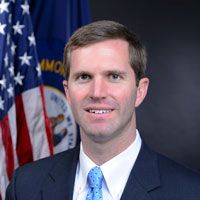 Attorney General Andy Beshear announced today that his office is doubling down on recent, successful efforts with phone companies to stop scam calls by urging the Federal Communications Commission (FCC) to compel more phone companies to join the fight.
Beshear joined a coalition of 51 attorneys general in sending comments to the FCC in support of requiring voice service providers to implement a caller ID authentication framework if they fail to implement the framework voluntarily by the end of 2019 and to provide free, default call-blocking programs to customers.
The comments follow a breakthrough announcement from Beshear, a bipartisan public-private coalition of 51 attorneys general and 12 phone companies last week who reached an agreement to work together to stop illegal and invasive scam calls.
“Working to stop illegal scam calls is a top priority for my office,” Beshear said. “To make sure every Kentuckian is protected, I want to see every phone service provider offer free call-blocking services and implement technology that can block scam calls. If companies won’t voluntarily provide these crucial services, they should be required to.”
In their comments to the FCC, the coalition of attorneys general states that phone service providers should be required to:
Attorneys general from all 50 states and Washington, D.C. have joined Beshear in signing these comments.
Since taking office, Beshear has worked on the state and federal level to encourage the implementation of new solutions to help stop scam calls.
Last year, Beshear urged the FCC to adopt rules that allow phone companies to use new technology to block illegal robocalls. In June, the FCC voted unanimously to let phone companies join the fight. Before this change, companies were required by law to complete known scam calls and now they can legally block them before they ever reach your phone.
Beshear has long supported the FCC’s actions to encourage and require service providers to implement a caller ID authentication framework. Some carriers are already helping by identifying a call as “scam likely” or “scam call.”
Earlier this year, Beshear’s office was also part of a national sweep with the Federal Trade Commission and other states that cracked down on nearly 100 illegal call operations. These operations were responsible for more than a billion illegal scam calls.
Kentuckians wanting to block scam calls to their phone should contact their phone carrier or internet service provider to ask about call-blocking technology, which can help stop many scam calls.
Kentuckians can avoid falling victim to scams by signing up to receive new and trending scam alerts from the Office of the Attorney General by texting the words KYOAG SCAM to GOV-311 or visiting ag.ky.gov/scams.
Beshear said Kentuckians should report scams to his office via an online complaint form or by calling 888-432-9257.
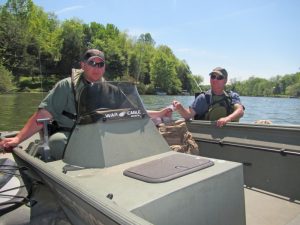
Photo: Kentucky Department Fish and Wildlife
The sun sets earlier each day and the kids are back in school. Summer is all but over. This inevitability prompts many to visit lakes, rivers and streams to get in that last weekend of the summer boating season during the Labor Day holiday weekend.
“Our busiest weekend of the year,” said Maj. Shane Carrier, assistant director of law enforcement for the Kentucky Department of Fish and Wildlife Resources. “Traditionally, Labor Day marks the end of the boating season.”
The crowded conditions common on this holiday weekend make observance of simple boating safety procedures vital to a safe weekend for everyone.
The law requires each passenger in a vessel to have a personal floatation device, commonly called a lifejacket, readily accessible for use. “I cannot stress enough the importance of wearing a lifejacket,” Carrier said. He explained that a lifejacket stored in a compartment or stuffed under a seat is not readily accessible.
“You must be able to get to the lifejacket quickly when you need it,” Carrier said.
Sales of paddlecraft such as kayaks, canoes and stand up paddleboards are booming, but wearing a lifejacket while paddling is of paramount importance for safety.
“Paddlecraft use is growing by leaps and bounds across Kentucky,” Carrier said. “Many paddlecraft users overlook the safety aspect. Paddlecraft are slow and do not have a motor. This lulls people into a false sense of security. I strongly suggest wearing a lifejacket at all times when operating a paddlecraft.”
Carrier said he sees many stand up paddleboard operators with their lifejacket strapped to the front of the paddleboard. “That doesn’t work well if you fall over and hit your head,” he said.
Paddlecraft now line the front of sporting goods, department and hardware stores awaiting a buyer.
“People buy paddlecraft with no training or experience and get in over their head, especially in moving water,” Carrier said. “Leave a float plan with a loved one and get a dry bag to store a charged cell phone on your boat in case you get in trouble.”
Carrier said the law enforcement division spent many hours this year on search and rescue efforts to look for paddlers. “We’ve had quite a few misjudge their take out or how long it takes to paddle there,” he said. “They must know how long it takes to get the float completed. If there is low water and you have to drag a boat over riffles and shoals, it takes time.”
Avoiding alcoholic drinks is one of the smartest safety decisions boaters can make. “Drinking in public is against the law in Kentucky and our waterways are public places,” Carrier said.
The combination of hours in the sun, heat and movement of the boat can induce a mild stupor called boater’s fatigue. “Alcohol intensifies boater’s fatigue,” Carrier said. “This condition can lead to poor decisions on the water.”
Carrier stressed the importance of checking safety equipment to ensure it is in good working order.
A boat with a motor must have a working fire extinguisher on board at all times. “Store the fire extinguisher away from the engine,” Carrier said. “On some boats with inboard-outboard motors, the fire extinguisher is mounted in the engine compartment. If you have a fire, you will burn yourself trying to get to it.”
All vessels over 16 feet in length must have a hand, mouth or power-operated signaling device such as a loud whistle or boat horn. They must also have working red and green navigation lights in the bow of the vessel and a steady white light visible from 360 degrees in the stern.
Boat operators must display these lights from sunset to sunrise in areas where other boats navigate, whether the boat is under power or anchored.
Some boaters mistakenly believe you do not need working navigation lights if you only operate the boat during daylight hours. Mechanical failures, dead batteries or getting lost can prevent a boat from getting back to the dock or ramp before nightfall when you must display these lights. Therefore, lights must be in working condition no matter when you operate the boat.
“You need a light at night so you don’t get run over by another boat,” Carrier said.
Each vessel must have a Type IV throwable personal floatation device such as a float cushion or ring readily accessible for use.
“Although this isn’t boating related, we’ve had multiple people this year drown from swimming,” Carrier said. “People, especially teenagers, try to swim beyond their ability and misjudge the distance. Peer pressure can induce them to try to swim across a large cove and then it is too late.”
Obey these simple safeguards and make the Labor Day weekend memorable for the right reasons.
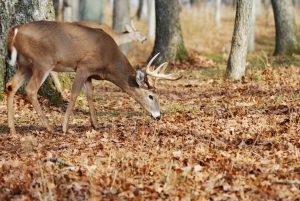
Photo: Kevin Kelly/Kentucky Department Fish and Wildlife
A white-tailed deer from western Kentucky is the state’s first confirmed case of hemorrhagic disease this year.
Murray State University’s Breathitt Veterinary Center recently confirmed to the Kentucky Department of Fish and Wildlife Resources that a deceased female deer recovered from Graves County tested positive for hemorrhagic disease, sometimes referred to as “blue tongue” or EHD. Kentucky Fish and Wildlife is investigating other possible cases involving 22 deer in 11 counties and expects the number could grow in the coming weeks.
“Hemorrhagic disease cannot be transmitted to people or pets,” said Dr. Christine Casey, state wildlife veterinarian for Kentucky Fish and Wildlife. “It is caused by two different viruses: epizootic hemorrhagic disease virus (EHD) and bluetongue virus. These viruses are transmitted to deer by small biting flies, also called no-see-ums.”
Kentucky experiences localized hemorrhagic disease outbreaks each year. More regionally widespread and statewide outbreaks can occur in cycles of five years or longer. A significant regional outbreak of hemorrhagic disease affected many east Kentucky counties two years ago. Far western Kentucky endured an outbreak in 2012, and the last statewide outbreak occurred in 2007.
Outbreaks of hemorrhagic disease generally last from late summer until the first hard frost of the year kills the virus-carrying flies.
Hemorrhagic disease has been present in the United States for more than 60 years. It is not the same as chronic wasting disease (CWD), an always fatal neurological disease that affects white-tailed deer, elk and other members of the deer family. Chronic wasting disease has never been detected in Kentucky.
One main difference between the diseases is that some deer do survive hemorrhagic disease outbreaks and produce protective antibodies, which can be passed to their young. Protective antibodies are major contributors to herd immunity and one reason why Kentucky sees cyclic outbreaks of hemorrhagic disease, rather than a higher prevalence every year.
In Kentucky and across the Midwest, deer that die from hemorrhagic disease typically die within 24 to 36 hours after being bitten by an infected insect. People often find carcasses of deer that have died from the disease around water, and because they died rapidly these animals can appear well fed or otherwise normal. Sometimes there are several carcasses in one area.
While elk in Appalachian Kentucky also contract hemorrhagic disease from insect bites, they usually show no outward signs of illness and death does not occur.
“Kentucky’s archery deer hunting season opens early next month,” said Gabe Jenkins, deer and elk program coordinator with Kentucky Fish and Wildlife. “The department is asking hunters and others to be on the lookout for sick looking deer.
“Deer with hemorrhagic disease can be more susceptible to other diseases. For that reason, the department always cautions against eating the meat from a deer that doesn’t appear to be healthy.”
Through Aug. 21, Kentucky Fish and Wildlife had received reports of suspected hemorrhagic disease in 22 deer. The reports originated from Anderson, Carroll, Christian, Graves, Greenup, Harrison, Meade, Oldham, Trimble, Scott and Shelby counties. The only confirmed case was the Graves County deer. Kentucky Fish and Wildlife is awaiting test results on others.
People can go online now to report to Kentucky Fish and Wildlife suspected cases of hemorrhagic disease in dead or dying deer. The digital form is available at fw.ky.gov under the “Important Info” tab. It takes only a few minutes to complete but provides important data for estimating the scale of the outbreak and for communicating with the public.
Reports also can be submitted by phone. Kentucky Fish and Wildlife staffs a toll-free number weekdays from 8 a.m. to 4:30 p.m. (Eastern). The number is 1-800-858-1549. In addition to their name and contact information, callers will be asked to provide the following about their observation: county and date, number of deer found, and whether the deer were sick or recently deceased.
Information reported to Kentucky Fish and Wildlife through these channels will help the department create maps so the public can see the extent of the disease’s spread.
For more information about hemorrhagic disease, visit the Kentucky Fish and Wildlife website at fw.ky.gov and search for the phrase, “Hemorrhagic Disease.”
Seven Kentucky State Parks were recognized in Kentucky Living magazine’s “Best in Kentucky” Awards announced Thursday at the 2019 Kentucky State Fair: My Old Kentucky Home, Cumberland Falls, John James Audubon, Green River Lake, Dale Hollow Lake, Natural Bridge and Barren River Lake.
“We’re proud of all of our Kentucky State Parks and the people who work there,” Parks Commissioner Donnie Holland said. “We appreciate being recognized by our guests.”
My Old Kentucky Home State Park in Bardstown received first place in the historic site category. The centerpiece of the park is Federal Hill, a mansion completed in 1818 by the Rowan family. Tours of the home and special events are offered throughout the year. The park also has a golf course and campground.
Cumberland Falls State Resort Park near Corbin received two 2nd place awards for long weekend getaway and day trip. Cumberland Falls is the home of a beautiful waterfall, 125-feet wide and 65-feet high, that also produces a “moonbow” during a full moon. The park has a lodge, cottages, restaurant, campground, hiking trails and many other recreational activities.
Other Kentucky State Parks recognized were:
For more information about these and other Kentucky State Parks, visit www.parks.ky.gov