Weather
 Traffic
 @LouisvilleDispatch
 @LouisvilleDisp
 Subscribe
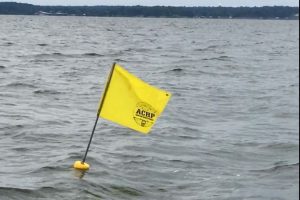 Commercial anglers on Kentucky and Barkley lakes are deploying indicator flags to mark the locations of their nets.
“We want to make anglers and recreational boaters aware of ongoing commercial angling and net locations,” said Jessica Morris, fisheries biologist with the Kentucky Department of Fish and Wildlife Resources.
“These bright yellow flags are visible for a mile. While nets are generally set 3-feet underneath the surface, boaters still should not go between flags or use them for skiing buoys because of the risk of entanglement.”
The Kentucky Fish and Wildlife Foundation purchased about 100 flags and the materials to attach them to the nets.
This spring, the Kentucky Fish and Wildlife Commission voted to allow commercial netting during summer weekends as part of the ongoing effort to control numbers of invasive Asian carp in Kentucky and Barkley lakes. Commercial anglers previously were restricted to netting during the weekdays in summer.
Asian carp outcompete native fish for food. Silver carp, one of the Asian carp species, can be hazardous to boaters as they jump out of the water as a boat approaches.
The net indicator flags are part of a collaborative effort between the department and Kentucky Fish and Wildlife Foundation to avoid user conflicts on the lakes. Nets may be deployed day or night, and not all will be marked.
So far this year, commercial anglers have netted 2.8 million pounds of Asian carp from Kentucky waterways, more than double the 1.1 million pounds taken by the same time in 2018. Morris said approximately 80 percent of the harvest comes from Lake Barkley.
Kentucky Fish and Wildlife is working with commercial anglers and processors to develop markets for Asian carp.
As part of the effort to control Asian carp, construction is underway on a deterrent system designed to thwart the fish from entering a boating lock chamber into Lake Barkley. The device, known as a bio-acoustic fish fence, could be operational by fall.
The Governor’s Scholars Program, within the Education and Workforce Development Cabinet (EWDC), recognized 1,024 outstanding Kentucky high school students, representing 118 counties, for completing the 37th Governor’s Scholars Summer Program.
The Governor’s Scholars Program is a summer residential program for outstanding high school students focused on enhancing Kentucky’s next generation of civic and economic leaders through educational and career opportunities.
“The Governor’s Scholars Program is a nationally recognized program that has helped foster the next generation of Kentucky leaders,” said EWDC Secretary Derrick Ramsey. “For 37 years, GSP has provided unique opportunities for the high school students to exchange ideas, learn new disciplines, and interact with peers from different regions of our state.”
To participate in the program, a statewide selection committee chooses participants based upon nominations submitted by each Kentucky school district. Selection criteria is based upon academic records and test scores, teacher and community recommendations, extracurricular and service activities, and a writing entry. The program is available at no cost to eligible students.
This year, the program was hosted at Centre College from June 16 – July 20; Morehead State University from June 22 – July 26; and Bellarmine University from June 23 – July 27.
Scholars balanced a busy academic schedule in the sciences, mathematics, social sciences, humanities and the arts with a variety of co-curricular and residential activities. They also participated in community projects, seminars, and other student-initiated activities throughout the five week program.
To learn more about the Governor’s Scholars Program, visit https://gsp.ky.gov/Pages/index.aspx.
 Five state and local prosecutors were awarded honors by Attorney General Andy Beshear at the annual Kentucky Prosecutors Conference today in Covington.
The conference hosted by the Office of the Attorney General’s Prosecutors Advisory Council (PAC), serves as an annual opportunity for county and commonwealth’s attorneys and state prosecutors to receive specialized training and recognition for their public service.
On Wednesday, Beshear highlighted the outstanding contributions prosecutors have made in their communities by presenting four 2019 Outstanding Prosecutors Awards and an Ian Sonego Award of Excellence.
Those receiving outstanding county or commonwealth’s attorney awards include:
Beshear awarded the Ian Sonego Award of Excellence to Hon. Barbara Maines Whaley of the Office of the Attorney General. Whaley has served under eight attorneys general for 36 years and prosecuted cases in more than 100 of Kentucky’s counties.
PAC established the Ian Sonego Award of Excellence in 2016 to honor the contributions of Ian Sonego, a former prosecutor, criminal appellate attorney and true champion for Kentucky prosecutors. The attributes honored by this award include perseverance in the pursuit of fairness and integrity in the criminal justice process and knowledge and respect for the law.
“This year, we are proud to honor five outstanding prosecutors for going above and beyond the call of duty,” Beshear said. “As state and local prosecutors they are on the front lines working to build a better, safer state for our families, and we see their dedication and appreciate it.”
The three-day conference takes place today through Aug. 24, at the Northern Kentucky Convention Center. The conference will provide a wide selection of seminars and presentations designed to help prosecutors try cases. Subjects include evidence collection, jury selection and understanding trauma.
A number of lectures specifically address changes in law that recently went into effect, including the state’s animal cruelty law. One presentation focuses on sharing information on how to best prosecute animal abuse cases, including collecting evidence, interviewing witnesses and preparing for trial.
Beshear said the presentation was needed to help ensure our new and current prosecutors have the information and resources they need to protect animals from abuse and prosecute those who abuse them.
Following reports from Kentucky teachers in Franklin, Jefferson and Whitley counties, Attorney General Andy Beshear issued a scam alert to warn of a new scam targeting Kentucky school systems and teachers.
Beshear said his office has recently received multiple reports of a “Deputy Hart” calling schools asking to speak with a specific teacher who allegedly has an outstanding warrant or missed jury duty. School officials have been threatened with “obstruction charges” if the scammer is not given information or allowed to speak with the teacher. Once on the phone with the victim, the scammer requests payment via gift cards to resolve the legal matter and avoid arrest.
“While this scam is similar to the widespread jury duty scam, now there is a troubling new twist that indicates scammers are targeting teachers through social media,” Beshear said. “It is despicable that at a time when our teachers are focused on returning to their classrooms to educate children they are being targeted by scammers. I want to make sure every teacher is aware of this scam and takes steps to protect their information online.”
Reports indicate that the scam call is spoofed appearing to be from a local area code and one victim said the scammer pressured her to purchase $2,500 in gift cards, but ultimately she did not fall victim.
Beshear’s office has been in contact with each school district, local officials and the Department of Education and is asking teachers and school district employees to follow these tips to avoid falling victim to the scam:
One of Beshear’s top priorities is to protect Kentucky consumers, especially senior citizens from scams, abuse and exploitation.
Since taking office, Beshear has repeatedly warned of jury duty and similar warrant scams. Since the beginning of 2019, the office has already received 23 reports of these scams in Breckinridge, Campbell, Fayette, Hardin, Henderson, Jefferson, Kenton, Ohio, Owen and Shelby counties, with losses totaling nearly $2,000.
Beshear’s office caught and convicted a Florida man posing as a Jefferson County Sheriff’s Deputy who was ordered to pay thousands of dollars to the two victims.
To report a scam contact the Office of the Attorney General at 888-432-9257 and file a complaint online. Kentuckians are urged to stay up to date on new and trending scams by signing up for Scam Alerts. To enroll text the words KYOAG Scam to GOV311 (468311), or enroll online at ag.ky.gov/scams and select text message or email alert.
A new training effort aimed at helping hospital employees provide victim-centered care to survivors of sexual assault was launched yesterday by Attorney General Andy Beshear, the Kentucky Association of Sexual Assault Programs (KASAP) and the Kentucky Hospital Association.
The new one-hour training video is for emergency room staff and hospital employees who respond to victims of sexual assault. The training includes an overview of survivors’ rights, the role of rape crisis advocates, legal requirements for hospitals under the Sexual Assault Forensic Exam (SAFE) Act and Kentucky law and dos and don’ts for conducting an exam in a victim-centered manner, which seeks to minimize retraumatization associated with the criminal justice process.
“We want to ensure that when survivors come forward to seek a sexual assault exam, they receive a trauma-informed, victim-centered response, which we know is a critical first step along a survivor’s path to healing and justice,” Beshear said. “The Kentucky Association of Sexual Assault Programs and the Kentucky Hospital Association have been tremendous partners in our collaborative effort to enhance victim services in Kentucky.”
It is estimated that one in two women and one in 16 men in Kentucky will experience sexual violence. In June 2018, Beshear announced his office wanted to better serve victims and provided KASAP with $30,000 in drug settlement funds to create and administer a statewide training program to fill gaps in the state’s SAFE kit response.
Eileen Recktenwald, executive director of the Kentucky Association of Sexual Assault Programs said, “Undergoing a sexual assault forensic exam can be daunting and painful, but it can also help survivors who are just beginning a long journey of healing. All victims deserve swift, compassionate, trauma-informed care when they walk into an emergency department in the aftermath of a sexual assault. We hope this video, produced in consultation with doctors and nurses, helps health care professionals understand their legal responsibilities and provide high quality, victim-centered care.”
According to Recktenwald, while the regional rape crisis centers currently provide certification training for sexual assault nurse examiners (SANE), the new training will inform a broader scope of hospital employees across all hospitals, rural and urban.
The SAFE Act of 2016 ensures the submission of all SAFE kits, requires police receive training to conduct victim-centered sexual assault investigations and sets timelines for testing kits.
Kentucky law also requires all hospitals that offer emergency services to provide a free sexual assault forensic exam to all victims and contact a local rape crisis center to provide advocacy. Hospitals must contact law enforcement to collect reported SAFE kits when a victim consents, and preserve all kits not reported to law enforcement for one year. Hospitals can also take steps to achieve a “SANE ready” designation, which are facilities that establish a readiness to provide constant response for sexual assault victims.
Donna Meador, director of quality and patient safety with the Kentucky Hospital Association said, “Our Kentucky hospitals demonstrate strong commitment to high quality and safe care, serving their communities with open doors all day, every day. The Kentucky Hospital Association is pleased to support this video as another educational resource for hospitals to use as they provide competent and compassionate care for victims of sexual assault.”
As part of Beshear’s work to support victims of sexual assault, his Office of Victims Advocacy created a first-of-its-kind Survivors Council in 2017 to give survivors a voice in Frankfort and to assist the office with victim issues and policies.
Hilary B. Sykes, current Survivors Council member said, “Hospitals play a vital role in survivors seeking justice. When hospitals know the rights of survivors, and how to perform a SAFE exam, it shows and the victim can feel it. You can make all the difference in how a survivor heals emotionally, physically and mentally. You hold the key for people to make it through this and feel like they have a chance at survival.”
Survivors Council Co-Chair, LaShana Harris said, “Hospitals are vital in the continuum of care for sexual assault survivors. An emergency room that has victim-centered services has a tremendous impact on the healing journey.”
Since taking office, Beshear’s Office of Victim Advocacy and his Department of Criminal Investigations have worked on many fronts with partners like KASAP and its 13 rape crisis centers, the Kentucky State Police (KSP) and local law enforcement and prosecutors to implement a victim-centered approach in Kentucky and seek justice for victims.
During his first year as attorney general, Beshear provided $4.5 million in settlement money to lawmakers to fund requested KSP crime lab upgrades and an additional $1 million from the settlement to aid law enforcement and prosecutors in conducting victim-centered investigations and prosecuting sexual assault offenders. In 2016, his office also hosted the first SAFE Summit and developed a Sexual Assault Law Enforcement Toolkit and SAFE Act Guide to help law enforcement address SAFE kit backlog investigations and prosecutions.
In 2017, Beshear transferred $45,000 of interest accumulated from the settlement to outsource more Sexual Assault Kits for testing and assist the KSP Crime Lab.
In 2018, Beshear established a sexual assault cold case unit from a three-year, nearly $3 million U.S Department of Justice, Bureau of Justice Assistance grant. The unit assists on cold sexual assault cases at every level with a victim advocate, investigator, prosecutor and coordinator.
Beshear’s office, local law enforcement and local prosecutors have now secured 10 statewide indictments linked to the SAFE kit backlog.
Kentucky is now only one of the few states that has tested every backlogged SAFE kit.
 Kentucky Labor Cabinet Secretary David Dickerson announced that the Cabinet’s Office of Inspector General has completed the investigation into whether Kentucky teachers engaged in an illegal work stoppage, also known as a “sick out,” during the 2019 session of the General Assembly. The investigation found that 1,074 teachers did violate Kentucky law, which clearly prohibits work stoppages.
KRS 336.050(2) gives the Cabinet the discretion to prosecute and assess civil penalties of up to $1,000 per person, per day of work stoppage on any violation of a labor law in the state of Kentucky. Dickerson noted that while no penalties will be assessed for violations in this specific instance, this investigation was necessary to ensure that public schools remain open during the upcoming school year and that similar work stoppages do not occur in the future.
“Kentucky law clearly prohibits public-sector employees from engaging in work stoppages that many teachers engaged in during the early months of 2019,” noted Dickerson. “Those teachers who participated in this concerted effort were in clear violation of the law, as noted by the Kentucky Education Association and recently affirmed by a federal court.”
In a clear and decisive victory for the Cabinet, United States District Judge Danny Reeves acknowledged that the Labor Cabinet had every right to investigate public school teachers for their conduct. “Kentucky statutes explicitly grant the Labor Cabinet the authority to prosecute and assess civil penalties against public employees, which includes public-school teachers who may have violated KRS Chapter 336,” Reeves stated. “Students are expected to attend classes. If they fail to do so without a valid excuse, their absence is duly-noted and appropriate action is taken. But the teachers at the center of this controversy expect[ed] different treatment.” A full copy of the Court’s Order can be found here.
“It is important to note what the Court explicitly stated,” added Dickerson. “Citizens of the Commonwealth have a strong and continuing interest in public schools remaining open during the school year. The purpose of the Cabinet’s investigation was to undertake a thorough investigation into conduct by some public school teachers and ensure that work stoppages do not happen again so that public schools will be able to fulfill their mission to educate the children of Kentucky. The Cabinet remains dedicated to that mission and will continue to monitor any future ‘sick outs’ closely for further violations of Kentucky labor law.”
“Let it be clearly understood that the grace extended in this instance will not be extended for future such proven violations,” said Dickerson. “The public cannot tolerate another illegal work stoppage in our schools. It is important for public school teachers to understand the level of seriousness that, by law, the Labor Cabinet must and will give to any future work stoppages. We dedicate ourselves to students and parents across the Commonwealth to make sure that this doesn’t happen again, and that our schools will remain open.”
 Following the recent devastating pipeline explosion that took the life of one Kentuckian in Lincoln County, Attorney General Andy Beshear wants greater scrutiny of the planned Louisville Gas and Electric Company (LG&E) Bullitt County Natural Gas Transmission Pipeline Project.
Beshear announced today that his Office of Rate Intervention filed a motion to intervene and expand the scope of a complaint case before the state’s Public Service Commission (PSC) that Bernheim Arboretum and Research Forest brought against LG&E over concerns surrounding its Bullitt County natural gas pipeline.
Intervening on behalf of Kentuckians, Beshear says the PSC should expand the matter to ensure the pipeline project meets safety, legal and regulatory compliance requirements, and address the tactics used and costs projected to secure and complete the pipeline.
“Given the recent tragedy in Lincoln County, I believe we must apply greater scrutiny to every pipeline project being proposed and constructed in our state,” Beshear said. “Kentuckians deserve to know that pipelines running across their property comply with the law and are as safe as possible.”
Beshear’s office noted recent decisions by the PSC concerning LG&E’s pipelines and safety practices, reminding the PSC of its “jurisdiction to regulate the safety of natural gas facilities in Kentucky.” The pipeline in Lincoln County was a large multi-state pipeline, and thus under federal jurisdiction. The Bullitt County pipeline, which will operate as part of LG&E’s transmission and distribution system, is entirely within the border of Kentucky and subject to PSC jurisdiction.
Beshear’s office is also concerned about complaints as to alleged tactics used to acquire the land for the pipeline. The complaint notes comments and statements made by the company that show “LG&E’s inappropriate use of its monopoly status to pressure” the remaining property owners to grant easements and right-of-ways, while threatening condemnation of their property.
Beshear’s office also notes that there is no evidence that the PSC has subsequently reviewed the numerous environmental permits LG&E is required to obtain for the project, and which the PSC required LG&E to file with it after receipt.
As the watchdog for consumers in matters relating to natural gas, water, sewer, electric and landline telephone rates, Beshear’s office further points out in its motions that the pipeline’s increasing cost warrants an expanded inquiry.
Beshear said the cost of the pipeline has increased nearly 50% in just two years and is currently estimated to cost $38.7 million.
The next steps in the case are determined by the PSC.
Under Kentucky law, Beshear’s office is responsible for representing the interests of Kentucky consumers before quasi-judicial and governmental ratemaking agencies. Over the past three and a half years, Beshear’s rate intervention team has helped Kentucky families avoid approximately $1.6 billion in proposed utility rate increases.
Over the past year alone, the office has taken on an unprecedented number of cases saving families in approximately 90 counties more than $113 million a year.
This spring, Beshear’s office also filed a friend-of-the-court brief with the Kentucky Supreme Court in support of low-income advocates having the ability to participate in utility rate cases. For nearly two decades, low-income advocates were granted participation in LG&E or KU rate cases before the PSC denied them earlier this year.
“If our families are being asked to pay more or are directly impacted by the actions of investor-owned utilities, I want to ensure their voices are heard,” Beshear said.
Beshear urges Kentuckians needing to file a utility complaint to do so by completing his office’s online form.