Friday January 23, 2026
Local Connection
 Weather
 Traffic
 @LouisvilleDispatch
 @LouisvilleDisp
 Subscribe
 Louisville has experienced a 4 percent drop in crime overall for the first half of 2017, with declines in all eight LMPD divisions and in every category except homicides, Mayor Greg Fischer and Chief Steve Conrad announced today.
(See Louisville crime data for 2017.)
LMPD data from the first six months of 2017 compared to the same six months of 2016 show:
Violent crime overall is down 5 percent.
- Homicides are up 20 percent
- Rape is down 15 percent
- Robbery is down 14 percent
- Aggravated Assaults are down 0.5 percent
Property Crime is down 3.7 percent
- Burglary is down 1.9 percent
- Larceny is down 4.8 percent
- Motor vehicle theft is down 1.4 percent
“This data is clear – with the exception of homicides, we are headed in the right direction for every category of crime,” Fischer said.
The Mayor said the data shows there were 658 fewer crimes in Louisville for the first half of the year, an overall 4 percent reduction. “That is 658 fewer citizens who were victims in Louisville,” he said.
And the declines are being seen across all eight LMPD patrol divisions:
- First Division (Downtown area, Portland, Russell and Phoenix Hill neighborhoods): Down 10.3 percent.
- Second Division (Shawnee, Chickasaw and Park DuValle neighborhoods): Down 5.5 percent.
- Third Division (Iroquois Park, Pleasure Ridge Park, Valley Station and Fairdale): Down 2.7 percent.
- Fourth Division ( Smoketown, Churchill Downs, the Fairgrounds, South Louisville and Old Louisville): Down 4.2 percent.
- Fifth Division (Highlands, Clifton and Cherokee and Seneca Park areas): Down 7 percent.
- Sixth Division (Audubon Park, Newburg, Norfolk, the airport and GE): Down 2.3 percent.
- Seventh Division (Okolona, Fern Creek, Ford plant and the Jefferson Mall): Down 0.13 percent.
- Eighth Division (Middletown, Lyndon, Oxmoor and the Ford Truck Plant): Down 0.07 percent.
Chief Conrad credited the entire LMPD team, from the command staff to the patrol officers, for work that is making a difference in the city.
“The entire force at LMPD is here to protect and serve the citizens, and I’m proud that we are having an impact,” Conrad said. “We will continue to work our plan, with a key focus on reducing homicides and getting the crime-fighting resources to the neighborhoods that need them most.”
Fischer and Conrad both cautioned that, although the six months of data shows positive signs, there is still tremendous work ahead to make Louisville one of America’s safest large cities. “But we are committed to making that happen,” Fischer said.
Credit: Louisville Metro Police
With the back drop of the Peterson-Dumesnil House, residents of Crescent Hill, Clifton, the Highlands, and St. Matthews will have a chance to find out what’s going on in the fight against crime on Tuesday, August 1st.
For a sixth year, the Fifth Division of Louisville Metro Police will host the 2017 National Night Out Celebration at this well-known landmark, located at 301 S. Peterson Avenue in Crescent Hill.
“Many of us on the Metro Council have had a sharp focus on crime in our districts. Fighting Crime begins with working with the men and women who patrol our streets,” says Councilman Bill Hollander (D-9). “National Night Out provides the chance for anyone to know what’s going on out in the streets.”
Hollander along with Council members Brandon Coan (D-8), Barbara Sexton Smith (D-4) and Angela Leet (R-7) are encouraging the public to come out for National Night Out which will be held from 6:00pm to 9:00pm.
“One of my goals in District 8 is to increase the number of neighborhood watch groups that can actively work with officers to keep our neighborhoods safe,” says Coan. “National Night Out is an opportunity to learn more about and sign-up for our program.”
“I talk many times about how people need to be connected to each other to improve our quality of life. An important connection is to know the men and women who keep our neighborhoods safe,” says Sexton Smith.
“Events such as National Night Out, help link neighbors to one another as well as help to build partnerships between the community and police,” Says Leet. “We need events like National Night Out to help empower our citizens to put a stop to the growing rates of violent and property crime.”
There is fun for all ages, including food, music, door prizes, and the making of child ID cards. There will also be a way to safely dispose of expired drugs.
For more information about the Fifth Division’s National Night Out event, call 574-LMPD (5673).
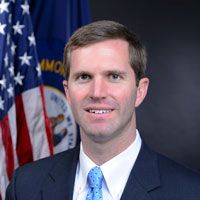 Health care workers, law enforcement officials, first responders and civic leaders in Western Kentucky have requested Attorney General Andy Beshear’s office train them in human trafficking awareness.
“Human trafficking represents the worst form of abuse, often to children, and it is increasing all over Kentucky,” Beshear said. “It occurs in every county, city and community in this state. We have an opportunity and obligation to prevent, identify and prosecute human trafficking cases, and by working with these groups in Western Kentucky, we can better work toward that goal.”
The training begins July 24 at 9 a.m. at Lourdes Hospital in Paducah for law enforcement and first responders. Nikki Coursey with Lourdes is a member of Beshear’s statewide Human Trafficking Taskforce.
At noon on July 24, a training will be held in Benton at the Majestic Steak House during the Marshall County Rotary Club’s monthly meeting. At 2 p.m., a training for law enforcement and first responders will be held at the Joe Creason Community Center in Benton.
Lourdes Hospital will hold three trainings July 25 for its clinical staff: 7:15 a.m., noon and 2:30 p.m. At 9 a.m. Beshear’s office will speak to law enforcement officials at the Kentucky Association of Chiefs of Police Conference at the Paducah Convention Center.
Beshear’s office will hold upcoming trainings across the state including ones for Keeneland staff July 17 and 18; Fayette County Public School staff July 28; Jefferson County Public School psychologists Aug. 1; and the Juvenile Justice Advisory Board Conference Aug. 8 in Lexington.
Over the last year, Beshear has established the Kentucky Attorney General’s office as the leading agency fighting human trafficking, a modern-day form of slavery in which adults and children are forced into sex or labor services.
Beshear’s office is currently working 14 human trafficking cases and has assisted local law enforcement with resources in an effort to resolve 96 other human trafficking complaints. His office has trained over 1,500 individuals statewide and forged partnerships with the trucking and hospitality industries, and the Baptist Convention.
The AG’s office, along with Catholic Charities of Louisville, received a federal grant in 2016, the first Department of Justice grant ever awarded to a Kentucky agency for human trafficking. The federal grant provides support to the statewide human trafficking taskforce in its efforts to develop a process for collecting and interpreting data on human trafficking and model protocols for victim-centered response, investigation and prosecution of these cases.
The funding allowed a specially trained human trafficking investigator to be hired.
Human trafficking victims are often the most marginalized in society – victims of abuse and violence, runaways, refugees, immigrants or those who are homeless, Beshear said.
In 2016, Beshear’s office arrested more online child predators than any year in the history of the office. The number of arrests, indictments and convictions totaled nearly 80. His cyber crime investigators also assist with the forensic review of technology on local human trafficking cases.
To learn more about human trafficking and efforts to fight it, contact the Attorney General’s Office of Child Abuse and Human Trafficking Prevention and Prosecution at 502-696-5300 or visit Catholic Charities of Louisville Rescue and Restore program website at http://www.rescueandrestoreky.org. The national human trafficking hotline number is 888-373-7888.
Attorney General Andy Beshear is warning about a scam that claims Kentuckians can receive tax-free, monthly payments from the Tobacco Master Settlement Agreement (MSA).
Beshear said his office has identified misleading online ads and received reports of scam emails claiming Kentuckians can receive monthly payments directly from the multibillion-dollar MSA. The solicitations proclaim Kentuckians, even if they “never used tobacco,” can receive thousands of dollars each month if they pay $5 a month or up to $100 a year to learn how.
Beshear said he does not want Kentuckians to be duped by ads that prey upon the nearly 20 years of positive impact the settlement funds have had in the Commonwealth.
“The ads and emails try to trick Kentuckians into believing something that is simply not true,” Beshear said. “MSA payments are made directly to states and territories, and in Kentucky they are used to boost investments in agriculture and help improve health outcomes.”
Individuals can potentially receive MSA funds through state programs or private lawsuits. Nevertheless, those who respond to the ads ultimately pay for information to learn how to purchase out-of-state bonds.
Beshear said the purchase of a bond is an investment, and Kentuckians should carefully investigate risks and benefits associated with any investment.
The MSA, reached between the four largest tobacco companies in the U.S. and attorneys general from 46 states, provides annual payments to the states ultimately worth more than $208 billion.
The funds help to compensate states for some of the medical costs associated with tobacco-related illnesses.
Since the first payment in 1999, Kentucky has collected over $2 billion, and is on pace to collect nearly $3 billion over the first 25 years of the agreement.
Kentucky’s Tobacco Settlement Agreement Fund Oversight Committee administers the determinations on grant applications from the agricultural fund, which aids farmers and creates sustainable farm-based businesses. Additional MSA revenues support early childhood education, health programs and cancer research.
Better protecting Kentucky families, especially seniors, from fraud is one of the core missions of Beshear’s office.
Kentuckians interested in staying ahead of scammers can sign up to receive Scam Alerts from Beshear’s office by texting the words KYOAG Scam to GOV311 (468311), or visit ag.ky.gov/scams to sign up with your mobile phone number or email address.
To report scams to the Office of the Attorney General call 888-432-9257 or file a consumer complaint online.
 Attorney General Andy Beshear and his Cyber Crimes Unit today announced an Elizabethtown couple has been arrested and charged for allegedly seeking sex with a minor.
Robert Dean Mitchell, 43, and Stephanie Smith, 30, were arrested in Jefferson County today and each charged with one count of prohibited use of an electronic communication system for the purpose of procuring a minor for a sex offense, a Class D felony.
At the time of arrest, Mitchell and Smith were charged with one count of possession of a controlled substance, a Class D felony. Mitchell was charged with possession of marijuana, a misdemeanor, and Smith with possession of drug paraphernalia, a misdemeanor.
Beshear’s cyber investigators said a 3-year-old and a 6-year-old were with the couple when the arrest was made. The Secret Service assisted Beshear’s office in the arrests.
The work of the Cyber Crimes Unit, a division of the Department of Criminal Investigations in the Office of the Attorney General, is part of Beshear’s core mission to keep sexual predators away from Kentucky’s families and children.
“Protecting Kentucky’s children from sexual abuse is one of my top priorities,” Beshear said. “I appreciate the investigators in my office and the Secret Service for working so hard to keep our children safe.”
The Office of the Attorney General’s work to prevent child abuse in 2016 led to the arrest of more online child predators than any year in the history of the office. The number of arrests, indictments and convictions total more than 80.
Mitchell and Smith are being held in the Jefferson County Detention Center and are scheduled to be arraigned tomorrow morning in Jefferson District Court.
In 2015, more than 225 Kentuckians died from a drug overdose with Opana in their blood.
Now that the makers of the opioid painkiller announced July 6 that it will no longer sell the drug, Attorney General Andy Beshear is calling the move a “first step” in fighting against what he believes is the single greatest threat to Kentucky – the state’s drug epidemic.
Beshear sent his concerns on the potential for abuse by Kentuckians on a reformulation of the drug, Opana ER (extended release), to the U.S. Food and Drug Administration (FDA) in February during an open comment period on the drug.
“The FDA previously determined the reformulated Opana ER can still be readily prepared for injection and can be crushed with common items for snorting,” Beshear said in his comments to the agency. “‘Snortable’ or injectable drugs have crippled Kentucky, ranging from the widespread abuse of Oxycontin to the return of heroin. Where the reformulation has merely been found to impede one of many means of abuse, approving labeling Opana ER as ‘abuse deterrent’ may mislead patients and providers.”
In his comments, Beshear said he was “encouraged that the agency is taking a hard look at the safety of this powerful drug.”
The FDA requested on June 8 that Endo Pharmaceuticals remove Opana ER from the market.
Beshear’s comments to the FDA on Opana ER is part of his ongoing efforts to address the opioid crisis in Kentucky.
“Opana ER has already taken the lives of Kentuckians,” Beshear said. “Louisvillian Emily Walden, whose son, T.J., died of an Opana ER overdose in 2012, has led the charge to have the reformulated drug removed from the market. By working hand-in-hand with dedicated Kentuckians like Emily, we can and will end our opioid epidemic.”
On June 28, Beshear announced that his office intends to file multiple lawsuits against drug manufacturers, distributors and retailers where there is evidence that they contributed to the opioid epidemic by illegally marketing and selling opioids to Kentuckians.
To support this litigation, Beshear issued a request for proposal (RFP) for legal services to assist the Commonwealth in multiple lawsuits and to ensure that Kentucky tax dollars are not used for the costs of the litigations.
Beshear is co-chair on the National Association of Attorneys General Substance Abuse Committee.
The AG’s office previously settled a $24 million lawsuit with Purdue Pharma regarding OxyContin. Beshear’s office has provided $8 million from that settlement directly to 15 substance treatment centers across Kentucky.
From a different drug company settlement, the office dedicated $2 million to expand and enhance Rocket Docket programs that expedite drug cases, generate significant cost savings and allow select defendants rapid access to substance abuse treatment.
Recently, Beshear joined a multistate lawsuit alleging the drugmaker of Suboxone, a drug used for treating opioid addiction, tried to monopolize the market.
Beshear is currently working with local law enforcement and community leaders to host substance abuse awareness forums across the state. The office has also been instrumental in numerous drug related arrests, including working with federal authorities on arresting a fentanyl dealer whose drugs had killed several Kentuckians.
“The abuse and diversion of Opana and other strong opioids is devastating the health of many of our Commonwealth’s citizens, and they, as well as our Medicaid and corrections departments, pay an enormous financial price in the attempt to treat this epidemic,” Beshear told the FDA. “It would benefit public health for the FDA to create and implement deadlines for the pharmaceutical industry to develop more robust abuse deterrent formulations for these high-dose opioids and to require that development before granting abuse deterrent labeling.”
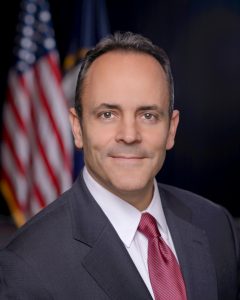 Gov. Matt Bevin today granted pardons to 10 Kentuckians previously convicted through the Commonwealth’s justice system.
“This is the week that we as Americans set time aside to celebrate our nation’s independence and the blessings of individual liberty,” said Gov. Bevin. “It is an appropriate time to use the authority vested in my office to grant a fresh start at independence and liberty for several individuals who have lost both due to their previous criminal behavior.
“My office receives many requests for pardons. All of them are in the process of being carefully reviewed. After much deliberation, I believe that unique circumstances warrant executive action for these 10 men and women. There will be additional pardons granted, as warranted, in the months and years ahead.”
The power of governors to pardon is vested in Section 77 of the Kentucky Constitution.
Governors, for the most part, have historically waited until their final days in office to issue pardons—wanting to avoid potential political ramifications. Gov. Bevin, however, has demonstrated a consistent record of making decisions based upon what he believes is the right thing to do, regardless of politics.
The Bevin Administration has initiated groundbreaking criminal justice reform efforts aimed at removing barriers for offenders to successfully reenter society.
In 2016, Gov. Bevin signed into law historic felony expungement legislation that gives non-violent felony offenders who have paid their debt to society a second chance. House Bill 40 allows Kentuckians convicted of certain Class D felonies—who have paid their debt to society, have stayed out of trouble as required by the law, and have shown that they are indeed trying to get back on track—to erase their criminal records and obtain a second chance at jobs, housing, and other opportunities sometimes denied felons.
Also, this past February, Gov. Bevin issued an executive order that removes questions about criminal history from the initial application for state jobs in the executive branch. The Fair Chance Employment Initiative means that applicants will not be required to check the box for criminal convictions on the initial state application, a policy in line with twenty-four states and more than 150 cities and counties across the nation.
Pardon applications are sent directly to the Governor’s Office, along with a statement of the reasons for seeking relief and three letters of recommendation. An application form may be obtained by contacting the Governor’s Office at 502-564-2611.
The list of individuals pardoned can be accessed here.