Wednesday December 17, 2025
Local Connection
 Weather
 Traffic
 @LouisvilleDispatch
 @LouisvilleDisp
 Subscribe
In support of Kentucky agriculture, Attorney General Andy Beshear joined with other egg-producing states to ask the country’s highest court to review a lower court’s decision that upheld California’s “Shell Egg Laws.”
In 2015, the six states asked the Ninth Circuit of the United States Court of Appeals to block enforcement of the California laws and regulations prescribing standards for the conditions under which chickens must be kept in order for producers to sell eggs in the state. California is the country’s largest egg market.
The appeals court ruled against the six states in favor of a lower court ruling. The group of states are now asking the United States Supreme Court to take up the issue. The states are Alabama, Iowa, Kentucky, Missouri, Nebraska and Oklahoma.
“Kentucky is a thriving egg-producing state, and this law places our agriculture industry and farming families at a disadvantage by increasing farming cost and driving up the cost of food for Kentuckians,” Beshear said. “The Supreme Court must review this issue in order to level the playing field for our producers against out-of-state regulations.”
 The group of five attorneys general and the Governor of Iowa representing egg-producing states argue that the laws hurt agriculture in their states and are in violation of the Commerce Clause, which regulates trade among states and foreign nations.
The group asserts that its egg farmers must choose to either bring their entire operations into compliance or not sell in the California marketplace. The states argue that the necessary capital improvements to meet the standards would cost farmers hundreds of millions of dollars.
Kentucky farmers produced 1.3 billion eggs in 2015, according to the USDA.
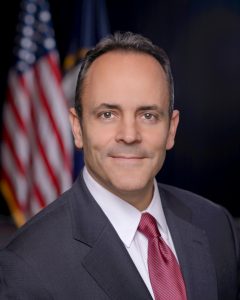 Gov. Matt Bevin testified last week before the House Judiciary Committee in support of House Bill 333, which seeks to set common sense limits on pain medication prescriptions in an effort to combat Kentucky’s opioid epidemic. The bill also has several measures to regulate, prohibit and punish the illicit possession, importation and trafficking of fentanyl, carfentanil and fentanyl derivatives.
Introduced by Rep. Kimberly Moser and a group of five bipartisan co-sponsors, this legislation seeks to prevent the creation of new addicts by reducing overexposure and oversupply of opioids in acute care settings. Recent statistics show that Kentucky ranks third among all states in opioid addiction, with a rate double the national average.
“Until we have a frank conversation—as it relates to everything from the production, prescription, dissemination, and prosecution of opioids—we’re not going to fix the problem,” said Gov. Bevin. “With the exception of intentional drug dealers, most of the people who are complicit in this didn’t start out trying to be complicit in something that has been so crippling to our nation and to the Commonwealth.”
In accordance with Center for Disease Control and Prevention (CDC) guidelines, House Bill 333 would prohibit a practitioner from issuing a prescription for more than a three-day supply of a Schedule II controlled substance intended to treat pain as an acute medical condition.
Certain exemptions would apply for cancer patients, individuals diagnosed with chronic pain, those in narcotic treatment programs, patients receiving end-of-life care, and other situations deemed medically necessary.
Studies compiled by the National Institute on Drug Abuse illustrate the importance of decreasing exposure to opioids: 86 percent of injection drug users took opioid pain relievers non-medically prior to using heroin, 75 percent of individuals abusing opioids used a prescription drug as their first opioid, and incidence of heroin initiation is 19 times higher among those using non-medical pain relievers versus those who did not.
“This addiction is everywhere, and we have to make it harder to get addicted,” said Gov. Bevin. “We don’t have the luxury of being able to pretend this doesn’t exist.”
Last week, joined by legislators and officials from local government, education and business associations, Gov. Matt Bevin ceremonially signed House Bill 3, which repeals the state law requiring payment of a set hourly base (prevailing) wage to workers on public works construction projects.
The prevailing wage is the wage set by government, which contractors and subcontractors must pay workers hired for public works projects (such as roads, buildings and sewers) that cost more than $250,000.
“This is one of those win-wins,” said Gov. Bevin. “We want to be good stewards of the limited resources we have, and this is going to be transformative in terms of just the financial impact alone on the Commonwealth of Kentucky. Studies estimate that, conservatively, it will result in somewhere between $125 and $135 million dollars a year in savings.”
A 2014 study by the Kentucky Legislative Research Commission found that the prevailing wage law inflated labor cost by 24 percent and increased the total project cost by 10 to 16 percent on average.
Experts note that prevailing wage regulations create a financial strain on local governments and school districts. In fact, the Kentucky Department of Education estimates that prevailing wage regulations have cost the Commonwealth at least $100 million since 1996.
“Without artificial, and often inflated, wage rates set by antiquated prevailing wage laws, Kentucky is now positioned to complete necessary construction projects at lower costs,” said Rep. Adam Koenig. “We are committed to spending every single tax payer dollar wisely, and Kentucky cities are already saving money due to the swift passage of the prevailing wage repeal by the House and Senate, and Governor Bevin’s prompt signing.”
“As a sponsor of similar legislation last Session, I applaud the efforts of Governor Bevin and my colleagues in the legislature who helped make this prevailing wage repeal bill become law in 2017,” said Sen. Wil Schroder. “This measure will provide more money for construction in our school districts, ultimately putting taxpayer dollars to better use.”
The Department of Financial Institutions (DFI) announced last week that it has received reaccreditation as the state regulator of banks, credit unions, and mortgages. The department began the joint reaccreditation process in November of last year with the Conference of State Bank Supervisors, the National Association of State Credit Union Supervisors, and the American Association of Residential Mortgage Regulators.
The five-day review was conducted by an in-person team representing the three agencies. The group examined DFI’s financial documents, records, and regulatory processes to determine the department’s ability to supervise the industry in each accreditation area.
“One of the department’s goals is to ‘lead in developing and advancing effective financial services regulation in Kentucky,’ and I believe the accreditation team recognized our commitment to that goal,” stated DFI Commissioner Charles Vice. “The accrediting agencies determined that DFI not only implemented the recommended industry best practices, but that our team also served as the standard bearer in many categories.”
This is the first year that all three reviews have taken place at once, and DFI pursued a simultaneous accreditation to make the process more efficient for the department and the accrediting team. The department undergoes reaccreditation every five years, and the final assessment scores are confidential.
“DFI’s staff recognizes that the appropriate regulation of the financial services industry contributes to economic growth throughout our state,” said Vice. “Our team works hard to implement industry standards that both protect consumers and encourage banks, credit unions, and mortgage companies to do business in Kentucky.”
DFI’s bank and credit union examination areas have been accredited since 1992. Kentucky was the third state mortgage regulator to achieve accreditation when the program began in 2010. All three programs aim to promote excellence in regulation with minimal regulatory burden and cost, as well as to apply national standards of performance.
Kentucky’s exports broke an all-time record in 2016 with $29.24 billion in goods and services shipped abroad from the Commonwealth, a 5.8-percent increase from 2015, Gov. Matt Bevin recently announced.
Aerospace products and parts led all categories with more than $10.85 billion in goods exported internationally, an increase of more than 24 percent over 2015. Kentucky ranked second nationally for 2016 in aerospace-related exports.
“Kentucky is headed in the right direction and the business community is taking notice. This new record is unequivocal proof of our positive trajectory,” said Gov. Bevin. “As we improve our business climate, global demand for our brands and expertise continues to grow, attracting new companies while at the same time strengthening existing partnerships. Together, we are moving forward. The economic future in Kentucky is very bright, indeed!”
Overall, the state’s 2016 exports increased $1.6 billion over the 2015 total. That placed Kentucky eighth among all U.S. states by percentage increase, according to data from the U.S. Census Bureau Foreign Trade Division and WISERTrade.
Kentucky’s strong showing in exports – ranking 17th nationally by dollar amount – continued its years-long trend of punching above its weight. As a state with 4.4 million people, Kentucky ranks 26th nationally in size.
As well, Kentucky’s positive numbers stand in contrast to a 3.3 percent decline nationally in exports during 2016. Additionally, the fact Kentucky is not along a coast speaks volumes about the state’s logistics industry – which includes air cargo, rail, barge and ship, and trucking capacities – and its ever-increasing ability to quickly send products across the world.
Kentucky exported to 199 nations in 2016, with Canada, the United Kingdom, France, Mexico and Brazil as the state’s top five trade partners. The Commonwealth sold nearly $7.5 billion in products and services to Canada last year, nearly three times as much as the next destination, the U.K.
Among the state’s largest percentage increases by destination in 2016 were France (59.8 percent), Malaysia (31.8 percent), the Republic of Korea (28.2 percent), Hong Kong (26.8 percent) and Brazil (17.6 percent).
By industry category, following aerospace were motor vehicles ($3.32 billion), pharmaceuticals and medicines ($1.81 billion), motor vehicle parts ($1.76 billion), resin and synthetic rubber, artificial and synthetic fiber and filament ($1.1 billion) and basic chemicals ($741 million). Those categories are established under the North American Industry Classification System.
Aerospace saw the highest percentage increase in 2016 (24.3 percent), followed by motor vehicle parts (12 percent) and pharmaceuticals and medicines (9 percent).
The Commonwealth ranks sixth nationally in motor vehicle exports for 2016. In total, Kentucky’s automotive industry – with parts, bodies, trailers and whole vehicles combined – exported nearly $5.5 billion in products throughout 2016.
The state’s horses, live, purebred breeding industry ranked first in the nation in 2016, with $195.2 million exported, a 33.1 percent increase over the previous year. Kentucky also exported whisky to Cuba, wine to France and beer to Ireland during 2016.
For more information on Kentucky exports, visit www.kyexports.com.
The state helps businesses learn about and connect with exporting opportunities through the Kentucky Export Initiative. KEI brings together a coalition of business organizations, trade experts and government entities including the Kentucky Cabinet for Economic Development with a focus on increasing Kentucky exports to create new jobs and diversified markets for the state’s products.
Information on Kentucky’s economic development efforts and programs is available at ThinkKentucky.com. Fans of the Cabinet for Economic Development can also join the discussion on Facebook or follow on Twitter. Watch the Cabinet’s “This is My Kentucky” video on YouTube.
WWE’s SmackDown Live is coming to Louisville. The event will be held at the KFC Yum! Center on Tuesday, April 18 and marks the return of live, televised professional wrestling events in the Commonwealth.
SmackDown will be the first major televised combat sporting event in Kentucky since Governor Bevin streamlined the state’s boxing and wrestling regulations last November as part of the Red Tape Reduction Initiative. Prior to these changes, WWE had not scheduled a televised event in Kentucky since 2010 because of the state’s antiquated regulations.
Under the Governor’s leadership, unnecessary regulations such as the “cut rule” were eliminated. The rule required an athlete to leave a match if he or she bled, which deterred promoters from hosting live events in the state. Other regulations were amended to remove duplicative licensing processes for athletes and promoters, signaling to the industry that Kentucky is open for business.
“The Governor’s Red Tape Reduction Initiative continues to provide new economic opportunities for the Commonwealth,” said Public Protection Cabinet Secretary David Dickerson. “The Governor has proven that he is committed to making our state business-friendly, and the boxing and wrestling industry has responded.”
“We are excited to have WWE do a live taping in Louisville, and we hope that this is the first of many major events that Kentucky will host,” said Kentucky Boxing and Wrestling Commission Chairman Chad Miller. “Our state is home to many enthusiastic professional wrestling fans, and this event provides an exciting new opportunity for Kentuckians.”
The Red Tape Reduction Initiative targets excessive and complex regulatory burdens that stifle economic development in the Commonwealth. To date, approximately 117 regulations have been repealed, and over 400 regulations have been amended or targeted for amendment. To learn more about the Red Tape Reduction Initiative, visit: redtapereduction.com.
Louisville Metro Government’s Office of Redevelopment Strategies is launching a citywide effort to address the issue of redlining in Louisville – past and present.
As part of this effort, the office today unveiled an interactive tool that uses maps and data to illustrate how redlining impacted Louisville in the past, and still does today. The map will be used to enhance community conversations about redlining, which takes many forms but is most commonly the practice of denying loans in certain neighborhoods because of race or socioeconomic characteristics.
 Redlining dates back to 1933, when the U.S. government created the Home Owner’s Loan Corporation (HOLC) to bolster the housing market and homeownership opportunities across the nation. The HOLC created residential securities maps, better known as redlining maps, to guide investment in U.S. cities. These maps assigned grades to neighborhoods to indicate their desirability for investment. Black, immigrant and low-income neighborhoods were often given low grades, eliminating their access to mortgage insurance or credit for decades. Although the HOLC was discontinued in 1951, the impact of disinvestment resulting from redlining is still evident in Louisville and most other U.S. cities today.
“Our city defines compassion as providing citizens the tools and support necessary to reach their full human potential,” Mayor Greg Fischer said. “Through past and present forms of redlining, unnecessary hurdles are placed in front of some residents, keeping them from that potential. This map and data is meant to spark a community conversation that results in removing those hurdles.”
Local urban planner Joshua Poe has developed the interactive story map entitled “Redlining Louisville: The History of Race, Class and Real Estate.” This tool illustrates the ways that redlining has affected housing development, disinvestment and lending patterns in Louisville since the 1930s. By layering data sets such as vacant properties, building permits and property values, the map shows how the intentional redlining that was devised in the 1930s has had consequences that are evident still today.
Examples of conventional redlining that still exists today include refusal to provide delivery in certain areas, business loan denials regardless of credit-worthiness and refusal to write property insurance policies or dropping property owners from insurance coverage altogether.
Other forms of redlining, referred to as reverse redlining, also exist. Examples of reverse redlining include offering services low-income residents at higher prices, higher interest rates and excessive service fees or inferior products. This example may come in forms such as payday loans, cash advances, and expedited tax returns.
With the launch of the interactive map, the city is convening a yearlong community dialogue to gain understanding, to collect ideas and to formulate recommendations that support citizens’ wealth-creation, homeownership and development opportunities in west Louisville and other areas experiencing disinvestment. By beginning this dialogue, the city is acknowledging the past and working to better our future by removing hurdles that prevent some residents from reaching their full human potential.
“Today is an opportunity to begin talking openly about many of the systematic and institutional challenges faced by everyday people trying to get ahead,” Office of Redevelopment Strategies Director Jeana Dunlap said. “Some of our neighborhoods need basic services or amenities that may be taken for granted in other areas of town. We hope to bring light to these challenges and find innovative ways to stimulate investment, stabilize housing conditions and improve overall quality of place for impacted areas.”
There are three scheduled public events that will be held to discuss the various impacts of redlining in our city. Details of those events are as follows:
- February 23 at 5:30 p.m. at the Louisville Urban League, hosted by the Louisville Urban League and Greater Louisville Project,
- March 28 at 5:30 p.m. at New Directions Housing Corporation, hosted by New Directions Housing Corporation, Human Relations Commission, and Metropolitan Housing Coalition,
- April 26 at 5:30 p.m. at the YouthBuild Louisville, hosted by The Center For Health Equity and YouthBuild Louisville.
Additionally, volunteer ambassadors will be educated on map information and trained to lead discussions throughout the community. These ambassadors will be encouraged to make presentations in their neighborhoods and record the thoughts and ideas provided by community members.
If you would like to be an ambassador or if you are an elected official or local organization that would like to provide support to this effort, please contact one of the partners below or visit the Office of Redevelopment Strategies website. Residents can also provide their thoughts by visiting the website and on social media using the hashtag #EraseTheLines.
The Office of Redevelopment Strategies coordinates cross-functional targeted neighborhood revitalization with a high level of accountability for tangible, data-driven actions that produce visible improvements in the built environment while supporting households, entrepreneurs, institutions, and other stakeholders.
To visit the interactive story map, please visit: https://lojic.maps.arcgis.com/apps/MapSeries/index.html?appid=e4d2990795…
For more information on Metro’s efforts to combat redlining and the upcoming community conversation, please visit https://louisvilleky.gov/government/redevelopment-strategies