Saturday January 24, 2026
Local Connection
 Weather
 Traffic
 @LouisvilleDispatch
 @LouisvilleDisp
 Subscribe
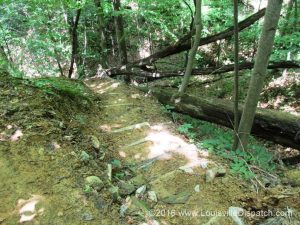 Romantic Valentine evenings await on February 13 and 14 at Jefferson Memorial Forest. For only $35, couples will be treated to a romantic candle-lit hike that ends with a view of Louisville’s lights from the scenic Manor House, where couples will enjoy hot beverages, rich hors d’ouvres and desserts, and the cozy warmth of a hearth.
“The natural beauty of Jefferson Memorial Forest is a great fit with Valentine’s Day,” said Rebecca Minnick, Program Manager at Jefferson Memorial Forest. “Couples can have a romantic evening by taking a stroll through the woods, then relaxing in front of the fire. We have many couples who have made this part of their Valentine tradition.”
Jefferson Memorial Forest is located near Fairdale, just 15 minutes from downtown Louisville. The evening begins at 7:00 p.m. and is expected to wind up by 10 p.m. The hike is on flat terrain, but closed-toe shoes with tread are recommended. Couples are also invited to bring flashlights to the hike for added visibility along the trails. Hikes meet in the Horine Reservation main parking lot at 12304 Holsclaw Hill Road, Fairdale KY.
Reservations must be made by Tuesday, February 7th. To register, call (502) 368-5404 or email the Forest at forest@louisvilleky.gov. In case of inclement weather, those registered should call the (502) 368-5404 number for cancellation information.
 Mayor Greg Fischer joined Metro Council members to announce that construction is scheduled to begin on the $5 million redevelopment of historic Colonial Gardens in south Louisville.
The adaptive reuse project includes renovating the 7,000-square-foot historic Colonial Gardens building, as well as adding three new, one-story buildings for a total of 18,000-square-feet that will share a common patio and garden area.
“Giving new life to historic structures like Colonial Gardens helps give Louisville an authentic quality of place like no other city, and our unique character is one of the things that helps draw millions of tourists to our city every year. And that’s a huge boost to our economy,” said the Mayor. “I would like to thank Underhill Associates, our south Louisville Metro Council members and the Iroquois neighborhood for making this project a go.”
Citizens sought successfully to designate the iconic Colonial Gardens building, located across from Iroquois Park, as a local landmark in 2008. The city purchased the property in 2013 to help foster its commercial redevelopment.
The site’s developer, Underhill Associates, is in talks with local restaurant groups to occupy the four corner spaces of the building, located on the corner of Kenwood Avenue and New Cut Road, and a common beer garden area.
“Underhill Associates is excited to create a venue where the past is honored and new events will be celebrated. We are pleased to partner with the city on the gateway to Iroquois Park where people can meet, eat, have a drink, and play,” said Jeff Underhill, Underhill Associates. “Architect Jeff Rawlins has designed an attractive plan clustering four restaurants welcoming visitors with great views of the park and a beer garden.”
Underhill noted that the venue will be decorated with memorabilia celebrating south Louisville.
Post Construction Company is expected to begin construction on the property in early 2018, with a completion date of spring 2019.
Metro Council comments:
Metro Council President David Yates, District 25: “The decaying building of Colonial Gardens has epitomized south Louisville’s unrequited demand for economic investment for far too long. In the shadow of the majestic Iroquois Amphitheater, the two buildings illustrate the dichotomy of who our community has been and who our community can be. Today, we take another step toward restoring our vibrant, unique South end neighborhood. This public-private partnership will turn a dilapidated eyesore into the gateway of the south. I stand with my colleagues in championing this development and am eager for its success to catalyze further investment into both our economy and people. I thank my colleagues, the Mayor and Louisville Forward who have all stood with me fight after fight to ensure this project’s success. Once complete, Colonial Gardens will be a win-win for our city and the good people of South Louisville.”
Councilwoman Marianne Butler, District 15: “This is one of the largest economic development projects that south Louisville has seen in some time. I thank the Underhills and the administration for coming together to find a partnership that works for all involved. This is a development that will transform this tired corner into a vibrant community spot and show other developers that investing in south Louisville is a win.”
Councilwoman Vicki Aubrey Welch, District 13: “This is a most exciting project for me and my family. We have three generations that danced at the old Colonial Gardens. My hope is that the new Colonial Gardens will provide dining and entertainment for generations to come in the future. Persistence has finally paid off after many years of planning this awesome public-private partnership.”
Councilman Rick Blackwell, District 12: “This public-private partnership will beautify a corner that has been an eyesore far too long. While great for residents of south and southwest Louisville, it will also significantly improve the experiences of those who visit Iroquois Park for the many races, Jack-o-lantern spectacular or shows at the amphitheater.”
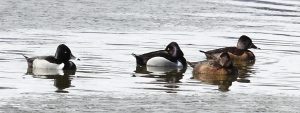
Photo: Kentucky Department Fish And Wildlife
The outlook for the upcoming waterfowl hunting seasons looks as promising as any seasons in recent memory.
“It is shaping up to be a phenomenal year,” said John Brunjes, migratory bird coordinator for the Kentucky Department of Fish and Wildlife Resources. “We are still at all-time highs for duck numbers with as many breeding ducks as we’ve ever had. It’s been that way for a couple of years now.”
Brunjes said biologists conducted duck population counts along the Mississippi River in Illinois last week. They produced four times the normal number of birds counted. “Usually for the second week of November in Illinois, they see about 200,000 birds,” he said. “They counted 800,000 birds along the Mississippi River last week and those birds are heading our way.”
Waterfowl of all stripes are migrating through Kentucky right now. “We are seeing white-fronted geese and even tundra swans in southeast Kentucky,” Brunjes said. “It is very rare. We have a ton of snow geese showing up in weird places this year. The birds are moving well this year.”
The duck, coot, and merganser seasons all open Thanksgiving Day, Nov. 23. The opening segment of the hunting season for ducks, coots and mergansers runs until Nov. 26. These seasons open again Dec. 4, 2017, and close Jan. 28, 2018.
The hunting season for Canada, white-fronted, brant and snow geese also open Thanksgiving Day, but do not close until Feb. 15, 2018.
“We want to remind hunters there is an extended opportunity for geese,” Brunjes said. “The extended season went into effect last year.” Traditionally, goose seasons closed in late January.
A summer devoid of long dry periods set the table for excellent waterfowl habitat this fall. “The moist soil areas and native vegetation look really good,” Brunjes said. “The crops on our wildlife management areas (WMAs) did well. We have the best crops at Ballard WMA that we’ve had in a number of years.”
Finding a place to waterfowl hunt is a challenge for the majority of Kentucky hunters. The first place to check is the public land hunting section of the 2017-2018 Kentucky Hunting Guide for Waterfowl. This section details the hunting options and regulations on public lands, mainly wildlife management areas.
Many, but not all, of the smaller state-owned or managed lakes are open to waterfowl hunting as are reservoirs operated by the U.S. Army Corps of Engineers or the U.S. Forest Service. The bigger waters hold more birds during the coldest stretches of the year, when many farm ponds or smaller lakes freeze over. Call the Kentucky Fish and Wildlife information center at 1-800-858-1549 to inquire if a lake is open to waterfowl hunting.
Those pursuing waterfowl on reservoirs must not hunt near access areas such as boat ramps or areas closed to hunting or public access by signs. Common sense and courtesy dictates waterfowl hunters avoid setting up near private residences or marinas.
Scouting is vitally important to waterfowl hunting success, especially in the first month of the season.
“If you aren’t seeing any birds in the areas you hoped to hunt prior to opening day, you likely won’t see birds on opening weekend either,” Brunjes said. “You have to find the areas birds are using and set up accordingly.”
Waste corn in cut silage fields provides excellent food for ducks and geese. Goose hunters may find agreeable farmers who consider geese a nuisance. Goose hunting in harvested cornfields provides excellent sport and peaks with the coldest weather.
Those farmers may also grant permission to hunt their ponds. From the air, farm ponds dot the Kentucky landscape as craters do the Moon. They can provide the hottest hunting, but not all farm ponds attract birds. Scouting is vital for successful farm pond hunting.
Waterfowl hunters must have a valid Kentucky hunting license, a Kentucky migratory game bird – waterfowl permit along with a Federal Duck Stamp. Federal Duck Stamps are available at post offices across Kentucky.
Waterfowl hunters must have their Harvest Information Program (H.I.P.) confirmation number recorded on either their Kentucky hunting license or on their Kentucky migratory game bird – waterfowl permit. To get your H.I.P. number, visit the Kentucky Fish and Wildlife website at www.fw.ky.gov and click on the “My Profile” tab. Answer a few questions about last season’s harvest of migratory birds to receive your confirmation number. The process takes less than 5 minutes.
“Folks in the neighboring states to our north such as Illinois, where waterfowl seasons are already open, are having great hunting so far,” Brunjes said. “It is early and a lot remains to be seen, but everything is setting up for a great season.”
Photo: Louisville Metro Parks and Recreation
Olmsted Parks Conservancy, Louisville Parks and Recreation, Councilman David James, and volunteers and park neighbors will celebrate completion of phase one of the Victory Park revitalization project on Saturday, November 18, 2017.
Phase one of a $1 million revitalization to Victory Park included relocation of the basketball court to create a larger open area for activities; a new walking path; installation of additional lighting, benches and 35 new trees.
Phase two of the revitalization project is expected to start in early 2018 and will include a new playground and sprayground.
Financial support came from Olmsted Parks Conservancy’s recent Campaign for Extraordinary Parks, including Humana Foundation, James Graham Brown Foundation, PNC Foundation, Kosair Charities along with support from Louisville Metro Government, Mayor Greg Fischer and Louisville Parks and Recreation.
“Olmsted Parks Conservancy is thrilled to preserve this historic park and see the neighborhood enjoy the new features, especially since they have been part of the whole revitalization process,” said Earl Jones, Board Chair, Olmsted Parks Conservancy.
“The improvements to Victory Park have the opportunity to transform the surrounding neighborhood and bring nearby residents together,” said Seve Ghose, Director, Louisville Parks and Recreation. “I’m looking forward to seeing what the future holds and cherish the partnership between Louisville Metro and the Olmsted Parks Conservancy.”
Victory Park is a four-acre parcel of land that was set aside as a park space by the Board of Park Commissioners in 1919 with a design drawn in 1923 by the Olmsted brothers. The area was noted for its magnificent trees, including gum, oak, osage orange and elm. It was originally called Greenwood Park, but its name was changed to Victory Park in commemoration of World War I.
Victory Park has historically been the site for band concerts, plays, and gathering space for choral groups, as well as a place for active and passive play. Since its inception, this greenspace has been a focal point and a source of community pride for the surrounding neighborhood.
 Joined by the 265-member Louisville Metro Snow Team, Mayor Greg Fischer declared today that the city is battle ready for winter 2017-18. The declaration came after the Snow Team spent hours working through a mock snow event that included driving all road treatment routes.
Mayor Fischer said, “Most important to the snow fighting effort are the 265 or so men and women who make up the Snow Team. They are the ones who will spring into action any hour of the day, any day of the week, to make it safe for the rest of us to get where we need to go when it snows.”
The Snow Team is led by Metro Public Works under the leadership of Director Vanessa Burns and Assistant Director for Roads and Operations Brian Funk.
Funk will direct the team, which also includes the Public Works Solid Waste Management Division, Metro Parks, the Department of Codes & Regulations, and the Division of Fleet and Facilities.
Louisville will begin the snow season this year with 33,500 tons of salt on hand. A contract is in place to order more if needed. Most of the salt will be stored underground in Louisville Mega Cavern, 1841 Taylor Ave., with about 13,500 tons distributed to four above ground locations, where it will be loaded onto salt spreading vehicles as needed.
The city will also continue to pretreat roads with brine ahead of snowfalls. Brine is a saltwater solution that reduces the adherence of snow and ice to pavement and reduces slick spots.
Snow removal progress can be followed via an interactive online map. During snow events we will post a link to the snow map on the city website www.Louisvilleky.gov and the Department of Public Works site at www.louisvilleky.gov/publicworks. The latest updates will also be posted on Twitter. Just follow the @LouPubWorks profile.
City snow routes include arterial and collector roads, bus routes and roads to major employers and emergency facilities. The Kentucky Transportation Cabinet and private contractors clear about 600 miles in the city. About 1,000 miles of neighborhood streets are only cleared when a snow emergency has been officially declared.
 Mayor Greg Fischer will hold the next installment of the Mayor’s Music & Art Series on Thursday, November 16 at 5:30 p.m. in the Mayor’s Gallery at Metro Hall. The topic of the event will be The Louisville Knot, an upcoming art installation to be installed under the 9th Street underpass at Main Street.
Louisville Metro Government, in coordination with the Louisville Downtown Partnership and other stakeholders, selected a multi-disciplinary team to design and to build a public art and lighting feature to enhance the 9th Street underpass. The installation, called The Louisville Knot, proposes to enhance the 9th Street underpass by transforming it into an engaging public space, providing both an improved pathway and destination for exploration.
“The Ninth Street divide is a physical and mental barrier that unfortunately disconnects our city,” Mayor Greg Fischer said. “My administration is working in many ways—such as the CHOICE neighborhood grant in the Russell neighborhood, the revitalization of 18th & Broadway and Waterfront Phase IV—to take down that divide. The Louisville Knot brings life to an underutilized area and will capitalize on already established commercial businesses to bridge the gap between east and west.”
The team commissioned for The Louisville Knot is led by Interface Studio Architects (ISA), based in Philadelphia, and includes Shine Contracting (Louisville), Core Design (Louisville), Element Design (Lexington/Louisville) and LAM Partners (Cambridge, Massachusetts). The Mayor’s Music & Art Series event will include a presentation by ISA representatives and a conversation between Mayor Fischer and the ISA design team. Installation is anticipated for spring 2018.
For more information on The Louisville Knot, please visit https://louisvilleky.gov/government/public-art/louisville-knot. For more information on the Mayor’s Music & Art Series, please visit https://louisvilleky.gov/government/mayors-music-art-series
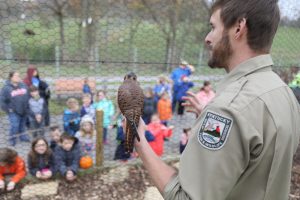
Photo: Kevin Kelly/Kentucky Department of Fish And Wildlife
The Salato Wildlife Education Center in Frankfort will close for the winter at 5 p.m. Wednesday, Nov. 22.
Seasonal closures allow the center’s staff to conduct needed maintenance to exhibits and facilities, which ensure a quality experience for the center’s 50,000 yearly visitors. Staff members also use the time to train the wildlife used in the center’s educational programs.
The center offers a number of wildlife and conservation programs, many of which employ the use of live animals including snakes, turtles, raptors, and mammals.
“Our staff is going to focus on training our two newest program animals during the winter closure,” said Salato manager Brent McCarty. “We’re excited to have two new animals that will help us make connections with our visitors. Our goal is to unveil these animals to the public in the spring of 2018.”
Fans of the center can view see what’s going on behind the scenes during the winter closure on the Salato Facebook page or on the Salato Twitter page. The Salato Wildlife Education Center reopens for the season March 1, 2018.
The Kentucky Department of Fish and Wildlife Resources operates the Salato Center to educate and inform the public about wildlife and conservation. The center is located off U.S. 60 in Frankfort, approximately 1½ miles west of the U.S. 127 intersection. A bronze deer statue marks the entrance of the main Kentucky Fish and Wildlife campus.
Hours are 9 a.m. to 5 p.m. Tuesday through Friday, and 10 a.m. to 5 p.m. Saturday. Salato is closed on Sunday, Monday and state holidays.
Admission is $5 for adults and $3 for youth 5 to 18. Children under 5 are admitted free. The center also offers annual memberships for individuals and families.