Saturday January 24, 2026
Local Connection
 Weather
 Traffic
 @LouisvilleDispatch
 @LouisvilleDisp
 Subscribe
Photo: LouVelo
Mayor Greg Fischer announced that with the financial backing of nine local businesses, Louisville’s bike share program will launch this spring and will be called LouVelo.
LouVelo is owned by Louisville Metro, which has contracted with CycleHop, a leading operator of major municipal bike share programs throughout North America, to run the program. The LouVelo network will begin with 300 bikes positioned at 28 bike share stations in downtown, Old Louisville, NuLu, near Waterfront Park, and points in between.
Another 15 stations are under consideration to expand the network. The city is working with the University of Louisville with an aim to place multiple stations on the school’s Belknap campus by fall 2017. Plans for expansion into other neighborhoods, such as Russell and the Highlands, are also being developed.
The service makes bicycles available for short-term use. The bikes can be picked up at one station and returned to any other station in the system, which makes it easy for people looking to get from one location to another during the work or school day without driving a car, and those riding for leisure, recreation or just touring the city.
LouVelo sponsors include Norton Healthcare, JP Morgan Chase & Co., UPS, Main & Clay, Genscape Inc., The Brown Hotel, KentuckyOne Health, Atria Senior Living, and The Eye Care Institute.
“These great community partners know that quality of life is a critical factor in maintaining and growing a talented workforce in Louisville,” Mayor Fischer said. “LouVelo is one of the many things we’re doing to enhance quality of life in our city.”
“We are pleased to be a sponsor of the bike share program,” said Russell F. Cox, president and CEO of Norton Healthcare. “LouVelo’s goal of offering bicycles across the community aligns with our mission to improve the health of our community.”
The Mayor noted that bike sharing is part of the Move Louisville long-term multimodal transportation plan, which calls for accommodating all users of the city’s transportation system — pedestrians, cyclists, motorists and public transit riders — in the best ways possible. It’s also a great way for people to reduce their carbon footprints and increase wellness while serving the routine objective of getting from one place to another.
LouVelo is another way that Louisville is growing its network of cycling facilities, such as bike lanes, that are making it easier and safer to get around the city on two wheels.
Dave Nelson, Chief Operating Officer of CycleHop, said “We are excited to offer a new mode of public transportation to the residents and visitors of Louisville. Providing healthy, sustainable and fun transit alternatives is at the core of CycleHop’s mission. We are very grateful to Mayor Fischer, our sponsors and everyone in Louisville Metro who has made this mission a reality.”
An official launch will be announced soon. Riders will then be able to buy daily, monthly or annual passes. Until then LouVelo is offering a $99 Founding Member plan that includes an unlimited number of 60-minute rides for a whole year. A station map and signup details are available at www.louvelo.com. LouVelo can also be found on Twitter and Facebook under LouVeloBikes.
Startup costs to develop the LouVelo plan and to purchase and install bikes and stations were funded through a federal Congestion Mitigation and Air Quality grant of $1.1 million matched with $273,000 from Louisville Metro. Operational costs for the program will be covered though user fees, sponsorship, and an annual appropriation from metro in the amount of $50,000.
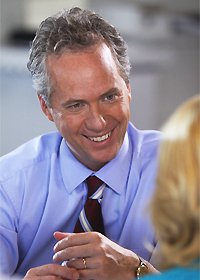 Mayor Greg Fischer announced the appointment of two new key officials with the aim of improving the city’s resilience and improving racial equity.
Eric Friedlander will be Louisville Metro’s Chief Resilience Officer (CRO), leading the city’s efforts to help prepare for, withstand, and bounce back from chronic stresses and acute shocks. The CRO is an essential element of Louisville’s partnership with 100 Resilient Cities – Pioneered by The Rockefeller Foundation.
Kellie Watson will be the city’s Chief Equity Officer, leading the city’s bid to improve racial equity within Louisville Metro’s policies and practices. Equity is a key component of resilience and the two officers will work closely together.
“Our city has been experiencing exceptional growth over the past seven years — $9 billion in investments, and tens of thousands of new jobs. But we have to make sure we’re growing the right way,” Mayor Fischer said. “Under Eric and Kellie, our resilience and equity efforts will collaborate — because we know our most vulnerable citizens are often the hardest hit by crises. Together, they will move forward to strengthen and better prepare our city for the big challenges of today and tomorrow.”
City takes next step as one of the world’s 100 Resilient Cities
Friedlander transitions to the Chief Resilience Officer role after serving since December 2015 as director of the city’s Department of Community Services. He previously served as deputy secretary of the state Cabinet for Health & Family Services and other agency leadership roles.
Friedlander will oversee the development and implementation of a comprehensive Resiliency Strategy for the city. The new position and resiliency efforts are funded and supported through 100 Resilient Cities, which last year selected Louisville to join its network aimed at building urban, environmental and economic resilience.
“My career has been focused on health and human services,” Friedlander said. “The people who are often the first to be hurt in catastrophes big or small, sudden or slow-moving, are often the people who have the least resources. Cities must plan for how to respond to the shocks and stresses found at the intersection of race, poverty, the environment and the economy. I am excited to begin the process of creating Louisville’s Resilience Strategy.”
“Eric will be a key leader in helping Louisville better understand its challenges and develop the solutions to solve them in an equitable and impactful way,” said Michael Berkowitz, President of 100 Resilient Cities. “Eric will lead the city’s resilience building efforts and will bring Louisville significant benefits in the form of private sector contributions, technical expertise, best practices from around the world, and more.”
The CRO will work within city government to break down existing barriers at the local level, account for pre-existing plans, and create partnerships, alliances and financing mechanisms that will address the resilience vulnerabilities of all city residents, with a particular focus on low-income and vulnerable populations. The CRO will focus on issues such as:
- Louisville’s built environment challenges;
- Environmental and sustainability issues; and
- Economic and social challenges that keep all Louisvilians from thriving and reaching opportunity and success.
The CRO will oversee the Department of Community Services, which will be renamed the Department of Resilience and Community Services, and will work closely with the city’s Office of Sustainability and Office of Health Equity to develop and implement the Resiliency Strategy.
Watson to focus on improving equity
Watson assumes the Chief Equity Officer role following nearly three years as the city’s General Counsel. She was previously the city’s Human Resources Director and the Director of the Louisville Metro Human Relations Commission.
Her new assignment will focus on ensuring that policies and practices — on matters ranging from hiring and promotions to procurement procedures — throughout Louisville Metro Government align with Mayor Fischer’s goal of improving racial equity in the city. Both the Department of Human Resources and the Human Relations Commission will report to Watson.
“Louisville Metro reaches citizens in countless ways every single day, and it’s important that we’re always mindful of racial equity as we go about our work,” Watson said. “Mayor Fischer’s goal of ensuring our city is a platform for helping citizens reach their full potential can only be achieved through working toward greater racial equity.”
The new Chief Equity Officer position is part of Mayor Fischer’s efforts to focus on equity issues in Louisville, which included a 2016 city leadership retreat and the city’s work with the Government Alliance on Race and Equity.
“Eric and Kellie are experienced and respected leaders in our city government,” Mayor Fischer said. “They have the know-how to identify and implement concrete steps to make Louisville more resilient and equitable, which benefits every resident in every neighborhood of our city.
“We’re looking to these two outstanding civic leaders to concentrate their efforts — independently and collaborative — to build a more resilient, equitable city.”
New general counsel, Resilience and Community Services director named
Mayor Fischer today also announced that Jeff Mosley will be the city’s new general counsel, and Gena Redmon will become Director of the city’s Department of Resilience and Community Services.
Mosley most recently served as Deputy Chief of Louisville Forward, the city’s integrated economic and community development arm. He’s previously served as general counsel of state agencies, including with the state Finance & Administration Cabinet.
Redmon most recently served as Deputy Director of Community Services, and previously served in the Executive Administrator roles for OMB Grants Administration and Community Services.

Photo: Kentucky Department Fish and Wildlife
Twenty years ago this December, seven elk were released atop Potato Knob in Perry County in front of thousands of onlookers. The landmark restoration of a free roaming elk herd in Kentucky was off and running.
Fast forward to present day. There are now more elk in Kentucky than any state east of the Rocky Mountains and each year the prospect of harvesting one compels tens of thousands of hunters to apply for Kentucky’s quota elk hunts.
Those interested in applying for 2017 should not delay. Applications must be submitted online at fw.ky.gov by midnight (Eastern time) April 30.
“For the person who has always wanted to elk hunt but just couldn’t afford to hunt out west, consider applying for a Kentucky elk quota hunt,” said Gabe Jenkins, elk program coordinator for the Kentucky Department of Fish and Wildlife Resources. “Our application and permit costs are low in comparison and our elk hunters enjoy some of the highest success rates in the country.”
Kentucky residents and those living out of state can apply for each of the four permit types – bull or cow firearms and bull or cow archery/crossbow – but can be drawn for one hunting permit only. Each entry costs $10. Applicants for the youth-only hunt can put in for the regular elk quota hunts as well but cannot be drawn for both in the same year.
This year, Kentucky Fish and Wildlife will issue 700 general quota hunt permits and 10 youth permits. The permit breakdown will be 100 bull archery and crossbow permits, 150 bull firearms permits, 160 cow archery and crossbow permits and 290 cow firearms permits. Youth permits are valid for use for either sex during all elk seasons.
At least 90 percent of the available elk quota hunt permits go to Kentucky residents. Last year, Kentucky Fish and Wildlife received almost 75,000 applications from more than 34,000 applicants. Kentucky residents alone submitted 46,365 applications.
Sixty-eight percent of hunters who were drawn and purchased their elk permit for the 2016-17 season filled their tags.
Bull elk hunters enjoyed the highest rate of success among drawn elk hunters last year. Eighty-one percent filled their tags and 70 percent of hunters utilizing archery and crossbow equipment successfully harvested a bull. The success rate for cow elk was 35 percent for archery and crossbow hunters and 67 percent among hunters using a firearm.
“A drawn hunter isn’t guaranteed an elk but a little planning goes a long way,” Jenkins said. “Whether you’re a do-it-yourselfer or hire a guide, putting in the time and effort goes a long way and increases your chances of success.”
The bull firearms season generates the greatest interest at application time, and understandably so. The past two seasons have produced two state records and five of the 10 largest bull elk taken in Kentucky since the species’ reintroduction in 1997.
The bull firearms season consists of two week-long hunts, one starting in September and one starting in October. Likewise, the cow firearms season is broken into two week-long hunts in December.
The bull archery/crossbow seasons open in September and the cow archery/crossbow seasons open in October. Each runs through Dec. 31. However, hunters drawn for a cow or bull elk archery/crossbow permit cannot hunt when an elk firearms season is open.
Applicants’ names will be drawn at random by the Commonwealth Office of Technology (COT) in May and randomly assigned a permit type based on their application choices. Hunters drawn for an elk hunting permit are blocked from re-applying for three years.
While waiting to learn if you’ve been drawn, explore Kentucky Fish and Wildlife’s website. It offers information about the basics of elk hunting in Kentucky as well as a newer featured called Kentucky Elk University. Designed to educate hunters of all experience levels, this online tutorial covers preparations before an elk hunt, what to expect in the field and what to do after the shot.
EARLY RETURNS: The 2017 spring youth turkey season ended April 2 with hunters reporting a harvest of 1,693 birds.
The youth-only weekend precedes the opening of the 23-day general statewide spring turkey season. This year, the general season opens Saturday, April 15.
AN OUNCE OF PREVENTION: With spring now in full bloom across Kentucky, it’s important to remember to guard against tick bites if you plan to be on their turf.
This means minimizing the amount of exposed skin by tucking pants legs into socks or boots and tucking in your shirt, utilizing repellents containing 20 to 30 percent DEET per the directions on the label and checking your clothing and body after being in wooded and brushy areas and areas with tall grass.
Consider treating clothing and boots with a product containing Permethrin, an insecticide that kills ticks, mosquitos and other pests, but allow any articles treated with Permethrin to dry completely before wearing. One treatment can protect through multiple washings.
Should you find a tick attached, grab the tick with tweezers as close to the skin’s surface as possible and steadily pull straight back to remove. Afterward, clean the area around the bite and wash your hands.
 Councilwoman Cheri Bryant Hamilton invites the community to attend the next District 5 Advisory Committee Meeting on Monday, April 17th at 6:00 pm at the Yearlings Club, located at 4309 W. Broadway.
“As we move forward into spring, we have a great program for the month that includes how you can help young people in need and learn more about a special LMPD Division and what they do to keep our community safe,” says Hamilton.
Councilwoman Hamilton has invited the following guests to make presentations at this month’s meeting:
- Jeri Swinton CEO, Big Brothers Big Sisters of Kentuckiana
- Lt. Billy Hibbs of the LMPD 9th Mobile Division
- Margaret Brosko, Shawnee Neighborhood Clean-up on April 22nd
“So please come join us to find out what else is going on in the district,” says Hamilton.
Any resident of Portland, Russell, Chickasaw or Shawnee is always invited and encouraged to bring their neighborhood concerns to these monthly meetings.
For information about the meeting, contact Councilwoman Hamilton’s office at 574-1105.
As part of an annual extravaganza of compassion and service, thousands of Louisvillians will be volunteering in ways large and small during the Mayor’s annual Week of Service, which runs Saturday through April 23.
One of the week’s largest projects will be the Brightside & Passport Health Plan Spring Community Wide Cleanup on Saturday. Already, more than 16,000 people are committed to making Louisville a greener and cleaner community, by picking up litter and debris from neighborhoods, greenspaces and roadways.
And there is still time to register: Go to www.brightsideinc.org. With the help of sponsors Passport Health Plan and the Kentucky Pride Fund, Brightside provides bags and gloves to all participating groups, and T-shirts to the first 5,000 registrants.
Volunteer for Give A Day Projects
Mayor Greg Fischer will kick off this sixth annual Give A Day week with a 9 a.m. stop Saturday at the Build A Bed event at Meyzeek Middle School, where hundreds of volunteers will work in teams to build beds that will go to Jefferson County Public School children who are sleeping on couches, air mattresses or even the floor.
Other Saturday events include a 3 p.m. bicycle giveaway to refugees at Kentucky Refugee Ministries, thanks to volunteers from Pedal Power; and huge community cleanups and picnics in the California, Parkland and Shelby Park neighborhoods. (Similar events are planned in the Smoketown and Shawnee neighborhoods on April 22.)
The Mayor’s goal for the week, which helps launch the 2017 Kentucky Derby Festival, is to break Louisville’s existing “world record” for caring and helping – set in 2016 with more than 175,000 volunteers and acts of compassion.
“When we decided six years ago to start to focus on celebrating and cultivating compassion as one of our city’s core values, the people of Louisville responded, demonstrating over and over again that this is a city where people believe in the value of doing what our great native son Muhammad Ali called ‘the work of the heart,’” the Mayor said. “That work happens every day in this city. Give A Day simply shines a spotlight on it.”
The Mayor pointed out that participating in the Week of Service can be as simple as dropping food into the Dare to Care bins at all area Kroger stores.
And for the second year in a row, the international WE Day will, in partnership with the Mayor’s office and WLKY, hold a short Walk of Compassion through downtown as a Give A Day event on April 18. The public is invited to join more than 3,000 students participating in the lunch-time walk, carrying signs of compassion.
Students from both private and public schools are a huge component of Give A Day. JCPS’ students will be planting trees, collecting items for local food pantries, organizing campus and neighborhood cleanups, writing thank you cards to police and veterans, and collecting teddy bears for police to have in their cruisers when they make runs on cases involving children.
“We are proud to once again have 100 percent participation from our schools in the Mayor’s Give A Day initiative,” said JCPS Superintendent Dr. Donna Hargens. “Last year, our students logged more than 1,145 days of service – that’s more than three years of kindness, service and citizenship in just one week. This experience gives our students a chance to give back to our community and participate as citizens in our diverse, shared world.”
Most local Catholic schools are also engaged in projects. St. Stephen Martyr, for example, is making care packages for cancer patients, filling decorated bags with things like hard candy, pocket tissues, hand sanitizer, lip balm and small packages of snacks. And fifth-graders at Holy Trinity will be visiting and playing games with residents of the Masonic Home.
Local businesses are also a huge part of the Week of Service, as companies large and small contribute their time, talent and treasure on projects throughout the community.
Volunteers are still needed for more than 100 projects of all kinds. To register, go to the website: www.mygiveaday.com and click on “volunteer for an existing project.”
Groups and individuals are urged to use the same website to report projects and good deeds they are doing on their own.
Thousands of volunteers will join together on Saturday, April 15 for the bi-annual Brightside & Passport Health Plan Spring Community-Wide Cleanup to pick up litter and beautify sites across Louisville.
More than 200 groups — Boy & Girl Scouts, neighborhood associations, business associations, elementary school classrooms, families and more — will be participating in Saturday’s event, which serves as the kick off to Mayor Fischer’s Give A Day Week of Service, April 15-23.
“A clean street is something that residents in all corners of our city can agree is important to the quality of life in our neighborhoods,” Mayor Greg Fischer said. “I encourage neighbors to work together and work with Brightside to keep our streets litter-free.”
To participate, volunteers choose their own cleanup site and coordinate with Brightside to receive gloves, bags, and for the first 5,000 volunteers, T-shirts. Trash pick-up will be coordinated with Louisville Metro Solid Waste Management Services. The cleanup is sponsored by Passport Health Plan.
“We are thrilled to be the title sponsor of the 2017 Brightside & Passport Health Plan Spring Community-Wide Cleanup,” said Mark B. Carter, CEO of Passport Health Plan. “We come together with Mayor Fischer, Brightside and all Louisville residents in the knowledge that a cleaner city helps all residents improve their health and overall quality of life.”
Cleanups are an integral part of Brightside’s mission, and without the help of volunteer groups and many other volunteers throughout the year, Brightside could not meet its goal of a cleaner, greener Louisville. Neighborhoods can hold their own cleanups at any point throughout the year, and Brightside encourages neighborhood associations, block watches, businesses and faith groups to play an active role in keeping their neighborhoods litter-free.
Registration for the April 15 community-wide cleanup is still open. Visit the Brightside website at www.brightsideinc.org to complete the registration form or call (502) 574-2613 to register your team.
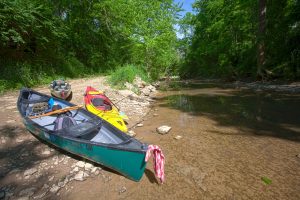
Photo: Kentucky Department Fish and Wildlife
The weather forecast calls for a redbud winter to hit this week. This old saying refers to cold snaps that occur in early April when the redbud trees bloom.
The up and down nature of spring weather can cause consternation among anglers when planning fishing trips. Concerns about the weather is one of three things to consider when planning fishing trips this spring.
1. Barometric pressure is key to unlocking fish behavior in spring:
Barometric pressure is the measurement of the weight of an entire column of air pressing down upon the Earth. Approaching storm fronts in spring ease this weight, resulting in low barometric pressure. The low pressure releases humidity trapped in the atmosphere, resulting in rain or snow.
The dark, low clouds, winds and precipitation that accompany low pressure systems limit light penetration into the water column, providing a better environment for predator fish to ambush prey. Fish do bite better before a front.
High pressure systems follow low pressure frontal systems. In North America, high pressure systems flow out in a clockwise pattern, resulting first in winds from the north and eventually from the east.
“I don’t believe in too many old wives tales when it comes to fishing, but ‘wind from the east, fish bite least’ is one I do believe in,” said Maj. Shane Carrier, assistant director of Law Enforcement for the Kentucky Department of Fish and Wildlife Resources. “I don’t catch many fish when the wind is from the east.”
A couple of days of stable weather in spring ease the influence of high pressure and get fish biting again. The sunny days typical of high pressure warm the water and stir fish activity.
Plan your trips this spring to fish either right before a low pressure system or on the third or fourth day of stable weather.
2. Making sense of the USGS streamflow charts to plan float trips on Kentucky streams:
The streamflow information on the U.S. Geological Survey (USGS) webpage at www.waterdata.usgs.gov provides invaluable information for paddlers and anglers. On this page, select Kentucky from the drop down menu on the top right hand corner to view the flow on streams on all of the river drainages in Kentucky.
The rate of flow on this page shows as CFS or cubic feet per second. The cubic feet per second expresses the amount of flow that passes the USGS stream gauges per second. The higher the CFS, the higher and swifter the water.
The chart for an individual stream shows the discharge for each day of the preceding week as well as the current day. A small triangle on the chart shows the median, or midpoint, flow for each day based on years of data. A flow measuring much higher than the median means high, and usually muddy, water, not the best conditions for fishing and floating.
A flow under the median usually means tolerable fishing and paddling conditions. The USGS streamflow page also has a chart showing the gauge height for each stream. This helps flesh out the data provided by the streamflow chart. This chart provides a good mental image of the rise, fall or stability of the stream over the last week.
The new Canoeing and Kayaking page on the Kentucky Fish and Wildlife website at www.fw.ky.gov is another invaluable repository of information for stream anglers and paddlers. This page leads to information collected by biologists concerning the fish populations in a stream, the recommended levels for floating selected streams, photos of access sites and fishing tips. The page also contains a link to the Blue Water Trails series, an ongoing initiative detailing the paddling and fishing on streams across Kentucky as well as a printable map.
3. What is a daily creel limit and a possession limit for fishing?
Anglers often get confused about these terms, especially when they are fishing three or more to a boat.
“Whenever anyone is fishing in Kentucky, each angler is entitled to the daily creel limit for that species on that lake, river or stream,” Carrier explained. “There is no boat limit in Kentucky.”
For example, if three anglers fish for crappie on Kentucky Lake out of one boat, each is entitled to 20 crappie, the daily creel limit for crappie on Kentucky Lake and Lake Barkley. There is also a 10-inch minimum size limit for crappie on these lakes, therefore anglers must immediately release any crappie caught less than 10 inches long.
The possession limit is the amount of unprocessed fish a person may hold after two or more days of fishing. In Kentucky, this amount is two times the daily creel limit for any species that has a daily creel limit.
Keep these things in mind as you plan and execute fishing trips this spring. Remember to buy your 2017-2018 fishing license, as the new license year began March 1.