Tuesday January 27, 2026
Local Connection
 Weather
 Traffic
 @LouisvilleDispatch
 @LouisvilleDisp
 Subscribe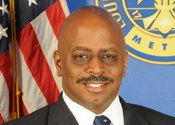
Photo: Louisville Metro Council
President David James invites residents of District 6 to come out to the next “Talk with David” on Saturday, March 24th. It’s an opportunity to meet with the Councilman and talk about any issue or concern from residents in an informal, relaxed setting.
“I am encouraging everyone to come out and just talk with me on a Saturday morning,” says James. “This is another way to let me know what is on your mind and how I can better serve as your Metro Councilman.”
“Talk with David” will be held at the Old Louisville Neighborhood Council, 1340 South 4th Street. The event begins at 10:00am.
“If you have a concern, come and talk to me about it. Not everyone has time during the week to come down to City Hall to talk things over,” says James. “If nothing else, just drop by and say hi!”
Refreshments will be served and everyone is welcome.
For more information about “Talk with David “, contact Councilman James’ office at 574-1106.
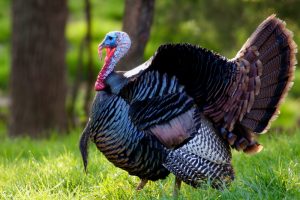
Photo: Kentucky Department Fish and Wildlife
The landscape awakens almost spontaneously from its winter slumber. Winter flocks break up into smaller groups. Innumerable turkey calls and lifelike decoys reappear at sporting goods retailers.
Turkey hunters interpret these occurrences as signs that it will not be long before they are easing into their spots before dawn, filled with anticipation.
In Kentucky, hunters still have ample time to scout and develop a game plan to increase their odds of success in the upcoming spring turkey season. This year, Kentucky’s youth-only season is the weekend of April 7-8. The start of the 23-day general statewide season follows on April 14. It ends May 6.
“Start at the computer then get out in the field to find birds,” said Zak Danks, wild turkey program coordinator with the Kentucky Department of Fish and Wildlife Resources. “Know some different approaches you might take and where you can move based on gobbling you hear once the season starts. Think about some good set-up spots or places to put your decoys, or vantage points to see birds.”
Virtual scouting can save precious time for hunters looking to hunt public land. Topographic maps and satellite views may reveal access points, existing trails, open fields, wooded areas, elevation changes and creeks or fences where approaching gobblers could hang up. Kentucky offers dozens of wildlife management areas and other lands open for public use. As a reminder, turkey calling is not allowed from March 1 until the opening of the youth-only season, and from the close of that season until the opening of the statewide season. Hunters may still use an owl, crow or other calls to locate turkeys while scouting.
It is always a good practice before the season to shoot your shotgun at a paper turkey head target using different brands of turkey loads. By patterning a shotgun ahead of time, the hunter knows the shotgun will shoot where it is aimed and deliver an acceptable number of pellets to the turkey’s vital area (head and neck).
“One thing I’ve learned over the past several years is just how good the hunting can be later in the season,” Danks said. “Last year, in particular, I had hunters contacting me well after the season ended saying they were still hearing turkeys gobble. So don’t get discouraged if you don’t have success early on. There’s still time to find turkeys throughout the season.”
In Kentucky, the spring hunting seasons are timed to give gobblers enough time to breed hens before subjecting the birds to hunting pressure. Kentucky Fish and Wildlife monitors turkey reproduction on a statewide scale through annual summer brood surveys.
Weather during the nesting period in May and June influences reproductive success. Heavy rains in Kentucky and surrounding states during that timeframe last year affected nesting success, which reflected in a statewide average of 1.2 pounds per hen. A figure of 2.0 or higher is optimal. Hunters should expect to encounter fewer of the more easily fooled jakes as a result this season.
Kentucky annually ranks first or second among surrounding states in the number of turkeys taken per square mile.
Hunters took a record number of birds during the 2010 spring season and have averaged more than 31,000 birds over the seven seasons since.
Last spring, hunters reported taking 33,061 birds, which represents a 6 percent increase over the previous year and the third highest total on record. Muhlenberg County led all counties with hunters reporting 681 birds taken there. Looking at it differently, Pendleton County led the state with 1.76 birds harvested per square mile.
The majority of counties are showing a stable to increasing harvest trend over the past decade. Some counties are exhibiting lower harvest totals. In response, Kentucky Fish and Wildlife is expanding efforts to monitor the turkey population and reproduction. Feedback from hunters will play an important role.
A new spring hunting log and post-season survey will soon be available on the department’s website at www.fw.ky.gov. On the homepage, type “Spring Turkey Hunting” into the search box. The log serves to collect information about a hunter’s daily hunting effort, number of turkeys seen, heard and harvested, observations about weather and other species observed. The post-season survey will include questions about spring hunting experiences.
“Our harvest totals tell us that we’re still in a pretty good situation on a statewide level,” Danks said. “We are hearing from people who tell us they’re not seeing as many turkeys as they had in the past. Most of that is from counties that have shown a decrease in harvest. What’s the reason? It’s difficult to determine on a statewide scale when all we’ve had to go on is harvest. We need information on hunter effort on a county level.
“The information gained from these hunter surveys and logs should help us track trends across the state.”
Hunters are allowed a limit of two bearded birds during the spring season, but no more than one bearded bird may be taken in a day.
The 2018 Kentucky Spring Hunting Guide provides information about current regulations, licenses and permits, legal equipment, safety tips and more. Find it online at fw.ky.gov or wherever licenses are sold.
Hunters also will have an opportunity to have their questions about spring turkey season answered during a special “Kentucky Afield” TV call-in show scheduled Saturday, March 24. The live one-hour show will air at 8 p.m. Eastern/7 p.m. Central on Kentucky Educational Television (KET). Joining host Chad Miles for the show will be Danks and pioneering turkey hunter Harold Knight.
 Ashlee Kemper, a third-grade teacher at Cochran Elementary School, has been presented with the Excellence in Classroom and Educational Leadership (ExCEL) Award. Representatives from Jefferson County Public Schools (JCPS) and from the award sponsors — LG&E and KU and WHAS11 — honored the teacher on March 20 during a ceremony at the school.
“Mrs. Kemper is kind and patient, all the while setting extremely high expectations for all children and holding all children accountable,” said Principal Tim Foster. “Her presence on our faculty is one of the reasons we have been able to move our school forward. She is what all principals pray for.”
Kemper is the past recipient of several educational awards, including Student Teacher of the Year at the University of Louisville and the 2014 Hilliard Lyons Teacher of the Year. In addition, she serves as a teacher leader at the school and is an active participant in her professional learning community.
“Ashlee knows her students very well, and because of this knowledge she is able to assist students in setting goals in all content areas and then helping them achieve those goals,” said Susan Spencer, a goal clarity coach at Cochran. “Through her knowledge and relationship building with her students she is able to set a tone of community in her classroom like no other.”
As part of LG&E and KU’s commitment to supporting education across the communities it serves, Kemper and other ExCEL Award winning teachers each receive a $1,000 instructional grant from the company.

Photo: Cabinet for Health and Family Services
A new tool launched by the Cabinet for Health and Family Services’ (CHFS) KASPER program–Kentucky All Schedule Prescription Electronic Reporting – allows healthcare providers to gauge how their prescribing patterns compare with their peers. The Prescriber Report Card feature is the latest enhancement to the nationally recognized prescription drug monitoring program.
“The new KASPER Prescriber Report Card is intended to increase the usefulness of KASPER as a tool for our healthcare providers to improve patient treatment and outcomes,” said CHFS Acting Secretary Scott Brinkman. “We are very pleased with the initial response and welcome additional prescriber suggestions on the Prescriber Report Card and other ways we can make KASPER a more effective tool to help address the opioid epidemic.”
Data from the controlled substance prescribing tool can be used to compare prescribing patterns with other prescribers in a respective specialty area as well as identify the number of patients who may be at higher risk of a problem due to inappropriate controlled substance usage or potential interactions among controlled substances.
KASPER can also be used as a licensure and enforcement tool. Prescriber professional licensure boards may obtain copies of prescriber report cards to support their licensee reviews.
“The Board has looked at the KASPER Prescriber Report Card and could not be more excited about its availability to physicians and other prescribers in Kentucky,” said Mike Rodman, Executive Director of the Kentucky Board of Medical Licensure. “It is a wonderful tool for physicians to compare their own prescribing habits with peers within their specialty and throughout the state. The Board encourages all physicians to take a moment and review this important data, which allows them to self-reflect on their own prescribing practices and decide whether they need to make any adjustments. The Board recognizes the Cabinet for all their hard work on this special project and knows that physicians throughout the state will find this information helpful as they care for their patients.”
The new tool received similar accolades from the Kentucky Medical Association (KMA).
“We believe the new KASPER Prescriber Report Card will be a useful tool for physicians to record and compare their prescribing patterns, which could ultimately improve patient safety and overall public health,” said KMA Executive Vice President Pat Padgett.
The KASPER system tracks controlled substance prescriptions dispensed within the state. A KASPER report lists all scheduled prescriptions for an individual for a specified time period, along with the prescriber and the dispenser information. Use of KASPER by practitioners and pharmacists is vital to improving public health and patient safety in Kentucky.
“The prescriber report card has enlightened (me) about the amount of opioids prescribed by, not only myself, but also my fellow Orthopedic Surgeons,” concluded Dr. Joshua Owens, an Orthopedic Surgeon in Maysville. “We as surgeons have a responsibility to our patients and communities to utilize all the resources available to help curb prescribing medications that are very addictive.
For more information on KASPER or to view the Prescriber Report Card User Guide, please visit: http://www.chfs.ky.gov/os/oig/KASPER.htm.
 More than 75,000 trucking professionals and representatives will park in Louisville March 22-24 for the Mid-America Trucking Show (MATS), the largest annual heavy-duty trucking industry event in the world.
The Kentucky Exposition Center has hosted MATS every year since 1972, and the show brings $26 million in economic impact to the Louisville region.
This industry-only event accommodates the entire trucking industry in one venue, so professionals can see new products and services; test drive new trucks and technology; connect with suppliers, distributors and customers; and stay up-to-date with changes in the industry.
More than 1,000 exhibitors will showcase everything from engines to electronics, tools to tires and sealants to sleeper cabs – plus a large number of recruiters will be in attendance. Numerous seminars offer educational opportunities for companies, fleets and trucking professionals.
For more information, visit www.truckingshow.com.
Louisville Metro Senior Nutrition Program announced its support and participation in the 16th annual March for Meals – the month-long, nationwide celebration of Meals on Wheels and the homebound and vulnerable seniors who rely on this vital safety net.
“The services that we provide the seniors of Louisville are critical and the need is rapidly increasing,” said Faith Aeilts, program manager for the city’s Senior Nutrition Program, part of Louisville Metro Office of Resilience and Community Services. “Together, we can keep seniors living independently, healthier at home and feeling more connected to their community as they age.”
The Senior Nutrition Program works year-round to help seniors stay healthy by providing hot, nutritious meals. Through the Meals on Wheels program, hundreds of volunteers helped deliver over 100,000 hot noontime meals last year to qualified individuals. Another 90,000 meals were served to active seniors at more than 20 congregate meal sites, which offer seniors an opportunity for a nutritious lunch, socialization and activities.
“This March, hundreds of local Meals on Wheels programs will rally their communities to build the support that will enable them to deliver nutritious meals, friendly visits and safety checks to America’s most at-risk seniors all year long,” said Ellie Hollander, President and CEO of Meals on Wheels America. “With the demand for Meals on Wheels increasing along with our country’s senior population, we need to ensure that seniors are not forgotten.”
To spotlight important services provided by the Senior Nutrition Program and to help recruit volunteers, Mayor Greg Fischer, six Louisville Metro Council members and other local leaders will help deliver meals to homebound seniors during March. This Week, March 19 – 23, the following individuals will deliver meals: Council Members Jessica Green (District 1), Barbara Sexton Smith (District 4), Brandon Coan (District 8), Bill Hollander (District 9), Pat Mulvihill (District 10), and Vicki Aubrey Welch (District 13) along with Becky Peak, Mayor of the City of Plantation.
Mayor Fischer will deliver meals on March 22 in the Buechel area. Resilience and Community Services Director Gena Redmon and Chief Resilience Officer Eric Friedlander will also be participating this month as well.
The Senior Nutrition Program seeks volunteers all year long to help in a variety of capacities, including packaging and serving meals at one of the congregate sites, and delivering meals to homebound clients. For more information about volunteering, call (502) 574-6420. Volunteer drivers are especially needed for routes in the west and south ends of Louisville. To make a financial donation to Meals on Wheels, click here for Louisville Metro’s secure on-line donation form.
Meals on Wheels is available to qualified seniors in Jefferson County, 60 years or older, who are homebound with no one available to help prepare meals. Seniors who would like to receive Meals on Wheels can call (502) 574-6325 to begin the qualification process. The senior congregate sites for more active seniors, 60 and older, can be found by calling the same number above or by visiting https://louisvilleky.gov/government/resilience-and-community-services/senior-nutrition-program. Sites require a one-day advanced reservation.
 Mayor Greg Fischer announced today the kickoff of Louisville’s participation in National Youth Violence Prevention Week, a campaign to boost violence prevention awareness and strategies for youth, parents, teachers, school personnel and community members.
From March 19 to March 23, nearly 100 activities, trainings, art projects and anti-violence campaigns will be held by Louisville schools and other youth-serving organizations throughout the community. Activities were identified by 40 young leaders convened for planning sessions and will center on violence prevention strategies such as knowing the signs of violence to prevent it before it happens, promoting respect and tolerance, being an upstander, resolving conflicts peacefully and uniting in action.
The week is a partnership among Mayor Fischer’s Office for Safe and Healthy Neighborhoods, Jefferson County Public Schools, Cities United, Metro United Way, Peace Education, Centerstone, Muhammad Ali Center, Center for Women and Families, Louisville Metro Police and other groups, and part of a national initiative organized by Students Against Violence Everywhere (SAVE), an initiative of Newtown, Connecticut-based group Sandy Hook Promise.
“Teaching young people strategies to prevent youth violence before it starts is another building block toward our goal to create a compassionate city where every youth feels safe and has the opportunity to reach their full potential,” Mayor Fischer said. “This week shows the important role young people can have, and want to have, in making their communities safer.”
“As superintendent, I’m so proud of the positive steps our students and staff are taking to promote inclusion and reduce violence, not just this week but throughout the year,” said Dr. Marty Pollio, superintendent of Jefferson County Public Schools. “Safety is our highest priority, and it’s profoundly rewarding to see this next generation of leaders taking up that mantle to model, by word and deed, what needs to be done to make their schools and communities safer.”
According to SAVE, 60 percent of American children are exposed to violence, crime or abuse in their homes, schools or communities. The issue of youth violence prevention has once again come under a national spotlight following school shootings in Parkland, Fla. and Marshall County, Ky. Recently, students from across the United States, including Louisville, walked out of schools to recognize victims of shootings and call for measures to reduce school violence.
National Youth Violence Prevention Week is just one of the efforts coordinated by the Office of Safe and Health Neighborhoods, created by Mayor Fischer in 2013 and charged with helping create a city of safe neighborhoods, where everyone is supported, free of violence, and prepared for lifelong success. Throughout the week, participants will be using the social media hashtags #LouYVPW and #NYVPW.
Media wishing to visit school activities on March 19 for b-roll or reporting may consider the following:
Carter Traditional Elementary, 3600 Bohne Ave, Louisville, KY 40211, is partnering with the Junior League of Louisville for a ‘Painting a Pathway for Peace’ activity until 3 p.m. on the 19th. All students and staff will paint pebbles throughout the day as a symbol of working together for a common goal; the colored pebbles will then be used to fill in a pathway in the school’s courtyard as a visual reminder of the project.
At Kammerer Middle School, 7315 Wesboro Road, students in various grades will be displaying posters and chain links with non-violence themes in the hallways, and airing student-made public service announcements about peace and inclusion throughout the day.