Thursday January 22, 2026
Local Connection
 Weather
 Traffic
 @LouisvilleDispatch
 @LouisvilleDisp
 Subscribe
By Laura Mullaney
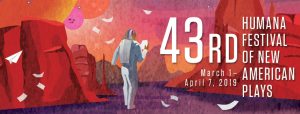 Actors Theatre of Louisville proudly announces the lineup for the 43rd Humana Festival of New American Plays. A cultural highlight for theatre lovers, artists and producers across the country, the Humana Festival runs March 1 through April 7, 2019 in Louisville.
This year’s Festival program will feature five world premieres, listed in order of first performance:
- We’ve Come to Believe by Kara Lee Corthron, Emily Feldman and Matthew Paul Olmos
- The Corpse Washer adapted by Ismail Khalidi and Naomi Wallace, from the novel of the same name by Sinan Antoon
- The Thin Place by Lucas Hnath
- How to Defend Yourself by Lily Padilla, co-world premiere with Victory Gardens Theater
- Everybody Black by Dave Harris
By investing in the future of playwriting, Actors Theatre makes a significant impact not only on the national theatre canon, but also on the economic prosperity and cultural vibrancy of Louisville. The 2018 Festival was attended by more than 38,000 people, with visitors from 41 states and 52 colleges and universities represented in the audience.
For over four decades, Actors Theatre of Louisville has been a driving force in new play development, introducing more than 450 plays into the American theatre repertoire and representing the work of more than 400 playwrights and ensembles. The internationally acclaimed Humana Festival is recognized as a crucial incubator for new work and a launchpad for myriad subsequent productions around the country and the world. Plays that have recently premiered at Actors Theatre—including Molly Smith Metzler’s Cry it Out, Leah Nanako Winkler’s God Said This, Jen Silverman’s The Roommate and Colman Domingo’s Dot—have continued to be produced on stages far and wide.
This year’s lineup of plays will be performed in rotating repertory in three theatres located in Actors Theatre’s downtown Louisville complex: the 633-seat Pamela Brown Auditorium, 318-seat Bingham Theatre and 159-seat Victor Jory Theatre. The 2019 Humana Festival schedule also offers a weekend of enrichment events for college students, and features special weekend packages for theatre lovers and practitioners alike. These weekends are packed with discussions, networking opportunities and parties, making Louisville an exciting destination for the American theatre this spring.
Weekend packages for the 2019 Humana Festival of New American Plays are now on sale and are available for the following weekends, enabling you to see a variety of Humana Festival plays and access special events: March 15-17, March 22-24, March 29-31 and April 5-7, 2019. Packages are available for theatre lovers and practitioners on all Festival weekends, and for college students and professors the weekend of March 22-24.. Single tickets prices start at $25, and go on sale January 3, 2019. For more information, please visit ActorsTheatre.org or call our Box Office at 502.584.1205.
Actors Theatre celebrates the 43rd Humana Festival with underwriter the Humana Foundation, the philanthropic arm of Humana, Inc. Additional support is provided by the National Endowment for the Arts and The Harold and Mimi Steinberg Charitable Trust.
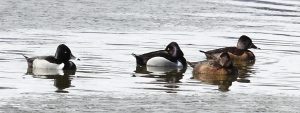
Photo: Kentucky Department Fish And Wildlife
The first snippets of snow fell this week, making most people frown, but put a smile on the faces of Kentucky waterfowl hunters. The cold weather the week before the waterfowl season opener on Thanksgiving Day is a good sign.
“Waterfowl hunting in Kentucky is nearly 100 percent weather dependent,” said Wes Little, migratory bird biologist for the Kentucky Department of Fish and Wildlife Resources. “We will have more birds to hunt if we get cold weather to the north of Kentucky. If we continue with this cold weather, we should have a good opener.”
Little said fantastic habitat conditions for waterfowl await those birds. “The moist soil vegetation such as wild ryes, annual smartweeds, millets and sedges are looking great across the state. The habitat is here and population wise, we are living the glory days.”
A slight dip in duck numbers in 2018 resulting from adverse weather conditions during breeding season in the prairie-pothole region on the northern Great Plains and Canada in 2017 should not concern waterfowl hunters. “We are still well above the long term average for duck numbers,” Little said. “This trend is basically a blip and should not impact hunting at all.”
New public waterfowl hunting opportunities on Sloughs Wildlife Management Area (WMA) in Henderson and Union counties offer a chance for excellent hunting each week of the season. Little explained hunters who have not put in for a quota hunt on the area may try for a minimum of 10 slots via a weekly draw each Monday night of the season.
“Nine of those slots are on the Jenny Hole Unit with one on the Sauerheber Unit,” Little explained. “More slots may be available if those drawn for quota hunts on the area don’t check in on the Sunday before their hunts.”
Waterfowl hunters on Ballard WMA in Ballard County, an anchor of Kentucky waterfowl hunting for decades, no longer have to hunt from blinds. “For the first time, a few boat-in hunting spots are available on Ballard WMA,” Little said. “There are many wade and shoot opportunities as well.”
Boatwright WMA, also in Ballard County, and Doug Travis WMA in Carlisle and Hickman counties, offer daily walk-in waterfowl hunting. For more information on these opportunities, refer to the 2018-2019 Kentucky Waterfowl Hunting Guide available in a printable PDF format at the Kentucky Fish and Wildlife webpage at www.fw.ky.gov. There is no longer a paper version of this guide.
Little said Cedar Creek Lake in Lincoln County, Barren River Lake in Allen and Barren counties and Green River Lake in Adair and Taylor counties offer some of the best waterfowl hunting in the central Kentucky region. He also recommended Cave Run Lake for duck hunting in east Kentucky, especially later in the season. Goose hunting is not permitted on most of Cave Run Lake. The Ohio River also offers good later season duck and goose hunting.
Hunters without a boat and other gear needed to hunt large bodies of water should try farm ponds. “Farm ponds always provide opportunity,” Little said. “You must get permission from the landowner. Do not be afraid to ask, many landowners with resident goose issues are open to waterfowl hunters. Do not forget to close the gate behind you; that is the number one way to lose hunting permission on a farm.”
Steel shotshells in No. 2 through No. 4 work well for ducks while those in BB through No. 2 make good goose loads. “The modern non-toxic loads with tungsten or bismuth allow hunters to use smaller shot sizes,” Little said.
“I mostly use 3-inch, steel shotshells with 1 1-4 ounces of shot for waterfowl hunting,” Little said. Waterfowl hunters may not use or possess lead shot while hunting.
Duck, coot and merganser season opens Thanksgiving Day, Nov. 22 and closes Nov. 25. This season opens again Dec. 3 and closes Jan. 27, 2019. Goose season also opens Thanksgiving Day, Nov. 22 and closes Feb. 15, 2019.
As a reminder, waterfowl hunters must complete a short survey and get their Harvest Information Program (H.I.P.) confirmation number before hunting. Visit the Kentucky Fish and Wildlife homepage at www.fw.ky.gov and click on the “My Profile” tab to begin. The process takes less than 5 minutes.
In addition to the H.I.P. confirmation number, waterfowl hunters need a valid Kentucky hunting license as well as a Kentucky Migratory Bird – Waterfowl Hunting Permit along with a signed Federal Duck Stamp to be legal waterfowl hunters.
Waterfowl hunting provides a fun reason to get outside in winter while providing excellent tasting, nutritious table fare. A meal featuring properly cooked duck is as good as any expensive restaurant
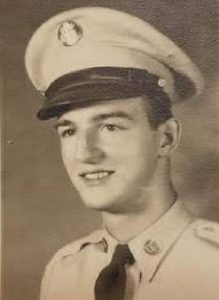 Gov. Matt Bevin today recognized the sacrifice of a Kentucky soldier who died in the Korean War, but whose remains have just been positively identified and are in the process of being returned to his family in Irvington.
Army Pvt. Robert J. Sipes, Jr., 19, died on Nov. 30, 1950, was accounted for on Oct. 23, 2018, and will be buried in his hometown on December 5, 2018.
In November 1950, Sipes was a member of Company L, 3rd Battalion, 7th Cavalry Regiment, 1st Cavalry Division. He was killed in action on Nov. 30, 1950, during heavy fighting between the Chinese People’s Volunteer Forces (CPVF) and the 7th Cavalry Regiment near the village of Unsan, North Korea. His remains were processed through a 7th Cavalry Regiment Collection Station on Dec. 1, 1950, and interred at the United Nations Military Cemetery (UNMC) Pyongyang on Dec. 2, 1950.
On Aug. 17, 1954, the United Nations Command (UNC) and North Korea, along with the CPVF, reached an agreement regarding the recovery and return of war dead. The agreement, known as Operation Glory, resulted in the turnover of 4,200 sets of remains to the UNC, including more than 400 sets reportedly disinterred from Pyongyang. One set of remains, designated N-16678 could not be identified, and was subsequently interred at the National Memorial Cemetery of the Pacific in Honolulu (known as the Punchbowl), as an Unknown.
In June 2017, Defense POW/MIA Accounting Agency (DPAA) disinterred Unknown X-16678 for identification.
To identify Sipes’ remains, scientists from DPAA and the Armed Forces Medical Examiner System used mitochondrial DNA (mtDNA) analysis, dental, anthropological, and chest radiograph comparison analysis, as well as circumstantial and material evidence.
Service arrangements for Pvt. Sipes are not yet complete.
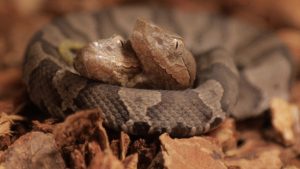
Photo: Kentucky Department Fish And Wildlife
Less than two weeks remain to see a rare, two-headed copperhead snake before the Salato Wildlife Education Center in Frankfort closes for the winter.
The unique, month-old copperhead is on display from 10 a.m. to 4 p.m. every Tuesday through Saturday. Time to view the snake is limited, however, as the Salato Center closes for the season after Nov. 21. Salato will reopen March 1, 2019.
The Salato Center closes seasonally each year to allow the staff to maintain and update exhibits and facilities. This helps ensure a quality experience for the 50,000 visitors who come to the center each year.
During this year’s closure, center staff plan to expand the existing indoor snake exhibit, among other projects. Work to clear hiking trails blocked by fallen trees is planned during this time. Staff closed trails through Davison Woods in the fall, due to the number of trees felled by a severe storm.
Fans of the Salato Center can see what’s going on behind the scenes during the winter closure by following the Salato Facebook or Salato Twitter page.
The Kentucky Department of Fish and Wildlife Resources operates the Salato Center to educate and inform the public about wildlife and conservation. The center is located off U.S. 60 in Frankfort, approximately 1½ miles west of the U.S. 127 intersection. A bronze deer statue marks the entrance of the main Kentucky Fish and Wildlife campus.
Hours are 9 a.m. to 5 p.m. Tuesday through Friday, and 10 a.m. to 5 p.m. Saturday. Salato is closed on Sunday, Monday and state holidays.
Admission is $5 for adults and $3 for youth 5 to 18. Children 4 and under are admitted free. The center also offers annual memberships for individuals and families.
In honor of Veteran’s Day, all veterans and active military personnel with valid identification will be admitted free on Saturday, Nov. 10.
 Lakshmi Sriraman of Lexington built a career as a performer and teacher of classical Indian dancing, but in February 2017 she added another layer to her artistry when she started painting.
Sriraman split her time between dance rehearsal and the canvas, and eventually decided in 2018 to apply for the Kentucky Arts Council’s Kentucky Crafted arts marketing program. In September, she was one of nine Kentucky artists juried into the elite program.
Kentucky Crafted is an adjudicated arts marketing assistance program that provides opportunities to Kentucky visual and craft artists through arts business training, networking, sales, exhibit and promotional opportunities. Adjudicated visual and craft artists become eligible to exhibit at The Kentucky Crafted Market, March 15-17, 2019, at the Kentucky Horse Park’s Alltech Arena in Lexington.
“It’s a tremendous validation of an artist to be selected for Kentucky Crafted, especially since I’m a self-starting artist,” Sriraman said. “I literally started painting in February 2017 and I’ve had a lot of feedback from friends who said I should apply. I was hesitant in the beginning, but I said, ‘I’m going to do it.’ The worst that could happen is that I’d get good constructive criticism on how to improve my application in the future.”
Sriraman was already familiar with the arts council’s jurying process, having been adjudicated into the Performing Artists Directory in 2013.
“I’m very grateful for the support and infrastructure the Kentucky Arts Council provides to artists here,” she said. “When I see the care the arts council takes with the adjudication process, I realize it’s all there for a reason. The arts council highlights the best in Kentucky art, and it’s a great honor to be included in that list.”
Teresa Webb is another relatively new artist who was juried into Kentucky Crafted. She creates unique dolls in her home-based studio in Berea. She agreed with Sriraman that there’s a validation in carrying the Kentucky Crafted brand.
“I’m no longer a hobbyist,” she said. “I can finally say I’m a maker.”
Webb is looking forward to joining the community of Kentucky’s finest visual and craft artists, and is interested in expanding her business.
“I would love to be able to contact someone and say, ‘I know you do woodworking, but how can what you’re doing relate to what I’m doing?’ I want to keep learning. It’s a whole new world. I want to learn from others so I can apply those lessons to my craft.”
The new Kentucky Crafted program artists are:
- Robert Bridges (Rob Bridges Illustration), Georgetown, painting
- Margaret Cooney (Cooney Pottery), Elizabethtown, ceramics
- Michelle Hayden (Michelle Hayden Fine Art), Richmond, sculpture
- Edward Lawrence (Zedz Press), Frankfort, photography
- Sharon Matisoff, Frankfort, painting
- David Neace, Nicholasville, painting
- Lakshmi Sriraman (Lakshmi’s Studio), Lexington, painting
- Teresa Webb (Worker Bee Sewing Co.), Berea, fiber art
- Mary Ann Woolery-Bussey (Blue Lick Hollow), Berea, fiber art
Applicants to the program must be visual or craft artists who have a well-developed body of work in any medium, full-time residents of Kentucky, and over the age of 18. For more information on the Kentucky Crafted program, contact Dave Blevins at david.blevins@ky.gov or 502-892-3120.
 Applications are now being taken for mobility-impaired hunters wishing to hunt from two specially constructed blinds at Doug Travis Wildlife Management Area (WMA) in Hickman and Carlisle counties. Applications for these quota hunts must be postmarked by Nov. 15.
“One blind, Blind 19, is a boat-only blind, built for mobility-impaired hunters,” said Wes Little, migratory bird biologist for the Kentucky Department of Fish and Wildlife Resources. “The whole boat hides in this blind. The other blind, Blind 13, is an above ground blind that is wheelchair accessible. The mobility-impaired hunt party will be able to drive to this blind.”
The hunt dates for the mobility-impaired quota hunts during 2018-2019 are: Nov. 22–25; Dec. 3–6; Dec. 7-9; Dec. 10–13; Dec. 14–16; Dec. 17–20; Dec. 21–23; Dec. 24–27 and Dec. 28–30; Dec. 31, 2018 – Jan. 3, 2019; Jan. 4–6; Jan. 7–10; Jan. 9–12; Jan. 11–13; Jan 14–17; Jan. 18–20; Jan. 21–24; and Jan. 25–27.
To register to be drawn for this blind during one or more of the mobility impaired hunts, mail a 3 x 5 white index card in an envelope addressed to:
Kentucky Department of Fish and Wildlife Resources
Attn: Wes Little – Doug Travis WMA Mobility-Impaired Waterfowl Hunt Application
1 Sportsman’s Lane
Frankfort, KY 40601
The envelope must be postmarked between Nov. 1 and Nov. 15.
“Hunters must specify on the index card the dates for which they are applying and list them in order of preference,” Little said. “While they may apply for up to three hunting dates, they can only be drawn for one hunt. The index card must include the hunter’s name, complete mailing address and phone number as well.”
Successful applicants may invite up to three guests. After Nov. 15, those selected for hunts will be mailed a quota hunt permit for the dates they are drawn, a map showing the blind location and other instructions concerning the hunt. Unsuccessful applicants will not be notified. Duplicate applications for the same hunt will result in disqualification.
“The hunting party will be responsible for bringing and placing decoys as well as retrieving birds,” Little said. “These blinds are open to standby hunters on a first-come, first-served basis if the blind is not occupied by the drawn party by one hour before sunrise, but priority for its use will go to mobility impaired hunters.”
If not completed already, waterfowl hunters must go online at the Kentucky Fish and Wildlife website at fw.ky.gov and fill out the Harvest Information Program (HIP) survey before they are legal waterfowl hunters.
Online applications are being taken through Nov. 15 for youth and mobility-impaired waterfowl quota hunts at two state-owned fish hatcheries near Frankfort and Morehead. Hunts will be available on each Saturday and Sunday in January 2019.
Hunts are being held at the Minor Clark Fish Hatchery in Rowan County and the Pete Pfeiffer Fish Hatchery in Franklin County.
“There are five blinds at Minor Clark Hatchery and two blinds at Pete Pfeiffer,” said Wes Little, migratory bird biologist for the Kentucky Department of Fish and Wildlife Resources. “Drawn hunters must provide their own decoys, put them out and retrieve their own birds.”
Interested youth or mobility-impaired waterfowl hunters may apply online by clicking this link or going to the Kentucky Fish and Wildlife homepage at fw.ky.gov and clicking on the “Hunt” tab, followed by “Quota Hunts” tab. Applications must be submitted by Nov. 15.
Hunt dates in 2019 include Jan 5-6, Jan. 12-13, Jan. 19-20 and Jan. 26-27. Youths under age 16 may apply for these quota hunts. A mentor age 18 or older must accompany the youth hunter. A mentor and youth drawn for a hunt may invite two additional youth hunters or one youth and second mentor to hunt with them. Selected mobility-impaired hunters may only have one assistant in the blind with them.
Drawn hunters will receive a quota hunt permit in the mail in late November notifying the hunter the dates for which they were drawn, along with detailed maps and other instructions concerning the hunt.
If not completed already, waterfowl hunters must go online at the Kentucky Fish and Wildlife website at fw.ky.gov and fill out the Harvest Information Program (HIP) survey before they are legal waterfowl hunters.
