Thursday January 29, 2026
Local Connection
 Weather
 Traffic
 @LouisvilleDispatch
 @LouisvilleDisp
 Subscribe
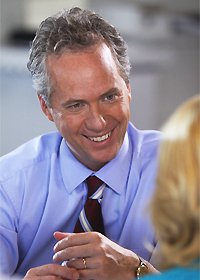 Mayor Greg Fischer delievered the 2018 State of the City address on Jan. 4, 2018, at the South Central Regional Library in Okolona. A video of the event can be found here. Below are his prepared remarks:
Thank you.
And thank you all for braving the cold to join us here at the gorgeous new South Central Regional Library.
This library makes a bold statement about our city value of lifelong learning. Our libraries are lifelong learning hubs, where people of all ages connect to information, imagination and inspiration.
That’s one reason we feature the work of local artists who are part of the Collider program here. This unique artist-in-residence program is possible because of the great Councilwoman Madonna Flood. She not only funds this program, she’s helping host us today in District 24. Councilwoman, thank you very much.
And thanks and welcome to all the members of the Metro Council and County Attorney Mike O’Connell.
And thanks also to my most important team – my family
And I want to thank my hardworking staff and the whole team at Louisville Metro Government, including Jim Blanton, Rachael Robertson and the crew from South Central Regional hosting us today.
It feels right to talk about the State of our City here. Because a public library represents so much of who we are: It’s a place of possibility, a place where you can learn about the past, the present, and imagine our future.
A library is, in many ways, a gateway to the future.
(See the 2017 Louisville Metro Progress Report)
And that’s where we are as a city: Standing at the gateway to our future.
In a city, country and world with incredible and disruptive change, the question is: What’s on the other side of that gateway?
To answer that, let’s look at where we’ve been, and where we’re going.
Let’s go back to January 2011, when I was sworn in on the steps of Metro Hall. We were just coming out of the Great Recession.
Unemployment had been above 10 percent.
We’d been losing, rather than adding, jobs.
Most of us had never been through a financial crisis like that. And as I talked to people across the city, there was anxiety about the future.
In my DNA are the lessons I learned as an entrepreneur – innovation, customer-focus, continuous improvement, responsible budgeting and strong fiscal management, the importance of training, data, collaboration and partnerships.
Let’s look at the results.
Well, my team knows how to put a strategy together, work hard and get after it.
Since 2011, our city has:
- Created over 70,000 new private sector jobs;
- Opened 2,500 new businesses.
- Unemployment is down to 3.5 percent.
- Since just 2014, we’ve attracted $12.5 billion in capital investment.
At the same time, Louisville-based businesses are doubling down on their investments by expanding: Companies like Ford, GE Appliances, Clariant, Churchill Downs, El Toro, Mint Julep Tours, Heine Brothers, and many more.
We’ve got 25 hotel projects announced or under construction.
And we need those.
Thanks to bourbonism, Louisville is now a 365-day-a-year tourist destination, welcoming over 24 million tourist visits a year and, with the expansion at the Kentucky International Convention Center, that number is only going to rise.
Our compassion work continues to change people’s lives:
Nearly $30 million invested in affordable housing in the last two city budgets.
180,000 volunteers and acts of compassion – another world record – during last year’s Give a Day Week of Service.
A 9 percent decline in homelessness over the last year, including a record 112 young people housed during last fall’s 100-day challenge.
And, met a national challenge to end veterans homelessness in our city
Prosperity is only real when everyone feels it. That’s why I’m happy to report wages are up too.
In the last two years, 11,000 Louisvillians lifted themselves out of poverty, and 8,300 Louisville families joined the middle class.
And we’re seeing investment all over our city.
In the east, Norton Healthcare is building a new $38 million facility off Brownsboro Road. LINAK is keeping construction crews busy with a $33 million expanded facility off Old Henry Road.
In south Louisville, the iconic Colonial Gardens is being restored.
UPS’ $300 million Centennial Hub expansion will create hundreds of new jobs.
Here in Okolona, Diversified Consultants opened its $19 million facility and is hiring for 1,000 jobs.
In southwest Louisville, Riverport Landing, a 36-acre apartment complex, will soon offer affordable housing to hundreds of seniors, families, and single parents at the Family Scholar House, and for young people who have aged out of foster care.
There are $50 million in improvements taking place on Dixie Highway.
In west Louisville, we’re seeing unprecedented levels of investment:
Portland is having a resurgence through art, culture, business and technology. It’s one of our first Google Fiber neighborhoods.
It’s also the home of expanding educational opportunities. The University of Kentucky College of Design just opened a satellite studio in Portland, and U of L’s Hite Art Institute is opening studio space there later this year.
The $220 million Russell neighborhood revitalization project is underway. This historic neighborhood once had a thriving commercial, residential and entertainment district, but was hit hard decades ago by discriminatory government and business practices like urban renewal and redlining.
All told, more than $800 million now is pouring into west Louisville, a great down payment on the overall need.
And let’s remember that while the big projects make the headlines, the economic resurgence like we’re seeing in west Louisville is something that happens one entrepreneur at a time.
That’s why I want to recognize Robert Springfield of Springfield Plumbing on West Market in Russell. He’s been in business for more than 30 years. He’s an entrepreneur and a community builder. Thank you, Mr. Springfield.
So we have entrepreneurs starting, building and growing businesses. We have unprecedented investment and momentum in our economy.
We are implementing our strategic plan while maintaining balanced budgets, receiving clean audits, and being recognized among the highest rated credits from Moody’s, Fitch and S & P.
And, like any community, we also have challenges
For example, because of a shortfall in the state pension system, unless Frankfort acts, Metro Government’s obligations will increase by $38 million this year alone.
We are always ready to deal with the unexpected. But this will be difficult for the people of Louisville, and force Metro Government to reduce existing services. We’ve got a great team, and will work with the Metro Council and citizens to find ways to meet this challenge.
A sustainable solution to the pension problem needs to be found in Frankfort without threatening the prosperity we have worked so hard to create in Louisville.
That’s not just important for Louisville, but for the entire Commonwealth. Louisville has about one-fifth of the state’s population, about one-fourth of the state’s jobs, and the Louisville area has more than one-third of the state’s GDP.
It is clear that Louisville is the economic engine of our entire state.
So, while I applaud Frankfort for taking on pension reform, we must acknowledge that it’s the result of historical underfunding and one symptom of a larger problem:
Our state’s tax code was designed to support the economy of the last century – not this one. For our Commonwealth to succeed in a global, modern economy, pension reform must be coupled with tax reform.
Kentucky’s communities have critical needs in terms of education, health, social services and infrastructure. To meet them, Frankfort needs to broaden the tax base.
That means we must reform an outdated system that exempts as much as it taxes.
We need to take a hard look at a tax code that exempts luxury items. It doesn’t make sense to consider cuts that could hurt your child’s classroom, law enforcement, drug treatment, or our justice system when we don’t even tax country club memberships or limousine rides.
That’s just not right.
And as businesspeople, we know that we would never create a two-year budget without knowing both our pension and tax reform solutions – that’s just more common sense.
So if you’re feeling anxious about the impact of the pension issue, you should. Let your legislators know we need a fair and workable long-term solution that includes giving more local control to cities and counties, and get going on the win-win of raising the cigarette tax at least a dollar a pack, which would not only create as much as $266 million in revenue, but save lives.
Let them know that the citizens of Kentucky deserve better than the tax and pension systems we have today.
Here are two big, complicated challenges we’re taking on in Louisville: opioids and violent crime.
We created an Office of Addiction Services to better fight the opioid epidemic.
Working with Jefferson County Attorney Mike O’Connell, we’ve filed a lawsuit against the three largest wholesale opioid distributors for dumping millions of pills into our neighborhoods, without monitoring, identifying, reporting or halting suspicious shipments of opioids – as the law requires.
We’ll use any funds we recover through this lawsuit to get treatment to more citizens struggling with substance use disorder.
And our Public Health team continues to improve our opioid action plan to focus on overdose prevention, recovery, youth prevention, education and treatment.
The drug epidemic and the illegal drug economy are major factors in the rise of violent crime in large cities across America over recent years.
We responded by creating an action plan that follows national best practices in both law enforcement and crime prevention.
We reorganized our police force while putting more cops on the street, especially in high-crime areas.
We established a federal task force with the FBI, DEA, U.S. Marshal, ATF and U.S. Attorney’s Office, to go after our most dangerous offenders.
Last month, that task force returned its first federal indictments.
Getting illegal guns off our streets is a priority. Last year, LMPD took almost 1,900 guns off the street, the highest since merger.
Looking at the big picture, overall crime is down.
Property crime – down.
Robbery – down – over 14 percent.
Violent crime – down.
Shootings are down 18 percent.
Homicides – down 9 percent.
In 2016, LMPD investigated 117 homicides, and in 2017 that number was 107.
We will keep working our plan – and always seek new ideas – to improve all of these results.
So please join me in thanking the brave men and women of LMPD, including Chief Steve Conrad and his command staff, for the outstanding work they do.
It takes someone special to be a police officer; it takes courage, dedication, training and compassion, much more than just making arrests.
Let me tell you about LMPD Officer Amber Ross, from our Community Policing Unit.
Often when she’d be called to a crime scene, she saw girls or young women, involved in or affected by the incident, and no one looking out for them. So Officer Ross started her own mentoring program, No Girl Lost. She and her team of volunteers work with over 100 teen girls throughout our city.
Officer Ross is here – thank you for joining us. Thank you for your service to these young women and to our city. Great job!
Officer Ross and others throughout Louisville who are mentoring, coaching, volunteering – answering the call to Be the 1 to make a difference – they are performing a critical service to the future of our city.
When we help Louisvillians develop a sense of belonging and possibility, the benefits ripple across our city, and last for generations. Online and at your tables, you’ll find flyers detailing how you can Be the One.
As a volunteer or a donor, you can help our city thrive. You can also help through your faith community, or through your business.
For example, we’re seeing tremendous results from our SummerWorks program, which we started in 2011. That year we helped about 200 young people find summer jobs.
Last year, we helped more than 5,200 find jobs that gave them the skills and experience they’ll need to build satisfying careers.
KentuckianaWorks executive director Michael Gritton and his SummerWorks team are here.
I ask all of you to talk with them today, join our SummerWorks family, join Humana, UPS, Thornton’s and many more, by bringing a young person into your company. Or, provide a donation so we can find them a spot somewhere else in our community, where they can learn the dignity of work while earning a paycheck.
KentuckianaWorks is also an integral partner, along with GLI, with JCPS’ Academies of Louisville initiative. This is a new partnership between JCPS and businesses, aligning employer needs with classroom curriculum and positioning our young people for great jobs.
The Academies also connect directly to our SummerWorks program to help develop a seamless pipeline of talent for our economy.
SummerWorks and the JCPS Academies are two critical pieces of a much larger effort we’ve been working on from Day One. We’ve had outstanding job growth in the last seven years. And because the global economy is evolving so rapidly, we’ve worked very hard to make sure that our workforce development programs are growing and evolving right along with it.
In the 21st century, education after high school is essential.
For some folks, the right path to a career is earning a 2- or 4-year college degree. For other folks, the right path is through a professional certification program. And our programs accommodate both.
We’ve done this because the need is there. Today, for example, there are about 100,000 adults in Louisville who ended their formal education after high school. There’s another 100,000 who have some college, but stopped before getting a degree.
Many of these folks are struggling to get ahead in today’s economy.
Today, I’m proud to say to anyone in Louisville who’s struggling to get ahead: You have more opportunities to develop the skills you need to thrive in the careers of tomorrow than ever before.
If you’re looking for a career that’s built for the future, we want to help you find it, and get the skills and credentials you’ll need so you can make more money to support yourself and your family.
That’s why our partners at KentuckianaWorks offer career services targeting the specific business sectors where our city has a competitive advantage and where we are primed for growth, including:
- Advanced Manufacturing
- Business Services
- Food and Beverage
- Lifelong Wellness Aging Care
- Logistics and e-commerce
Programs like the Kentucky Health Career Center and Kentucky Manufacturing Career Center. These two programs alone have helped more than 1,700 people find promising careers, and that includes members of our immigrant community — the primary driver of population growth, which are need more of because of the expanding opportunities in our city.
Louisville is a welcoming, global city.
That’s why we created our MTELL program – Manufacturing Training for English Language Learners.
People like Reza Elahi. Reza’s originally from Iran. He already had a degree in electrical engineering when he came to the U.S. in 2016. He began working with us at the KMCC last year and added MTELL credentials.
And in August, Reza began a great career as a Global Commodity Leader with GE Appliances – one of our great partners. And congratulations to Reza, who’s with us today; thank you for joining us, and great job!
There’s the nationally recognized Code Louisville program, which has placed over 175 people in good-paying, high-demand jobs in computer software coding. There are great coding jobsfor people willing to learn these skills, and Code Louisville will teach you for free.
That’s what Shannon Beach discovered. She’s a single mom who lives near Iroquois Park. After Code Louisville, she got a good job with CBS Interactive as a Software Engineer. And, she now volunteers with Code Louisville as a mentor. She’s with us today as well. Thank you, Shannon, great job!
These programs are helping prepare our citizens and our city for the future. So let’s talk about our future. Here’s what’s coming in 2018:
– Downtown will continue to thrive – and draw more people to move there. We will see the grand openings of apartments at 4tha and Guthrie as well as the Main and Clay Apartments.
There’ll also be 225 apartments at the Omni, a $300 million investment that includes an urban market.
The Omni is also one of those 25 hotel projects I mentioned,. In addition, existing jewels like the Marriott, the Hyatt, the Galt House and the Brown are altogether investing over a hundred million dollars in upgrades and renovations.
– They want to be ready in August when the Kentucky International Convention Center reopens after a $200 million renovation.
– Bourbonism will continue its incredible growth. This year, we’ll celebrate the grand openings of Michter’s Distillery Experience, Rabbit Hole and the Old Forester Distillery Experience on Whiskey Row.
Also, the Frazier Museum will open its Kentucky Bourbon Trail Welcome Center, making Louisville the official trailhead of the Kentucky Bourbon Trail, which grows in popularity every year.
– And, you notice how many of these announcements are related to tourism? One big reason for that is the outstanding partnership we have with the great team at Louisville Convention and Visitors Bureau. Their CEO Karen Williams is with us. She and her team are among the best in the country. Karen, thank you.
– In 2018, coming of Louisville City’s USL championship, we’ll break ground on our new $200 million soccer stadium district, which will include restaurants, hotels, and serve as a vibrant link between downtown, Nulu, Butchertown and Waterfront Park. It’s within sight of the Waterfront Botanical Gardens, which will open in 2019.
– The $28 million Paristown Pointe development will move forward this year, with a 2019 opening featuring restaurants, retail, and a new world-class Kentucky Center for the Arts performance venue.
– Our partners, the Marian Group, will begin work at the Urban Government Center site on Barrett Avenue. They’ll create a modern, multi-use project, including mixed-income housing, community gathering space, and neighborhood retail opportunities.
– This year, we’ll break ground on the $160 million redevelopment of Beecher Terrace on the east side of the Russell neighborhood, and we’ll continue working with the Louisville Urban League to create the $30 million Heritage West track and field facility on the west side of the neighborhood.
– We’ll also see the resurgence of 18th and Broadway with the new Passport Health headquarters and the Republic Bank Foundation YMCA both underway. They’ll open next to a key stop on Louisville’s future Bus Rapid Transit system, a project that also gets underway this year and will be complete by the end of 2019.
– As part of our commitment to sustainability and better health, we’re working with community and global partners like 100 Resilient Cities and the Nature Conservancy.
As part of the Green Heart Project, 8,000 trees will be planted in south Louisville to study vegetative medicine and its potential to improve the health of our community. The Green Heart Project is gaining a reputation as one of the leading environmental medicine projects in the world. It’s led by Dr. Aruni Bhatnagar.
He’s director of the Environmental Health Institute at the University of Louisville, and a fantastic partner to our city. He’s with us today. Dr. Bhatnagar, thank you so much.
We’re very proud of this project and all efforts to improve air quality and sustainability. Like the fact that our city reduced greenhouse gas emissions by 17 percent since 2010.
A major factor in that achievement was LG&E’s decision to switch from coal to natural gas at their Cane Run facility. Kudos to LG&E for their leadership on this big sustainability initiative.
– In 2018, we’ll expand Parks and Recreation’s Outdoor Education efforts through our ECHO Mobile program. And work will begin on the new Outdoor Education Center in Shawnee Park, where we’re connecting kids to nature, because we know that spending time outdoors has tremendous benefits for physical and mental health.
– We’ll continue building our Northeast Regional Library Campus off Ormsby Station Road and prepare for its 2019 opening. With its completion, we will meet the library master plan’s goal, and my administration’s commitment, to have regional libraries within five miles of 90 percent of the population.
– We’ll continue creating more paths to opportunity for young people through our Office for Safe and Healthy Neighborhoods, including a new fellowship program for young men who’ve been involved in the justice system.
Besides education and employment assistance, our Thrive Fellowship will provide mentoring and leadership development. So, not only can these young guys help themselves find the right path, they can serve as role models for future generations.
As we lean into our future, it’s essential that we learn from our history. A city is not successfully positioned for the future if it is not inclusive. In the aftermath of the violence in Charlottesville last August, I saw an opportunity for the citizens of Louisville to deepen our bonds around race, history, immigration, and the role of public art in the life of our city.
So in the coming weeks, in partnership with our business, faith and other community leaders, we’ll announce a series of lectures, conversations, performances and art exhibits designed to engage, inform and enlighten us on those issues.
The goal is to make us stronger and closer as a community of equity where there is no place for discrimination of any kind, so we can move forward together.
This is not only right, it’s an economic development imperative. The world’s leading 21st-century companies have made it clear they will only operate and expand in inclusive cities.
So, if you or your organization would like to be part of this effort, contact our Chief Equity Officer, Kellie Watson, or Kendall Boyd, Director of the Metro Human Relations Commission.
Another of our top priorities is digital inclusion. The legacy of discrimination includes a lack of access to 21st century technology in our low-income communities.
Even today, 82,000 Louisville families don’t have computers in their homes and can only access the internet on cell phones. This is a tremendous barrier for students and job seekers.
So we’re working with partners to provide adequate and affordable hardware, assistive technology and technical support. Metro’s Civic Innovation Team has partnered with Fern Creek High School students to refurbish donated laptops, which are then provided to low-income families.
We have two of our partners from Fern Creek here – Alexus Maddox, president of the Girls Who Code Club, and her teacher, Scott Horan.
Thank you – great job!
Also, too many citizens in both urban and rural areas can only get slow speed internet because their neighborhoods aren’t wired for the future.
We are changing that. Our partnership with Google Fiber is one way.
That’s why two of the first neighborhoods wired were Portland and Newburg. Google Fiber is laying more fiber optic cable all the time and connecting more neighborhoods to ultra-high-speed internet.
AT&T and Spectrum have also upped their game, offering higher speed and lower cost services.
And, through the Louisville Fiber Information Technology project, we’re laying more than 115 miles of fiber optic cable throughout our city.
Boosting our ability to provide high-tech solutions to challenges like traffic congestion and public safety. And, we will work with private companies to connect thousands more Louisville homes and businesses to the technology that powers innovation, entrepreneurship and economic growth in the 21st century.
Digital inclusion Technology is also critical to our city value of lifelong learning. And in the 21st century, learning truly must be a lifelong effort, one that begins in a child’s earliest days
That’s why we created the Cradle to Career framework, bringing together partners like Metro United Way, JCPS, 55,000 Degrees and Kentuckiana Works.
Because education isn’t just something that happens in school between the first day of kindergarten and the last day of high school or college. In fact, our kids only spend about 20 percent of the year in school. Twenty percent.
What are they learning the other 80 percent of the time? And from whom?
That’s why we’re developing an approach to better address children’s needs beyond the classroom, so they can thrive in the 21st century. It’s the evolution of our city’s long efforts to improve student achievement in general and address issues of equity in particular.
With this effort, government, schools, citizens and the business community are joining forces to provide all of our city’s children with, not only a world-class academic education, but others services that support the whole child – from social, emotional, and health services to financial, legal and mentoring services.
This is an economic development initiative as well. For example, I mentioned wage growth earlier.
If every family earning poverty-level wages earned a living wage, it would add almost $900 million to Louisville’s economy every year. That’s a win for everybody.
To make that happen, we have to recreate how we support our kids, because too many are being left behind – both here and across the country.
As a career businessman, I believe in results.
And when you’re not getting results, you make changes.
America’s education system was designed for a different era. Even with hardworking teachers and dedicated parents, our schools can’t meet the needs of the future unless we embrace reform at every level.
According to US News and World Report, Kentucky ranks 24th in PreK-12 education and 41st in higher education. On a global scale, test scores reported by the Pew Research Center show the U.S. ranks 24th in science and 38th in math.
The future demands new thinking, new skills and new systems, like universal pre-K, a thriving K-12 system for all students, and opportunities for people to get their post-high school education tuition-free.
In Louisville, we’re moving ahead. Because education beyond high school has never been more essential, and it’s never been more out of reach.
Earlier, I talked about our programs to help people earn professional certifications as the path to a career.
Now let’s talk about college.
Today, college comes at a cost that’s so high it keeps too many from pursuing their education, and leaves too many of those who do with crippling debt.
That’s unacceptable.
It’s unsustainable.
And frankly, it’s un-American.
This country was built on the promise that if you work hard, you can achieve the American dream, but the unaffordability of higher education is making a mockery of that dream for too many Americans.
Communities around the country are responding by offering free tuition programs to make higher education affordable. Tennessee does this. Oregon, New York, and Rhode Island have programs and more are moving in this direction.
So are cities like Detroit, Boston, Pittsburgh and many more.
They’re providing scholarships to enable public school graduates to afford at least a two-year degree or skills certification at a community college or technical school.
2018 will be the year for all of Louisville to join these communities.
In doing so, we’ll be following the example set by the Rotary Club of Louisville.
Thank you for the vision, citizenship and compassion you showed in creating the Rotary Promise Scholarship in 2016, which provides the opportunity for two years of tuition-free post-secondary education to students from two JCPS high schools.
We want to expand this type of opportunity throughout our city.
That’s why this year, you will hear exciting announcements from major funders as we work to make these scholarships happen, and we open wide the gates to a prosperous future for more Louisvillians than ever before!
This is an incredible time to be alive, a time of both global challenges and unprecedented opportunity. To be witness and participant in a city, a country and a world that are changing and evolving, all the time.
So what is on the other side of that gateway to the future?
It is clear, 2018 will be a year of momentum, opportunity, and change for communities across Louisville. Some construction cranes will finish their work while others go up, as we continue building our city for the future.
And, in the years ahead, I see a city that honors and learns from the past, lives fully in the present and prepares for the future.
I see a thriving city that competes and wins in the global marketplace and whose reputation for compassion, innovation and opportunity continues to grow on the world stage.
I see a sustainable city, filled with safe and healthy neighborhoods, where good health and prosperity are equally available to every age, race, and background.
I see a compassionate city where citizens create connections to lift up all those around them.
I see a city where every person has the chance to reach their full human potential.
That’s the future of Louisville that I see.
That I believe in.
And that I expect.
Because that’s the future that I, along with hundreds of thousands of people all across our city, wake up every morning and work at, strive toward, and fight for.
That’s the future that every citizen of Louisville deserves.
And that’s the future that we are creating together.
Thank you.
 The annual program that helps prevent low income residents of Louisville from being disconnected from utility services begins Monday, Jan. 8, 2018.
LIHEAP, the Low Income Home Energy Assistance Program, is administered by Louisville Metro Office of Resilience and Community Services. The Crisis Phase of LIHEAP will run from Jan. 8 – March 30, or until available funds have been expended, whichever comes first.
This year’s Crisis Program features expanded eligibility which allows residents receiving a current utility bill with a past due amount to apply, in addition to continuing to serve residents receiving a disconnect notice.
Residents wishing to apply must make an appointment utilizing the automated appointment system. Appointments can be scheduled by phone by calling 502-991-8391 or online atlouisvilleky.cascheduler.com. The toll-free service is currently open and is available twenty-four hours a day, seven days a week.
Applicants must be Jefferson County residents with a household income at or below 130 percent of the federal poverty guidelines (e.g. for a household of four, the gross monthly income cannot exceed $2,665.00).
Applicants must also meet one of the following eligibility requirements:
- Disconnect notice from utility service provider, or
- Current bill with a past due amount, or
- Eviction notice if utilities are included in the rent, or
- Bulk fuel is within four days of running out; or
- Pre-paid electric services is within ten days of running out.
Applicants must provide the following documents.
- Proof of all household income for the preceding month (Food Stamp award letter, Social Security Award letter, pay stubs, or other proof of $0 income). Note: Zero Income forms are available at the LIHEAP offices or at 701 W. Ormsby Ave., Suite 201 or by clicking here.
- Social Security card(s) or (official documentation with Social Security Numbers) or Permanent Residence card (Green Card) for each member of the household; and
- Disconnect notice or a current bill with a past due amount; or
- Eviction notice if heating expenses are included in the rent. If heat is included in rent, clients must also provide a copy of the lease in addition to the eviction notice; or
- Statement from utility company that shows 10 days or less of service if participating in pre-paid electric service.
Individuals who are unable to apply for this program in person may send an authorized representative on their behalf with a signed, written, note including the applicant’s name, address, phone number, Social Security Number, and the name of the designated representative. The authorized representative must provide a picture ID to verify they are the person designated in the note. Residents who are homebound and who are unable to send a representative may call 502/780-7937.
LIHEAP applications will be completed at the time of the appointment at one of the six locations listed below.
- Northwest Neighborhood Place/Academy at Shawnee, 4018 W Market St., 40212
- South Central Neighborhood Place, 4255 Hazelwood Ave., 40215
- Neighborhood Place Ujima/Duvalle Education Center, 3610 Bohne Ave., 40211
- Neighborhood Place/Bridges of Hope, 1411 Algonquin Pkwy., 40210
- Newburg Community Center/East, 4810 Exeter Ave, 40218
- Southwest Government Center/Dixie Highway location. 7219 Dixie Highway, 40258
Callers who require more information can contact MetroCall 311 by simply dialing 311 or 574-5000, email metro.call@louisvilleky.gov, visit the website’s On Line Customer Service or Live Chat at www.louisvilleky.gov/metrocall, tweet @LouMetro311, or download the free Mobile 311 app from the website. Residents can also call Metro United Way’s 2-1-1 help referral service.
 3As previously announced, the Louisville Parks and Recreation storage and maintenance barn at Joe Creason Park will be removed beginning the week of January 8.
The barn, which dates to November 1918, served as The Motor School Garage building for Camp Zachary Taylor during World War I. Although altered over time, the barn incorporates a distinctive wooden lattice truss structural system that spans 102 feet. Originally built as a temporary structure, the wood structural elements have deteriorated over time and have begun to shift and buckle, making the building structurally unsound and unsafe.
The 2017-18 capital budget approved by Metro Council includes funding to take down the Creason barn. The decision to remove the building is based on findings from engineering assessments that cite significant structural deficiencies in the now vacant facility.
Louisville Parks and Recreation continues to work closely with the Camp Zachary Taylor Historical Society and The Kentucky Department of Veterans Affairs to ensure elements of the structure are documented, salvaged and repurposed to commemorate the barn’s history.
“While we are sad to see the structure removed, we are well aware of the current condition,” said Ken Maguire, president of the Camp Zachary Taylor Historical Society. “I’m happy to be working with Louisville Metro to preserve as much of the history as possible and creating a lifetime memorial to Camp Zachary Taylor for future generations.”
Design for the new maintenance facility will begin sometime in 2018.
The structural assessments obtained by the city may be viewed at https://louisvilleky.gov/government/parks/about-us.
Mayor Greg Fischer announced that he will deliver the 2018 State of the City address on Thursday, Jan. 4 at the new South Central Regional Library in Okolona.
The address is traditionally delivered to the Downtown Rotary Club at the start of the new year, in various locations.
The Rotary luncheon will begin at 11:30 a.m. The address is free and open to the public. Those wishing to have lunch will be asked to pay $30. There also will be seating for those who wish to attend by not have lunch.
Attendees should register at http://www.IsMyRotaryClub.org/Register/index.cfm?EventID=77353553 no later than Jan. 1.
Last year, Mayor Fischer gave the State of the City at the Baxter Community Center one month after announcing that the Russell neighborhood would benefit from a $29.5 million HUD Choice Neighborhoods grant. In previous years, the State of the City has been give at the Southwest Regional Library, Churchill Downs and the African American Heritage Center.
 A major project to improve safety along one of the city’s most traveled highways began a new phase today, as Mayor Greg Fischer and U.S. Dept. of Transportation Secretary Elaine Chao announced the construction kickoff of the New Dixie Highway Project.
Upon completion in December 2019, the improved corridor will include safety improvements such as new medians, wider sidewalks and clearly marked crosswalks; efficiency improvements including responsive traffic signals linked by fiber optic cable; and the city’s first bus rapid transit system which will vastly improve bus travel times to and from downtown.
“The U.S. Department of Transportation’s $16.9 million TIGER grant is providing nearly half of the funding for the New Dixie Highway Project to greatly improve the Louisville area transportation network,” said Secretary Chao. “As a resident of Louisville, I have spent a lot of time driving Dixie Highway and am delighted to be part of this effort to improve the safety and efficiency of the city’s busiest traffic corridor.
The $35 million project will create a New Dixie Highway that’s safer for drivers and pedestrians, and will fuel transformation of a major economic corridor for southwest and west Louisville. The New Dixie Highway Project is the first major construction project under the Mayor’s MOVE Louisville initiative.
“We’re investing more money into improving Dixie Highway right now than any other corridor in the city,” said Mayor Greg Fischer. “This road is a crucial connector for people to get to schools, to work, to health care, and most importantly, to get back home. This project will not only make Dixie safer for drivers, but it will make it more attractive for business owners, consumers and investors.”
Dixie Highway carries nearly 60,000 vehicles per day near its busiest intersections, which is a higher traffic count than some interstate stretches. Dixie Highway also suffers a fatality rate three times higher than comparable Kentucky roadways.
The project includes funding from federal, state and local sources, including a $16.9 million federal TIGER grant, $5.28 federal funds through KIPDA, $12 million in state funds, and $600,000 from Louisville Metro.
“It takes collaboration and support between city, state and federal partners to move a project of this size forward,” said KYTC Secretary Greg Thomas. “The upcoming construction, coupled with roadway improvements in recent years, will completely transform Dixie Highway into a safer, better-connected corridor.”
Mayor Fischer, Sec. Chao, KYTC Sec. Thomas, Congressman John Yarmuth, Metro Council members and other leaders celebrated the New Dixie Highway construction kickoff at the Kroger Marketplace, a $23 million grocery and retail superstore, at 4915 Dixie Highway. The location is appropriate, Mayor Fischer said, because the project builds on the renaissance already under way on the corridor, with tens of millions of dollars in private investments in new restaurants, retail businesses, housing and other developments.
Safety improvements lead the way
This month, MAC Construction began preparations for construction, including temporary lane shifts and utility location. Safety improvements will include new concrete medians designed to limit left turns between Crums Lane and Greenwood Road. Dedicated turn lanes will reduce the risk for head-on collisions. Pedestrians will enjoy new, more accommodating sidewalks that are eight feet wide in many areas, and better markings for crosswalks.
The city’s busiest transit corridor will also get the region’s first “bus rapid transit” line, including distinctive TARC buses and high-visibility shelters to help move thousands of people daily and better define the 14-mile corridor. More than 100 trees will be planted along the route, as well as native grasses and plants within the new landscaped medians.
Mayor Fischer thanked state legislators, Metro Council members and the KYTC for their commitment to improving safety and mobility along Dixie Highway, noting that without their work to secure state and local matching funds, the city would not have been able to leverage the federal grant to jump-start the project.
Bus rapid transit will help move people to work, home
Fueled by a $16.9 million federal TIGER grant, the New Dixie Highway project will include a new bus rapid transit line along Dixie Highway from around the Gene Snyder Freeway to Broadway, and connect to the downtown business district. It will include specially designed vehicles and bus stations that will reduce travel times for riders and increase reliability along Louisville’s most used public-transit corridor.
“This strategic investment in a proven transportation solution will help transit users get to work, to stores and back home faster and more reliably than today,” Yarmuth said. “That’s important for working families, employers and our regional economy.”
With more than 30 distinctively branded bus shelters, new buses and sidewalk improvements, the New Dixie Highway project will also help transform the look and feel of the corridor.
Multiple improvements on Dixie are already underway or completed
Overall, more than $50 million has been invested in Dixie Highway in a series of projects over the past two years. The total investment of federal, state and local dollars includes:
- $14.5 million in pavement replacement and resurfacing underway along a five-mile segment from Stonegate Manor Drive to Greenwood Road
- $2.5 million in resurfacing work completed this summer – a two-mile section from Algonquin Parkway to Maple Street (31W) and a six-mile section from the Jefferson/Hardin county line to Stonegate Manor Drive
- $2.5 million project to clean and repaint the Dixie Highway overpass at the Watterson Expressway completed last year
- $800,000 project completed this fall to add a new sidewalk along the east side of Dixie, and straighten ramp and add a signal at the westbound I-264 Shively exit
Open house meetings planned for early 2018
Citizens will get a chance to learn more about the planned improvements at an open house meeting in early 2018. Citizens can also get more information through the project website (www.TheNewDixieHighway.com) and social media channels, including Facebook and Twitter.
Follow progress on the New Dixie Highway at TheNewDixieHighway.com, on Facebook, and on Twitter @NewDixieHighway.
 Metro Public Works will provide curbside pickup of Christmas Trees within the Urban Services District (the old City of Louisville boundaries) after the holiday. Beginning Tuesday, December 26, residents with City curbside yard waste pickup may set their Christmas trees and greenery out on their regular collection day. Trees must not be in plastic bags, and all decorations must be removed.
Drop-off sites will also be available for all Louisville/Jefferson County residents at three locations. Two of the three drop-off sites will also instantly recycle trees in to mulch that will be offered back to citizens for home use.
Those wishing to receive mulch must bring an appropriate container in which to carry it. Trees picked up from curbside will also be recycled but not offered as mulch. All lights and ornaments should be removed from trees before they are set out or dropped off.
Residents normally serviced by private waste haulers should check with those companies to see whether and when tree pickup is available.
Christmas tree vendors may recycle their unsold trees on Tuesday, December 26 only, and only at the Hubbard’s Lane site.
DROP OFF LOCATIONS
- East District Recycling Center, 595 N. Hubbards Lane (Bring containers to take home fresh mulch.)
- December 26 – 29, January 2
- Hours: 9:00AM – 4:00PM
- Southwest Government Center, 7219 Dixie Highway (Bring containers to take home fresh mulch.)
- December 26 – 29, January 2
- Hours: 9:00AM – 4:00PM
- Waste Reduction Center – 636 Meriwether Avenue (Tree drop-off only. Mulch is not available at this location.)
- Through January 31
- Hours: 9:00AM – 4:00PM
Don’t throw away that old television, computers or other electronic device that’s you just replaced. Let Metro Public Works recycle those newly obsolete devices instead.
Free post-holiday electronics drop-off service is available at our Waste Reduction Center at 636 Meriwether Avenue. Drop-off will be available from 8 a.m. to 3 p.m. on these three Saturdays: January 6, January 13 and January 20.
The special holiday promotion is in addition to our regular year round electronics recycling program. Details on the regular program are available on our website at https://louisvilleky.gov/recycling.
