Sunday February 1, 2026
Local Connection
 Weather
 Traffic
 @LouisvilleDispatch
 @LouisvilleDisp
 Subscribe
 Jefferson County Public Schools (JCPS) Acting Superintendent Marty Pollio announced today that Ballard High School Principal Staci Eddleman has been reassigned to a new position in the district as its director of Title I/II Services. The search begins immediately for a new principal at Ballard.
“During her entire career with JCPS, Dr. Staci Eddleman has been a champion for all students,” Dr. Pollio said. “Staci’s experience in both priority and nonpriority schools gives her a unique perspective, as I’ve challenged her to rethink the way our district allocates funds to support students, teachers and schools.”
Title I funding is provided to school districts by the federal government. The funding must be used to support schools with high numbers and/or high percentages of children from low-income families. The funding helps ensure that all children meet challenging state academic standards.
Title II funds are intended to increase the number of high-quality, effective teachers and principals. Funds can be used for a variety of purposes—from recruiting and retaining teachers to reducing class sizes or providing professional development.
“I am emotional about leaving my post at Ballard, but this opportunity is a perfect next step in my career,” Dr. Eddleman said. “The opportunity to impact tens of thousands of students outside the walls of just one school is appealing, and I appreciate the vision of Dr. Pollio as he looks to reimagine the way we support our staff, students and schools across the district.”
The Ballard School-Based Decision Making (SBDM) Council will immediately begin the process of seeking a replacement for Dr. Eddleman. A new principal is expected to be named before the start of the 2017-18 school year.
Jefferson County Public Schools (JCPS) Acting Superintendent Marty Pollio announced that Dr. Carmen Coleman will serve as JCPS acting chief academic officer. She will begin her service with the district on July 11.
Dr. Coleman is an associate clinical professor at the University of Kentucky (UK) in the Department of Educational Leadership Studies. She is the program coordinator for the Principal Preparation Program and the director of the Next Generation Leadership Academy. Dr. Coleman is taking a one-year leave from UK. The memorandum of agreement finalizing the arrangement is on the agenda for a July 10 special-called Jefferson County Board of Education meeting.
“I am honored to have Dr. Coleman join our JCPS team,” Dr. Pollio said. “She is Kentucky’s foremost expert in implementing deeper learning strategies, and her level of professional accomplishment and history of instructional leadership will help move our district forward and increase student achievement.”
Before joining UK, Dr. Coleman served as superintendent of Danville Independent Schools from 2009 to 2014. Previously, she was director of elementary schools in Fayette County, the state’s second largest school district, from 2006 to 2009.
“I’ve been incredibly fortunate to have had the opportunity to work with teachers and leaders both in Kentucky and across the country who are simply the best of the best,” Dr. Coleman said. “I only had to talk with Dr. Pollio for a few minutes to know that he was one who belonged at the very top of that list. His vision for the kinds of opportunities we have to ensure for every child is the right one—and his record of success leaves no doubt that he will make it happen.
I also have tremendous respect for the JCPS Board and Teachers’ Association for making deeper learning their top priority for every child. This, combined with the tremendous talent of the teachers and leaders in Jefferson County and Dr. Pollio’s leadership, positions JCPS perfectly to lead both the state and the nation in showing just what is possible for kids. I am simply honored to be a part and cannot wait to get started.”
Dr. Coleman began her career in Scott County, where she worked as a teacher and principal from 1994 to 2006.
In addition to naming Dr. Coleman as acting chief academic officer, Dr. Pollio said at this time he has no plans to post or fill the chief business officer position and will redirect those funds to schools.
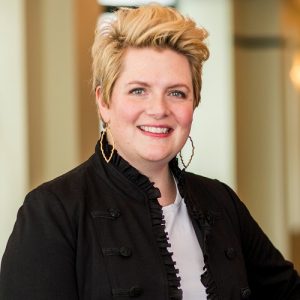
Photo: The Kentucky Center
Following a nationwide search process, The Kentucky Center is announcing the appointment of Julie Roberts to the role of vice president of development.
Since 2013, Roberts has served as the director of development for Actors Theatre of Louisville, one of the most respected regional theaters in America and known worldwide for the Humana Festival of New American Plays. She previously served as vice president of development and communications at Maryhurst and as vice president of marketing & advancement for Sunrise Children’s Services.
Roberts has experience with multiple capital campaigns, building community partnerships and short- and long-term strategic planning. She is a graduate of the Fund for the Arts NeXt! Leadership program and serves on its alumni board. She also is a board member with Friends of the Waterfront. Roberts is a Kentucky native who studied print journalism at Western Kentucky University and has lived in Louisville with her husband, Jonathan, for 20 years.
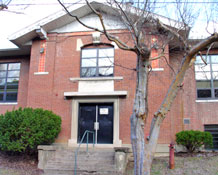
Photo: Beechmont Community Center
A program offered at the Beechmont Community Center will introduce storytelling and acting to youths ages 8-13 and culminate in a performance at the center on Friday, August 31. Led by actor and director Tony Dingman, the Beechmont Theatre will cultivate confidence, cooperation, compassion and joyful learning in its students through imaginative play and storytelling.
Dingman is the Co-Artistic Director of Louisville’s Think Tank Theatre and previously Le Petomane Theatre Ensemble. He has been building new works for the stage for more than 12 years. He has directed and taught young actors at Missoula Children’s Theatre, Kentucky Shakespeare, Walden Theatre and the Frazier Museum.
“Theatre is unique in the way it can tell a story, and there is a magic in it,” Dingman said. “It is a shared moment that can’t be reproduced, where the audience and actors are counting on each other to help build a world. I hope to help ignite the imagination of young people and give them tools to create and share their stories, the ones that they think are exciting and fun.”
The 8-week program begins on Monday, July 10, and the group will meet on Mondays and Wednesdays from 5:30-7:30 p.m. through August 31 at the newly renovated theatre area at the Beechmont Community Center, located at 205 Wellington Avenue.
The class size is limited to 15 students, and the program fee is $145 and includes a free meal each night. The Beechmont Theatre Showcase will end the class’s run on Friday, August 31 at 7 p.m., and family, friends and the public are invited to attend.
Metro Parks and Recreation has recently renovated the basement at Beechmont into a theatre space, including new paint, floor tiles, a stage, curtains and sound system, as well as a colorful mural created with the help of the Kentucky Center’s ArtsReach program.
 The Kentucky Court of Appeals has ruled that a lawsuit by the Office of the Attorney General against drug company Bayer Corporation will proceed at the trial court level.
In two June 29 orders, the three-judge panel denied Bayer’s request to dismiss the AG’s lawsuit, currently in Franklin Circuit Court, that alleges the company improperly promoted a drug and violated a 2007 agreement with the Commonwealth.
“Bayer is essentially seeking an appeal before the trial court has had the opportunity to enter an order,” the three judges wrote in the decision.
The Franklin Circuit Court had previously denied Bayer’s motion to dismiss the suit, prompting Bayer to appeal that decision. Bayer also sought an order prohibiting the trial court from considering contempt charges and blocking the attorney general from amending its complaint. The Court of Appeals also denied those requests.
The AG’s office is alleging that Bayer misled consumers and doctors about the risks of its combined oral contraceptive drug, YAZ.
Attorney General Andy Beshear said the company’s alleged activity with YAZ violates a 2007 multistate settlement involving Bayer misrepresenting certain risks associated with its anti-cholesterol drug, Baycol. Kentucky’s 2007 settlement with Bayer said the company would not make any false, misleading or deceptive representation regarding any of its pharmaceutical products.
“We appreciate the ruling by the Court of Appeals that will allow our case against Bayer to move forward at the trial court level,” Beshear said. “We will hold Bayer or any company accountable who tries to mislead Kentuckians about its products.”
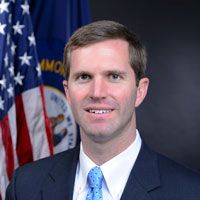 In 2015, more than 225 Kentuckians died from a drug overdose with Opana in their blood.
Now that the makers of the opioid painkiller announced July 6 that it will no longer sell the drug, Attorney General Andy Beshear is calling the move a “first step” in fighting against what he believes is the single greatest threat to Kentucky – the state’s drug epidemic.
Beshear sent his concerns on the potential for abuse by Kentuckians on a reformulation of the drug, Opana ER (extended release), to the U.S. Food and Drug Administration (FDA) in February during an open comment period on the drug.
“The FDA previously determined the reformulated Opana ER can still be readily prepared for injection and can be crushed with common items for snorting,” Beshear said in his comments to the agency. “‘Snortable’ or injectable drugs have crippled Kentucky, ranging from the widespread abuse of Oxycontin to the return of heroin. Where the reformulation has merely been found to impede one of many means of abuse, approving labeling Opana ER as ‘abuse deterrent’ may mislead patients and providers.”
In his comments, Beshear said he was “encouraged that the agency is taking a hard look at the safety of this powerful drug.”
The FDA requested on June 8 that Endo Pharmaceuticals remove Opana ER from the market.
Beshear’s comments to the FDA on Opana ER is part of his ongoing efforts to address the opioid crisis in Kentucky.
“Opana ER has already taken the lives of Kentuckians,” Beshear said. “Louisvillian Emily Walden, whose son, T.J., died of an Opana ER overdose in 2012, has led the charge to have the reformulated drug removed from the market. By working hand-in-hand with dedicated Kentuckians like Emily, we can and will end our opioid epidemic.”
On June 28, Beshear announced that his office intends to file multiple lawsuits against drug manufacturers, distributors and retailers where there is evidence that they contributed to the opioid epidemic by illegally marketing and selling opioids to Kentuckians.
To support this litigation, Beshear issued a request for proposal (RFP) for legal services to assist the Commonwealth in multiple lawsuits and to ensure that Kentucky tax dollars are not used for the costs of the litigations.
Beshear is co-chair on the National Association of Attorneys General Substance Abuse Committee.
The AG’s office previously settled a $24 million lawsuit with Purdue Pharma regarding OxyContin. Beshear’s office has provided $8 million from that settlement directly to 15 substance treatment centers across Kentucky.
From a different drug company settlement, the office dedicated $2 million to expand and enhance Rocket Docket programs that expedite drug cases, generate significant cost savings and allow select defendants rapid access to substance abuse treatment.
Recently, Beshear joined a multistate lawsuit alleging the drugmaker of Suboxone, a drug used for treating opioid addiction, tried to monopolize the market.
Beshear is currently working with local law enforcement and community leaders to host substance abuse awareness forums across the state. The office has also been instrumental in numerous drug related arrests, including working with federal authorities on arresting a fentanyl dealer whose drugs had killed several Kentuckians.
“The abuse and diversion of Opana and other strong opioids is devastating the health of many of our Commonwealth’s citizens, and they, as well as our Medicaid and corrections departments, pay an enormous financial price in the attempt to treat this epidemic,” Beshear told the FDA. “It would benefit public health for the FDA to create and implement deadlines for the pharmaceutical industry to develop more robust abuse deterrent formulations for these high-dose opioids and to require that development before granting abuse deterrent labeling.”
 In a continuous effort to keep families and their children safe from lead-based paint and other home health and safety hazards, Lead Safe Louisville, a partnership between the Office of Housing and Community Development and the Louisville Metro Department of Public Health and Wellness., received $2.9 million from the U.S. Department of Housing and Urban Development (HUD) to eliminate lead hazards that exist in both owner-occupied and rental units. HUD awarded more than $127 million to 48 state and local government agencies
The grant funding announced today will reduce the number of children with elevated blood lead levels, and protect nearly 7,600 families living in homes with significant lead and other home health and safety hazards. HUD’s Lead Based Paint Hazard Control grant programs have a proven history of success, filling critical needs in communities where no other resources exist to address substandard housing that threatens the health of the most vulnerable residents.
Today in Washington, DC, HUD Secretary Ben Carson announced the new funding during an event that featured a panel discussion about the importance of public and private partnerships to the work of healthy homes. With HUD celebrating June’s National Healthy Homes Month, Carson said he wants to make lead paint hazard removal a top priority.
In a national release HUD Secretary Ben Carson said, “Children perform better at school and in life if they live in a healthy home. A healthy start at home translates to a successful life outside of the home. HUD is committed to working with local communities to eradicate lead paint poisoning to make sure our homes are safe and ensure positive outcomes for families and their kids.”
Also in that release, Jon L. Gant, Director of HUD’s Office of Lead Hazard Control and Healthy Homes said, “Millions of families and children are seeing their hope for the future threatened by poor health simply because of where they live. This round of funding includes awards to eight cities that are receiving grant awards for the first time. We are pleased the program is expanding into these previously unserved communities.”
Housing improvements, such as removing lead help prevent injuries and illnesses, reduce associated health care and social services costs, reduce absentee rates for children in school and adults at work, and reduce stress—all which help to improve the quality of life.
The purpose of the Lead-Safe Louisville Program is to eliminate lead hazards that exist in both owner-occupied and rental units in the Metro Louisville area, especially those in which children under six years of age reside. Houses and apartments built before 1978 are most likely to have lead-based paint which can create a hazard to its inhabitants. Key risk factors are chipping or peeling paint on doors, windows, woodwork or exterior siding. Children are particularly prone to lead poisoning in such environments.
Eligible units are based on the following:
- Built prior to 1978
- A child 5 years or younger or pregnant woman lives in the home or a child 5 years or younger visits a minimum of 6 hours a week
- Occupant is low income 80% AMI based on size of family
For more information on Lead Safe Louisville, please call 574-1965 or visit https://louisvilleky.gov/government/housing-community-development/lead-s…