Wednesday December 17, 2025
Local Connection
 Weather
 Traffic
 @LouisvilleDispatch
 @LouisvilleDisp
 Subscribe
 Thousands of volunteers will join together on Saturday, April 15 for the bi-annual Brightside & Passport Health Plan Spring Community-Wide Cleanup to pick up litter and beautify sites across Louisville.
More than 200 groups — Boy & Girl Scouts, neighborhood associations, business associations, elementary school classrooms, families and more — will be participating in Saturday’s event, which serves as the kick off to Mayor Fischer’s Give A Day Week of Service, April 15-23.
“A clean street is something that residents in all corners of our city can agree is important to the quality of life in our neighborhoods,” Mayor Greg Fischer said. “I encourage neighbors to work together and work with Brightside to keep our streets litter-free.”
To participate, volunteers choose their own cleanup site and coordinate with Brightside to receive gloves, bags, and for the first 5,000 volunteers, T-shirts. Trash pick-up will be coordinated with Louisville Metro Solid Waste Management Services. The cleanup is sponsored by Passport Health Plan.
“We are thrilled to be the title sponsor of the 2017 Brightside & Passport Health Plan Spring Community-Wide Cleanup,” said Mark B. Carter, CEO of Passport Health Plan. “We come together with Mayor Fischer, Brightside and all Louisville residents in the knowledge that a cleaner city helps all residents improve their health and overall quality of life.”
Cleanups are an integral part of Brightside’s mission, and without the help of volunteer groups and many other volunteers throughout the year, Brightside could not meet its goal of a cleaner, greener Louisville. Neighborhoods can hold their own cleanups at any point throughout the year, and Brightside encourages neighborhood associations, block watches, businesses and faith groups to play an active role in keeping their neighborhoods litter-free.
Registration for the April 15 community-wide cleanup is still open. Visit the Brightside website at www.brightsideinc.org to complete the registration form or call (502) 574-2613 to register your team.

Photo: IRS
For taxpayers who have not filed their 2016 individual income taxes, there is a little more time to file this year.
The filing deadline to submit 2016 tax returns is Tuesday, April 18, 2017, rather than the traditional April 15 date. This year, April 15 falls on a Saturday, which would usually move the filing deadline to the following Monday, April 17. However, Emancipation Day, a legal holiday in the District of Columbia, is on that Monday and pushes this year’s filing deadline to Tuesday, April 18, 2017.
Another holiday is just around the corner, Easter.
In observance of Good Friday, all Kentucky Department of Revenue offices will close at noon local time, Friday, April 14, 2017.
DOR offices will open Monday, April 17 at their regularly scheduled business hours.
For more information on DOR programs, please go to revenue.ky.gov
Yesterday, Mayor Greg Fischer joined Councilwoman Cheri Bryant Hamilton, the Waterfront Development Corporation (WDC), the Metropolitan Sewer District (MSD), and MKSK Studios to announce that a major piece of planning for Waterfront Park Phase IV is in place.
MSD has acquired 4.8 acres of land there as part of a tunnel basin project that is expected to begin construction in late summer 2017. Once completed, the bulk of the land will be turned over for the park, providing an important link with other parcels, creating a unified waterfront experience.
“Waterfront Park is Louisville’s front yard, our community living room. We’re enormously proud of it,” said the Mayor. “Projects like Waterfront Park Phase IV are critical because they strengthen the connection among our neighborhoods by giving people even more space to come together, take a walk, ride their bikes and enjoy our unique quality of life in Louisville.”
Phase IV will expand Waterfront Park west of 10th Street to provide a continuation of open space along the river and bring the prospect for new experiences and activities to the area. As part of the project, River Road will be extended west to Rowan Street, providing a vital connection between the existing park and Phase IV, downtown and the west.
The existing RiverWalk adds an additional pedestrian- and bicycle-friendly connection between the first three phases and Phase IV. The expansion will also refresh and update one of the early sections of the Louisville Loop.
“I am excited that today we are taking another important step in the westward expansion of Waterfront Park with the acquisition of all the 22-acres,” said Councilwoman Bryant Hamilton. “Louisville was founded here in the Portland neighborhood, and I’m glad that the residents of the community will soon have additional waterfront recreational access, as was originally planned back in the 1980s.”
In addition to announcing the land acquisition, MKSK unveiled new renderings of the amenities Phase IV will provide, centering on three components – Reveal, Play, Connect, where residents and visitors can experience the waterfront like never before.
The 22-acre site plan shows increased green space and interactive features that will connect Portland and downtown, becoming a catalyst for economic development, improved health and wellness for the city, as well as a regional attraction for visitors to downtown.
“The location of Phase IV offers both social and economic opportunities that few other sites in the city could afford,” said WDC VP Mike Kimmel. “This will be an exciting addition to Waterfront Park.”
The Waterfront Park master plan for Phase IV was approved by Metro Council in 2015, and the city allocated $950,000 in last year’s budget for planning and land acquisition. As with the first three phases of Waterfront Park, funding will be assembled from a variety of sources, including requests to government, corporations, individuals, and foundations. The team will work with the Jefferson County Legislative Delegation and the Congressional Delegation to help identify state and federal resources.
Waterfront Park has been a 30-plus-year project with planning beginning with creation of the Waterfront Development Corporation in 1986, extensive public meetings in the late ‘80s, and the adoption of the original Waterfront Master Plan in 1992. Completion of the first three phases of Waterfront Park, and plans for Phase IV, have sparked more than $1.3 billion in investment in the surrounding area and built a program of more than 150 special events per year with an annual park attendance of more than 2 million visitors.
As part of Louisville’s economic momentum and in anticipation of the new park extension, the city is already enjoying new investment in west Louisville, including Kentucky Peerless Distilling Co., Heine Brothers’ headquarters, Old 502 Winery, Over the 9, and other exciting projects in the Portland neighborhood.
Click here to view design renderings for Phase IV.
Public comments on the project are welcome, visit https://louisvillewaterfront.com/contact/
For more information on Waterfront Park, visit https://louisvillewaterfront.com/about-wdc/what-we-do/phaseiv/

Photo: Louisville Metro Office of Advanced Planning
The Louisville Metro Office of Advanced Planning will hold public meetings at 6 p.m. on April 19 and May 18 at Girl Scouts of Kentuckiana, 2115 Lexington Road, to discuss safety improvements coming soon to Lexington Road between Grinstead Drive and Payne Street.
The meetings are designed to allow citizens to view and to discuss the proposed improvements with Metro staff. The planned changes implement recommendations of the Lexington Road Corridor Transportation Plan, which was completed in 2015 after extensive community engagement.
Project details include:
- Extending the left turn bay on eastbound Lexington Road to northbound Grinstead Drive, for those traveling to I-64, to accommodate rush hour congestion. The number of lanes at this intersection will not be reduced.
- Lanes in the lower traffic volume area between Grinstead and Payne will be reduced from four to two so that a flush median (buffer zone) can be introduced to separate oncoming traffic and reduce the number of collisions.
- Dedicated left turn lanes will be introduced at Girl Scouts of Kentuckiana, The Woods at Lexington Road, and Payne Street.
- With the reduction in the number of lanes in the lower traffic volume areas, the pavement width will allow for painted, flush medians and bike facilities.
The safety improvements will be coordinated with a scheduled repaving of the Lexington Road corridor slated for later this year. The current Average Daily Traffic (ADT) count—a measurement of the volume of vehicular traffic per day—is currently 10,800 vehicles and has been decreasing since the completion of the Ohio River Bridges Project.
Typical roadway reconfigurations of four lanes to two lanes can accommodate up to 16,000 ADT.
Lexington Road is very similar in design to Grinstead Drive, which underwent a similar reconfiguration in 2012 and has shown a 67 percent reduction in collisions.
Lexington Road from Payne Street to Baxter Avenue is not part of this proposed project, though funding is available to study the Payne to Baxter segment. As part of this future study, additional opportunities for citizens input will be provided.
To view the Lexington Road Corridor Transportation Plan or provide a comment on this project, please visit https://louisvilleky.gov/government/advanced-planning/lexington-road-saf…
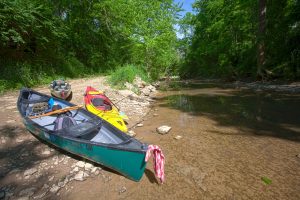
Photo: Kentucky Department Fish and Wildlife
The weather forecast calls for a redbud winter to hit this week. This old saying refers to cold snaps that occur in early April when the redbud trees bloom.
The up and down nature of spring weather can cause consternation among anglers when planning fishing trips. Concerns about the weather is one of three things to consider when planning fishing trips this spring.
1. Barometric pressure is key to unlocking fish behavior in spring:
Barometric pressure is the measurement of the weight of an entire column of air pressing down upon the Earth. Approaching storm fronts in spring ease this weight, resulting in low barometric pressure. The low pressure releases humidity trapped in the atmosphere, resulting in rain or snow.
The dark, low clouds, winds and precipitation that accompany low pressure systems limit light penetration into the water column, providing a better environment for predator fish to ambush prey. Fish do bite better before a front.
High pressure systems follow low pressure frontal systems. In North America, high pressure systems flow out in a clockwise pattern, resulting first in winds from the north and eventually from the east.
“I don’t believe in too many old wives tales when it comes to fishing, but ‘wind from the east, fish bite least’ is one I do believe in,” said Maj. Shane Carrier, assistant director of Law Enforcement for the Kentucky Department of Fish and Wildlife Resources. “I don’t catch many fish when the wind is from the east.”
A couple of days of stable weather in spring ease the influence of high pressure and get fish biting again. The sunny days typical of high pressure warm the water and stir fish activity.
Plan your trips this spring to fish either right before a low pressure system or on the third or fourth day of stable weather.
2. Making sense of the USGS streamflow charts to plan float trips on Kentucky streams:
The streamflow information on the U.S. Geological Survey (USGS) webpage at www.waterdata.usgs.gov provides invaluable information for paddlers and anglers. On this page, select Kentucky from the drop down menu on the top right hand corner to view the flow on streams on all of the river drainages in Kentucky.
The rate of flow on this page shows as CFS or cubic feet per second. The cubic feet per second expresses the amount of flow that passes the USGS stream gauges per second. The higher the CFS, the higher and swifter the water.
The chart for an individual stream shows the discharge for each day of the preceding week as well as the current day. A small triangle on the chart shows the median, or midpoint, flow for each day based on years of data. A flow measuring much higher than the median means high, and usually muddy, water, not the best conditions for fishing and floating.
A flow under the median usually means tolerable fishing and paddling conditions. The USGS streamflow page also has a chart showing the gauge height for each stream. This helps flesh out the data provided by the streamflow chart. This chart provides a good mental image of the rise, fall or stability of the stream over the last week.
The new Canoeing and Kayaking page on the Kentucky Fish and Wildlife website at www.fw.ky.gov is another invaluable repository of information for stream anglers and paddlers. This page leads to information collected by biologists concerning the fish populations in a stream, the recommended levels for floating selected streams, photos of access sites and fishing tips. The page also contains a link to the Blue Water Trails series, an ongoing initiative detailing the paddling and fishing on streams across Kentucky as well as a printable map.
3. What is a daily creel limit and a possession limit for fishing?
Anglers often get confused about these terms, especially when they are fishing three or more to a boat.
“Whenever anyone is fishing in Kentucky, each angler is entitled to the daily creel limit for that species on that lake, river or stream,” Carrier explained. “There is no boat limit in Kentucky.”
For example, if three anglers fish for crappie on Kentucky Lake out of one boat, each is entitled to 20 crappie, the daily creel limit for crappie on Kentucky Lake and Lake Barkley. There is also a 10-inch minimum size limit for crappie on these lakes, therefore anglers must immediately release any crappie caught less than 10 inches long.
The possession limit is the amount of unprocessed fish a person may hold after two or more days of fishing. In Kentucky, this amount is two times the daily creel limit for any species that has a daily creel limit.
Keep these things in mind as you plan and execute fishing trips this spring. Remember to buy your 2017-2018 fishing license, as the new license year began March 1.

Photo: Kentucky Labor Department
Last month, the Labor Cabinet conducted 27 free on-site visits, or “consultative surveys” for employers, identifying 128 serious violations affecting up to 729 employees, and saving participating companies potential enforcement penalties up to $896,000.
The Labor Cabinet’s Division of Occupational Safety & Health Education & Training leads the Cabinet’s proactive efforts to create safe and healthful workplace conditions. This includes providing free consultative surveys to employers in an effort to increase workplace safety by improving injury and illness rates.
Employers and employees all across Kentucky and the nation also have access to cost-free safety and health eLearning programs on the Labor Cabinet’s eTrain website. The Division also offers cost-free OSHA training courses, or “Population Center Training” throughout the state. Proactive approaches to workplace safety, like the ones developed by the Cabinet’s education and training team, are proven methods that reduce workplace injuries and can help employers from paying increased workers’ compensation premiums.
In addition to consultative surveys and OSHA training, cost-free assistance from the Division consists of publications, required workplace posters and information on injury/illness recordkeeping requirements. The Division is also responsible for overseeing the Partnership Programs as well as conducting the Annual Survey of Occupational Injuries and Illnesses, the Census of Fatal Occupational Injuries and the OSHA Data Collection.
According to a recent report from the U.S. Bureau of Labor Statistics (BLS), Kentucky employers recorded the lowest incident rate for nonfatal occupational injuries and illnesses in the state’s history last year.
Along with the Kentucky Safety and Health Network, the Division of Education and Training also co-hosts the Governor’s Safety and Health Conference and Exposition each year. The 33rd annual conference will take place at the Northern Kentucky Convention Center in Covington from May 8-12, 2017. For more info and to register for the conference, please visit kshn.net.
Additional information is available at http://labor.kentucky.gov.
 The Council on Postsecondary Education set 2017-18 tuition and mandatory fee ceilings for resident undergraduate students at its meeting Friday at Northern Kentucky University.
The ceilings limit tuition and mandatory fee increases to 3 to 5 percent and include:
- 3 percent for Western Kentucky University
- 4 percent for the University of Kentucky and Northern Kentucky University
- 5 percent for Eastern Kentucky University, Kentucky State University, Morehead State University and Murray State University.
The ceiling for the Kentucky Community and Technical College System was set at $6 per credit hour, a 3.9 percent increase.
A ceiling was not set for the University of Louisville since the university’s board of trustees has already voted not to increase tuition next year.
The new tuition dollars will partially offset inflationary fixed costs, manage growth in employer-paid retirement contributions, and support continuing progress to produce a more highly skilled and productive workforce, create new jobs and grow Kentucky’s economy through higher levels of educational attainment.
“Setting tuition ceilings is not something we take lightly,” said Council President Bob King. “After a very thorough process, we believe these rates strike the right balance between keeping costs affordable for students and their families, while providing adequate funding for our campuses to address fixed and unavoidable budget challenges.”
Even with the additional tuition revenue, campuses will face an $11.5 million shortfall for the 2017-18 year.
The different ceilings for campuses reflect in part the equity adjustments of $2.5 million for Western Kentucky University and $5.1 million for Northern Kentucky University. These funds were provided in the current biennial budget. A condition of the agreement was that both campuses would set lower tuition increases.
Another factor considered in setting the tuition ceilings was the expectation that employer-paid contributions in the Kentucky Employment Retirement System (KERS) will continue to increase at an accelerated rate. Between 2011-12 and 2016-17, the mandated increases in campus contributions grew from $30.2 million to $72 million, or 138 percent.
Only two campuses, the University of Kentucky and the University of Louisville, do not have employees who participate in KERS.
Council staff stressed the importance of considering the net price of going to college as opposed to the published “sticker price.” The net price is the total cost of attendance, including tuition and fees, textbooks, and room and board costs, minus student financial aid from federal, state or local and institutional sources.
In Kentucky, very few students pay the stated sticker price because of liberal amounts of grant and scholarship aid provided by the state and postsecondary institutions. For example, even though annual resident undergraduate tuition and fees at Kentucky comprehensive universities increased by $1,191 between academic years 2011-12 and 2015-16, the average net price that students paid actually decreased by $186 during this period.
The tuition action also allows campuses to submit market competitive tuition and fee rates for graduate, professional and online courses.
Council action on campus tuition and fee proposals is set for the June 16 meeting at Spalding University.
In other action, the Council:
- Extended President Bob King’s contract two years.
- Approved a KCTCS request for six new capital projects funded with a combination of Kentucky Work Ready Skills Initiative funds ($30.5 million), private funds ($5.3 million) and agency restricted funds ($2.9 million).
- Approved three academic programs: Master of Science in Nursing, Family Nurse Practitioner, Morehead State University; Ph.D. in Radiation and Radiological Sciences, University of Kentucky; and Specialist in Gifted and Talented Education, Western Kentucky University.
- Awarded resolutions of appreciation for distinguished service for outgoing members Pam Miller, Glenn Denton and Dan Flanagan.
- Chair Sherrill Zimmerman appointed Donna Moore, Joe Ellis and Ron Beal to the Council’s Executive Committee. Zimmerman and Vice Chair Ben Brandstetter also serve on this committee.
- Zimmerman appointed Lizbetthe Rodriguez to the Committee on Equal Opportunities.
The Council heard the following reports: CPE President, Kentucky Commissioner of Education, Strategic Agenda Metrics Accountability System Overview, Stronger by Degrees: Update on Opportunity, 2017 Legislative Session Summary and Committee on Equal Opportunities. Reports from the campuses were also available.
Additionally, new member Shawn Reynolds of Almo was sworn in at Thursday’s work session. His term expires Dec. 31, 2022.
Meeting materials are available at https://v3.boardbook.org/Public/PublicMeetingMaterials.aspx?ak=1001061&mk=50220579.
