Wednesday December 17, 2025
Local Connection
 Weather
 Traffic
 @LouisvilleDispatch
 @LouisvilleDisp
 Subscribe
Plans were filed last week for a $5 million redevelopment of Colonial Gardens in south Louisville.
The adaptive reuse project includes renovating the 7,000-quare-foot historic Colonial Gardens building, as well as adding two new, one-story buildings that will share a common patio and garden area.
Citizens sought successfully to designate the iconic Colonial Gardens building, located across from Iroquois Park, as a local landmark in 2008. The city purchased the property in 2013 to help foster its commercial redevelopment.
The site’s developer, Underhill Associates, is in talks with local restaurant groups to occupy the space on the corner of Kenwood Avenue and New Cut Road.
“Redevelopment will establish Colonial Gardens as a key anchor to south Louisville and Iroquois Park once again,” said Mayor Greg Fischer. “I applaud our south Louisville Metro Council members and Underhill Associates for their commitment to making this project a success.”
Construction is expected to begin on the property in mid- to late spring 2017.
To view renderings of the project provided by Architectural Artisans, visit http://portal.louisvilleky.gov/codesandregs/permit/detail?type=URBAN&id=17COA1007
Metro Council comments:
Metro Council President David Yates, District 25: “Too long has this historic site sat vacant. I look forward to the day when the people of south Louisville can again take pride in Colonial Gardens and the economic impact it will bring to our community.”
Councilwoman Marianne Butler, District 15: “The development of the Colonial Gardens corner not only improves the quality for life for residents, it also enhances your experience when you attend a show and/or movie at the amphitheater, and will spur development all along the corridor. I applaud and thank the Underhills for investing in south Louisville!”
Councilman Dan Johnson, District 21: “The restoration and reopening of Colonial Gardens is a top priority of mine, and I look forward to continuing my work with the administration to ensure this project is successful. When it opens, Colonial Gardens will not only restore a historic piece of the neighborhood, it could be the economic spark I have long advocated for in this area.”
Councilwoman Vicki Aubrey Welch, District 13: “It is so exciting that we are finally moving forward at this historical site, bringing long-awaited restaurants and jobs adjacent to Iroquois Park. My hope is that this will also spur other economic development along the New Cut/Taylor Boulevard Corridor.”
Councilman Rick Blackwell, District 12: “The combination of the re-vamped Colonial Gardens across from one of the city’s greatest concert venues, Iroquois Amphitheater, will be a win for south Louisville. This is another example of the positive momentum we have in the south and southwest, and we are excited to welcome people from all across Metro Louisville to see what we have to offer.”
Kentucky’s seasonally adjusted preliminary unemployment rate was unchanged from November 2016 to December 2016 at 4.8 percent, according to the Office of Employment and Training (OET), an agency of the Kentucky Education and Workforce Development Cabinet.
The preliminary December 2016 jobless rate was 0.9 percentage points lower than the 5.7 percent rate recorded for the state in December 2015.
The U.S. seasonally adjusted jobless rate for December 2016 was 4.7 percent, according to the U.S. Department of Labor.
Labor force statistics, including the unemployment rate, are based on estimates from the Current Population Survey of households. It is designed to measure trends rather than to count the actual number of people working. It includes jobs in agriculture and those classified as self-employed.
In December 2016, Kentucky’s civilian labor force was 2,016,835, an increase of 11,903 individuals compared to the previous month. Employment was up by 11,715, while the number of unemployed increased by 188.
“In December, our labor force increased by .6 percent,” said Kentucky Labor Market Information Director Kate Shirley Akers, Ph.D. “Over the last year, Kentucky has seen growth in both the labor force and the number of employed, with the labor force growing by 3.3 percent and employment increasing by 4.3 percent.”
In a separate federal survey of business establishments that excludes jobs in agriculture and people who are self-employed, Kentucky’s seasonally adjusted nonfarm employment increased by 800 jobs in December 2016 compared to November 2016.
“Overall, nonfarm employment has increased by 11,000 positions or .6 percent from one year ago,” said Akers. “The largest month-to-month gain in jobs was in the trade, transportation and utilities sector.”
Nonfarm data is provided by the Bureau of Labor Statistics’ Current Employment Statistics program. According to this survey, six of Kentucky’s 11 major nonfarm North American Industry Classification System (NAICS) job sectors registered gains in employment, while five declined from the previous month.
Kentucky’s trade, transportation and utilities sector expanded by 2,100 jobs in December 2016 from November 2016. This is the largest sector in Kentucky with nearly 400,000 jobs accounting for one-fifth of all nonfarm employment. Since December 2015, this sector has expanded by 8,100 jobs.
“The month-to-month increase in the trade, transportation and utilities sector was driven by gains in retail trade. This area added 2,400 jobs from November 2016 to December 2016,” said Akers.
The financial activities sector rose by 1,700 jobs in December 2016 from November 2016. The sector has added 5,700 jobs or 6 percent since December 2015.
“The financial activities sector had the largest month-to-month percent growth among the sectors at 1.7 percent,” said Akers. “The increase was in the finance and insurance subsector.”
Employment in the information sector grew by 400 in December 2016, but had a drop of 400 jobs from December 2015. The industries in this sector include traditional publishing as well as software publishing; motion pictures and broadcasting; and telecommunications.
The educational and health services sector rose by 200 positions in December 2016, and had a gain of 6,300 jobs or 2.3 percent from December 2015. Health care jobs, which account for about 13 percent of all nonfarm employment in Kentucky, increased by 7,900 jobs from December 2015 to December 2016.
Employment in Kentucky’s manufacturing sector jumped by 900 jobs in December 2016 compared to November 2016. Over the year, manufacturing employment rose by 500. Durable goods account for two-thirds of the manufacturing sector and grew by 1.6 percent from a year ago with the addition of 2,500 jobs. Nondurable goods lost 2,000 jobs from December 2015.
Mining and logging sector jobs increased by 100 in December 2016 from November 2016. The industry has declined by 1,900 positions from a year ago.
The government sector, which includes public education, public administration agencies and state-owned hospitals, decreased by 100 jobs in December 2016 and declined by 2,600 positions compared to December 2015.
The construction sector fell by 1,500 jobs in December 2016 from November 2016. Since December 2015, construction jobs have decreased by 5,000 positions.
Kentucky’s professional and business services sector lost 1,800 jobs in December 2016 from the month before but remained steady from a year ago. This category includes establishments engaged in services that support the day-to-day activities of other organizations, including temporary employment services and payroll processing.
The leisure and hospitality sector declined by 1,100 jobs in December 2016 from November 2016. Since December 2015, the sector has added by 100 jobs. This sector includes arts, entertainment, recreation, accommodation, and food services.
Employment in the other services sector, which includes repairs and maintenance, personal care services, and religious organizations, decreased by 100 positions in December 2016 compared to the month before, but gained 200 positions since December 2015.
Civilian labor force statistics include nonmilitary workers and unemployed Kentuckians who are actively seeking work. They do not include unemployed Kentuckians who have not looked for employment within the past four weeks.
Kentucky’s statewide unemployment rate and employment levels are seasonally adjusted. Employment statistics undergo sharp fluctuations due to seasonal events, such as weather changes, harvests, holidays and school openings and closings. Seasonal adjustments eliminate these influences and make it easier to observe statistical trends. However, because of the small sample size, county unemployment rates are not seasonally adjusted.
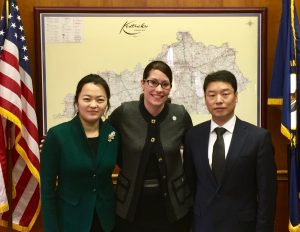 Secretary of State Alison Lundergan Grimes this week met with Chinese Embassy officials to continue to cultivate the economic and cultural relationship between Kentucky and the People’s Republic of China. Grimes is Kentucky’s chief business official.
“As Secretary of State, I look for every opportunity to help grow Kentucky’s economy and further develop connections for our state and its businesses,” Grimes said. “Kentucky’s trading relationship with China is strong and continues to grow because of the many factors that make our state a great place to do business. I am hopeful that with continued dialogue we will see even more investment in the commonwealth.”
China is the commonwealth’s 4th largest export partner with more than $1.9 billion of Kentucky exports in 2015, a growth of more than 16 percent year over year.
Grimes traveled to China in 2015 to provide information about Kentucky, its business climate and economic development opportunities in the state as part of a delegation coordinated and funded by the Chinese People’s Association for Friendship with Foreign Countries.
During the week-long trip, Grimes spent time in several cities and met with various government and business officials. Numerous Kentucky companies, including Lexmark, KFC/Yum! Brands, Brown Forman, and Ashland Oil, have offices in China.
Grimes has also made visits to Birtley Industrial Equipment Corporation’s headquarters in Lexington and offices in China. Birtley, a manufacturer of advanced coal preparation products, was the first Chinese manufacturer to locate in Kentucky, investing approximately $10 million and creating as many as 50 new full-time jobs.
“Encouraging businesses to make Kentucky their home is vital to growing jobs and opportunity in our commonwealth,” said Grimes. “There are also many opportunities for Kentucky businesses to do business abroad, further growing Kentucky’s economy, and I am committed to helping build relationships with other countries to provide the foundation for those investments.”
Gov. Matt Bevin and Cabinet for Economic Development Sec. Terry Gill were in Detroit last week, promoting Kentucky and speaking with automotive industry leaders at the 2017 North American International Auto Show (NAIAS) in Detroit.
NAIAS, which runs through Jan. 22, is considered one of the world’s largest and most prestigious automotive industry showcases. More than 800,000 people expected to attend. The event features dozens of concept and new-vehicle introductions, a showcase of technology for the rapidly evolving mobility industry, interactive displays by suppliers and hundreds of production vehicles.
“We’re here today at the North American International Auto Show to promote Kentucky as the top location for automotive engineering, manufacturing and distribution,” said Gov. Bevin. “Kentucky’s newly enacted pro-business laws are being well received as we meet with executives from global vehicle manufacturers and automotive suppliers, and discuss opportunities that can lead to new jobs and investments. A new day is dawning for Kentucky’s engineering and manufacturing industries and the future is looking bright.”
Sec. Gill, recently named to lead the Cabinet for Economic Development, said the trip provides key exposure for the state at the internationally attended event.
“Kentucky’s automotive industry is a pillar of its economy, and it’s crucial we continue to grow and expand it,” he said. “Kentucky already has more than 500 automotive-related facilities that employ nearly 95,000 people, but we believe we can grow those numbers even more. Our meetings at this show will create and solidify relationships that we expect will lead to more growth.”
The trip is the Governor’s second time attending NAIAS on behalf of Kentucky and comes just days after the General Assembly passed and Gov. Bevin signed legislation making Kentucky a right-to-work state. Already a premier location for businesses thanks to its central location, robust logistics and distribution industry and low costs of conducting business, this latest business tool holds the promise of further accelerating Kentucky’s economic growth, boosting employment and supporting the creation of better jobs and higher wages for residents.
Kentucky’s automotive industry continued to grow rapidly throughout 2016. The industry announced nearly 70 new-location or expansion projects totalling more than $923 million in investments. Those are projected to create nearly 3,200 new full-time jobs.
The automotive jobs and investment account for a significant portion of the 16,200 jobs and $3.1 billion in investments announced in Kentucky manufacturing, service and technology industries last year. The state is the number one vehicle-producing state per capita and among the top vehicle producers in the U.S.
Last year, the show featured the introduction of 61 vehicles, the majority of which were worldwide debuts, with more than 5,000 journalists from 60 countries in attendance. The public show runs Jan. 14-22. For more information on NAIAS, visit www.NAIAS.com.
Information on Kentucky’s economic development efforts and programs is available at www.ThinkKentucky.com. Fans of the Cabinet for Economic Development can also join the discussion on Facebook or follow on Twitter. Watch the Cabinet’s “This is My Kentucky” video on YouTube.
The Kentucky Department for Public Health (DPH), within the Cabinet for Health and Family Services (CHFS) is raising the influenza (flu) level in the state from “regional” to “widespread.” Widespread activity is the highest level of flu activity, which indicates increased flu-like activity or flu outbreaks in at least half of the regions in the state.
“With widespread flu activity reported in Kentucky, now is a good time to protect yourself and your family by getting a flu shot”, said Hiram C. Polk, Jr., M.D., commissioner of DPH. “We urge anyone who hasn’t received a flu vaccine, particularly those at high risk for complications related to the flu, to check with local health departments or other providers.”
The Centers for Disease Control and Prevention (CDC) Advisory Committee on Immunization Practices recommends flu vaccine for all individuals six months of age and older. However, the nasal spray flu vaccine should not be used because it has been shown to be ineffective. People who are strongly encouraged to receive the flu vaccine because they may be at higher risk for complications or negative consequences include:
• Children age six months through 59 months;
• Women who are or will be pregnant during the influenza season;
• Persons 50 years of age or older;
• Persons with extreme obesity (Body Mass Index of 40 or greater);
• Persons aged six months and older with chronic health problems;
• Residents of nursing homes and other long-term care facilities;
• Household contacts (including children) and caregivers of children aged ≤59 months
(i.e., aged aged • Household contacts and caregivers or people who live with a person at high-risk for complications from the flu; and
• Health care workers, including physicians, nurses, and other workers in inpatient and
outpatient-care settings, medical emergency-response workers (e.g., paramedics and
emergency medical technicians), employees of nursing home and long-term care
facilities who have contact with patients or residents, and students in these professions
who will have contact with patients.
Adequate supplies of flu vaccine are available for this year’s season. Vaccinations can be given any time during the flu season. The flu activity level is tracked weekly as part of the CDC national flu surveillance system.
“You should also follow the advice your parents gave you to prevent flu and other illnesses that tend to circulate at this time of year – wash your hands frequently, cover your mouth when you cough or sneeze and stay home when you’re sick,” concluded CHFS Secretary Vickie Yates Brown Gilsson.
Infection with the flu virus can cause fever, headache, cough, sore throat, runny nose, sneezing and body aches. Flu can be very contagious. For more information on influenza or the availability of flu vaccine, please contact your local health department or visit http://healthalerts.ky.gov.
Attorney General Andy Beshear joined the Truckers Against Trafficking (TAT), the Kentucky Baptist Convention, the Kentucky Hotel and Travel Industry, Free 2 Hope, the Kentucky Trucking Association, WDRB and Catholic Charities of Louisville to raise awareness about one of the nation’s fastest growing criminal enterprises – human trafficking.
The 11th of each January is National Human Trafficking Awareness Day. January is National Human Trafficking Awareness Month.
Over the last year, Beshear has established the Kentucky Attorney General’s office as the leading agency fighting human trafficking, a modern-day form of slavery in which adults and children are forced into sex or labor services.
“Human trafficking represents the worst form of abuse, often to children, and it is increasing in Kentucky,” Beshear said. “That’s why my office is partnering with the public and private sector to enhance and improve policy measures and training opportunities to increase resources and awareness to help end human trafficking.”
Beshear’s office receives direct complaint information on possible human trafficking from the Cabinet for Health and Family Services and the National Human Trafficking Hotline.
In just the last quarter of 2016, Beshear’s office provided assistance on 14 possible incidences of human trafficking and acted as the sole investigative agency on five cases.
For 2016 as a whole, the AG’s Department of Criminal Investigations provided technical assistance to local law enforcement agencies on 32 possible human trafficking cases, resulting in the identification of two minors who were being trafficked for sex.
The office was selected by the United States Department of Justice as the first Kentucky government agency to receive a federal human trafficking grant, and has forged partnerships with the trucking and hospitality industries, and the Baptist Convention.
“As the largest denomination in the Commonwealth, the Kentucky Baptist Convention feels a special burden to stand with the attorney general to prevent human trafficking and rescue those individuals whose lives are systematically and cruelly devastated,” said Hershael W. York, chairman of the Kentucky Baptist Convention Public Affairs Committee and pastor at Buck Run Baptist Church of Frankfort. “The resulting devaluation of human life and the loss of human dignity is an attack on all of us. Victims of human trafficking are surely emblematic of Jesus’ concern for ‘the least of these’ and so we must accept the mandate of protection, deliverance and justice.”
“Professional drivers have proven time and again that they are the eyes and ears of our nation’s roadways,” said Truckers Against Trafficking Executive Director Kendis Paris. “They are in places and see things that most of us do not. If we can train every CDL holder in America to recognize and report human trafficking as they’re seeing it, many more victims will be recovered out of a life of forced prostitution. Truckers Against Trafficking is extremely grateful to be partnering with the Kentucky Attorney General’s office and the Kentucky Trucking Association to reach this critical goal, and we applaud both groups for being leaders on this issue.”
“The Kentucky Trucking Association, our members and the trucking community in this state and around the country pledge our support to Truckers Against Trafficking and its mission,” Guy Young, president and CEO of the Kentucky Trucking Association. “Our thanks to Attorney General Beshear for his leadership on this important issue. We are hopeful that the public-private partnerships formed in Kentucky to fight human trafficking will continue to make a difference in this human tragedy. Awareness and training for our professional drivers has led to increased reporting of suspected activity, rescue of many victims, and the arrest and prosecution of those responsible. We are glad to extend our help to TAT in any way we can.”
“Kentucky’s tourism industry is fully prepared to help inform and educate our businesses and employees about human trafficking,” said Hank Phillips, president and CEO of the Kentucky Travel Industry Association. “This activity is so despicable, that there can be a temptation to ignore it and pretend it does not exist. We cannot do that and we will not do that.”
“Human trafficking is a crime that is hidden in the seams of Kentucky communities, in rural and urban areas,” said Marissa Castellanos, human trafficking program director for Catholic Charities of Louisville. “Workers are being abused and enslaved in horrific conditions on farms, in restaurants, in domestic work, and other Kentucky businesses. Men, women, and children are being exploited for commercial sex, forced to engage in sex acts, resulting in thousands of dollars in profits for traffickers. Survivors need supportive services in order to regain control of their lives and begin healing. Catholic Charities is committed to helping victims of human trafficking with case management services, basic needs, immigration relief, advocacy, and other services. We hope Kentuckians will continue to raise their awareness of this issue, and look for ways to engage as more conscious consumers and by reporting potential trafficking activities to law enforcement.”
Human trafficking victims are often the most marginalized in society – victims of abuse and violence, runaways, refugees and immigrants, Beshear said.
“They are coerced into submission by their abusers through many immoral means, including forced dependence on drugs, violence, threats and manipulation,” Beshear said. “And the problem is getting worse.”
Human trafficking reports to the Cabinet for Health and Family Services have grown by 50 percent each year, climbing from 51 victims in 2013 to 169 reported cases for 2015.
Beshear said his office is working with state and federal partners to fill these gaps in several different ways.
“We are getting real time case information from state and federal agencies, and reaching out to local law enforcement, prosecutors and social workers,” he said. “We’re offering support for investigations, victims services referrals, legal research, specialized training and prosecution assistance.”
Beshear recognized WDRB Television in Louisville for producing the human trafficking awareness video that will be shown to train the employees of each participating hotel, convention center and others from the tourism industry.
The Kentucky Human Trafficking Task Force will meet on Wednesday to discuss plans to use the federal grant to hire a specially trained human trafficking investigator, enhance the collaborative efforts of the task force to ensure victim-centered response, investigation, prosecution and follow up services in cases of human trafficking. The grant will also allow the task force and AG’s office to better collect data on human trafficking.
To learn more about human trafficking and efforts to fight it, visit Catholic Charities of Louisville Rescue and Restore program website at http://www.rescueandrestoreky.org, or contact the Attorney General’s Office of Child Abuse and Exploitation Prevention at 502-696-5300.The national hotline is 888-373-7888.
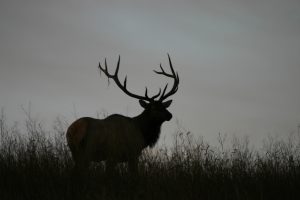 The Kentucky Fish and Wildlife Commission took another step toward its goal of increasing Kentucky’s elk population at a faster rate by proposing hunting season modifications and setting season dates at its Jan. 6 special-called meeting.
The commission recommends all hunting, fishing and boating regulations for approval by the General Assembly and approves all expenditures by the Kentucky Department of Fish and Wildlife Resources. All recommendations must be approved by legislators before they become law.
Kentucky’s free-ranging elk population is the nation’s largest east of the Rocky Mountains, but the commission is taking strides to grow it faster as a way to create more recreational opportunity.
The commission moved to compress the state’s hunting season by ending the season December 31. In doing so, it proposed moving Cow Firearms Hunt 2 (second week) from January to December immediately after Cow Firearms Hunt 1.
The commission also proposed the 2017 elk season dates:
Bull Archery:
Sept. 16 – 29; Oct. 14 – Dec. 8; Dec. 23 – 31
Bull Crossbow:
Sept. 23 – 29; Oct. 14 – Dec. 8; Dec. 23 – 31
Bull Firearms 1:
Sept. 30 – Oct. 6
Bull Firearms 2:
Oct. 7 – 13
Cow Archery and Crossbow:
Oct. 14 – Dec. 8; Dec. 23 – 31
Cow Firearms 1:
Dec. 9 – 15
Cow Firearms 2:
Dec. 16 – 22
The next regular Kentucky Fish and Wildlife Commission meeting will be 8:30 a.m. (Eastern time), Friday, March 17, 2017. Meetings are held at Kentucky Fish and Wildlife headquarters, located at 1 Sportsman’s Lane off U.S. 60 in Frankfort.
