Saturday January 24, 2026
Local Connection
 Weather
 Traffic
 @LouisvilleDispatch
 @LouisvilleDisp
 Subscribe
 A fun – and free – family event will take place on the banks of the Ohio River in southwest Louisville on Saturday, June 17 as Riverside, the Farnsley-Moremen Landing hosts “Family Farm and Forage Day” from 10 a.m. to 4 p.m.
The event will explore historic and present-day farming with a variety of children’s activities, workshops, talks and booths. Families can enjoy a milking demonstration featuring “Bluegrass Bessie” the cow; a farm animal petting zoo; horse-drawn wagon tours, barrel train rides as well as demonstrations on beekeeping, raising chickens, cultivating beneficial garden insects, growing fruit trees and more.
New this year to the festival – in its second year – is the Jefferson County 4-H Fair Open Youth Dairy Goat Show . The goats will be judged on adherence to breed standards and their youth handlers will be judged on showmanship. Late entries will be accepted the day of the show. The entrance fee is $5 per goat and champions will be awarded a small premium. For questions, contact Kelly Smith at the Extension office at (502) 569-2344.
All events and demonstrations are free, although a suggested donation of $5 can be made prior to tours of the Farnsley-Moremen house. Ehrler’s Ice Cream and the LaRue County Pork Producers will be providing concessions at Family Farm and Forage Day.
“This is a terrific family event that combines fun and learning,” said Mayor Greg Fischer. “Beyond the activities of the event itself, I urge citizens from all over the community to come out and see some of the great things that southwest Louisville has to offer.”
“I am so excited to see this wonderful farm event behing held at the Farnsley-Moremen historic property,” said Councilwoman Cindi Fowler, who represents District 14, where Riverside is located. “It is so important to educate the public on how our food gets from the farm to the table and past and present practices of how exactly that happens. I look forward to seeing you at this free event!”
This event is held in partnership with the Jefferson County Cooperative Extension Service and the University of Kentucky’s College of Agriculture, Food and Environment. Other sponsors include Louisville Gas & Electric, Jefferson County Farm Bureau, the Future Farmers of America, the Louisville Water Co. and 4-H.
In addition to Fowler, Metro Council sponsors include Council President David Yates, D-25; Vicki Welch, D-13 and Rick Blackwell, D-12.
Photo: Louisville Metro Parks and Recreation
As part of a multi-year effort creating improvements at Shawnee Park, Mayor Greg Fischer and other local officials dedicated the newly upgraded and historic Dirt Bowl courts Tuesday morning. The annual Dirt Bowl tournament, in its 48th year, begins this year on Saturday, June 17 at Shawnee Park.
Many of the city’s and region’s leading hoops figures– including Darrell Griffith, Tony Kimbro, Artis Gilmore, Louie Dampier and Derek Anderson – have competed in the tournament. In addition to the high-quality of competition in the tournament, the Dirt Bowl is also been recognized as cultural and social summertime institution in west Louisville.
Just last year, a book titled “I Said Bang: A History Of The Dirt Bowl” was released by the Louisville Story Project outlining the significance of the tournament, from its beginnings in 1969 when it was created by Janis Carter and Ben Watkins.
In conjunction with an underground basin project that is ongoing in the park and is slated to continue through 2018, MSD has committed to making several improvements to the park, including new playing surfaces at Hornung Field, a new open-air pavilion and restrooms and the restoration of the lily pond and Ball House – the future home of the West Louisville Outdoor Recreation Initiative.
“These changes will transform the park and bring amenities that will be enjoyed at Shawnee Park for generations to come,” said Mayor Greg Fischer. “The short-term inconvenience due to MSD’s work in the park will result in a long-term gain.”
“I’m so glad that the MSD basin project has made the improvements to the Dirt Bowl courts possible. They are heavily used courts and will be able to extend the enjoyment and usage of the courts for years to come for patrons of all ages,” said Councilwoman Cheri Bryant Hamilton, who represents District 5, which includes Shawnee Park.
The work on the basketball courts consists of new fiberglass backboards, a scoreboard, concrete pads and bleachers as well as an enhanced electrical system for the court and nearby surroundings. The courts have also been slightly moved so that the evening sun will not be in the player’s faces, something that has been a long been a challenge at the Dirt Bowl.
“Everything about the Dirt Bowl experience, from the people in the stands listening to the call of the game and watching it on the court, to the players participating in it, will be enhanced because of this work,” said Seve Ghose, Director of Metro Parks and Recreation. “These are crowd-pleasing improvements and we’re looking forward to a great summer at Shawnee Park.”
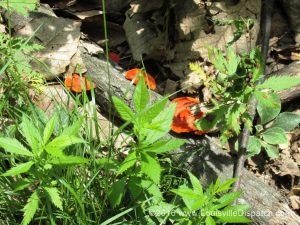 Jefferson Memorial Forest will connect with thousands of other campers and the great outdoors on Saturday, June 24 and Sunday, June 25, as they host the annual Great American Campout.
The Great American Campout, in its 13th year, is a great way for friends, families, and children experience nature, sleep under the stars and create lasting family memories. Jefferson Memorial Forest will provide the campfire, story-telling, and night hikes; you provide your dinner, breakfast, and tent.
In the morning campers will have the day to explore the Forest by hiking any of our 35 miles of trails, fishing at Tom Wallace Lake with free fishing poles provided at the Welcome Center, or unleashing your adventurous side by taking on the GoApe tree-top adventure course (reservations with GoApe required).
The price of the campout is $25 per family of (4), and $5 each additional family member. Platform tents are available to rent at a cost of $15.
Pre-registration is required by calling the Forest’s Welcome Center at (502) 368-5404.
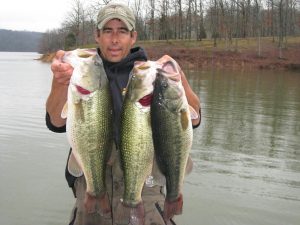
Photo: Kentucky Department Fish and Wildlife
June is one of the best months for outside activities such as fishing. However, many predator species, such as largemouth bass, have already completed their annual reproductive ritual and kind of sulk through June.
It can be a tough month for fishing in lakes and reservoirs, but two options will produce fishing that compares to the marvelous weather.
Largemouth bass in farm ponds:
June is a transitional month for largemouth bass in our larger lakes, but the confined nature of a farm pond ups the odds in the angler’s favor.
“You can catch largemouth bass all summer in a farm pond,” said Jeff Ross, assistant director of fisheries for the Kentucky Department of Fish and Wildlife Resources.
Successful summer largemouth bass fishing in farm ponds is all about timing and changing approaches as the day progresses. Wake up early enough that dew soaks your shoes as you walk to the pond.
Old school topwater lures such as the Hula Popper or a Jitterbug in the bullfrog color draw vicious strikes when slowly worked along the edge of vegetation in the low light of early morning.
As the sun rises, switch to fishing a weightless 7-inch ribbon-tailed worm in the junebug color. “Bass hold tight to cover during the middle of the day on a farm pond,” Ross said. “Fish the shady side of the pond if there is one.”
The weightless ribbon-tailed worm slowly falls through the cover attracting largemouth bass snuggled deeply in it. If the pond has no cover, fish the worm slowly along any weedlines or under any floating vegetation.
As day fades into night, the topwater bite again comes into play. Anglers also catch many farm pond bass in the dark on a 1/4-ounce black spinnerbait with a round Colorado blade.
Fish the spinnerbait just above bottom and let the Colorado blade thump. Hold on tight as largemouth bass often savage this presentation.
Channel catfish:
Channel catfish spawn in Kentucky mainly in June. “They are cavity spawners,” Ross said. “You often find them near riprap or chunk rock.”
Riprap consists of cantaloupe-sized rock used to protect the face of dams, bridge abutments and marinas from erosion caused by the pounding of waves. A 3/8-ounce slip-sinker rig with a 4/0 circle hook is a good choice for catfish when fished on or near riprap or areas of chunk rock lining the banks.
A slip-sinker rig consists of an 18-inch fluorocarbon or monofilament leader with the circle hook on one end. Tie the other end of the leader to a barrel swivel. After threading the main line coming from your rod through an egg sinker followed by a glass bead, tie the main line to the open loop of the barrel swivel.
A circle hook prevents gut hooking catfish. Resist the temptation to set the hook, simply reel in slack line until you feel the catfish swimming and keep your rod tip high. The catfish will hook itself in the side of the mouth with a circle hook.
“Hot dogs, shrimp, chicken liver or beef liver, channel catfish will eat practically anything,” Ross said. “I like chicken liver best for channels.”
Ross also said any cavity near a root wad or stump also holds channel catfish in June on our lakes and reservoirs.
The many creeks coursing through Kentucky hold surprising numbers of channel catfish. Those with rocky bottoms and water at least chest deep are best.
Undercut banks are key to finding channel catfish in streams. Use a slip-sinker rig with enough weight to hold it in place in current. Use a 3/0 circle hook with a piece of cleaning sponge impaled on it.
Drop the sponge into a tub of commercially made stink bait, also called dip bait, and push it to the bottom with a stick. Hold it there to soak up as much of the smelly dip bait as the sponge can hold and cast it to an undercut bank. The sponge emits a plume of funk downstream that channel catfish follow back to the sponge and eat it.
You can also use chicken livers, nightcrawlers or rancid cheese for this presentation, but the dip bait sponge is hard to beat in a stream. You will catch many 16- to 21-inch long channel catfish in streams, perfect size for a dinner. Channel catfish from a cool stream offer fantastic table fare.
June is a wonderful month weather wise, but a transition time as predator fish move into their summer locations. Farm pond largemouth bass and channel catfish provide excellent sport during this unpredictable month.
Twenty-six of Kentucky’s environmental educators were recognized as Certified Professional Environmental Educators at a ceremony at the state capitol in Frankfort yesterday. Brad Montell, deputy secretary of the Education and Workforce Development Cabinet, delivered the keynote address.
The Certified Professional Environmental Educators completed the state’s rigorous Professional Environmental Educator Certification (PEEC) course that was conducted from November 2016 – May 2017. The course is offered by the Kentucky Environmental Education Council (KEEC), an agency of the Kentucky Education and Workforce Development Cabinet.
The PEEC course, now with 213 graduates since the program was launched in 2004, is based on national guidelines designed to professionalize the field of environmental education by standardizing best practices. It was accredited by the North American Association for Environmental Education in 2015.
“I was a relative newcomer to environmental education when I joined the 2007-2008 PEEC course, and the networking opportunities provided to me were immeasurably beneficial,” said Billy Bennett, now the executive director of the KEEC.
“In addition to numerous resources and contacts, I gained a much better understanding of environmental education’s role as it pertains to both formal and non-formal settings, especially presenting complex environmental issues without advocating for a particular viewpoint.”
The following 26 people were recognized as Certified Professional Environmental Educators:
- Carmen Agouridis, Fayette County
- Dale Booth, Franklin County
- Susan Brown, Harlan County
- Ashley Bryant Cheney, Fayette County
- Jo Ann Corum, Clay County
- Michael Downs, Fayette County
- Joseph Franzen, Jefferson County
- Jackie Gallimore, Fayette County
- Jeanine Huss, Warren County
- Tim Joice, Jefferson County
- Jessica Kane, Jefferson County
- Rebecca Konopka, Carter County
- Megan McCarty, Fayette County
- Katherine Morrison, Fayette County
- Angie Muncy, Leslie County
- Moria Painter, Russell County
- Steven Rogers, Fayette County
- Trinity Shepherd, Floyd County
- April Simmons, Fayette County
- Jen Smith, Morgan County, Indiana
- Traci Tackett, Pike County
- Jamie Thorn, Russell County
- Jane Vanhook, Lincoln County
- Heather Warman, Fayette County
- Nic Williamson, Fayette County
 Rachelle Wood, Jefferson County
Certified Professional Environmental Educators are required to complete annual continuing education to renew their certification. Those who renewed for at least six years receive the Master Environmental Educator designation.
Master Environmental Educator Jenny Howard Owen, who has participated in and taught the course, said, “In the academic context, environmental education (EE) is a fantastic approach for helping teachers and students connect classroom topics and lessons to real life. Outside the classroom, EE offers us tools for understanding how our daily lives and communities are directly affected by and connected to the natural environment.”
For more information about the PEEC course, visit keec.ky.gov or contact Wesley Bullock at wesley.bullock@ky.gov or 502-564-5937.
Photo: Louisville Metro Parks and Recreation
Major improvements to A.B. Sawyer Park, including the installation of a new playground, picnic shelter and a newly configured parking area, will begin this week. The work, which will significantly improve the park, especially the areas used by Lyndon Recreation will last through late summer.
The project, which is expected to begin Tuesday, May 30, is the first of several phases of work recommended by Metro Parks and Recreation through its master plan for A.B. Sawyer Park completed in 2012. The A. B. Sawyer Greenway, another project proposed by the park master plan, is currently in design.
The project was also advocated and funded by Metro Council members Marilyn Parker (District 18), Angela Leet (District 7) and Glen Stuckel (District 17). Since 2014, the Metro Council has allocated $1.3 million towards this project, with additional funding for other adjacent projects planned in the coming months. Council members Parker, Leet and Stuckel have been tremendous supporters of Lyndon Recreation and making these needed improvements to A.B. Sawyer Park.
“A.B. Sawyer Park serves so many of our families throughout the year. The park is adjacent to the NE YMCA, the future site of our newest Regional Library and an ideal location for persons wishing to get a little exercise during a lunch break. The planning for this project has included all users of the park and will transform this into a much more safe and user friendly jewel for the community.” – Metro Councilwoman Marilyn Parker.
The project is overseen by the Metro Parks Planning, Design and Construction Division with Element Design collaborating as the Landscape Architectural consultant.
Work occurring within the Lyndon Recreation use area includes the construction of a new playground, picnic shelter, pedestrian entry and walkway, walking path to the Northeast YMCA and a newly configured parking lot. The park entry drive from Whipps Mill Road will also be relocated.
“It’s exciting to see the work at A.B. Sawyer commence, and know this initial work is the start of bigger and better things to come,” said Seve Ghose, Metro Parks and Recreation Director. “We hope those who use the park enjoy the improvements and thank Councilwoman Parker and Lyndon Recreation for their partnership.”
Construction is expected to be completed in late summer or early fall of this year. The Lyndon Recreation parking area will be closed intermittently during the construction period. Park visitors are encouraged to allow extra time to park and enter the site.
“As with any project of this size, there will be inconveniences. We apologize in advance for any disruption or distraction,” said Nathan Moore, Lyndon Recreation Board President, “You may have to walk slightly further from your parking spot or park in a different lot for a couple months, but we assure you, once completed, you will agree that the improvements were worth a couple months of changed behavior.”
Additional parking will be available after 5 p.m. at the Plaza III parking area at 9520 Ormsby Station Rd. as well as the YMCA lot next to the football field. All other A.B. Sawyer Park and Lyndon Recreation facilities will remain open during construction.
The construction area will be fenced, and parking spaces and sidewalk areas will occasionally close to accommodate equipment and delivery during the construction hours of Monday through Friday from 7 a.m. until 4;30 p.m. and some Saturday hours. Lyndon Recreation encourages parents to ensure children are not playing in or around the construction site while work is underway.
For more information about the Lyndon Recreation A.B. Sawyer Park construction project, call 502-648-6534. For more information about the A.B. Sawyer Park Master Plan, visit https://louisvilleky.gov/government/parks/ab-sawyer-master-plan.
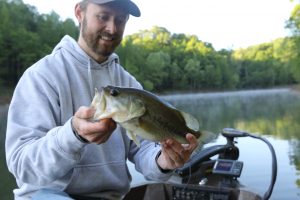
Photo: Kentucky Department Fish and Wildlife
The months of May and June make for two of the best for catching largemouth bass. The weather is warm, but not too hot, and the largemouth bass feed heavily as warmer water temperatures increase their desire to eat.
Largemouth bass are one of the most popular sport fish in Kentucky. Two of Kentucky’s excellent state resort parks, Barren River Lake State Resort and Lake Barkley State Resort Park, lie on two of the best largemouth bass lakes in our state.
A buddy weekend of largemouth bass fishing while staying at one of these top class state resort parks could be the trip of the year.
Barren River Lake State Resort Park:
The 2017 Fishing Forecast produced by the Fisheries Division of the Kentucky Department of Fish and Wildlife Resources rated the largemouth bass fishery in Barren River Lake as good/excellent, noting the lake is chock full of 2- to 4-pound fish.
“You are launching at a good spot at the Barren River State Resort Park ramp,” said Geoff Roberts, conservation educator at Kentucky Fish and Wildlife’s Salato Wildlife Education Center. “You are within a very short run to the biggest tributaries on the lake: Skaggs Creek and Peter Creek. Barren River State Resort is also near deep main lake spots that are productive for largemouth bass in summer.”
Roberts knows Barren River Lake like the back of his hand and has landed myriad largemouth bass in the 3- to 5-pound range from the lake over the years with some larger bass mixed in with these. In early summer, he likes a jig in hues of green pumpkin, brown, orange with a touch of chartreuse or a medium running shad-colored crankbait to catch largemouths.
“The bass move to main lake points after they spawn,” Roberts said. “Focus on ones that are near deep water. They need deep water nearby in summer.”
A river or major creek channel swinging close to one of those points supplies the needed deep water sanctuary.
“As you fish those points, work the drop that falls off into the river or creek channel,” Roberts said. A jig fished in a slow pull and drop retrieve works great in these spots as does the crankbait worked shallow to deep.
“The state resort park is also close to main lake bluffs that are productive for largemouth and Kentucky spotted bass in hot weather,” Roberts said. A crankbait worked parallel to the bluff walls picks off bass suspended in the water column near the bluff, waiting for a school of shad to amble by.
“I also like to throw topwater baits in the early morning during summer,” Roberts said.
Lake Barkley State Resort Park:
Lake Barkley is not only one of the best largemouth bass lakes in Kentucky, but also one of the best in the nation. It consistently rates high in Bassmaster Magazine’s Best 100 Bass Lakes in the country.
Lake Barkley State Resort Park is in the Little River arm of the lake. A bass angler could have an excellent weekend of early summer largemouth bass fishing without ever leaving the Little River arm.
A shallow lake by Kentucky standards, fishing near the submerged creek channels is key to catching early summer largemouths on Lake Barkley. Anglers who pound shallow cover near the bank will pick off the occasional small largemouth, but anglers who want quality must fish near the channel.
In the early morning, largemouth bass move onto the flats near the channel to feed on shad or small bluegill. Those flats with some brush or other cover on them are best. A medium-running shad-colored crankbait fished on the flat allows an angler to cover water and catch bass. A white buzzbait fished in the same area draws vicious hits from bass in the low light of dawn.
As the sun rises in the sky, an old school 3/16-ounce Texas rigged curly tailed worm in the plum glitter or junebug colors fished along the channel drops draws strikes. A 6-inch green pumpkin lizard fished on a 1/2-ounce Carolina rig also works well in summer, especially if the water has some color to it. Cast the Carolina rig onto the flat and work it back into the channel.
When the truly hot weather sets in, bass anglers move to the main lake and the mouths of major creek arms and fish humps and channel drops near deep water. Locals call these spots “ledges.” A 10-inch plum glitter or red shad-colored curly tailed worm fished on 5/8-ounce Shakey heads draws strikes. A 3/4-ounce black and blue jig and trailer combination also works well on the ledges for largemouth bass.
Slowly crawl these lures on the bottom along the ledge. Fishing the ledges may present the best chance of the year to catch a largemouth bass larger than 6 pounds.
Head to Barren River Lake or Lake Barkley State Resort Parks for a fun weekend of bass fishing and boating this summer.