Monday February 2, 2026
Local Connection
 Weather
 Traffic
 @LouisvilleDispatch
 @LouisvilleDisp
 Subscribe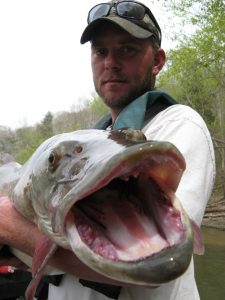
Photo: KDF
Spring break for many conjures thoughts of traveling somewhere warm and catnapping on a beach between rounds of golf.
A staycation sounds much better if you’re a muskellunge angler from Kentucky. The state’s muskellunge fishery has earned a reputation that extends beyond its borders, and experienced anglers know spring is one of the can’t-miss times of the year.
“Your odds of catching a trophy are better in the spring and fall,” said Tom Timmermann, northeastern fisheries district biologist for the Kentucky Department of Fish and Wildlife Resources. “In the fall, they’re packing on that weight to get through the winter. In the spring, if you catch those females before they release their eggs, they’re full of eggs. Either way, you’re looking at a chance at some bigger fish.”
Kentucky lies within the natural range of the Ohio strain of muskie, but the population in lakes and streams now is supported with stocking.
The bloodlines of these young predators trace to broodstock collected each spring from the Licking River. Kentucky Fish and Wildlife’s Minor Clark Fish Hatchery at the foot of Cave Run Lake Dam raises every muskellunge stocked in Kentucky.
Buckhorn, Cave Run, Dewey and Green River lakes are managed as trophy fisheries and there is a 36-inch minimum size limit in place on each. A 30-inch size limit for muskellunge is in effect elsewhere in the state
Cave Run Lake reaches into parts of Bath, Menifee, Morgan and Rowan counties and it produced the current state record in 2008. The 47-pound bruiser measured 54 inches.
Mike Hardin grew up fishing the lake and this past fall released a 50-incher caught on a homemade inline spinner.
“I believe they’re probably right there and ready to go pretty soon,” said Hardin, an assistant fisheries division director with Kentucky Fish and Wildlife. “The cold weather may slow things down a little bit but they’re already making that march.”
The longer periods of daylight and water temperatures climbing past 50 degrees trigger the muskellunge’s instincts to move shallow. Many anglers do well focusing on larger embayments, secondary cuts and flats because they warm up first.
Look for areas that offer food, vegetation or timber, warmer water and close proximity to deeper water. Scotts Creek, Warix Run, Buck Creek and Leatherwood on Cave Run Lake are popular spots in spring. Start at the points and work back to the shallows, casting to the bank and any structure or sub-surface features along the way.
“Those fish run up into the hollows seeking that flowing water,” Timmermann said. “The males are up there early and the females come up second. If you see a bunch of males, you know you’re still a little ways off from the big fish getting up there.”
Kentucky Fish and Wildlife is studying the impact of a 2010 regulation change that adjusted the size limits on Buckhorn, Cave Run and Green River lakes to 36 inches.
The same size limit went into effect last year on Dewey Lake in Floyd County. It is maturing as a muskie fishery after receiving its first muskie stocking in 2014. Sampling conducted this past fall found some of those fish had reached the minimum size limit.
At Buckhorn Lake in Leslie and Perry counties, catch rates have been better in the lower lake due to the habitat. “We have some larger shallow flats and there’s a lot of woody debris on those,” Kentucky Fish and Wildlife fisheries biologist Joseph Zimmerman said.
At Green River Lake in Adair and Taylor counties, the areas around the Emerald Isle and state marinas produce some of the better catch rates on the lake while the upper reaches of the Robinson Creek, Casey Creek and Green River arms offer large shallow flats worth exploring.
“The area behind the state marina is a good spot,” said Eric Cummins, southwestern fisheries district biologist with Kentucky Fish and Wildlife. “It’s wind protected and heats up quicker than some other parts of the lake.
“In the upper ends of the lake, you have warmer water dumping in at the mouths of those feeder creeks. If you have some stained water, muskie will slide up a little shallower and generally be more available to your shallower presentations.”
Many a bass angler pitching a crankbait or plastic frog has been surprised by a muskie. To have a fighting chance, it’s best to pair a 6-foot-6 or longer medium-heavy or heavy action rod with a 4.2:1 or 5.2:1 ratio baitcasting reel spooled with 65-pound or heavier braid. Wire leaders of 9- to 18-inches are a necessity because of the muskie’s sharp teeth.
Up-sized rattling lipless crankbaits, large soft-plastic swimbaits, minnow-imitating crankbaits, jerk and glide baits, spinnerbaits and in-line spinners are enough to cover just about any situation in the spring.
Anglers should dip the rod tip into the water as a lure gets to within a few feet of the boat and draw a figure eight. Muskie are prone to stalk a lure and the figure eight can entice a boat-side strike.
“I don’t know how many fish I’ve had hit right at the boat and I’ve never seen them until I’ve made the turn,” Hardin said.
A guide once told Timmermann that muskellunge anglers should not be married to one spot in spring.
“If you’re not catching fish, if you’re not seeing fish on your electronics, if you’re not raising fish, keep moving,” Timmermann said. “This time of year, jump from big hollow to big hollow.”
On Cave Run and Dewey lakes, anglers should inspect their boats and lures and discard any weeds before running to a new spot because of the presence of hydrilla, an invasive aquatic plant. Hydrilla was discovered just last year in Cave Run Lake.
“This is not a good thing for the lake,” Timmermann said. “Pay attention to what you’re moving and when you’re moving it. Clean your motors and trolling motors off before you move to a new spot and clean those weeds off of your baits.”
Furthermore, boaters can fight the spread of hydrilla by clearing any plant material from their boats before launching and removing all plant material from boats, motors and trailers after pulling their boats from the water. Spray or scrub off any remnants of plant material on boats before storing them.
One more thing to remember before trying for the muskellunge of a lifetime this spring in Kentucky is a fishing license. The new license year started March 1. Consult the Kentucky Fish and Boating Guide for complete licensing information. It is available online at fw.ky.gov and wherever licenses are sold.

Photo From KY Transportation Cabinet
The Kentucky Department of Vehicle Regulation is alerting boaters of a recent change in federal law regarding the registration and renewal process for vessels.
Beginning January 2018, boat owners will need to verify all Hull Identification Numbers (HIN) when renewing or applying for new registrations. All HIN registrations must be valid and formatted correctly in order to be compliant with the new law.
If a HIN is missing or not formatted properly, a boater must apply for a new HIN. Boaters are required to complete the TC 96-169 application for a hull identification number and attach the ownership documents as instructed.
Boaters can submit their applications by mail, email or in-person at the Kentucky Transportation Cabinet’s One-Stop-Shop.
“This new law streamlines the boater registration verification process and establishes federal standards to help prevent identification theft and fraud,” said Stephanie Williams, director of the Division of Motor Vehicle Licensing.
Renewal postcards for 2017 will be also mailed to Kentucky boat owners notifying them of the new requirement and required compliance by the 2018 renewal period.
When registering or renewing a HIN in 2017, a message attached to the registration or receipt will notify individuals that they will not be able to renew their registration in 2018 without a valid HIN. Boaters are encouraged to visit http://drive.ky.gov for more information.
All boats registered in Kentucky must have a HIN recorded in the state’s title and registration database. All boats imported or manufactured on or after November 1, 1972 are required to have a HIN. These identification markers may be molded into the hull or marked by an engraved metal plate located at the vessel’s stern.
The Department of Vehicle Regulation has been working with the U.S. Coast Guard and the Kentucky Department of Fish and Wildlife in order to conform to this new requirement.
To find out more about valid HINs and the actions that boat owners must take in order to comply with the new law, visit http://drive.ky.gov/motor-vehicle-licensing/Pages/Boat-Titling.aspx or contact KYTCMVLBoat@ky.gov for more information.
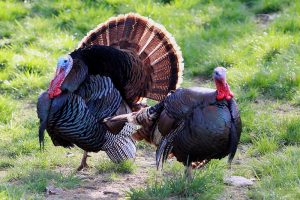
Photo From KDF
Spring turkey hunting is slipping into position before daybreak and sitting still as the sun eases over the hills.
It is breaking the silence with a call and getting a response that sends a shock of excitement down your spine. It is coaxing a love-struck gobbler closer and keeping your wits as it struts into range.
“There’s something about that drumming, spitting, gobbling turkey in front of you that makes the ground shake,” said Jason Lupardus, Midwest Conservation Field Supervisor with the National Wild Turkey Federation who has regional biologist duties in Kentucky. “I live for those moments. Favorite time of year, by far. You can’t beat it.”
The spring turkey season is something of an obsession among hunters who have experienced those magical mornings many times over or dream about it happening their first time out this year.
In Kentucky, the 2017 season is right around the corner. Hunters ages 15 and younger are first up. The youth-only season is the weekend of April 1-2. The general statewide season opens April 15 and runs through May 7.
“I’ve got high hopes,” said Zak Danks, wild turkey program coordinator with the Kentucky Department of Fish and Wildlife Resources.
The state’s turkey flock numbered fewer than 2,400 birds when restoration efforts began in 1978. The restoration continued until 1997, and today turkeys can be found in all 120 counties. The statewide turkey flock is estimated from 200,000 to 240,000.
Kentucky Fish and Wildlife monitors turkey reproduction through annual brood surveys conducted every summer.
A wet spring and early summer affected nest success and brood survival in 2016. The number of turkey poults per hen averaged 1.6 across the state, down from 2.3 the year before. What that means for this spring is fewer jakes but a strong crop of older, more experienced gobblers.
“We should have plenty of 2-year-old birds out there gobbling and providing good opportunity for folks,” Danks said. “I’m pretty excited about it. Of course, we’re going to cross our fingers and hope for good weather. The early season weather really impacts things. If we get good weather, people will get out and should have some good action.”
Lupardus is even more bullish about the upcoming season.
“We may have our banner year,” he said. “There were reports last spring of lots of jakes running around. That tells me that banner production from two years ago was still in place. Therefore, we should have a lot of 2-year-old birds out there gobbling this year. I’m thinking this could be our 10-year high.”
Kentucky’s spring turkey harvest has remained stable since the 2010 season when hunters took a record 36,097 birds.
The average spring harvest for the six years before 2010 was 26,887. In the six years since, the average spring harvest was 31,600. Hunters checked 31,047 birds last spring.
Kentucky times its spring season to give gobblers ample opportunity to breed hens before subjecting them to hunting pressure. The mild winter and subsequent early green up this year has ramped up anticipation.
“I’m sure people have been seeing a lot of birds strutting, hearing some gobbling, and that may have them wondering why we don’t start hunting them sooner like some other states,” Danks said. “But we really feel like we have a good handle on our season. We’re trying to strike a balance between hunting opportunity and protecting the resources.”
A strong mast crop this past fall combined with the mild winter should translate into hens being in tip-top physical condition for the breeding season.
“Which hopefully could bode well for their clutch sizes,” Danks said. “When hens are in better condition, they lay better eggs with more yolk reserves and hopefully that leads to better poults. We would like to think that we’re coming into a really good spring in that respect.”
Hunters are allowed a limit of two bearded birds during the spring season. Any combination of male turkeys, or female turkeys with visible beards, may be included in the season limit. No more than one bird may be taken per day.
Shooting hours are 30 minutes before sunrise to 30 minutes after sunset, but hunters may be in the field before and after shooting hours.
While many hunters focus their efforts on the early season and early morning hours, Bo Spencer does not overlook the mid-morning and late-season opportunities.
“I tend to really like mid to late mornings and the second half of our spring season,” said Spencer, who works in Kentucky Fish and Wildlife’s Information Center and is an avid turkey hunter. “The first week or two of the spring season, hens are roosting with and staying with gobblers until mid-morning. After about 9:30 or so, the hens have left the gobblers. Often times this will result in a gobbler becoming more willing to answer and come to calls.”
He continued: “The second half of our spring season, hens are on the nest and those gobblers are still in breeding mode. Late-season birds can be more willing to work to calls. They might not be as vocal and gobble as much as pre-season and early season but they will come looking. These late-season birds can come in quietly and all of the sudden there is a gobbler in range that you didn’t know was even in the area.”
Hunters are encouraged to consult the 2017 Kentucky Spring Hunting Guide before the season or going afield. The guide provides information about current regulations, licenses and permits, legal equipment, safety tips and more. It is available online at fw.ky.gov and wherever licenses are sold.
Kentucky Fish and Wildlife helps take the worry out of finding a place to hunt. It owns, leases or manages more than 80 public hunting areas across the state, and all but a few are open under statewide hunting regulations for the spring turkey season. These exceptions are noted in the guide. A complete listing of public hunting areas can be found on the department’s website.
Be sure to tune in to Kentucky Educational Television (KET) on Saturday, March 25 for a special “Kentucky Afield” TV half-hour call-in show focusing on the spring turkey season. The live show airs at 8:30 p.m. Eastern/7:30 p.m. Central.
Danks and a representative from Kentucky Fish and Wildlife’s Law Enforcement Division will join host Chad Miles to field phone calls from hunters across the state.
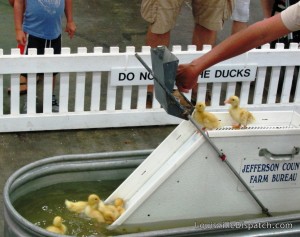 Now that spring is here, and Easter is approaching, Louisville health officials are cautioning people against giving baby chicks, ducklings or other live poultry to children as gifts.
“Baby chicks and ducklings can be so soft and cute, but they can also pose a health risk to young children,” said Dr. Joann Schulte, director of the Louisville Metro Department of Public Health and Wellness. “Children younger than age 5, whose immune systems are still developing, are especially susceptible to infection from germs commonly associated with live baby poultry, such as salmonella, campylobacter, and E. coli,” said Schulte. “Children this age are also more likely to put their fingers in their mouths after handling animals and get infected.”
Salmonella is estimated to cause one million illnesses in the United States each year, with 19,000 hospitalizations and 380 deaths. In 2016, Louisville had 72 Salmonella cases. Most people infected with salmonella develop diarrhea, fever and abdominal cramps 12 to 72 hours after infection. The illness usually lasts four to seven days, and most people recover without treatment. However, for some, the diarrhea may be so severe that the patient needs to be hospitalized. And when severe infection occurs, salmonella may spread from the intestines to the bloodstream and then to other body sites and can cause death unless the person is treated promptly with antibiotics.
According to the Centers for Disease Control and Prevention (CDC), children younger than 5 years of age, older adults, or people with weak immune systems should not handle or touch chicks, ducklings, or other live poultry. The CDC further advises:
- Don’t give baby poultry as gifts to young children.
- Don’t eat or drink in the area where the birds live or roam.
- Don’t snuggle or kiss the birds, touch your mouth, or eat or drink around live baby poultry.
- Don’t let live baby poultry inside the house, in bathrooms, or especially in areas where food or drink is prepared, served, or stored, such as kitchens or outdoor patios.
“As an alternative to giving children live baby chicks or ducklings, adults might consider cuddly stuffed animals, or better yet, why not celebrate the spring and Easter season with outdoor activity-related basket stuffers that encourage children to be active, such as jump ropes, Frisbees or yard games?” said Dr. Schulte.
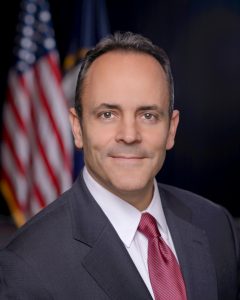 Kentucky placed second nationally in economic development projects per capita last year and first in the South Central region according to Site Selection magazine, Gov. Matt Bevin announced earlier this month.
The rankings – part of Site Selection’s annual Governor’s Cup awards – make 2016 the third consecutive year Kentucky has placed first or second in the per-capita competition. Numerous Kentucky metropolitan and micropolitan regions also placed on top-10 lists for their economic development achievements. As well, Kentucky ranked seventh nationally in total projects, beating out states of far greater size.
“Kentucky continues to distinguish itself as a top location for new business growth and expansion,” Gov. Bevin said. “The strong performance outlined in this report stands as further proof of this fact, ranking us among the top 10 states by total economic projects announced. This is a great achievement for a state much smaller than many of our competitors, and is a testament to the efforts of thousands of people. It is exciting to see what happens when city, county, regional, state and federal levels collaborate to attract growth in communities across the commonwealth. The incredible beauty, quality of life, work ethic and abundant opportunities in Kentucky are becoming increasingly well known, and the future is bright indeed.”
In addition to the state’s high ranking, Site Selection named five Kentucky communities among its Top 10 Metro Areas Ranking. These include the Northern Kentucky/Cincinnati region, which ranked fifth among areas with populations exceeding 1 million; Lexington, which ranked fourth for communities with populations between 200,000 and 1 million; and Bowling Green, Owensboro and Elizabethtown, which placed second, seventh and ninth, respectively, among metropolitan areas with fewer than 200,000 people.
Kentucky also ranked fourth in total projects in micropolitan areas and 11 of its communities placed on the magazine’s 2016 Top Micropolitans list, including:
- Bardstown – Nelson County, 7th
- Danville – Boyle and Lincoln counties, tied for 9th
- Mayfield – Graves County, tied for 18th
- Frankfort – Franklin County, tied for 32nd
- Richmond-Berea – Madison County, tied for 32nd
- London – Laurel, Knox and Whitley counties, tied for 51st
- Maysville – Mason County, tied for 51st
- Somerset – Pulaski County, tied for 51st
- Glasgow – Barren and Metcalfe counties, tied for 78th
- Madisonville – Hopkins County, tied for 78th
- Mt. Sterling – Bath, Menifee and Montgomery counties, tied for 78th
Additionally, Paducah earned 10th place in total projects in communities along the Mississippi River Corridor.
“Our local economic development partners statewide share credit for this success. Their dedication to a team approach helps make Kentucky such a strong player,” said Terry Gill, secretary of the Kentucky Cabinet for Economic Development. “Considering the showing by 11 of our micropolitans and five metros, Kentucky owns a winning formula for attracting, retaining and growing businesses. As we apply that formula in the coming years, we’ll continually hone our approach to maintain our leading edge.”
Last year, Kentucky announced more than 310 new location and expansion projects. Those are expected to create more than 16,000 jobs and over $3.1 billion in investment. Site Selection counts 231 of those projects toward its rankings. For inclusion in the magazine’s database, qualifying projects must meet one or more of these criteria: a minimum capital investment of $1 million, 20 or more new jobs created, and 20,000 or more square feet of new space.
Site Selection, an Atlanta-based publication, has awarded the Governor’s Cup annually since 1988 to the US state with the most new and expanded corporate facilities as tracked by the Conway Projects Database.
Corporate real estate analysts regard the rankings as an industry scoreboard. The magazine’s circulation reaches 48,000 executives in corporate site selection decision making.
The full rankings can be viewed at www.siteselection.com.
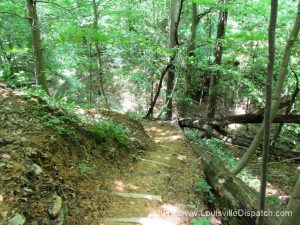 If you’re planning to enjoy the outdoors this year and go camping, make sure to try out a Kentucky State Park campground.
The parks have 30 campgrounds across the state. To help kickoff the camping season, the state parks will hold its annual “Camper Appreciation Weekend” on April 28-30, when campers can get two nights for the price of one.
Another camping discount offered during April is a two nights for the price of one Sunday through Thursday nights. Guests should use the discount code “Spring2017” when making online reservations to get the discount.
State park campgrounds are offering a variety of activities during Camper Appreciation Weekend. These include entertainment, arts and crafts, putt-putt golf, bonfires, movies, cookouts and nature programs.
All state park campgrounds have water and electric services with dump stations or sewer hookups, along with picnic tables and fire rings at each improved site and bath houses. Primitive sites are also available.
All campgrounds will be open March 31.
Check the Department of Parks web site at www.parks.ky.gov for more information on Camper Appreciation Weekend, including reservations. (For the Camper Appreciation Weekend, campers will be charged half price for the nights of April 28-29.)
Kentucky’s seasonally adjusted preliminary unemployment rate for February 2017 was down 0.1 percent from the January 2017 rate of 5.0 percent, according to the Office of Employment and Training (OET), an agency of the Kentucky Education and Workforce Development Cabinet.
The preliminary February 2017 jobless rate was 0.3 percentage points lower than the 5.2 percent rate recorded for the state in February 2016.
The U.S. seasonally adjusted jobless rate for February 2017 was 4.7 percent, according to the U.S. Department of Labor.
Labor force statistics, including the unemployment rate, are based on estimates from the Current Population Survey of households. It is designed to measure trends rather than to count the actual number of people working. It includes jobs in agriculture and those classified as self-employed.
In February 2017, Kentucky’s civilian labor force was 2,044,119 an increase of 18,982 individuals compared to the previous month. Employment was up by 19,092 and the number of unemployed decreased by 110.
“In February, our labor force increased by 0.9 percent,” said Kentucky Labor Market Information Director Kate Shirley Akers, Ph.D. “And over the last year, Kentucky’s employment has increased by 3.3 percent.”
In a separate federal survey of business establishments that excludes jobs in agriculture and people who are self-employed, Kentucky’s seasonally adjusted nonfarm employment increased by 1,900 jobs in February 2017 compared to January 2017.
“Overall, nonfarm employment has increased by 26,400 positions, or 1.4 percent from one year ago,” said Akers. “The largest month-to-month gain in jobs was in the construction sector.”
Nonfarm data is provided by the Bureau of Labor Statistics’ Current Employment Statistics program. According to this survey, five of Kentucky’s 11 major nonfarm North American Industry Classification System (NAICS) job sectors registered gains in employment, while six declined from the previous month.
The construction sector saw the largest month-to-month increase in February 2017, growing by 2,800 positions, or 3.5 percent, from a month ago. Since February 2016, this industry has added 4,700 jobs, growing by 6.1 percent.
Kentucky’s professional and business services also registered gains, increasing by 2,700 positions from January 2017. This sector has added 5,700 jobs, growing 2.6 percent, from February one year ago. This category includes establishments engaged in services that support the day-to-day activities of other organizations, including temporary employment services and payroll processing.
“The month to month gains in professional and business services was driven by growth in administrative and support and waste management and remediation services, which added 1,600 jobs, as well as increases in professional, scientific and technical services, which gained 1,000 positions,” said Akers.
Employment in the educational and health services increased by 800 jobs in February and has gained 4,100 positions over the year. This year to year increase was driven by job gains in health care and social assistance. Health care and social assistance jobs, which account for 12 percent of all nonfarm employment in Kentucky, increased by 1.7 percent from February 2016 to February 2017.
Employment in the other services sector, which includes repairs and maintenance, personal care services, and religious organizations, increased by 400 positions in February 2017 compared to a month ago. Over the year, the sector has added 1,000 positions, growing 1.5 percent.
The mining and logging sector added 100 jobs in February 2017 from a month ago. The industry has declined by 1,700 positions from a year ago.
Employment in the information sector declined by 100 positions in February 2017, but gained 1,100 from February one year ago. The industries in this sector include traditional publishing as well as software publishing; motion pictures and broadcasting; and telecommunications.
The leisure and hospitality sector lost 300 positions in February 2017 from a month ago. Since February 2016, the sector has added 700 jobs. This sector includes arts, entertainment, recreation, accommodation, and food services.
Kentucky’s manufacturing sector declined, decreasing by 500 positions from January 2017 to February 2017. Since February 2016, this sector has grown by 2.5 percent, expanding by 6,200 jobs.
The financial activities sector lost jobs in February 2017, declining by 500 positions from January 2017. This category includes establishments engaged in finance and insurance as well as real estate, rental and leasing. Since February 2016, however, the sector added 1,500 jobs, an increase of 1.6 percent.
Kentucky’s trade, transportation, and utilities also registered losses, decreasing by 1,200 positions over the month. However, since February 2016 the sector has added 5,700 positions, growing by 1.4 percent. This is the largest sector in Kentucky with over 400,000 jobs accounting for one-fifth of all nonfarm employment.
The government sector, which includes public education, public administration agencies and state-owned hospitals, decreased by 2,300 jobs in February 2017. The sector has lost 2,600 positions since last February.
Civilian labor force statistics include nonmilitary workers and unemployed Kentuckians who are actively seeking work. They do not include unemployed Kentuckians who have not looked for employment within the past four weeks.
Kentucky’s statewide unemployment rate and employment levels are seasonally adjusted. Employment statistics undergo sharp fluctuations due to seasonal events, such as weather changes, harvests, holidays and school openings and closings. Seasonal adjustments eliminate these influences and make it easier to observe statistical trends. However, because of the small sample size, county unemployment rates are not seasonally adjusted.
Learn more about the Office of Employment and Training at http://www.kylmi.ky.gov/