Thursday January 22, 2026
Local Connection
 Weather
 Traffic
 @LouisvilleDispatch
 @LouisvilleDisp
 Subscribe
 The Kentucky Derby Festival is partnering with the Louisville Bicycle Club to produce the PNC Tour de Lou, which will ride through Louisville this Sunday, April 30. Created for cyclists of all experience levels, this is the Festival’s fourth annual bike event. For riders who still want to participate, late registration is available this week. They can register on site at the Kentucky Derby Festival Race Expo at the Kentucky Exposition Center, West Wing, April 27, from 4 p.m. – 8 p.m. and Friday, April 28, from 11 a.m. to 9 p.m. (Cyclists who have already registered can pick up their packets at the Expo.)
As in the past, the 2017 PNC Tour de Lou route will be an open course, with two lane or bike lanes provided for over 90% of the route. Cyclist will start and finish at Waterfront Park near Kroger’s Fest-a-Ville. There are separate distances based on experience levels:
- 20 miles – Beginner/New to cycling (Open course, no streets closed.)
- 35 miles – Moderate/Experienced (Open course, no streets closed.)
- Metric Century, 62.1 miles – Seasoned (Open course, no streets closed).
The course highlights include a scenic Olmsted Park Tour showcasing Shawnee, Chickasaw, Wayside, Iroquois and Cherokee parks. Cyclists will also travel through neighborhoods around the city from Downtown along Main Street and Waterfront Park, to Portland, Algonquin and South Louisville; as well as Old Louisville NULU, the Highlands and Butchertown.
Late registration (April 27 and 28) is $50. A portion of the registration fee also benefits the Louisville Bicycle Club. For more information, visit www.kdf.org or call (502) 584-FEST.
PNC is Title Sponsor of the event. Official Safety Sponsor: AAA East Central. Contributing Sponsors: Baptist Health Sports Medicine, Louisville Marriott Downtown, and Scheller’s Fitness & Cycling. Media Sponsors: 102.3 The Max and The Courier-Journal. Supporting Sponsors: Louisville Bicycle Club and Louisville Water Company.
Since 1956, the Derby Festival has worked to bring the community together in celebration. The Festival is an independent community organization supported by 4,000 volunteers, 400 businesses and civic groups, Pegasus Pin sponsorships and event participation. This involvement has made the Festival the largest single-attended event in Kentucky and one of the leading community celebrations in the world.
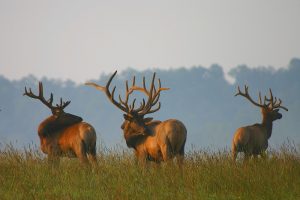
Photo: Kentucky Department Fish and Wildlife
Twenty years ago this December, seven elk were released atop Potato Knob in Perry County in front of thousands of onlookers. The landmark restoration of a free roaming elk herd in Kentucky was off and running.
Fast forward to present day. There are now more elk in Kentucky than any state east of the Rocky Mountains and each year the prospect of harvesting one compels tens of thousands of hunters to apply for Kentucky’s quota elk hunts.
Those interested in applying for 2017 should not delay. Applications must be submitted online at fw.ky.gov by midnight (Eastern time) April 30.
“For the person who has always wanted to elk hunt but just couldn’t afford to hunt out west, consider applying for a Kentucky elk quota hunt,” said Gabe Jenkins, elk program coordinator for the Kentucky Department of Fish and Wildlife Resources. “Our application and permit costs are low in comparison and our elk hunters enjoy some of the highest success rates in the country.”
Kentucky residents and those living out of state can apply for each of the four permit types – bull or cow firearms and bull or cow archery/crossbow – but can be drawn for one hunting permit only. Each entry costs $10. Applicants for the youth-only hunt can put in for the regular elk quota hunts as well but cannot be drawn for both in the same year.
This year, Kentucky Fish and Wildlife will issue 700 general quota hunt permits and 10 youth permits. The permit breakdown will be 100 bull archery and crossbow permits, 150 bull firearms permits, 160 cow archery and crossbow permits and 290 cow firearms permits. Youth permits are valid for use for either sex during all elk seasons.
At least 90 percent of the available elk quota hunt permits go to Kentucky residents. Last year, Kentucky Fish and Wildlife received almost 75,000 applications from more than 34,000 applicants. Kentucky residents alone submitted 46,365 applications.
Sixty-eight percent of hunters who were drawn and purchased their elk permit for the 2016-17 season filled their tags.
Bull elk hunters enjoyed the highest rate of success among drawn elk hunters last year. Eighty-one percent filled their tags and 70 percent of hunters utilizing archery and crossbow equipment successfully harvested a bull. The success rate for cow elk was 35 percent for archery and crossbow hunters and 67 percent among hunters using a firearm.
“A drawn hunter isn’t guaranteed an elk but a little planning goes a long way,” Jenkins said. “Whether you’re a do-it-yourselfer or hire a guide, putting in the time and effort goes a long way and increases your chances of success.”
The bull firearms season generates the greatest interest at application time, and understandably so. The past two seasons have produced two state records and five of the 10 largest bull elk taken in Kentucky since the species’ reintroduction in 1997.
The bull firearms season consists of two week-long hunts, one starting in September and one starting in October. Likewise, the cow firearms season is broken into two week-long hunts in December.
The bull archery/crossbow seasons open in September and the cow archery/crossbow seasons open in October. Each runs through Dec. 31. However, hunters drawn for a cow or bull elk archery/crossbow permit cannot hunt when an elk firearms season is open.
Applicants’ names will be drawn at random by the Commonwealth Office of Technology (COT) in May and randomly assigned a permit type based on their application choices. Hunters drawn for an elk hunting permit are blocked from re-applying for three years.
While waiting to learn if you’ve been drawn, explore Kentucky Fish and Wildlife’s website. It offers information about the basics of elk hunting in Kentucky as well as a newer featured called Kentucky Elk University. Designed to educate hunters of all experience levels, this online tutorial covers preparations before an elk hunt, what to expect in the field and what to do after the shot.
EARLY RETURNS: The 2017 spring youth turkey season ended April 2 with hunters reporting a harvest of 1,693 birds.
The youth-only weekend precedes the opening of the 23-day general statewide spring turkey season. This year, the general season opens Saturday, April 15.
AN OUNCE OF PREVENTION: With spring now in full bloom across Kentucky, it’s important to remember to guard against tick bites if you plan to be on their turf.
This means minimizing the amount of exposed skin by tucking pants legs into socks or boots and tucking in your shirt, utilizing repellents containing 20 to 30 percent DEET per the directions on the label and checking your clothing and body after being in wooded and brushy areas and areas with tall grass.
Consider treating clothing and boots with a product containing Permethrin, an insecticide that kills ticks, mosquitos and other pests, but allow any articles treated with Permethrin to dry completely before wearing. One treatment can protect through multiple washings.
Should you find a tick attached, grab the tick with tweezers as close to the skin’s surface as possible and steadily pull straight back to remove. Afterward, clean the area around the bite and wash your hands.
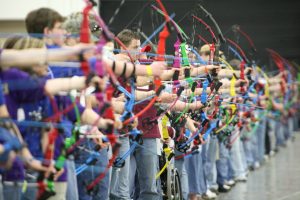 Trigg County High School emerged from the largest field in the 16-year history of the National Archery in the Schools Program (NASP) Kentucky state tournament to win the team competition on April 1 at the Kentucky Exposition Center in Louisville.
The two-day event drew a record 6,071 students from 295 schools across the state.
“The tournament was awesome,” said Lisa Frye, state NASP coordinator for the Kentucky Department of Fish and Wildlife Resources. “Over 6,000 smiling faces participating in a culminating event showcasing the skills they learned as part of their in-school NASP program. For most archers, it isn’t about competition. It’s all about participating together in a common sport.”
Elementary, middle and high school student archers competed for individual and team honors. After practice rounds, each competitor shot 15 arrows from 10 meters and 15 arrows from 15 meters for a total possible score of 300 points.
Lincoln County High School junior Roby Mullins won the boys’ overall title with a score of 298 and Hancock County High School sophomore Kayla Woodward won the girls’ overall title with a score of 296.
Trigg County’s overall team title was its fifth in the past six NASP Kentucky state tournaments. Madison Central High School and Lafayette High School finished second and third behind the Arrowcats in the high school division.
Pulaski Northern Middle School won the middle school division and Morgantown Elementary placed first in the elementary school division.
The top 10 seniors in the boys’ and girls’ divisions received $1,000 scholarships to apply to any post-secondary education.
Complete state tournament results are available online at nasptournaments.org. Click on “Tournaments” then select “Kentucky” and “Completed This Season” from the dropdown menus.
The next step for many of the archers who competed in the state tournament is the 2017 NASP Nationals scheduled May 11-13 at the Kentucky Exposition Center.
Now that the Kentucky-based teams are no longer in the NCAA basketball tournament, the Final Four isn’t nearly as exciting, and somewhat depressing, to watch.
The best cure for any bruised feelings left by March Madness is to get out in early April and chase largemouth bass. A huge largemouth bass shaking its head vigorously trying to throw your white spinnerbait soothes any broken basketball heart.
Water temperatures range from 52 degrees at Lake Cumberland in the east to 58 degrees on Kentucky Lake in the west. In other words, it is prime time.
“With water temperatures in the mid-50s, the big female largemouth bass are staging,” said Jeff Ross, assistant director of Fisheries for the Kentucky Department of Fish and Wildlife Resources. “They are moving from their deeper winter locations to spawning locations in the shallows. They definitely work their way shallow in stages, but a cold front can push them back for a short period.”
At this time of year, the male largemouth bass move shallow first to build nests, followed by the female bass to lay their eggs.
“Recently, I caught a lot of largemouth bass, but they were all small male bass,” said Easton Copley, aquatic education program coordinator for Kentucky Fish and Wildlife. “When you look at their lips, they were roughed up and bloodied. They looked like they had lipstick on them from making spawning beds.”
Copley recommends looking for those staging areas to catch the large female largemouths. Female largemouth bass stage where large mud flats drop-off into deeper water. This is especially true on smaller state-owned lakes.
“At this time of year, I am not looking for numbers of bass,” Copley explained. “I am fishing for big females.”
Ross said to hit the secondary points or ledges near shallow water on the larger reservoirs, such as Kentucky Lake or Barren River Lake. “When the females hit those secondary points in spring, they are pretty close to spawning,” he said.
Copley said when water temperatures climb to 60 degrees, the larger female bass move into their shallow water spawning areas. “I look for rocky banks and transitional banks from rocky to mud,” he said. “If you can find a laydown tree on this kind of bank, all the better.”
Copley throws a variety of lures when spawning bass are up shallow. “I’ve caught a lot of bass on a square-billed crankbait in the Sexy Shad color,” he said. “I also catch quite a few on jigs. Black and blue is my go-to jig color for lakes with some color to the water. In clear water, I like the Cumberland Craw color for my jigs at this time of year.”
White spinnerbaits with a white and chartreuse trailer also draw strikes from shallow spring largemouth bass.
“When the bite gets tough, I pull out a Shakey head with a black and blue 7-inch straight-tailed worm,” Copley said.
Anglers who plan to release their catch need to release the female largemouth bass back to the same area during the spawn. “Take a photo and get them back in the water as soon as possible so they can get back to their spawning,” Copley said. “They are full of eggs.”
Kentucky anglers have oodles of options to catch spring largemouth bass. Check the 2017 Fishing Forecast
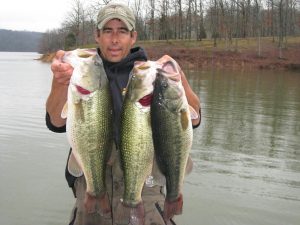
Photo: Kentucky Department Fish and Wildlife
for productive largemouth bass lakes near you.
Copley’s favorite lake is south-central Kentucky’s Green River Lake. He also likes 784-acre Cedar Creek Lake in Lincoln County. “Guist Creek Lake near Shelbyville has lots of big fish, but can be tough to fish because of high fishing pressure,” he said.
Kentucky Lake and Lake Barkley ranked number 4 in the Southeast Region for 2016 on Bassmaster Magazine’s Best Bass Lakes in the Country rankings. These lakes offer arguably the best chance in Kentucky to catch largemouth bass 4 pounds and larger
“We have many lakes where you don’t need a 20-foot bass boat to catch a big bass,” Ross explained. “Our smaller state-owned lakes, such as Kincaid Lake in northern Kentucky and Lake Malone in western Kentucky, are trophy largemouth bass lakes. Both of these lakes have excellent facilities for anglers at Lake Malone State Park and Kincaid Lake State Park. Beshear Lake, mainly located inside Pennyrile State Forest in western Kentucky, is always a big bass producer. Cranks Creek Lake in southeastern Kentucky also has some huge bass in it.”
The Final Four may be a bummer for Kentuckians this year, but warm days and trophy largemouth bass will put the NCAA tournament in the rearview mirror.
Remember to buy your 2017-2018 fishing license if you haven’t already.

Photo: Louisville Metro Parks and Recreation
Louisville Metro Parks & Recreation is accepting team registrations for spring athletic leagues – softball, kickball, flag football and basketball. Games begin the week of May 14. Participants must be 18 or older. Registration deadline is April 28, or until leagues are filled.
Metro Parks athletic leagues offer year-round opportunities for residents to improve their fitness, display their competitive spirit and socialize with others. Spring league sports include:
Softball: men’s, women’s and co-ed leagues. Games are played Sunday through Friday at Camp Taylor, Highview and Seneca parks. The fee is $375-$425 per team.
Kickball: co-ed leagues. Games are played Sunday through Friday at Camp Taylor and Seneca parks. The fee per team is $375.
Flag Football: men’s leagues are Thursday evenings at Seneca Park. The fee per team is $400.
Basketball: men’s leagues are played on Sunday afternoons/evenings at Cyril Allgeier Community Center. The fee per team is $450.
To pre-register for an Athletic League, participants can use this online form: Adult Leagues Pre-Registration. Payment can be made over the phone with credit card (Mastercard/Visa), or in person, by cash, check or credit card, at the Athletics Office located at the Metro Parks and Recreation Athletic Office at the Cyril Allgeier Community Center, 4101 Cadillac Court.
Payment must be made in full at the time of registration in order to reserve team’s place for the season. Registrations after the deadline will be subject to a $35 late registration processing fee.
For More Information:
More information concerning league offerings, registration forms, rules and team roster sheets can be found on the Metro Parks website at https://louisvilleky.gov/government/parks/athletics. Leagues are first-come, first-serve. No mail-in or over-the-phone registrations are accepted. Any questions please contact the Athletics office at 502-574-4515 or by email at athletics@louisvilleky.gov
Photo: KY State Parks
Kingdom Come State Park will host the Tour De Kingdom Come cycling race on May 20.
The 36-mile road race is part of the 6-race Eastern Ky/Va Cycling Rally Circuit. Points will be awarded for top finishers for each event and winners will be recognized at the final event in October.
Riders will tour the park in the mountains of Eastern Kentucky as well as 14 miles of the Little Shepherd Trail. The route will bring riders back to the park entrance and a final climb with a 22 percent gradient. Riders who complete the final climb in under 17 minutes will earn a polka dot t-shirt.
Registration starts at 9 a.m. at the park gift shop. The race starts at 10 a.m. Participants should register at www.BikeReg.com before May 1 to guarantee a t-shirt.
For more information about the park, call 606-589-4138.
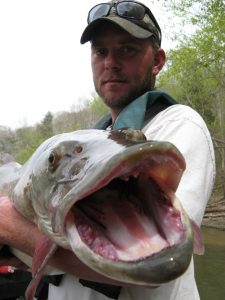
Photo: KDF
Spring break for many conjures thoughts of traveling somewhere warm and catnapping on a beach between rounds of golf.
A staycation sounds much better if you’re a muskellunge angler from Kentucky. The state’s muskellunge fishery has earned a reputation that extends beyond its borders, and experienced anglers know spring is one of the can’t-miss times of the year.
“Your odds of catching a trophy are better in the spring and fall,” said Tom Timmermann, northeastern fisheries district biologist for the Kentucky Department of Fish and Wildlife Resources. “In the fall, they’re packing on that weight to get through the winter. In the spring, if you catch those females before they release their eggs, they’re full of eggs. Either way, you’re looking at a chance at some bigger fish.”
Kentucky lies within the natural range of the Ohio strain of muskie, but the population in lakes and streams now is supported with stocking.
The bloodlines of these young predators trace to broodstock collected each spring from the Licking River. Kentucky Fish and Wildlife’s Minor Clark Fish Hatchery at the foot of Cave Run Lake Dam raises every muskellunge stocked in Kentucky.
Buckhorn, Cave Run, Dewey and Green River lakes are managed as trophy fisheries and there is a 36-inch minimum size limit in place on each. A 30-inch size limit for muskellunge is in effect elsewhere in the state
Cave Run Lake reaches into parts of Bath, Menifee, Morgan and Rowan counties and it produced the current state record in 2008. The 47-pound bruiser measured 54 inches.
Mike Hardin grew up fishing the lake and this past fall released a 50-incher caught on a homemade inline spinner.
“I believe they’re probably right there and ready to go pretty soon,” said Hardin, an assistant fisheries division director with Kentucky Fish and Wildlife. “The cold weather may slow things down a little bit but they’re already making that march.”
The longer periods of daylight and water temperatures climbing past 50 degrees trigger the muskellunge’s instincts to move shallow. Many anglers do well focusing on larger embayments, secondary cuts and flats because they warm up first.
Look for areas that offer food, vegetation or timber, warmer water and close proximity to deeper water. Scotts Creek, Warix Run, Buck Creek and Leatherwood on Cave Run Lake are popular spots in spring. Start at the points and work back to the shallows, casting to the bank and any structure or sub-surface features along the way.
“Those fish run up into the hollows seeking that flowing water,” Timmermann said. “The males are up there early and the females come up second. If you see a bunch of males, you know you’re still a little ways off from the big fish getting up there.”
Kentucky Fish and Wildlife is studying the impact of a 2010 regulation change that adjusted the size limits on Buckhorn, Cave Run and Green River lakes to 36 inches.
The same size limit went into effect last year on Dewey Lake in Floyd County. It is maturing as a muskie fishery after receiving its first muskie stocking in 2014. Sampling conducted this past fall found some of those fish had reached the minimum size limit.
At Buckhorn Lake in Leslie and Perry counties, catch rates have been better in the lower lake due to the habitat. “We have some larger shallow flats and there’s a lot of woody debris on those,” Kentucky Fish and Wildlife fisheries biologist Joseph Zimmerman said.
At Green River Lake in Adair and Taylor counties, the areas around the Emerald Isle and state marinas produce some of the better catch rates on the lake while the upper reaches of the Robinson Creek, Casey Creek and Green River arms offer large shallow flats worth exploring.
“The area behind the state marina is a good spot,” said Eric Cummins, southwestern fisheries district biologist with Kentucky Fish and Wildlife. “It’s wind protected and heats up quicker than some other parts of the lake.
“In the upper ends of the lake, you have warmer water dumping in at the mouths of those feeder creeks. If you have some stained water, muskie will slide up a little shallower and generally be more available to your shallower presentations.”
Many a bass angler pitching a crankbait or plastic frog has been surprised by a muskie. To have a fighting chance, it’s best to pair a 6-foot-6 or longer medium-heavy or heavy action rod with a 4.2:1 or 5.2:1 ratio baitcasting reel spooled with 65-pound or heavier braid. Wire leaders of 9- to 18-inches are a necessity because of the muskie’s sharp teeth.
Up-sized rattling lipless crankbaits, large soft-plastic swimbaits, minnow-imitating crankbaits, jerk and glide baits, spinnerbaits and in-line spinners are enough to cover just about any situation in the spring.
Anglers should dip the rod tip into the water as a lure gets to within a few feet of the boat and draw a figure eight. Muskie are prone to stalk a lure and the figure eight can entice a boat-side strike.
“I don’t know how many fish I’ve had hit right at the boat and I’ve never seen them until I’ve made the turn,” Hardin said.
A guide once told Timmermann that muskellunge anglers should not be married to one spot in spring.
“If you’re not catching fish, if you’re not seeing fish on your electronics, if you’re not raising fish, keep moving,” Timmermann said. “This time of year, jump from big hollow to big hollow.”
On Cave Run and Dewey lakes, anglers should inspect their boats and lures and discard any weeds before running to a new spot because of the presence of hydrilla, an invasive aquatic plant. Hydrilla was discovered just last year in Cave Run Lake.
“This is not a good thing for the lake,” Timmermann said. “Pay attention to what you’re moving and when you’re moving it. Clean your motors and trolling motors off before you move to a new spot and clean those weeds off of your baits.”
Furthermore, boaters can fight the spread of hydrilla by clearing any plant material from their boats before launching and removing all plant material from boats, motors and trailers after pulling their boats from the water. Spray or scrub off any remnants of plant material on boats before storing them.
One more thing to remember before trying for the muskellunge of a lifetime this spring in Kentucky is a fishing license. The new license year started March 1. Consult the Kentucky Fish and Boating Guide for complete licensing information. It is available online at fw.ky.gov and wherever licenses are sold.
