Thursday January 22, 2026
Local Connection
 Weather
 Traffic
 @LouisvilleDispatch
 @LouisvilleDisp
 Subscribe
 The National Wheelchair Basketball Tournament will be hosted by Louisville Parks and Recreation’s Adaptive and Inclusive Recreation program (AIR) from April 12-15, and the organization is looking for volunteers to help staff the event.
There are a large array of opportunities for those interested in helping out with the event, AIR administrator BJ Levis said. The NWBA is recruiting for the following positions to volunteer for throughout the 2018 NWBT: shot clock; rimekeeper; scorekeeper; event setup; event breakdown; water service; registration/will call assistant; statistician; store assistant; 50/50 raffle volunteer; and greeters/unloaders.
Click here to register.
Louisville has hosted the tournament since 2013. For more information, visit www.nwba.org.
The Kentucky Fish and Wildlife Commission has recommended expanding modern gun season for deer to 16 days statewide, increasing the number of deer allowed on a statewide permit from two to four, and increasing some license and permit fees for non-residents.
The proposals were among multiple recommendations to deer, waterfowl and migratory bird seasons made by commission members at their March 23 meeting in Frankfort.
The commission recommends hunting, fishing and boating regulations for approval by the Kentucky General Assembly. Legislators must approve all recommendations before they become law.
The changes recommended by commission members are designed to help thin the state’s deer herd in more densely populated areas while boosting numbers where deer populations are lower than desired. Changes also will boost many opportunities for hunters.
All deer-related regulations will go into effect for the 2018-2019 seasons, if approved by legislators. Click the “details” link for more information on each change.
Deer-related recommendations approved by the commission include:
- Creating an antlerless-only modern gun hunt during the last weekend of September in Zone 1 counties. (details)
- Expanding the modern gun deer season to 16 days statewide. (details)
- Modifying the statewide deer permit from a two-deer limit to four deer (details), and the youth deer permit from a one-deer limit to four deer. (details) Hunters would still be limited to one antlered deer statewide, regardless of zone or method.
- Changing the following counties from Zone 2 to Zone 1: Union, Henderson, McLean, Muhlenberg, Todd, Mercer, Mason and Hart. (details)
- Changing the following counties from Zone 3 to Zone 2: Warren, Allen, Monroe, Barren, Metcalfe, Adair, Edmonson, Butler, Breckinridge, Meade, Hancock, Daviess, Taylor, Casey, Lincoln, Boyle, Madison, Clark, Montgomery and Bath. (details)
- Changing the following counties from Zone 4 to Zone 3: Garrard, Pulaski, Wayne and Laurel. (details)
- Allowing hunters to take only one antlerless deer with a firearm in Zone 3. (details)
- Setting a Zone 4 season bag limit of two deer, consisting of one antlered and one antlerless deer. Antlerless deer could only be taken during youth gun seasons, during archery and crossbow seasons, or the last three days of the December muzzleloader season. (details)
- Allowing hunters to take a bag limit of deer in each zone, independent of the other zone’s bag limits. (details)
- Modifying the additional deer permit from a two-deer limit to 15 deer. Hunters would still be limited to one antlered deer statewide, regardless of zone or method. (details)
- Prohibiting devices designed to entangle and trap the antlers of a deer. (details)
- Creating a special deer hunt program that would allow modern gun hunts for deer outside of the normal season. This would only apply to nonprofit conservation organizations working under Kentucky Fish and Wildlife’s recruitment, retention and re-activation guidelines. (details)
- Allowing a person to use an unlimited number of deer control tags. The current limit is five tags. (details)
- Removing the requirement to sign a deer control tag at the time of transfer from landowner to hunter. (details)
- Requiring the hunter to sign a deer control tag at the time of harvest. (details)
Commission members also took several steps at their meeting to simplify some waterfowl regulations and to increase opportunities for hunters. Waterfowl regulations will go into effect for the 2018-2019 seasons, if approved by legislators. Recommendations include:
- Increasing the northern pintail daily bag limit from one bird to two for the 2018-2019 duck seasons. (details)
- Changing Northeast Goose Zone season dates to correspond to the statewide goose seasons. (details)
- Removing the September closure for goose hunting in the Northeast Goose Zone and the West-Central Goose Zone. (details)
Commissioners also made several recommendations affecting Sloughs Wildlife Management Area (WMA) in Henderson and Union counties. These include:
- Allowing expanded waterfowl quota hunts on the Sauerheber Unit. (details)
- Removing blind site hunting restrictions on the Sauerheber Unit. (details)
- Developing a check-in system for quota hunt participants on the Sauerheber Unit. (details)
- Creating a lottery for unclaimed blinds or hunt sites on the Sauerheber Unit (details) and removing the ability to occupy unclaimed blinds. (details)
- Creating a quota hunt for the Jenny Hole Unit, with spots allocated by a weekly drawing. (details)
- Closing the Jenny Hole Unit to waterfowl hunting, except for quota hunt participants. (details)
- Prohibiting boat use on the Jenny Hole Unit from Thanksgiving Day to the last Sunday in January, except for quota hunt participants during limited hours. (details)
Recommendations affecting Ballard WMA in western Kentucky include:
- Removing the requirement to hunt from a blind in the Ballard Zone. (details)
- Mandating that hunters accurately report waterfowl harvest on their harvest cards. (details)
Commission members proposed several changes to the existing regulations governing sandhill crane hunting. These would expand hunting opportunities and establish a second refugee area on public property. Proposals include:
- Changing the sandhill crane quota hunt application period from late November to the month of September to align it with quota hunt application periods of other game species. (details)
- Increasing the number of sandhill crane permits and tags issued. (details)
- Lengthening the sandhill crane season and increasing the statewide bag limit. (details)
- Allowing hunters to take more than two birds in a season, if they have the required number of tags. (details)
- Requiring participants to buy a hunting license by Sept. 30 to be eligible for a permit. (details)
- Establishing a new refuge for roosting birds by closing portions of Green River Lake to sandhill crane hunting. (details)
In fisheries-related business, the commission proposed new fishing regulations for Rockcastle River WMA in Pulaski County. These include a daily creel limit of 10 bluegill or other sunfish, four catfish, 15 crappie and one largemouth bass that must be greater than 15 inches long.
Commissioners also recommended adding mooneye and goldeye to the restricted movement list of fish species to help blunt the spread of Asian carp into new waterbodies.
The commission also proposed changing some non-resident license and permit fees. (details)
The next regularly scheduled Kentucky Fish and Wildlife Commission meeting will be 8:30 a.m. (Eastern time), Friday, June 8, 2018. Meetings are held at Kentucky Fish and Wildlife headquarters, located at 1 Sportsman’s Lane off U.S. 60 in Frankfort.
 Mayor Greg Fischer proclaimed that Friday will be Wear Red Day in Louisville to support the Louisville Cardinals women’s basketball team in the Final Four.
The Mayor is asking citizens across the community to wear Cardinal red on Friday, when the team takes on Mississippi State for a spot in the women’s NCAA Tournament championship game. If UofL wins, the Mayor asks that citizens again wear Cardinal red on Sunday to support the team as they play for the national championship.
“What the Cardinals have achieved this season is absolutely extraordinary — an ACC Championship, No. 1 seed in the Big Dance, a first team All-American in Asia Durr, and now a spot in the Final Four,” Mayor Fischer said. “Let’s show UofL women’s basketball that we stand with them and are ready to cheer like crazy this weekend.”
The Cardinals play Mississippi State at 7 p.m. Friday. The winner faces Notre Dame or Connecticut for the National Championship on Sunday.
 The National Archery in the Schools Program State Tournament aims to bring 6,600 student archers grades four through twelve to the Kentucky Exposition Center March 30-31. The record breaking registration makes the Kentucky NASP tournament the largest state archery tournament in the country.
NASP promotes archery as part of in-school curriculums, with the goal of improving motivation, attention, behavior, attendance and focus. It originally began as the Kentucky Archery in the Schools Program in 2001, and has grown to include 14,000 schools in five countries. More than a million students will have learned archery by the end of this school year.
The NASP Kentucky State Tournament runs 7:30 a.m. – 6 p.m. daily. A full schedule can be found online at www.nasptournaments.org.
Admission is $10 for adults and $5 for children (ages 13-18). Children 12 and under, registered archers and coaches are free. Parking at the Kentucky Exposition Center is $8 per vehicle and $20 per bus.
For more information about NASP and the tournament, visit www.nasptournaments.org.
Mayor Greg Fischer today proclaimed that Friday will be Wear Red Day in Louisville to support the Louisville Cardinals women’s basketball team in the Final Four.
The Mayor is asking citizens across the community to wear Cardinal red on Friday, when the team takes on Mississippi State for a spot in the women’s NCAA Tournament championship game. If UofL wins, the Mayor asks that citizens again wear Cardinal red on Sunday to support the team as they play for the national championship.
“What the Cardinals have achieved this season is absolutely extraordinary — an ACC Championship, No. 1 seed in the Big Dance, a first team All-American in Asia Durr, and now a spot in the Final Four,” Mayor Fischer said. “Let’s show UofL women’s basketball that we stand with them and are ready to cheer like crazy this weekend.”
The Cardinals play Mississippi State at 7 p.m. Friday. The winner faces Notre Dame or Connecticut for the National Championship on Sunday.
 The Kentucky Derby Festival Louisville Parks & Recreation StepFest returns this Saturday, March 24. The competition starts at 1pm, at Central High School (1130 W Chestnut Street in Louisville). Doors open for the event at Noon. The competition will feature elementary, middle and high school step teams, as well as community step groups.
“We’re very excited to be hosting the StepFest dance competition again in 2018,” said Ben Johnson, Assistant Director of Recreation. “It’s quickly becoming a Derby Festival tradition. We’ve already doubled the number of step teams competing this year.”
Division winners will receive cash prizes. In addition, all division winners will be featured in the 2018 Republic Bank Kentucky Derby Festival Pegasus Parade, where they will show off their moves once more. Admission for spectators to watch StepFest is $5, and is free for children 5 and under.
The competition is free for participants and registration will be open until the event starts. If interested, contact Laneisha Beasley at (502) 574-3206 or Laneisha.beasley@louisvilleky.gov.
The Kentucky Derby Festival StepFest is sponsored by Louisville Parks & Recreation, with Media Sponsor B96.5 FM.
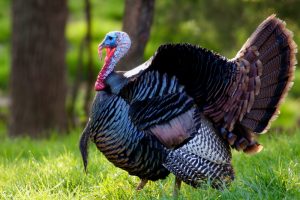
Photo: Kentucky Department Fish and Wildlife
The landscape awakens almost spontaneously from its winter slumber. Winter flocks break up into smaller groups. Innumerable turkey calls and lifelike decoys reappear at sporting goods retailers.
Turkey hunters interpret these occurrences as signs that it will not be long before they are easing into their spots before dawn, filled with anticipation.
In Kentucky, hunters still have ample time to scout and develop a game plan to increase their odds of success in the upcoming spring turkey season. This year, Kentucky’s youth-only season is the weekend of April 7-8. The start of the 23-day general statewide season follows on April 14. It ends May 6.
“Start at the computer then get out in the field to find birds,” said Zak Danks, wild turkey program coordinator with the Kentucky Department of Fish and Wildlife Resources. “Know some different approaches you might take and where you can move based on gobbling you hear once the season starts. Think about some good set-up spots or places to put your decoys, or vantage points to see birds.”
Virtual scouting can save precious time for hunters looking to hunt public land. Topographic maps and satellite views may reveal access points, existing trails, open fields, wooded areas, elevation changes and creeks or fences where approaching gobblers could hang up. Kentucky offers dozens of wildlife management areas and other lands open for public use. As a reminder, turkey calling is not allowed from March 1 until the opening of the youth-only season, and from the close of that season until the opening of the statewide season. Hunters may still use an owl, crow or other calls to locate turkeys while scouting.
It is always a good practice before the season to shoot your shotgun at a paper turkey head target using different brands of turkey loads. By patterning a shotgun ahead of time, the hunter knows the shotgun will shoot where it is aimed and deliver an acceptable number of pellets to the turkey’s vital area (head and neck).
“One thing I’ve learned over the past several years is just how good the hunting can be later in the season,” Danks said. “Last year, in particular, I had hunters contacting me well after the season ended saying they were still hearing turkeys gobble. So don’t get discouraged if you don’t have success early on. There’s still time to find turkeys throughout the season.”
In Kentucky, the spring hunting seasons are timed to give gobblers enough time to breed hens before subjecting the birds to hunting pressure. Kentucky Fish and Wildlife monitors turkey reproduction on a statewide scale through annual summer brood surveys.
Weather during the nesting period in May and June influences reproductive success. Heavy rains in Kentucky and surrounding states during that timeframe last year affected nesting success, which reflected in a statewide average of 1.2 pounds per hen. A figure of 2.0 or higher is optimal. Hunters should expect to encounter fewer of the more easily fooled jakes as a result this season.
Kentucky annually ranks first or second among surrounding states in the number of turkeys taken per square mile.
Hunters took a record number of birds during the 2010 spring season and have averaged more than 31,000 birds over the seven seasons since.
Last spring, hunters reported taking 33,061 birds, which represents a 6 percent increase over the previous year and the third highest total on record. Muhlenberg County led all counties with hunters reporting 681 birds taken there. Looking at it differently, Pendleton County led the state with 1.76 birds harvested per square mile.
The majority of counties are showing a stable to increasing harvest trend over the past decade. Some counties are exhibiting lower harvest totals. In response, Kentucky Fish and Wildlife is expanding efforts to monitor the turkey population and reproduction. Feedback from hunters will play an important role.
A new spring hunting log and post-season survey will soon be available on the department’s website at www.fw.ky.gov. On the homepage, type “Spring Turkey Hunting” into the search box. The log serves to collect information about a hunter’s daily hunting effort, number of turkeys seen, heard and harvested, observations about weather and other species observed. The post-season survey will include questions about spring hunting experiences.
“Our harvest totals tell us that we’re still in a pretty good situation on a statewide level,” Danks said. “We are hearing from people who tell us they’re not seeing as many turkeys as they had in the past. Most of that is from counties that have shown a decrease in harvest. What’s the reason? It’s difficult to determine on a statewide scale when all we’ve had to go on is harvest. We need information on hunter effort on a county level.
“The information gained from these hunter surveys and logs should help us track trends across the state.”
Hunters are allowed a limit of two bearded birds during the spring season, but no more than one bearded bird may be taken in a day.
The 2018 Kentucky Spring Hunting Guide provides information about current regulations, licenses and permits, legal equipment, safety tips and more. Find it online at fw.ky.gov or wherever licenses are sold.
Hunters also will have an opportunity to have their questions about spring turkey season answered during a special “Kentucky Afield” TV call-in show scheduled Saturday, March 24. The live one-hour show will air at 8 p.m. Eastern/7 p.m. Central on Kentucky Educational Television (KET). Joining host Chad Miles for the show will be Danks and pioneering turkey hunter Harold Knight.
