Thursday January 22, 2026
Local Connection
 Weather
 Traffic
 @LouisvilleDispatch
 @LouisvilleDisp
 Subscribe
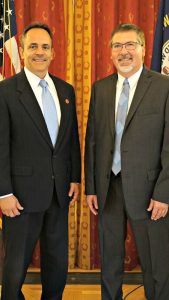 Gov. Matt Bevin and Justice Secretary John Tilley announced today that Damon Preston has been appointed as Kentucky’s next Public Advocate, continuing his decades of steadfast work at the Department of Public Advocacy (DPA) on behalf of indigent clients.
Preston is taking the helm after 20 years of service at key levels of the department. Since joining the DPA in 1997, he has worked as a staff attorney, director of trial offices, and manager of the department’s appeals branch. In 2007, Preston joined the department’s leadership team as director of the Trial Division. He was later appointed deputy public advocate in 2011.
“As a career public defender, I am thrilled to be entrusted with the position of Kentucky’s Public Advocate,” Preston said. “I have been blessed to work under the strong leadership of past advocates Ed Monahan and Ernie Lewis and intend to continue their tradition of faithfully upholding the Sixth Amendment right to counsel in the Commonwealth. My goal is to improve our statewide system, which already provides excellent representation to indigent clients in the criminal courts of Kentucky.”
The Department of Public Advocacy provides legal representation to low-income clients accused of crimes, fulfilling their constitutional rights to an attorney and to a fair trial. Each year, DPA attorneys, investigators, mitigation specialists, alternative sentencing workers and administrative specialists handle more than 140,000 trial and post-trial cases statewide. These include involuntary commitments, juvenile cases, misdemeanors and felonies.
Today’s appointment fills the position of outgoing Public Advocate Ed Monahan, who dedicated more than 40 years of service to the department. Gov. Bevin selected Preston from three candidates nominated by the Public Advocacy Commission. The appointment takes effect September 16, 2017.
“Damon is a proven leader who commands with a steady hand, and he has played an instrumental role in every aspect of DPA over the past two decades,” Secretary Tilley said. “We value his data-driven approach and eye toward accountability and look forward to his continued service at the department. We also thank Ed Monahan for his unyielding service and sacrifice on behalf of DPA and its clients. He has provided a great deal of resolute leadership during tough budgetary times, and his work has impacted many lives for the better.”
A native of Harrodsburg, Ky., Preston earned a mathematics degree from Transylvania University and later graduated cum laude from Harvard Law School in 1994. He began his legal career as a public defender at the Legal Aid Society in New York City.
As deputy public advocate, Preston has focused on DPA’s legislative efforts and led the department’s implementation of a comprehensive information and case management system. Last year, Gov. Bevin also appointed Preston to serve on the Criminal Justice Policy Assessment Council.
In addition to work at DPA, Preston serves on the board of the Kentucky Association of Criminal Defense Lawyers and is a past chair of the Criminal Law Section of the Kentucky Bar Association. He is married with two daughters and lives in Georgetown.
Download copy of Executive Order.
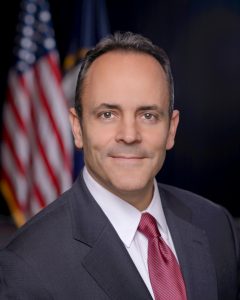 Gov. Matt Bevin joined with a 17-state coalition, led by Texas Attorney General Ken Paxton, to urge the U.S. Department of Labor to rescind the Obama-era Persuader Rule. This regulation threatened to increase legal costs for businesses and undermine the longstanding and vital attorney-client privilege.
In a letter to Labor Secretary Alexander Acosta, the group concludes: “Given that the Persuader Rule has the effect of regulating a traditionally state-regulated domain, and that Congress has made no such indication, the Department should rescind the rule.”
Last November, Attorney General Paxton won a permanent, nationwide injunction against the Persuader Rule, when a federal judge ruled that it was unlawful and would have required attorneys to publicly disclose confidential information protected by attorney-client privilege. In December, a Texas-led 10-state coalition won a final judgment in the case.
The Obama administration’s reinterpretation of the Persuader Rule upended five decades of established federal labor policy and would have made it more difficult and expensive for small businesses to obtain legal advice. Attorney General Paxton’s lawsuit kept the Department from enforcing the new rule.
The Department’s proposal to rescind the Persuader Rule requires a 60-day public comment period—which ends on August 11—before the Department can take final action.
Joining Gov. Bevin and Attorney General Paxton in the letter is the governor of Mississippi, as well as the attorneys general of Alabama, Arizona, Arkansas, Indiana, Kansas, Louisiana, Michigan, Missouri, Nevada, Oklahoma, South Carolina, Utah, West Virginia, and Wisconsin.
A copy of the letter can be downloaded here.
Gov. Matt Bevin made the following appointments to Kentucky’s public university boards:
Dr. Sandra Robbin Shuffett and Derrick Ramsey have been appointed to the University of Kentucky Board of Trustees.
- Dr. Sandra Robbin Shuffett, of Nicholasville, is a physician for Baptist Health a part-time farmer. Shuffett is a former graduate program instructor and has been a frequent lecturer on the subject of breast cancer, mammography and radiology. She will represent agricultural interests and serve for a term expiring June 30, 2023.
- Derrick Ramsey, of Lexington, is Secretary of the Kentucky Labor Cabinet and a former NFL player with the 1981 Super Bowl champion Oakland Raiders. Ramsey is a former University of Kentucky quarterback, where he helped to lead the Wildcats to the 1976 SEC Championship and the 1976 Peach Bowl. He will serve for a term expiring June 30, 2023.
Roger Reynolds has been appointed to the Kentucky State University Board of Regents.
- Roger Reynolds, of Louisville, is an entrepreneur and small business owner. Reynolds serves on the Federal Reserve Bank of St. Louis – Louisville Branch Board and is a former KSU trustee. He will serve for the remainder of an unexpired term ending June 30, 2018.
Deborah Haydon Long has been appointed to the Morehead State University Board of Regents.
- Deborah Haydon Long, of Lexington, is proprietor of Dudley’s on Short restaurant and a current MSU trustee. Long is a member of the Central Bank Advisory Board, and her business was recognized by Southern Living magazine as “Best Restaurant in Kentucky” for 2017. She has been reappointed to the board and will serve for a term expiring June 30, 2023.
Don Irvin Tharpe has been appointed to the Murray State University Board of Regents.
- Don Irvin Tharpe, of Nicholasville, is a past president of the Pan American Health and Education Foundation and former executive director of the Association of School Business Officials International. Tharpe is a “Distinguished Alumnus” of MSU, where he earned multiple degrees in industrial education. He will serve for a term expiring June 30, 2023.
George Nichols III has been appointed to the Western Kentucky University Board of Regents.
- George Nichols III, of Potomac, Maryland, is executive vice president of governmental affairs for New York Life Insurance Company and a former Kentucky Commissioner of Insurance. Nichols currently serves on the Alice Lloyd College Board of Trustees and was a past chairman of the National Organization of Life and Health Guaranty Associations. He will serve for a term expiring June 30, 2023.
Juan Carlos Castro and Christopher Pace have been appointed to the Eastern Kentucky University Board of Regents.
- Juan Carlos Castro, of Lexington, is managing partner of JCC Accounting Solutions and chairman of the Lexington Hispanic Education Association. Castro is currently an instructor with the Latino Tax Preparers Association and board member of Matthew 5:16 Ministries International. He will serve for a term expiring June 30, 2023.
- Christopher Pace, of Winchester, is an investor and attorney. Pace was a former student trustee on the EKU Board of Regents and the Kentucky Council on Postsecondary Education. He will serve for the remainder of an unexpired term ending June 30, 2021.
Ashley Himes has been appointed to the Northern Kentucky University Board of Regents.
- Ashley Himes, of California, is assistant principal for Northern Elementary School in Pendleton County and a part-time farmer. Himes and her husband hold multiple degrees from NKU and are involved with various education and community-related organizations. She will serve for a term expiring June 30, 2023.
Raymond Burse has been appointed to the University of Louisville Board of Trustees.
- Raymond Burse, of Prospect, is a retired vice president and general counsel for GE Appliances and a former president of Kentucky State University. Burse has served on the boards of many non-profit and professional organizations, including the Center for Creative Leadership. He will serve for the remainder of an unexpired term ending January 13, 2019.
Kentucky public university boards are composed of eight members appointed by the governor and three other members—including a teaching faculty representative, a nonteaching employee representative and the student body president.
Karen Finan has been appointed to the Kentucky Community and Technical College System Board of Regents.
- Karen Finan, of Ft. Mitchell, is a partner at Gilman Partners and former senior vice president of Northern Kentucky Tri-County Economic Development Corporation. Finan also serves as chairwoman of Aviatra Accelerators and the Northern Kentucky Education Council. She will serve for a term expiring July 21, 2023.
The Kentucky Community and Technical College System (KCTCS) Board of Regents is composed of eight members appointed by the governor and six other members—including two members each of the teaching faculty, non-teacher personnel and student body, representing respective KCTCS institutions.
Fostering Success, the summer employment initiative for Kentucky youth who are aging out of the state foster care program, is celebrating the start of its second year. At least 72 young people are expected to be involved in Fostering Success this summer. Last year, 52 completed the Cabinet for Health and Family Services (CHFS) program.
Fostering Success gives older youth in foster care the opportunity to access employment, job training and leadership skills through a collaborative program that places them in entry-level positions with state government agencies.
“Very often, children who age out of the foster care system lack the social and financial management skills they need to find jobs and be productive, self-reliant adults,” said Gov. Matt Bevin. “Fostering Success is one of many ways our administration is seeking to correct that. With mentoring from seasoned professionals, and an opportunity to work within state government or with respected, private sector partners, these young adults are given an excellent chance to acquire some of the hands-on experience they need to become future leaders in Kentucky.”
The summer youth employment program serves Kentucky’s foster youth between the ages of 17 and 23. Program participants must have a high school diploma or the equivalent to be selected for the 10-week employment. Half of the youth who participated in last year’s initial Fostering Success collaborative extended their employment to nine months and three of last year’s participants were offered full-time employment with CHFS.
First Lady Glenna Bevin said that foster youth might need extra guidance from a caring community as they mature.
“The transition to adulthood can be more difficult for foster children who have experienced so much instability and trauma that was no fault of their own,” said First Lady Bevin. “Fostering Success gives these youth committed role models and a community of support in addition to the invaluable job training and ‘soft skills’ they will get from a summer of comprehensive career preparation.”
Fostering Success includes summer employment opportunities in several state and CHFS offices – including the Department of Parks and the Department for Community Based Services, the Office of Legal Services and Child Support Enforcement – across the state.
Start dates are staggered during the summer months because of worksite needs and application processing time. Independent Living Coordinators, who assist foster youth who are aging out of care, will continue to recruit young people for the employment opportunity through mid-July. Kentucky Works contractors are facilitating two-day job readiness training for the youth. Facilitators addressed areas like workplace attire, time and attendance, cell phone usage, transportation needs and meal breaks.
The program also features a mentoring component: Department for Community Based Services (DCBS) supervisors and regional Independent Living Coordinators are providing job coaching and guidance. In Jefferson County, the Orphan Care Alliance is working to connect each of the participants in that region with life coaches who will remain connected to the youth after the program ends.
In addition, program partner True-UP, a Louisville-based foster youth support organization that collaborated with the inaugural Fostering Success program in 2016, is expanding its financial literacy and employment retention training to Elizabethtown and Lexington.
“Work readiness skills are so valuable, yet they can be more difficult to obtain for foster children, who may experience many more barriers to independence during their transitional years,” said CHFS Secretary Vickie Yates Brown Glisson. “I am so proud that my agency continues to collaborate with businesses, organizations like True-UP and other state agencies to help our foster youth develop skills to improve their lives.”
Kentucky Labor Cabinet Secretary Derrick Ramsey said Fostering Success is cultivating new talent for the state’s changing workforce.
“For Kentucky to reach its full economic potential, we will need the talents, leadership and hard work that exists currently in our state’s youth,” Labor Secretary Ramsey stated. “Fostering Success is laying the foundation between a trained workforce and employers, and we will continue to seek areas where we can grow this pipeline for industries in need. In the end, this summer program can be a winning formula for everyone involved.”
DCBS Commissioner Adria Johnson said there are more than 8,500 children with active placements in out of home care in Kentucky.
“Foster youth who are aging out of care can face a lot of challenges,” Johnson said. “The transition to adulthood is more complex without a permanent family as a resource. Fostering Success is part of a network that gives these older foster youth connections to get help when they need it and to see a positive future for themselves.”
Courtney Parr, a Fostering Success participant assigned to the DCBS Central Office in Frankfort, said her aspirations for a career in social services are reinforced by her immersion in the summer employment program.
“I wanted to participate in the program because not only was I a former foster youth but I have developed a passion for the social work field and am currently working on my degree in social work,” she said. “I love seeing the other side of the foster care system. After the 10 weeks, I hope to have an opportunity to continue my internship here while I continue my studies at Kentucky State University, where I am currently a junior.”
Tonya Bailey is the Independent Living Coordinator for the 15-county Northeastern Region, which includes Morehead and Ashland, said she was “thrilled” when Fostering Success was established last year – her region had seven youth in the inaugural program.
“This summer, the Northeastern Region’s 12 Fostering Success participants are working in DCBS and other CHFS offices,” concluded Bailey. “The opportunities the youth have been given through the Fostering Success Program is nothing short of amazing.”
Bailey said two youth from last year’s program returned this year, and she envisions a couple of current participants applying for permanent cabinet positions.
Within the DCBS offices, the youth perform clerical tasks similar to an office support assistant, like directing phone calls, filing, preparing documents and assisting administrative assistants. They also get a closer look at how Division of Protection and Permanency staff works to keep children safe and secure.
For more information about Fostering Success and the Kentucky foster care program, call 1-800-232-KIDS (5437).
Gov. Matt Bevin signed a budget reduction today last week, meeting the Constitutional mandate that the Commonwealth of Kentucky end the fiscal year with a balanced budget. General Fund revenue receipts fell short of budgeted amounts by $138.5 million, requiring today’s action.
The Governor’s veto of a portion of the budget bill allowed an additional $5 million in lottery receipts to be dedicated to scholarships and not lapse to the General Fund. In addition, a lower than expected lapse of debt service raised the total resource requirements to meet the shortfall to $152.2 million.
“This year’s budget shortfall validates the need for conservative spending plans, and it dramatically underscores the critical need for fixing Kentucky’s broken pension systems and modernizing the state’s tax code,” said Gov. Bevin. “A solid financial foundation is essential before the Commonwealth can reach its full potential.”
The actions taken today to close the fiscal year 2017 budget gap included a combination of General Fund appropriation reductions and fund transfers from restricted funds. Also included were one-time savings in Medicaid costs due to the favorable renegotiation of contracts with the managed care organizations (MCOs) and lower than expected pharmacy costs. The Governor’s order to balance the budget does not include any reduction to the state’s Budget Reserve Trust Fund.
“We are expecting an ongoing challenge with revenues in the next fiscal year and the next biennium,” stated John Chilton, the State Budget Director. “Today’s actions by the Governor responsibly preserves the Rainy Day Fund as we prepare for the tight fiscal environment in front of us.”
In anticipation of the budget shortfall, the Office of the State Budget Director directed the Governor’s Cabinet Secretaries to identify a reduction in their General Fund expenditures. These reductions, plus reductions by the Legislative and Judicial branches, amounted to $59.3 million. Fund transfers of various excess restricted funds totaled $77.3 million. General fund lapses and fund transfers in excess of budgeted amounts accounts for the remaining $15.5 million of the total $152.2 million shortfall. Programs funded through coal severance revenues are automatically adjusted when receipts fall short of projections. That resulted in a $17 million reduction in money going to the Local Government Economic Assistance Fund.
The Medicaid portion of the original budget was based on MCO contract rates in effect in 2015. Prior to Governor Bevin taking office, Kentucky ranked number 1 in the nation in profits earned by MCO providers; their profits were more than 4 times the national average for all MCOs. As part of Governor Bevin’s Medicaid transformation, the administration renegotiated these contracts resulting in lower than budgeted cost.
Final fiscal year 2017 General Fund receipts were 1.3 percent less than the official estimate. If the fiscal year 2018 revenue shortfall approximates this year’s amount, significant additional spending reductions will be needed to balance the budget in fiscal year 2018. The current balance of the Budget Reserve Trust Fund, $150.5 million, remains unaffected by today’s action.
Gov. Matt Bevin is urging all Kentuckians to help beat back the opioid epidemic with a new public awareness campaign that highlights the dangers of opioid abuse and offers information on drug treatment and naloxone.
The campaign, launching this week, combines web content with statewide advertising to drive home a simple message: “Don’t Let Them Die.” The theme encourages Kentuckians to recognize the inherent value of human life – even in the grip of addiction – and take proactive steps to help their friends, family and communities overcome this crisis.
One way all Kentuckians can help: Learn about the risk of opioid abuse and spread the word.
“We don’t have the luxury of pretending there isn’t a problem,” said Gov. Bevin. “Every life is worth saving. There is not a person we would not want to see redeemed and removed from this addiction, and it is up to all of us to work together and find solutions.”
Lethal overdoses claimed more than 1,400 lives in Kentucky last year, a 7.4 percent increase from 2015. Fentanyl, a synthetic opioid that is up to 50 times more potent than heroin, was a factor in 623 deaths, while heroin contributed to 456 deaths.
The highest number of fatalities occurred among people ages 35 to 44, followed by ages 45 to 54. Kentucky currently has the third highest overdose rate in the country, and a recent study showed that 80 percent of heroin users start with prescription opioids.
“Behind each number is a suffering soul and a wounded family that has often struggled with substance abuse for decades,” said Kentucky Justice Secretary John Tilley. “However, we also hear stories almost every day of hope and recovery. That’s why it’s essential that every Kentuckian joins this battle to preserve life. With the right support and resources, we know recovery is possible.”
As part of the campaign, radio and television ads that feature audio from a harrowing 911 call will begin airing statewide over the next week. The anguished voice on the phone belongs to Nikki Strunck, a mother from Richmond, Ky. who discovered her son, Brendan, dying from an overdose in January 2016.
While the initial ad seeks to raise awareness about the dangers of opioids and the human toll of addiction, future ads are expected to focus on resources and treatment. The 30-second spots were purchased through the Public Education Partnership Program, which is administered by the Kentucky Broadcasters Association.
Along with advertising, the governor’s office has established www.DontLetThemDie.com, a website with information about opioids, treatment and the overdose antidote, naloxone. Officials plan to continue updating the website as new initiatives are announced.
Photo: Kentucky Labor Cabinet
Gov. Matt Bevin and Labor Deputy Secretary Mike Nemes joined officials from Norton Healthcare in Louisville last week to announce a new apprenticeship for nurses that is one of the first of its kind in the country.
This Student Nurse Apprenticeship Program is a paid apprenticeship that provides educational and clinical experiences over 12 to 18 months to prepare students for a registered nurse role after graduation. Eligible students include nurses who are in their junior year of a Bachelor of Science degree in Nursing program or with one semester completed of an associate degree in nursing program.
“Innovative training programs, like this one at Norton Healthcare, deserve to be celebrated,” said Gov. Bevin. “I have challenged Kentucky employers to think and act boldly, and Norton Healthcare has answered that challenge in an impressive way. This apprenticeship program is one of the first of its kind in the country and will be transformational for Norton’s workforce. I believe it will inspire other employers around Kentucky to explore ways that apprenticeships can take their business—and Kentucky—to the next level.”
With just over 70,000 active registered nurses currently in Kentucky, it is projected that an additional 4,500 nurses will be needed in the next 10 years to meet demand. The 125 new apprentices in this program will both provide Norton Healthcare with an effective workforce recruitment and training tool while also displaying the potential that this could bring to other healthcare providers across the county.
“The ‘Kentucky Trained. Kentucky Built.’ registered apprenticeship initiative encompasses a new era of apprentice able trades never before seen in the Commonwealth, and today provides a fitting example of this,” Labor Secretary Derrick Ramsey stated. “Nursing is a new frontier for apprenticeships, but with Norton Healthcare’s vision, we couldn’t be more excited to partner with them and the new student nurse apprentices who are taking advantage of this wonderful program to further their careers. It’s a win for Norton Healthcare, the apprentices, and the entire healthcare community as we continue to seek ways to address the workforce needs in this critical industry.”
Serving the Greater Louisville region and beyond for more than 130 years, the hospital and health care system is the Louisville area’s third largest private employer. The Louisville-based not-for-profit system includes five Louisville hospitals with 1,837 licensed beds; seven outpatient centers; 13 Norton Immediate Care Centers; more than 14,000 employees; more than 850 employed medical providers; and approximately 2,000 total physicians on its medical staff.
“We know the value in having highly trained nurses and other professionals to help us meet the health care needs of our community,” said Russell F. Cox, president and chief executive officer, Norton Healthcare. “By offering an apprenticeship for nurses, we not only help individual students reach their goals, but we help ensure we continue to have these highly trained professionals.”
“This program will reinforce nursing education and awareness of the professional nurse role, as well as help increase the students’ self-confidence and understanding of organizational structure and operations within a world-class health care setting,” said Tracy E. Williams, DNP, R.N., senior vice president and system chief nursing officer, Norton Healthcare.
This program will work in conjunction with the student’s school of nursing while learning hands-on experience with a Norton Healthcare mentor. Upon completion of the training program, the apprentice will receive a nationally recognized certification allowing employers, such as Norton, to better meet expectations of their patients through a highly-skilled and trained workforce.
The “Kentucky Trained. Kentucky Built.” initiative, launched last year, signals Kentucky’s recommitment of new energy and resources toward strengthening apprenticeships across Kentucky. Since last November, the number of apprentices in Kentucky have increased by 39 percent. In total, the Kentucky Labor Cabinet has registered nearly 1,100 different programs with employers including a new emphasis on growing trades within the healthcare and information technology sectors.
For more information on Registered Apprenticeships, visit www.KentuckyApprenticeship.com.
Follow the Kentucky Labor Cabinet on Facebook and Twitter for all the latest updates.