Wednesday January 28, 2026
Local Connection
 Weather
 Traffic
 @LouisvilleDispatch
 @LouisvilleDisp
 Subscribe
 “Stories of Ali,” a brand new lecture program of the Muhammad Ali Center will bring its Oral History Project to life through a series of live recorded programs. Each event will focus on a specific topic of Muhammad’s life, featuring two or three persons knowledgeable about the Muhammad Ali-specific theme to participate in a public oral history forum facilitated by the Center’s Collections Department.
The inaugural program, “Ali and the Nation”, will be on Friday, March 30th from 6:00 – 8:00 p.m. at the Ali Center. It is free and open to the public.
“Stories of Ali: Ali and the Nation” will present two approaches and understandings of the Nation of Islam: to explore Ali’s early religious conversion and his choice to devote much of his life to his new faith. The two interviewees are:
Dr. Brandon McCormack, professor of Pan-African Studies at the University of Louisville, will offer an educational and historical perspective.
Donald Lassere, president and CEO of the Muhammad Ali Center, grew up on the South Side of Chicago and has memories of the Nation of Islam selling bean pies and serving as protectors. Through his role at the Center, Donald will offer a unique perspective of the Louisville Lip. His stories will be of a personal nature, based on memories, and professional knowledge.
The Muhammad Ali Center’s Oral History Project is an ongoing initiative created to utilize the practice of oral history to document the life and legacy of Muhammad Ali. More information about the Project is available here.
 Attorney General Andy Beshear and a bipartisan coalition of attorneys general sent a letter urging congress to scrap legislation that would block states from combating fraud and abuse by the student loan industry.
The coalition is advising Congress to remove language from the pending version of the Higher Education Act reauthorization, H.R. 4508, also known as the PROSPER Act that will obstruct state oversight of private companies that initiate, service or collect on student loans.
“In the face of a student loan debt crisis in our country, protecting Kentucky students from predatory loan companies who seek to mislead them is simply the right thing to do,” Beshear said. “Congress must take immediate action and join our coalition in standing up for students.”
In the fourth quarter of 2017, U.S. borrowers owed an estimated $1.38 trillion in federal and private student loans – more than auto loans, credit cards or any other non-mortgage loan category.
The letter also points out in recent years, state attorneys general have investigated significant, far-reaching abuses in the student loan industry and won settlements returning tens of millions of dollars to student borrowers.
In Kentucky, the Office of the Attorney General has helped more than 9,000 students receive more than $25.5 million in restitution, including debt relief, from predatory lenders and for-profit colleges.
Beshear said today’s letter is just the latest action he has taken to protect Kentuckians from a series of acts by the U.S. Department of Education that aim to strip critical protections from millions of students and families repaying student loans.
In October, Beshear and 18 other state attorneys general sent a letter to the U.S. Department of Education, demanding the department stop rolling back vital safeguards for student loan borrowers.
In July 2017, Beshear and 20 other state attorneys general submitted public comments in response to the department’s announcement of intentions to delay large portions of the Borrower Defense Rule, which was designed to hold abusive higher education institutions accountable for cheating students and taxpayers out of billions of dollars in federal loans.
Beshear opposed the department’s efforts to replace the Gainful Employment regulations that empower students to make informed decisions about their education, and protects students from burdensome debt and poor job prospects.
Beshear remains committed to holding for-profit colleges accountable in Kentucky and helping defrauded students.
Students who have been a victim of a for-profit college or predatory loan practices may contact the Office of the Attorney General by phone, 502-696-5300 or by completing an online complaint form.
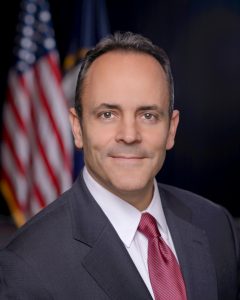 Gov. Matt Bevin congratulated Kings Royal Biotech Inc. (KRB), a manufacturer of cannabidiol isolate, for breaking ground on its $30 million-plus facility, a project expected to create 140 full-time jobs in the West Kentucky city of Bardwell.
“Ag-tech businesses are increasingly recognizing the many benefits of manufacturing hemp-related products in Kentucky,” Gov. Bevin said. “We are grateful for the jobs and investment that Kings Royal Biotech brings and for the company’s efforts to build lasting relationships with West Kentucky farmers. We look forward to seeing our state become a global leader in this rapidly growing industry. Congratulations to KRB on today’s announcement and to the Carlisle County community on this exciting new opportunity.”
KRB will build its 75,000-square-foot building on nearly nine acres in Carlisle County. The facility will use state-of-the-art methods to extract, refine and re-crystallize cannabidiol (CBD) from industrial hemp and is believed to be the largest operation of its kind in the nation. With the issuance of an industrial hemp research pilot program processor license by the Kentucky Department of Agriculture, KRB plans to start processing hemp in late 2018 and ramp up to full capacity by summer 2019.
“Industrial hemp is the next big thing in Kentucky,” said Keith Taylor, chief operating officer at KRB. “The bourbon industry is synonymous with the state, and it is our goal to reach that level of success, where any time someone thinks of hemp-related products, they think of Kentucky.”
KRB, incorporated in Kentucky in 2017, partnered with a China-based company specializing in industrial hemp-related products to establish the Bardwell operation. KRB licensed its partner’s patented extraction and crystallization process in West Kentucky. CBD isolate and full spectrum oil will then be sold in commercial quantities throughout the US and worldwide. People use CBD isolate for numerous health and wellness purposes.
Taylor noted Kentucky’s ideal conditions for the growth of hemp as a major influence in its decision to locate in the state, and the company has hired J.T. Workman IV, of Carlisle County, as its growing manager. Workman assisted the company to secure an agreement with local farmers to plant and harvest more than 1,000 acres of hemp.
KRB also has partnered with Andrea Schiavi of Lexington-based Schiavi Seeds LLC to provide hemp seeds certified through the Association of Official Seed Certifying Agencies (AOSCA). Schiavi Seeds received recognition in fall 2017 for becoming the first company since the 1930s to produce certified hemp seeds in the commonwealth.
“Kentucky’s nationally-renowned industrial hemp research pilot program continues to grow,” said Kentucky Commissioner of Agriculture Ryan Quarles. “The number of processors is increasing, creating new market opportunities for our farmers and jobs for Kentuckians across the commonwealth. I’d like to thank Governor Bevin and the Cabinet for Economic Development for continuing to attract new and exciting businesses to Kentucky.”
Sen. Danny Carroll, of Paducah, expressed enthusiasm for the project.
“I’d like to congratulate and welcome Kings Royal Biotech to Carlisle County as it builds a $30 million facility that will create 140 jobs in Senate District 2,” Sen. Carroll said. “As a manufacturer of CBD, Kings Royal Biotech uses state-of-the-art methods that will help the commonwealth lead the nation in this fast-growing industry. I look forward to the completion of this project and the national distribution of its Kentucky products.”
Rep. Steven Rudy, of Paducah, welcomed the company to west Kentucky.
“This facility will be a tremendous asset for the Carlisle County region,” Rep. Rudy said. “Hemp production is a growing industry and the company will provide more than 100 great jobs in Kentucky. We welcome Kings Royal Biotech to the state.”
Carlisle County Judge-Executive Greg Terry said the project shines a light on the community’s ability to support new business.
“I am very proud of the work that the Carlisle County Industrial Development Board has done to show what a great place Carlisle County would be for this new CBD isolate facility,” Judge-Executive Terry said. “I look forward to working with Kings Royal Biotech during this process.”
KRB can receive resources from the Kentucky Skills Network. Through the Kentucky Skills Network, companies can receive no-cost recruitment and job placement services, reduced-cost customized training and job training incentives. In fiscal 2017, the Kentucky Skills Network provided training for more than 120,000 Kentuckians and 5,700 companies from a variety of industry sectors.
A detailed community profile for Carlisle County can be viewed at http://bit.ly/CarlisleCo.
Information on Kentucky’s economic development efforts and programs is available at ThinkKentucky.com. Fans of the Cabinet for Economic Development can also join the discussion on Facebook or follow on Twitter. Watch the Cabinet’s “This is My Kentucky” video on YouTube.
For the first time in Kentucky, some child protection cases will be open to the public under a four-year pilot project that will take place 2018-2021. The Supreme Court of Kentucky issued an order March 13 authorizing the Open Court Pilot Project. In 2018, Family Courts will be open from March 19-May 31 in Hopkins and Jefferson counties and the four-county judicial circuit of Harrison, Nicholas, Pendleton and Robertson.

 Although child protection cases are normally closed due to confidentiality, the pilot project will provide an opportunity to look at whether it’s beneficial to open some cases for the public to observe. The public and media will be able to attend proceedings in cases involving child dependency, neglect and abuse, and termination of parental rights. Judges in the first six counties to participate in the pilot project volunteered to open their courts for a two-month observation/evaluation period.

 The 2016 Kentucky General Assembly passed legislation asking the Supreme Court to institute a pilot project to study open courts. The project is covered in KRS 21A.190-192.

 “I’ve long been in favor of opening courts when there are benefits to be gained in accountability and transparency,” Chief Justice of Kentucky John D. Minton Jr. said. “Kentucky has been discussing opening child protection cases for several years, and I look forward to seeing what we learn from this pilot project. I appreciate the judges in the pilot counties, who are as invested as I am in determining how to balance the public’s need to know with the child’s need for privacy.”

 Parents and other parties and professionals involved in the proceedings, such as attorneys and social workers, will be asked to complete a survey about their experience with open court. Reporters will also have the opportunity to take a survey.

 Signs outside the Family Court Courtrooms will give the public information about the pilot project and the rules for participating. Those who attend proceedings are prohibited from recording audio or video and taking photos, taking notes with the name or personal information of any minor child who is a party or witness unless the name/information was obtained outside of court, getting copies of any documents or court recordings, and sharing the name or personal information of any party or witness unless they are discussing it with another party or witness in the case or unless they obtained the information outside of court.

 Media outlets must adhere to the same rules as the public. The media may report on cases that take place in open court but may not record audio or video or take photos, take notes with the name or personal information of any minor child who is a party or witness unless the name/information was obtained outside of court, get copies of any documents or court recordings or share the name or personal information of any party or witness unless they are discussing with another party or witness in the case or unless they obtained the information outside of court. In the context of the pilot project, the definition of party includes the child, the child’s parents and/or custodian and the social service worker.

 A judge may close proceedings if it is determined to be in the best interest of the child or for other good cause. The procedure for closing a case during the pilot project is described in KRS 21A.190(2). All cases involving sexual abuse will be closed.

 The Department of Family and Juvenile Services at the Administrative Office of the Courts is administering the pilot project. Court staff will attend court proceedings to observe and will conduct focus groups with family members and professionals involved in the cases. They will also provide surveys to participants. The AOC will report to the legislature annually on the project.

 Family Court Case Schedule
 The schedules for Family Courts participating in the Open Court Pilot Project are:
-
Jefferson County – 8:30 a.m. ET Tuesday, Wednesday and Thursday, Jefferson County Judicial Center, 700 W. Jefferson St., Louisville -
Hopkins County – 9 a.m. CT Tuesday, Hopkins County Justice Center, 120 E. Center St., Madisonville

 Harrison County – 1:30 p.m. ET on the first and third Wednesday of the month, Harrison County Justice Center, 115 Court St., Cynthiana
-
Nicholas County – 1 p.m. ET on the first and third Tuesday of the month, Nicholas County Courthouse, 125 E. Main St., Carlisle -
Pendleton County – 10 a.m. ET on the first and third Tuesday of the month, Pendleton County Judicial Center, 120 Ridgeway Ave., Falmouth -
Robertson County – 10 a.m. ET on the first and third Tuesday of the month, Robertson County Judicial Center, 127 E. Walnut St., Mount Olivet
Photo: Louisville Metro Council
Councilman David Yates (D-25) will be on hand for the unveiling of the newest Kentucky Historical Marker which tells the history of a road that is well travelled in Southwestern Louisville.
“St. Andrews Church Road is well known to those of us who live in the area but many may not know the reason why it was named in the first place,” says Yates. “We should always honor the history of the area and the people who came before us.”
Kentucky Historical marker #2551 will be located at Doss High School, 7601 St. Andrews Church Road. The marker will provide the history of St. Andrews Church Road as well as the Wiser family who owned much of the property in the area.
The text of the historical marker is:
ST. ANDREW’S CHURCH ROAD
Intersection with Dixie Hwy once had post office, hotel, and train
depot. Ella Murphy was depot agent for many years. Doss HS and
Trunnel Elem opened 1967. Thomas Harry Doss was Jefferson Co.
School Board Chairman. Bertha Trunnel was long-time educator.
Now called Pleasure Ridge Park, formerly known as Wisertown.
Sponsored by Wiser descendants
WISERTOWN
Area once known as Wisertown. Descendants and extended family
of John (1793-1877) and Luzanna Wiser (1804-1873) lived here,
including Gagels, Arnolds, and Webers. John came here 1817,
married Luzanna 1821, bought farm 1838. They built St. Andrew’s
Church and Cemetery then gave to Catholic Church. Wiser farm now
site of Doss HS and Trunnel Elem.
The unveiling ceremony will take place at Doss High School beginning at 4:00pm on Sunday, March 18th.
 The Democratic Leadership of the Louisville Metro Council is calling on the people of Metro Louisville to contact lawmakers in Frankfort and let them know the importance of passing Senate Bill 66.
The proposed legislation deals with pension funding obligations by local city and county governments. Failure to pass the bill could have devastating effects for Metro Louisville.
The Leadership has released the following statement:
“There are less than two weeks left in the current legislative session in Frankfort. As this session draws to a close, there is word that SB66 may not be called for a vote.
There is great debate on how to fund the state’s obligations to the pension system for the coming years. Every year Kentucky’s cities and counties meet their financial pension obligations to their employees. Now these local governments are faced with a major financial crisis if SB 66 is not passed.
Louisville Metro Government is looking at a $38 million dollar increase in pension funding on top of the $76 million it already annually pays. If Louisville is forced to pay this increase, there could be devastating cuts in services covering all areas of government including public safety and laying off employees.
SB 66 would allow local governments to phase in increases up to 12% per year over a period of ten years. It is a realistic approach. It would allow Metro Louisville to work within its means to provide government services while keeping its commitment to our employees.
The time has come for the people of Louisville to let Frankfort know they support giving city and county governments the leeway needed to continue pension obligations by passing SB 66.
This is not an issue that should be dealt with in a special session. Right now, the Mayor and the Metro Council are putting together the Fiscal Year 2018 to 2019 Operating and Capital Budgets. A special session on SB66 is simply kicking the can down the road, while Metro Louisville and other cities are put in limbo.
Lawmakers should realize that if SB 66 is not passed, the proposed pension costs along with cuts in the budget proposed by Governor Bevin will have a major negative impact on the people of Metro Louisville. It will increase a possible budget deficit from $38 to $50 million.
Louisville is the chief economic engine that drives the Commonwealth of Kentucky. Now is not the time to stop our progress. The people of Louisville are asking the General Assembly to do what is right.”
Thirteen seniors from Jefferson County Public Schools (JCPS) have been awarded the 2018 Vogt Educational & Leadership Scholarship, which recognizes the students for their academic achievements and leadership in and out of the classroom. The students will be celebrated for their accomplishments during the annual awards luncheon, being held at noon on Monday, March 19 at The Olmsted, 3701 Frankfort Ave.
Prior to his death in 1999, Henry V. Heuser Sr. established the endowed scholarship fund at the Community Foundation of Louisville to provide $10,000 college scholarships annually to remarkable JCPS high school seniors. This special award honors exceptional students throughout Jefferson County who have demonstrated high standards of scholarship, leadership, character and citizenship. Including this year, more than $2.9 million has been awarded to 291 students.
Henry V. Heuser Jr. will host the annual awards luncheon to present the scholarships. He will be joined by Louisville Mayor Greg Fischer, JCPS Superintendent Dr. Marty Pollio, JCPS principals, more than 100 business and community leaders, and several university and college presidents from the region who have contributed additional scholarship incentives if the awardees attend their colleges.
Student winners are selected based on SAT/ACT scores and cumulative GPAs, as well as demonstrated community and campus leadership, participation in extracurricular activities, and recommendations from principals and community leaders.
The 2018 Vogt Educational & Leadership Scholarship recipients are:
- Franklin Alongi, Atherton High School
- Brian Knapp, Ballard High School
- Randi House, Butler Traditional High School
- Nora Alshimary, Brown School
- Madison Sneve, DuPont Manual High School
- Jovita Devasia, Eastern High School
- Patrick Ryan, Fern Creek High School
- David Do, Fairdale High School
- Rachel Roberts, Jeffersontown High School
- Kaylee Coleman, Louisville Male High School
- Madison Shely, Marion C. Moore School
- Ryan Finley, Southern High School
- Oliver Kratholm, Waggener High School