 Weather
 Traffic
 @LouisvilleDispatch
 @LouisvilleDisp
 Subscribe
 Neighborhood residents in Metro Council Districts 6 and 8 have submitted more than 250 ideas to improve health and wellbeing in their neighborhoods through the Our Money, Our Voice project. Now volunteers are needed to help evaluate those ideas and prepare them for voting.
Launched in August, Our Money, Our Voice is an initiative of the Metro Department of Public Health and Wellness’s Center for Health Equity, and Metro Council President David James (District 6) and Councilman Brandon Coan (District 8). People living in those council districts will decide how $150,000 ($75,000 in each district) will be spent.
“Ideas can be submitted until Nov. 2,” said Council President James. “In our next phase, we need volunteers to serve as community scientists and research the ideas we’ve collected for cost, feasibility, and equity. This work will then lead to those projects all residents can vote on to be funded.”
People interested in volunteering for this phase of the project are asked to attend the Our Money Our Voice Civic Innovation Institute on November 8 from 6 to 8 p.m. at the Louisville Metro Department of Public Health and Wellness headquarters at 400 E. Gray St.
“This is an important step,” said Councilman Coan. “At the Civic Innovation Institute, volunteers will also have an opportunity to build the kind of skills that will help them be able to directly influence how Metro government prioritizes the projects it funds in this pilot and beyond.”
Our Money, Our Voice is the name of Louisville’s participatory budgeting initiative – a way for members of a community to work together to better meet their needs while having a direct say in government decisions. In the process, people often find new ways of interacting with government and with each other to create solutions for all.
Funding for the initiative is coming from $100,000 in capital infrastructure funds ($50,000 from each district) and $50,000 from the Department of Public Health and Wellness.
District 6 neighborhoods participating in Our Money, Our Voice include Algonquin, California, Limerick, Old Louisville, Park Hill, Russell (the section north of Broadway Avenue, south of Plymouth Street, west of 22nd Street, and east of 26th Street), Taylor-Berry, University, and Victory Park.
Participating District 8 neighborhoods include Belknap, Bonnycastle, Cherokee Seneca – Alta Vista, Cherokee Triangle, Deer Park, Gardiner Lane – Upper Highlands, Hawthorne, Hayfield Dundee.
To volunteer, submit ideas or learn more about Our Money, Our Voice visit www.OurMoneyOurVoice.org.
 Mayor Fischer announced today that Develop Louisville’s Office of Advanced Planning has issued a Request For Proposal for the creation of a new Smoketown neighborhood plan. This neighborhood plan is expected to be complete by the end 2019 and is an update to the current Smoketown/Shelby Park Neighborhood Plan, which was adopted in 2002.
A neighborhood plan offers the community an opportunity to be proactive, to establish neighborhood goals, and to coordinate with public and private investment. Residents and businesses will be engaged throughout the process and are directly involved in creating the plan. The planning process allows a neighborhood to build shared values, goals, and objectives for the future of Smoketown. Staff will work with neighbors to emphasize the CHASE principles—connected, healthy, authentic, sustainable, and equitable.
“Louisville’s renaissance is spread across our city, particularly in our edge neighborhoods like Butchertown, Portland, Russell, and Smoketown, to name a few,” Mayor Greg Fischer said. “Neighborhood plans are a key for implementing the community’s vision. Updating the vision for the Smoketown neighborhood is critical to set a course for the neighborhood that embraces its history and prepares for future growth that includes current Smoketown residents and businesses.”
“Smoketown is a neighborhood filled with excited neighbors that I know are looking forward to making plans for the future of their neighborhood,” said District 4 Councilwoman Barbara Sexton Smith. “This process will allow the neighborhood to have a voice and a unified vision moving forward for future public and private investment in Smoketown.”
The Smoketown neighborhood, located southeast of downtown, is bordered by Broadway, South Floyd Street, East Kentucky Street, and Beargrass Creek. With much recent and upcoming public and private investment in the surrounding neighborhoods, this is an appropriate time to connect with residents and discuss the future of their neighborhood. Once the neighborhood plan is complete and adopted by Metro Council, it will be used as a guiding document for future public and private investment.
Community engagement will begin in 2019. The neighborhood plan is expected to be complete by the end of 2019.
 On Saturday, November 10 at 8PM, Principal Pops Conductor, Bob Bernhardt and YOUR Louisville Orchestra welcome Brass Transit to The Kentucky Center to relive the 70s and 80s with the horn-laden music of the legendary band, Chicago. Eight of Canada’s most talented and accomplished musicians will bring you back to the most memorable time of your life with some of the American rock band’s biggest hits such as “25 or 6 to 4,” “Saturday In the Park,” and “If You Leave Me Now.”
Individual tickets range from $85 – $27 and are available by calling 502.584.7777 or by visiting LouisvilleOrchestra.org.
Brass Transit goes far beyond just imitating the songs; they embody the music. They recently produced their first self-titled album, taking songs by other top artists from the seventies and recording them with horns in the CHICAGO style. The result is a fresh approach to some of the greatest hits of the era. They also recently scored their show for full symphony orchestra with original arrangements that are truly spellbinding. They have left crowds in awe and on their feet, evoking comments like “Spine-tingling,” “Brought me back to my youth,” and “Perfect in every detail.”
Principal Pops Conductor Bob Bernhardt continues to bring his unique combination of easy style, infectious enthusiasm and wonderful musicianship to the city and orchestra he loves. He’s been a constant presence with the Louisville Orchestra for the past 37 years; as Assistant and Associate Conductor, Principal Guest Conductor with Kentucky Opera, and now for 22 years as the LO’s Principal Pops Conductor. Bernhardt is concurrently Principal Pops Conductor of the Grand Rapids Symphony in Michigan, and Principal Pops Conductor and Music Director Emeritus of the Chattanooga Symphony and Opera, where he previously spent 19 seasons as Music Director and is now in his 27th year with the company. He is also an Artist-in-Residence at Lee University in Cleveland, TN.
Credit: KY State Parks
An important bridge for motorists will be replaced at Natural Bridge State Resort Park, Gov. Matt Bevin announced last week.
The project — a joint effort between the Kentucky Transportation Cabinet and the Tourism, Arts and Heritage Cabinet — will allow for safer and more direct access to the park’s cottages, Woodland Center, swimming pool and Hoedown Island, a public area used for square dancing and other events.
“Today’s announcement is an important collaboration between the Tourism and Transportation Cabinets. This bridge replacement will allow park guests to better enjoy the beauty, fun and adventure of Natural Bridge State Park,” said Gov. Bevin. “This is how state government should work — cohesively and efficiently to deliver results for taxpayers.
“Natural Bridge is one of the Commonwealth’s oldest state parks, and the bridge to Hoedown Island is a well-known and beloved connection point for visitors, offering a link to weekly hoedowns, campgrounds, playgrounds, trails and picnic areas. This bridge replacement project ensures that guests will have an incredible experience for years to come at one of our state’s most popular parks.”
The original bridge, constructed in the 1930s by the Civilian Conservation Corps, was closed in January following an inspection by the Transportation Cabinet that showed signs of deterioration to the bridge piers and beams. An alternate route using another bridge at Middle Fork Campground has since been used for park traffic.
“Natural Bridge is one of the most popular parks in our system, and replacing this bridge is of great importance to our valued guests,” Tourism, Arts and Heritage Cabinet Secretary Don Parkinson said. “I appreciate Sec. Thomas and the Transportation Cabinet for their partnership on this project, and I appreciate the efforts of Gov. Bevin to help make this a reality.”
The Transportation Cabinet is contributing approximately $500,000 and the Department of Parks approximately $200,000 for the replacement bridge, which crosses the Middle Fork of the Red River. Construction is expected to begin next spring.
“Recommissioning this bridge will restore safe access to travelers who visit the resort for business or recreation,” Kentucky Transportation Cabinet Secretary Greg Thomas said. “We are pleased to partner with the Tourism Cabinet to support the local economy by replacing this deteriorating structure.”
Natural Bridge State Resort Park at Slade has a lodge, cottages, restaurant, campgrounds, hiking trails and a sandstone arch that is a popular tourist attraction. The park is adjacent to the Red River Gorge Geological Area inside the Daniel Boone National Forest.
 Nine grants that will generate investment of nearly $100,000 in historic preservation-related projects have been awarded to seven Certified Local Government (CLG) communities for fiscal year 2018-19 by the Kentucky Heritage Council/State Historic Preservation Office (KHC). The annual grants are part of a pass-through allocated from the federal Historic Preservation Fund (HPF) for state preservation offices to recognize, save, and protect historic places.
Grants totaling $58,468 went to Bardstown, Bellevue, Covington, Danville, Frankfort, Metro Louisville and Newport, which will require local matches totaling at least $38,980. The awards were approved earlier this year by the KHC board, with applications for the next funding cycle set to be distributed to Kentucky’s 23 participating CLG communities in November.
“October is National Community Planning Month, a good time for our CLG partners to consider how historic neighborhoods add to the overall vitality, livability, and desirability of their communities,” said Vicki Birenberg, CLG program and planning coordinator.
The grants will largely fund training and education initiatives but also be used to revise and update local historic district design guidelines, survey historic resources, and nominate a historic district to the National Register of Historic Places. A portion of KHC’s federal set-aside has also been made available to provide scholarships to local CLG program coordinators and board members to attend the annual National Trust for Historic Preservation National Preservation Conference, and KHC’s Kentucky Main Street Program annual spring meeting.
All grant activities must directly support goals outlined in “A Map Made of Memory: Kentucky’s State Historic Preservation plan, 2017-2021.”
CLG designation offers a way for local governments to develop a comprehensive approach to historic preservation and promote the integration of preservation interests into the planning process. To qualify, local governments must meet five broad standards, including enacting a historic preservation ordinance and appointing a professionally qualified preservation commission or architectural review board. In addition to grant eligibility, CLG benefits include access to technical assistance from KHC and the National Park Service.
City and county-wide historic preservation commissions that have earned CLG designation may apply for the annual grants. Qualifying projects require a local match of at least 40 percent. Grants cannot be used to acquire or rehabilitate historic buildings.
KHC is required to allocate at least 10 percent of its HPF apportionment to CLG grants. Those charged with training and implementing funded projects must adhere to the Secretary of the Interior’s standards and guidelines for the treatment of historic properties. For more, contact Vicki Birenberg at 502-892-3606 or visit www.heritage.ky.gov.
2018-19 Certified Local Government historic preservation grants
Bardstown, Protect and Preserve Workshops (federal share $9,569, minimum local match $6,379), for two educational workshops: one to cover cemetery and monument preservation, the other to teach historic property owners and others how to conduct research to learn the history of a property from deeds and other historic documents, and to understand design review and the Certificate of Appropriateness process for proposed changes to properties located in historic districts.
Bellevue, Window Rehabilitation Workshop (federal share $1,200, minimum local match $800), to plan, market and implement a full-day intensive historic wood window rehabilitation demonstration and workshop for property owners and local contractors.
Bellevue, Northern Kentucky Restoration Weekend (federal share $3,200, minimum local match $2,133), to partner with other Northern Kentucky communities to produce the 8th annual Northern Kentucky Restoration Weekend, a free, multifaceted educational event with sessions on topics of interest to historic property owners. A day is also dedicated to professional development, allowing participants to earn professional credits from the American Institute of Architects (AIA) and American Institute of Certified Planners (AICP).
Covington, Northern Kentucky Restoration Weekend (federal share $3,000, minimum local match $2,000), to partner with other Northern Kentucky communities to produce the 8th annual Northern Kentucky Restoration Weekend (see above).
Danville, Historic Preservation Workshop Series (federal share $2,500, minimum local match $1,667), to produce three educational workshops to assist historic property owners: one focusing on local historic preservation overlay zones, including how to apply and interpret new historic district design guidelines; one to address the appropriate rehabilitation of historic windows; and a third to explore National Register eligibility and designation, how it differs from local designation, and how one goes about getting a property or district designated.
Frankfort, Historic Property Brochures (federal share $3,000, minimum local match $2,000), to develop, print and mail two brochures to educate property owners living in historic districts about the Certificate of Appropriateness process and existing historic zoning regulations, and about federal and state historic rehabilitation tax credit programs as well as local tax moratoriums and grant opportunities for qualified rehabilitation.
Louisville-Jefferson County Metro Government, Survey Project (federal share $24,999, minimum local match $16,677), to survey historic buildings in a large portion (approximately 50%) of the Portland neighborhood, which currently has only a small National Register district with 106 primary buildings, while more than 4,000 resources remain undocumented. This neighborhood is currently experiencing intensive redevelopment due to its attractive building stock and urban location, and this step toward expanding National Register eligibility will assist owners with preservation incentives such as rehabilitation tax credits.
Newport, Design Guidelines Update (federal share $3,000, minimum local match $2,000), for funding to allow staff to revise and update Historic District Design Guidelines, which were originally developed for a single district. The city now has three local districts, each with its own character. The update will address the distinctive elements of each district as well as include sections on renewable energy and use of alternative materials for restoration.
Newport, National Register nomination for the Buena Vista Historic District (federal share $8,000, minimum local match $5,334), to develop a National Register nomination for the Buena Vista Historic District, which will include more than 1,000 primary buildings. The survey work required to develop the nomination was completed with a previous CLG grant.
 Fifteen students at Eastern High School scored among the top business students nationwide on rigorous exams to test their business knowledge. The exams are part of the school’s High School of Business™ program, a national accelerated business administration program of MBA Research and Curriculum Center. Approximately 8,000 students from across the nation participated in the program during the 2017-18 school year.
Receiving top scores were:
Students participating in High School of Business™ complete real, hands-on business projects through a series of six courses. The program also includes observational internships, opportunities to earn college credit, and local oversight via a steering team of college faculty, business professionals, and school personnel.
High School of Business™ is a program of MBA Research, a non-profit organization specializing in educational research and the development of business and marketing curriculum for high schools and colleges across the U.S. The accelerated program is designed for college-bound students with interest in business administration careers, such as marketing, finance, entrepreneurship, or management.
For more information about the national organization, click on this link.
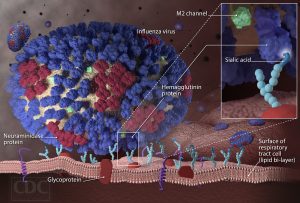 The Department for Public Health (DPH), within the Cabinet for Health and Family Services, is reminding Kentuckians to get vaccinated against the flu.
“Getting the flu can be debilitating and sometimes life-threatening,” said Jeffrey Howard, M.D., commissioner of DPH. “Vaccination is the best tool we have to prevent the flu and it is also extremely important to take simple preventive steps to avoid the flu and other illnesses that tend to circulate at this time of year – wash your hands frequently, cover your mouth when you cough or sneeze and stay home when you’re sick.”
DPH officials report weekly influenza activity to the CDC as part of statewide flu surveillance efforts. The weekly report is located online at https://healthalerts.ky.gov/Pages/FluActivity.aspx will be updated by noon each Friday. Kentucky currently is reporting 28 laboratory-confirmed cases of flu and one influenza-related death. The state flu activity level is currently classified as “sporadic”. The report consists of laboratory-confirmed cases of influenza that are defined by molecular virus testing and positive virus culture test results. Rapid positive influenza tests are not included in this report, but are used as an indicator of flu-like illness circulating across the state.
The Centers for Disease Control and Prevention (CDC) Advisory Committee on Immunization Practices (ACIP) recommends flu vaccine for all individuals six months of age and older. People who are strongly encouraged to receive the flu vaccine because they may be at higher risk for complications or negative consequences include:
Adequate supplies of flu vaccine are expected to be available for this year’s flu season. Vaccination can be given any time during the flu season, but providers are encouraged to administer the vaccine as soon as possible.
During the 2016-17 and 2017-18 influenza seasons, ACIP recommended that Flu Mist not be used because of concerns about low effectiveness against influenza A (H1N1). However, ACIP recommends that FluMist once again be an option for vaccination during the 2018-2019 influenza season for persons for whom it is age-appropriate and who have no medical contraindications. The change in recommendation is a result of the influenza A (H1N1) strain being changed in the current FluMist formulation.
Due to the timing of the decision by the ACIP regarding use of FluMist, the Kentucky Vaccines for Children Program (VFC) will not be offering FluMist for VFC or KCHIP patients during the 2018-2019 influenza season. However, some private providers will offer FluMist this season for their patients.
The flu vaccine is especially important in light of the severe season experienced last year across the U.S. The CDC reports that more than 900,000 flu-related hospitalizations occurred and more than 80,000 people died as a result of flu. In Kentucky there were 333 flu-related deaths, 5 of which were pediatric. Of the pediatric flu deaths reported in last year’s season, more than one-third of these occurred among healthy children between the ages of 6 months and 4 years.
It is especially important for pregnant women to be vaccinated before or during pregnancy. Antibodies cross the placenta and provide immunity to infants up to 6 months of age, when the infant is eligible to receive their dose of flu vaccine.
DPH relies on sites such as doctors’ offices, hospitals and health departments to help track the level of influenza activity in the state and to identify which strains of the flu are circulating in Kentucky. These voluntary sites collect data and report influenza-like illness (ILI) cases according to age groups each week. This sampling represents only a small percentage of influenza cases for the state, but contributes to the ongoing assessment of flu activity in the Commonwealth and helps determine the weekly level of flu activity.
Infection with the flu virus can cause fever, headache, cough, sore throat, runny nose, sneezing and body aches. Flu can be very contagious. For more information on influenza or the availability of flu vaccine, Kentuckians should contact their primary care medical provider or local health department. Influenza information is also available online at https://www.cdc.gov/flu/index.htm.
