Saturday January 24, 2026
Local Connection
 Weather
 Traffic
 @LouisvilleDispatch
 @LouisvilleDisp
 Subscribe
Credit: KY State Parks
Let the Kentucky State Parks help you celebrate the 4th of July weekend this year!
Several state parks are planning special events that include fireworks displays, picnics, entertainment and more.
These parks are planning fireworks shows: Kenlake, Kentucky Dam Village, My Old Kentucky Home, Lake Barkley, Lake Cumberland, Barren River Lake and Rough River Dam.
There will also be special events at campgrounds as well as entertainment and recreational activities.
For a list of July 4th events at state parks, visit: http://parks.ky.gov/fourth-of-july/
For more information about Kentucky State Parks, including lodging and camping reservations, visit: www.parks.ky.gov
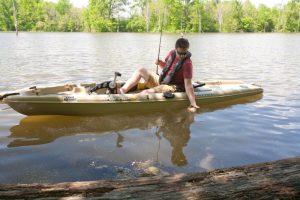
Photo: Kentucky Department Fish and Wildlife
A car, truck or sport utility vehicle with a couple of kayaks on the roof with fishing poles visible through the back window is an increasingly common sight on Kentucky highways.
Sales data shows kayak fishing and related kayak accessories increasing in popularity. Some of this popularity has to do with many baby boomers reaching retirement age and wanting a new hobby.
Price is another aspect of the rise in popularity of kayak fishing. They are a replacement for a fishing boat for many people scared off by the rising cost of power boats.
While many associate kayaks with flowing water, a huge number buy a kayak to fish small lakes, the backwaters of reservoirs, rivers and large farm ponds.
“If you want to fish mainly flatwater, the longer, the better for a kayak,” said Nathan Depenbrock, co-owner of Canoe Kentucky, an outfitter along the banks of famed Elkhorn Creek near Frankfort. “Length in a kayak gives you speed and tracking. By speed, we don’t mean miles per hour. Speed in a kayak how far you go without paddling. It is also called the glide.”
Length is relative to kayaks. Two feet of length makes a big difference in how the boat performs. “The ideal length for Kentucky is 12 to 13 feet,” Dependbrock, who’s paddled waters from Rio Grande River north to the Great Lakes, explained. “A major consideration is to buy a boat you can get to the water. Make sure it fits in the bed of your truck or on top of your vehicle. A kayak that is too heavy is no good because you won’t use it.”
As kayaks go longer than 14 feet, they also get narrower. “The long kayaks are designed for paddling long distances, not for stability,” Depenbrock said. “They can get squirrely at rest.”
This is why for fishing, the 12- to 13-foot long kayak makes the best choice. It is long enough for speed, but short enough for width and stability.
“I really would not go less than 11 feet long,” Depenbrock said. “Being in a boat of 10 or 11 feet is a really frustrating way to paddle on flatwater. They don’t perform well at all.”
He also prefers a sit-on-top or the relatively new hybrid kayaks for flatwater paddling and fishing. “Stay away from the sit in kayaks,” Depenbrock explained. “They are not meant to fish out of.”
Depenbrock also said anglers fishing lakes, rivers or reservoirs out of a kayak must keep in mind their low profile and short length makes a kayak hard to see.
“We blend in so much in kayaks, especially on our big lakes,” Depenbrock said. “Kayaks can get down in between waves and not be seen. Color is important. Make sure you have a safety flag, a bright paddle or even one of those bright safety vests so other boaters can see you. Always wear something bright.”
Practice getting back into your kayak from the water before launching. “On bigger lakes, it is really important,” Depenbrock said. “You have to be able to get back in the kayak if something happens and are far from the bank.”
Depenbrock enjoys flatwater kayaking on several spots in Kentucky. “Grayson Lake is one of my best places to paddle,” he said. “The scenery is unbelievable. A lot of the rock grottos and other really cool spots are only accessible by kayak.”
He also loves the Kentucky River. “Every pool in the Kentucky River has its own unique features,” Depenbrock said. “Everywhere on the Kentucky River is beautiful, but Pool 6 upstream to Pool 10 is some of the most spectacular scenery in Kentucky. The area in Pool 7 around Camp Nelson is unbelievable. The Kentucky River has a ton of access for paddlers to use as well.”
In fall, Depenbrock moves down river to Pool 2. “There is good wildlife in Pool 2,” he said. “We see bald eagles, coyotes, white-tailed deer, wild turkeys, waterfowl and other kinds of birds.”
Depenbrock is also exploring the forks of the Kentucky River. “The forks of the Kentucky are really looking good, especially the North Fork of the Kentucky River,” he said. “They are really improving. The cleanups are starting to show. I am going to enjoy exploring more of the forks in the coming years.”
No matter which of these scenic spots Depenbrock is paddling, he always wears his PFD (personal floatation device), commonly called a lifejacket. “No matter what time of year, I never paddle without my PFD,” he said.
Summer is a time of enjoying water sports. Keep these tips in mind if you plan to get a kayak to fish the many smaller state-owned lakes, reservoirs and rivers in Kentucky.
 Louisville’s resilience efforts will initially focus on strengthening education, racial equity, economic development and sustainability throughout the city — challenges identified in partnership with more than 200 citizens, Mayor Greg Fischer announced today.
Louisville is a member of 100 Resilient Cities – Pioneered by The Rockefeller Foundation, which seeks to build resilience to economic, social and physical challenges in cities worldwide. Each city is tasked with identifying its own “shocks” — sudden events such as natural disasters — and long-term challenges, or “stresses.”
“Louisville is on a rapid trajectory, with 63,000 new jobs and $11 billion in capital investments since 2011,” Mayor Fischer said. “That’s all the more reason we need to be strengthening ourselves against the stresses and shocks that could slow or even halt our momentum – be it a natural disaster, like a flood, or economic distress, like a major employer leaving the city. We can do this by working with partners to build resilience in education, racial equity, economic development and sustainability.”
Louisville identified education, racial equity, economic development and sustainability as the initial focus of the resilience efforts during a workshop in January that included city leaders and representatives from dozens of local agencies, nonprofits and businesses. A full report on the Agenda Setting Workshop was released today and can be read at https://louisvilleky.gov/sites/default/files/asw.pdf
Eric Friedlander, who was named the city’s chief resilience officer in April, will use the Agenda Setting Workshop report as he leads the crafting of a resilience strategy — an outline for how the city will strengthen itself against shocks and stresses that could disrupt or slow the city’s momentum. This begins the process of identifying, with the larger community, and preparing for, the most impactful shocks and stresses that Louisville will need to address.
(Learn more about Resilient Louisville)
“For Louisville to thrive as an entire community, we must be able to respond to inevitable shocks and address and minimize stresses,” Friedlander said. “That will be accomplished by examining how to build on our ongoing initiatives in the areas of education, racial equity, economic development and sustainability, and to launch new efforts that will lead to as stronger, more resilient Louisville.”
Mayor Fischer will discuss the city’s resilience efforts at 6 p.m. Thursday, July 6, at the Ali Center during the community conversation Capturing Ali’s Spirit: Creating a City of Peace.
 The Kentucky Transportation Cabinet (KYTC) today released a data-driven list of statewide transportation projects that will help guide development of the next Highway Plan.
Over the past several months, KYTC evaluated and scored more than 1,100 projects across the state using the new Strategic Highway Investment Formula for Tomorrow (SHIFT). The formula is an objective approach that uses data on safety, congestion, asset management, economic growth and cost-benefit ratios.
At the direction of Gov. Matt Bevin, state transportation leaders created SHIFT as a data-driven tool to help prioritize spending of limited transportation dollars, estimated at $2.6 billion over the next six year cycle (FY 2018-FY 2024) based on current funding sources. Kentucky’s current six-year Highway Plan has nearly $6 billion in unfunded transportation projects.
“With limited dollars to spend, we must make wise investments that improve safety for our citizens, increase mobility and drive the state’s economy,” said Transportation Sec. Greg Thomas. “SHIFT is a tool to help us propose a prioritized and balanced Highway Plan to present to the governor and lawmakers.”
The first step in narrowing funding priorities was to identify and rank projects with statewide significance – interstates and highways that move people and goods from one Kentucky region to another and to other states.
The statewide list identifies 70 projects, which are part of the National Highway System, as projects of statewide significance. These projects will be considered for funding through a statewide funding pool, which will be designated in the recommended Highway Plan later this year.
The next step in the SHIFT process will focus on ranking regional projects, transportation improvements within geographical sections of the Commonwealth.
Over the coming weeks, local transportation leaders (Area Development Districts, Metropolitan Planning Organizations and KYTC District Offices) across the state will meet to decide which projects to prioritize for consideration for Highway Plan funding. The groups will consider more than 1,000 projects that have been scored using SHIFT including those National Highway System projects that were determined not to have statewide significance.
KYTC has grouped the state’s 12 highway districts into four geographic regions – North, South, East and West – consisting of three districts each. Leaders in each region will be asked to prioritize spending on projects in their areas.
Greater Commitment to Repair Existing Roads, Bridges
Thomas also announced yesterday that the recommended Highway Plan will set aside an additional $205 million annually in the next highway plan to repair or replace aging bridges and roads across the Commonwealth.
Kentucky has more than 1,100 structurally deficient bridges and more than 3,700 miles of roads that need significant repairs. The backlog of pavement improvements alone totals approximately $1 billion and is growing at a rate of 500 miles of roadway each year.
“We must take better care of the roads and bridges that motorists depend on today,” Thomas said. “The backlog of deteriorating infrastructure is significant and we must invest more resources to preserve our existing system.”
Later this fall, the statewide and regional lists developed under SHIFT scoring will guide development of the Highway Plan, a six-year outline for transportation spending. The plan will also include funding for priorities outside of SHIFT, including projects already underway and federally designated programs such as the Transportation Alternative Program and the Congestion Mitigation Air Quality program funded through the Office of Local Programs.
For more information about SHIFT and to view the statewide projects list, visit http://transportation.ky.gov/SHIFT.
 Kentucky Emergency Management (KYEM) remains activated at Level 4 in support of Tropical Storm Cindy as it moves through Kentucky. Level 4 operations consist of KYEM staff monitoring and gathering information on the storm as it moves across Kentucky.
Officials are urging our citizens to be prepared and aware of their surroundings as the rain increases throughout the day and overnight. Following are some safety tips for flooding:
Flooding Water:
Never enter flood waters by foot or vehicle. A vehicle caught in swiftly moving water can be swept away in a matter of seconds. Twelve inches of water can float a car or small SUV and 18 inches of water can carry away large vehicles.
Do not go into a basement or any room, if water covers the electrical outlets or if cords are submerged. If you see sparks or hear buzzing, crackling, snapping or popping noises — get out!
Power Outages:
If electrical power lines are down, don’t touch them. Keep your family and pets away. Report downed lines to your utility company.
Do not use a generator inside your home. Make sure it is outside and ventilated as required by manufacturer instructions. Make sure you have a carbon monoxide detector in your home.
Tetanus:
Avoid contact with flood waters. Flood waters are unclean and can be a risk for tetanus for those who have open wounds that come into direct contact with them. Contact your regular health care provider or your local health department if you believe you may need a tetanus shot.
Mold Cleanup:
Mold may be present in homes that were flooded. An air conditioner or dehumidifier may be used to lower the level of humidity to prevent mold growth. Use exhaust fans when showering and cooking.
When cleaning up small areas affected by mold, make sure the area has enough air by opening doors or windows. Use protective glasses or goggles, rubber boots and waterproof gloves. Wash clothing afterwards. If there is heavy mold growth, use a respirator or suitable mask to prevent breathing the mold.
Remove all wet items that have been wet for more than 48 hours and are not able to be cleaned and dried.
If mold is growing in your home, you will need to clean up the mold and fix the moisture problem. Mold growth can be removed from hard surfaces with commercial products, soap and water, or a bleach solution of no more than 1 cup of bleach in 1 gallon of water. Severe mold cases may require an expert to clean up.
Food Safety:
If you have power outages, keep freezers closed to help keep frozen food from going bad. A full freezer will keep the temperature for about 48 hours and for 24 hours if the freezer is half full.
Refrigerated foods should be safe as long as power is out for no more than four hours. Throw away any perishable food in your refrigerator, such as meat, poultry, lunchmeats, fish, dairy products, eggs and any prepared or cooked foods that have been above 40 degrees Fahrenheit for two hours.
Fresh fruits and vegetables are safe as long as they are still firm and have no mold or slimy feel.
To remove spills and refresh the freezer and refrigerator, DPH recommends washing with a solution of 2 tablespoons of baking soda dissolved in 1 quart of warm water. To get rid of any odors, place an open box or dish of baking soda in the freezer or refrigerator.
For more flooding preparedness information, go to http://Healthalerts.ky.gov or http://www.floodsafety.noaa.gov. Also, visit www.kyem.ky.gov where you can follow KYEM on Twitter and like us on Facebook.
When posting on social media regarding the rain event, please use #KYWX.
Photo: Kentucky River Authority
The Kentucky River Authority (KRA) encourages volunteers to help in 19 Kentucky counties that will have teams removing debris as part of the Kentucky River Sweep this Saturday. The river sweep, a cooperative effort of the KRA and the Ohio River Valley Water Sanitation Commission, encourages volunteers to clean the waterways of debris in six states.
The first Kentucky River Sweep, in 1994, was organized by the KRA to clean up the banks of the Kentucky River and its tributaries. Over the years, volunteers have removed tons of trash, debris and recyclable items.
The Kentucky River, including its upper tributaries, is approximately 420 miles long from its beginning in the mountains of Eastern Kentucky to the Ohio River in Carrollton. There are 42 counties in the Kentucky River Basin and more than 750,000 people depend on the Kentucky River for their primary source of drinking water, agricultural production, and industrial uses.
Individuals interested in participating in cleanup activities and a list of contacts for participating counties, visit www.kra.ky.gov or contact Sue Elliston 502-696-2830 or sue.elliston@ky.gov.
Photo: Kentucky Transportation Cabinet
Governor Matt Bevin has approved $24.9 million in Congestion Mitigation and Air Quality (CMAQ) and Transportation Alternatives Program (TAP) funds for communities across the Commonwealth. TAP and CMAQ programs are federally funded reimbursement programs administered through the Kentucky Transportation Cabinet’s (KYTC) Office of Local Programs.
“By updating this year’s priority ranking criteria, we ensured federal dollars will be spent on the greatest community needs,” said Gov. Bevin. “These funds allow investments to be made in local infrastructure that increases connectivity and serves diverse populations, such as the non-driving and disabled communities.”
This year, TAP funding for 34 projects was awarded to 28 counties while 10 CMAQ projects in various municipalities were selected. Furthermore, four ongoing TAP projects received additional funding. Projects in this year’s cycle range from new sidewalks and walk/bike paths to the purchase of new hybrid electric diesel buses that will replace traditional diesel buses.
“These funds support many Cabinet priorities such as improved safety, increased access and more efficient modes of transportation,” said Sec. Greg Thomas. “We’re pleased so many counties across the state will be able to make needed improvements to enhance the quality of life for Kentuckians.”
TAP assists communities in funding transportation improvements, such as safe bicycle and pedestrian pathways and/or facilities, safe routes to schools, scenic turnouts and overlooks and other investments. Projects may be a mix of elements and accessible to the general public or targeted to a broad segment of the general public.
Funding for TAP is authorized as a set-aside of the Surface Transportation Block Grant (STBG) funding program under the Fixing America’s Surface Transportation (FAST) Act, which authorizes federal transportation funding from Fiscal Year 2016-2020.
Both TAP and CMAQ enable local governments to recoup as much as 80 percent of the cost of a project.
CMAQ is a transportation improvement program focused on funding innovative transportation projects or programs that will reduce congestion and improve air quality. Kentucky receives CMAQ funds each year which can only be spent in areas designated as non-attainment or maintenance for the National Ambient Air Quality Standards.
CMAQ funds are available to state and local government agencies as well as private entities through public-private partnerships. Nonprofit organizations may also apply in partnership with a state or local government agency.
KYTC solicits applications and makes awards annually for these CMAQ/TAP funds. The 2016 application cycle ended on Sept. 30, 2016.
For a list of CMAQ and TAP awards by county, click here.
For more information, please visit http://transportation.ky.gov/Local-Programs.
