Sunday February 1, 2026
Local Connection
 Weather
 Traffic
 @LouisvilleDispatch
 @LouisvilleDisp
 Subscribe
Photo: Kentucky State Parks, Pennyrile Forest
Learn about the route of the Cherokee Trail of Tears in western Kentucky during Pennyrile Forest State Resort Park’s Trail of Tears Weekend May 12-13.
The event, co-sponsored by the Friends of Pennyrile, will feature a bus tour of the trail in Caldwell, Crittenden and Livingston counties. The bus will take participants to Mantle Rock Nature Preserve, which is an important point on Trail of Tears National Historic Trail.
The Trail of Tears was a series of forced removals of the Cherokee living east of the Mississippi to what is now Oklahoma.
Guests can attend an introductory program on Friday evening and a historical and musical program on Saturday evening by Laura Hunt Angel.
Space is limited to 50 people.
The fee is $45 and includes the bus tour, a boxed lunch, evening programs and a tour guide. The park is also offering a 10 percent lodging discount. Call 800-325-1711.
The rustic wood and stone Pennyrile Lodge, with 24 rooms, sits serenely on a high cliff overlooking Pennyrile Lake. Open year-round, the park has 12 cottages in the wooded lodge area and on the lake’s shores. The restaurant seats 200, including a private dining room for up to 80. The park also offers hiking trails, fishing, basketball, tennis, camping and horse campsites that are available year-round.

“In For The Cure” by Franklin County artist Fran Redmon
Work by 29 Kentucky artists will hang in Frankfort for the Governor’s Derby Exhibit, an annual initiative coordinated by the Kentucky Arts Council.
This exhibit is on display through May 8 in the Capitol Rotunda, 700 Capital Ave. in Frankfort.
“The Kentucky Derby is a time-honored tradition, and so, too, is our celebration of work by Kentucky artists,” said Kentucky First Lady Glenna Bevin. “The Governor’s Derby Exhibit is something we want all Kentuckians and visitors to our wonderful state to come to Frankfort and enjoy as we count down the days until the first Saturday in May.”
The exhibit celebrates Kentucky stories and traditions, including its tobacco heritage, which Frankfort artist Fran Redmon chose to capture in her pastel work titled “In For the Cure,” which shows a colorful rendition of a barn with drying tobacco hanging inside.
“I grew up in Woodford County as the daughter of a tobacco farmer with my five siblings,” Redmon said. “We worked on the farm every year. It was something we were all part of. When I drive down the road in the fall and see tobacco hanging, I remember those days.”
The barn in her piece is one she saw on a fall drive in Franklin County near Switzer.
“I took a picture of it and decided to do a painting,” she said. “I liked the way it was weathered, but the thing that caught my eye was the dramatic lighting of the sun coming across the front. I liked the drama of the light and shadow at that time of day.”
This is the second time Redmon’s work has been selected for the Governor’s Derby Exhibit.
Unlike most Kentucky Arts Council exhibits, which are only open to adjudicated arts council program participants, the Governor’s Derby Exhibit includes art from any Kentuckian age 18 or older.
“One of my goals as executive director is creating more opportunities for Kentucky artists across the state to show work in arts council exhibits,” said Lydia Bailey Brown, arts council executive director. “These exhibits often help us discover even more talent in the state, and gives those artists the confidence to put themselves out there.”
Below is a full list of artists included in the display, their county of residence and title of artwork:
- Bill Berryman, Clark, “The Piper”
- Bill Burton, Daviess, “Keeneland Fall Meet”
- CeCe Butcher, Pulaski, “Tribute to Bill Monroe”
- Robert Clark, Scott, “Mine That Bird’s Derby”
- Laura Eklund, Carter, “Kentucky Sky”
- Darryl Halbrooks, Madison, “Natura Morta 5”
- Jerielle Hanlon, Fayette, “Kentucky Agate and Cloud Abstract”
- Marilyn Holmes, Jefferson, “I Too Sing America”
- Frederica Diane Huff, Jefferson, “A Kentucky Girl and Her Horse”
- Robert Hunt, Madison, “Kentucky Derby Story”
- Shirley Jeter, Fayette, “Tradition”
- Betty Liles, Christian, “The Apple Barn”
- David Neace, Jessamine, “Earth 1946”
- Kevin Osbourn, Clark, “The Rock Bridge”
- Ken Page, Kenton, “The Maestro Takes a Walk”
- Linda Pierce, Christian, “Troop Train”
- Monica Pipia, Fayette, “The Turnaround”
- Fran Redmon, Franklin, “In For the Cure”
- Cassandra Russell Dossett, Jefferson, “My Old Kentucky Saddler”
- Marcheta Sparrow, Franklin, “Intensity – Expression of a Kentucky Champion”
- Wayne Stacy, Franklin, “Faith Abandoned”
- Paula Stone-Buckner, Montgomery, “The Queen’s Court”
- Jason Sturgill, Fayette, “Face Shielded from the Sun Floating Slowly Down the River”
- Billy Tackett, Boone, “Pearl Bryan”
- Susan Tolliver, Jefferson, “Surging Ahead”
- Patty Trujillo, Jefferson, “Uncle Damon”
- Connie Vice, Oldham, “Worthington’s Garage”
- Amy Welborn, Oldham, “Mimosa Sunrise”
- Angela Wells, Jefferson, “Abe’s Last Garden”
The Governor’s Derby Exhibit is open to the public during regular State Capitol building hours from 8 a.m. to 4:30 p.m. Monday through Friday; and 10 a.m. to 2 p.m. Saturday.
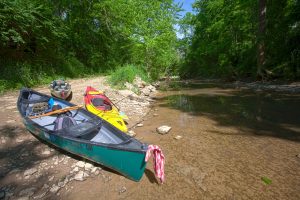
Photo: Kentucky Department Fish and Wildlife
The weather forecast calls for a redbud winter to hit this week. This old saying refers to cold snaps that occur in early April when the redbud trees bloom.
The up and down nature of spring weather can cause consternation among anglers when planning fishing trips. Concerns about the weather is one of three things to consider when planning fishing trips this spring.
1. Barometric pressure is key to unlocking fish behavior in spring:
Barometric pressure is the measurement of the weight of an entire column of air pressing down upon the Earth. Approaching storm fronts in spring ease this weight, resulting in low barometric pressure. The low pressure releases humidity trapped in the atmosphere, resulting in rain or snow.
The dark, low clouds, winds and precipitation that accompany low pressure systems limit light penetration into the water column, providing a better environment for predator fish to ambush prey. Fish do bite better before a front.
High pressure systems follow low pressure frontal systems. In North America, high pressure systems flow out in a clockwise pattern, resulting first in winds from the north and eventually from the east.
“I don’t believe in too many old wives tales when it comes to fishing, but ‘wind from the east, fish bite least’ is one I do believe in,” said Maj. Shane Carrier, assistant director of Law Enforcement for the Kentucky Department of Fish and Wildlife Resources. “I don’t catch many fish when the wind is from the east.”
A couple of days of stable weather in spring ease the influence of high pressure and get fish biting again. The sunny days typical of high pressure warm the water and stir fish activity.
Plan your trips this spring to fish either right before a low pressure system or on the third or fourth day of stable weather.
2. Making sense of the USGS streamflow charts to plan float trips on Kentucky streams:
The streamflow information on the U.S. Geological Survey (USGS) webpage at www.waterdata.usgs.gov provides invaluable information for paddlers and anglers. On this page, select Kentucky from the drop down menu on the top right hand corner to view the flow on streams on all of the river drainages in Kentucky.
The rate of flow on this page shows as CFS or cubic feet per second. The cubic feet per second expresses the amount of flow that passes the USGS stream gauges per second. The higher the CFS, the higher and swifter the water.
The chart for an individual stream shows the discharge for each day of the preceding week as well as the current day. A small triangle on the chart shows the median, or midpoint, flow for each day based on years of data. A flow measuring much higher than the median means high, and usually muddy, water, not the best conditions for fishing and floating.
A flow under the median usually means tolerable fishing and paddling conditions. The USGS streamflow page also has a chart showing the gauge height for each stream. This helps flesh out the data provided by the streamflow chart. This chart provides a good mental image of the rise, fall or stability of the stream over the last week.
The new Canoeing and Kayaking page on the Kentucky Fish and Wildlife website at www.fw.ky.gov is another invaluable repository of information for stream anglers and paddlers. This page leads to information collected by biologists concerning the fish populations in a stream, the recommended levels for floating selected streams, photos of access sites and fishing tips. The page also contains a link to the Blue Water Trails series, an ongoing initiative detailing the paddling and fishing on streams across Kentucky as well as a printable map.
3. What is a daily creel limit and a possession limit for fishing?
Anglers often get confused about these terms, especially when they are fishing three or more to a boat.
“Whenever anyone is fishing in Kentucky, each angler is entitled to the daily creel limit for that species on that lake, river or stream,” Carrier explained. “There is no boat limit in Kentucky.”
For example, if three anglers fish for crappie on Kentucky Lake out of one boat, each is entitled to 20 crappie, the daily creel limit for crappie on Kentucky Lake and Lake Barkley. There is also a 10-inch minimum size limit for crappie on these lakes, therefore anglers must immediately release any crappie caught less than 10 inches long.
The possession limit is the amount of unprocessed fish a person may hold after two or more days of fishing. In Kentucky, this amount is two times the daily creel limit for any species that has a daily creel limit.
Keep these things in mind as you plan and execute fishing trips this spring. Remember to buy your 2017-2018 fishing license, as the new license year began March 1.
 Four teachers from Jefferson County Public Schools (JCPS) have been selected for 2018 Valvoline Teacher Achievement Awards (TAA), the Kentucky Department of Education (KDE) announced last week. The four join 20 other teachers throughout the state in competing for the 2018 Kentucky Teacher of the Year Award, which will be announced in May.
The teachers include:
· Mandy Ridenour, a fifth-grade teacher at Audubon Traditional Elementary School;
· Kim Joiner, a drama teacher at Noe Middle School;
· Apryl Moore, a science teacher at the Academy @ Shawnee; and
· Taylor Clements, a math teacher at Atherton High School.
“It’s always rewarding to be recognized for excellence in your field, but when that field is teaching our young people, the award takes on a special significance,” JCPS Superintendent Dr. Donna Hargens said. “I want to congratulate all the award recipients – I know you do the jobs that you do not for the accolades, but for the love of teaching, and that makes the real winners our students whose lives you touch.”
All 24 teachers will be honored at a May 16 ceremony in Frankfort, during which the Kentucky Elementary, Middle and High School Teachers of the Year will be named. The Kentucky Teacher of the Year will be selected from this group of three finalists, and will represent the state in the National Teacher of the Year competition.
The Kentucky Teacher Achievement Awards and the Kentucky Teacher of the Year programs are sponsored by Valvoline.
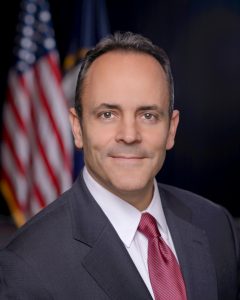 Gov. Matt Bevin, as part of his Red Tape Reduction initiative, has signed documents to eliminate more than 65 obsolete, inactive and superseded boards and commissions.
A 2012 Legislative Research Commission (LRC) study identified 571 boards, commissions and similar entities such as authorities, councils and committees in Kentucky—a figure “nearly twice the number of the typical state.”
Gov. Bevin issued an executive order on March 23 eliminating 29 boards and commissions that were originally established by gubernatorial executive order.
“This Administration desires and will implement more effective and efficient management of state government operations and resources,” wrote Gov. Bevin in the order. “The dissolution of boards and commissions that are no longer active or necessary will aid in securing this greater efficiency and effectiveness.”
House Bill 276 (signed into law on March 21) eliminates 28 boards and commissions that were originally created by legislative action, and Senate Bill 249 (signed into law on March 27) eliminates 11 additional boards, commissions and task forces.
Among the boards and commissions abolished were entities such as the Kentucky Adoption 2002 Strategic Planning Task Force, the Capitol Centennial Commission and the War of 1812 Bicentennial Commission, which completed their work in 2002, 2010 and 2015 respectively.
These actions, along with sunset provisions and board consolidations, reduce the number of active boards on the books to under 400. No board members, funds or services to taxpayers will be impacted.

Photo: Kentucky Labor Department
Last month, the Labor Cabinet conducted 27 free on-site visits, or “consultative surveys” for employers, identifying 128 serious violations affecting up to 729 employees, and saving participating companies potential enforcement penalties up to $896,000.
The Labor Cabinet’s Division of Occupational Safety & Health Education & Training leads the Cabinet’s proactive efforts to create safe and healthful workplace conditions. This includes providing free consultative surveys to employers in an effort to increase workplace safety by improving injury and illness rates.
Employers and employees all across Kentucky and the nation also have access to cost-free safety and health eLearning programs on the Labor Cabinet’s eTrain website. The Division also offers cost-free OSHA training courses, or “Population Center Training” throughout the state. Proactive approaches to workplace safety, like the ones developed by the Cabinet’s education and training team, are proven methods that reduce workplace injuries and can help employers from paying increased workers’ compensation premiums.
In addition to consultative surveys and OSHA training, cost-free assistance from the Division consists of publications, required workplace posters and information on injury/illness recordkeeping requirements. The Division is also responsible for overseeing the Partnership Programs as well as conducting the Annual Survey of Occupational Injuries and Illnesses, the Census of Fatal Occupational Injuries and the OSHA Data Collection.
According to a recent report from the U.S. Bureau of Labor Statistics (BLS), Kentucky employers recorded the lowest incident rate for nonfatal occupational injuries and illnesses in the state’s history last year.
Along with the Kentucky Safety and Health Network, the Division of Education and Training also co-hosts the Governor’s Safety and Health Conference and Exposition each year. The 33rd annual conference will take place at the Northern Kentucky Convention Center in Covington from May 8-12, 2017. For more info and to register for the conference, please visit kshn.net.
Additional information is available at http://labor.kentucky.gov.
 Attorney General Andy Beshear, the Child Sexual Abuse and Exploitation Prevention Board and the University of Louisville today announced an upcoming special screening of “I Am Jane Doe,” a worldwide documentary on child sex trafficking.
The 2017 film chronicles the battle of several American mothers on behalf of their middle-school daughters, who are victims of sex trafficking, against printed and online adult classifieds.
The film, narrated by Academy Award-nominee Jessica Chastain, will play at 6:30 p.m. on May 8 at the Clifton Center’s historic Eifler Theater in Louisville, located at 2117 Payne St. An expert panel discussion introduced by Beshear will follow the viewing of the film.
“We must continue to raise awareness on human trafficking and how it represents the worst form of abuse, often to children, in the Commonwealth,” Beshear said. “Human trafficking is increasing all over the Commonwealth, and as Kentuckians we must recognize the signs because it occurs in all our counties, cities and communities. By helping to bring this film to Kentucky, we have another opportunity to raise awareness about our obligation to prevent, identify and prosecute human trafficking cases.”
The Child Sexual Abuse and Exploitation Prevention Board, which is administered by the Office of the Attorney General, is co-sponsoring the film – currently only being shown in larger cities worldwide – through the Child Victims’ Trust Fund.
The Fund last year helped pay for nearly 400 child sexual abuse forensic exams and helped administer $160,000 in statewide grants aimed at teaching parents how to discuss child sexual abuse with children and how to keep children safe on the Internet.
Dr. Jennifer Middleton, director of the University of Louisville’s Human Trafficking Research Initiative, is spearheading the efforts to bring “I Am Jane Doe” to Louisville and is working with
Beshear’s office to raise awareness on human trafficking.
Beshear recently joined Dr. Middleton and her colleagues at the University of Louisville’s Kent School of Social Work to announce a study from the school that found that 40 percent of homeless youth surveyed in Louisville and southern Indiana reported being victims of sex trafficking, mostly in exchange for money or lodging.
“Based on the findings of our recent research study, it is clear that child sex trafficking is prevalent in our community, particularly among our most vulnerable children,” Dr. Middleton said. “The good news is that there is a lot that we can do to combat the issue and even prevent it from happening. And it starts with increasing the community’s knowledge and awareness about the issue.”
The Eifler Theater at the Clifton Center seats approximately 500 guests. To obtain admission information and to register for the event, please visit the event page at http://bit.ly/2ogJzkh. The event is free to the public but space is limited, so pre-registration is strongly encouraged. For additional questions about the event, please call the Human Trafficking Research Initiative at 502-852-3651.
At the completion of the film, a panel will discuss with the audience the documentary and the signs of human trafficking. The panelists include: Donna Pollard, survivor and member of Beshear’s Survivors Council; Julie Horen, coordinator of the My Life My Choice prevention program at Catholic Charities Human Trafficking Program; Allyson Taylor, director of Beshear’s Office of Child Abuse and Exploitation Prevention; Michael Littrell, cyber investigator for Beshear’s Department of Criminal Investigations; and Angela Renfro, survivor and director of the Kristy Love Foundation.
“Human trafficking is a crime and its victims are often hidden, which makes awareness especially important and also difficult to achieve,” Renfro said. “It is important for everyone in our community to be aware of the human trafficking problem in our community. Because you can make a difference.”
Beshear is encouraging Kentuckians to support the Child Victims’ Trust Fund through private donations, proceeds from the purchase of “I Care About Kids” license plates or donations made through the state income tax refund check-off program. To support victims of child sexual abuse, Kentuckians may visit their county clerk’s office and request an “I Care About Kids” license plate or check the box on their tax returns to designate a portion to the CVTF.