Thursday January 22, 2026
Local Connection
 Weather
 Traffic
 @LouisvilleDispatch
 @LouisvilleDisp
 Subscribe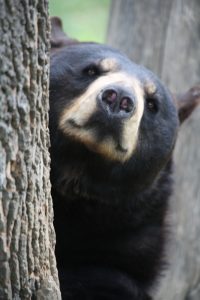
Photo: Kentucky Department Fish and Wildlife
Viewers of “Kentucky Afield” television picked up their phones and took to social media last weekend to submit more than 200 questions for the annual fall hunting call-in show.
Kentucky Department of Fish and Wildlife Resources wildlife biologists Gabe Jenkins and John Morgan, along with Sgt. Rufus Cravens of the department’s Law Enforcement Division, joined “Kentucky Afield” host Chad Miles for the hour-long show that aired live on Sept. 16 on Kentucky Educational Television. The panel could not get to all of the questions before the credits started rolling.
Below, Kentucky Fish and Wildlife personnel answered a handful of the questions that did not make it on-air. Viewers who missed the live show can watch a full replay on YouTube. Enter “KYAfield” in the search box on the YouTube homepage.
Will Kentucky Fish and Wildlife consider adjusting deer seasons due to the EHD (Epizootic Hemorrhagic Disease) outbreak? – Eddie from Morgan County
GABE JENKINS, Deer and Elk Program Coordinator, Kentucky Fish and Wildlife: We will not be implementing an emergency regulation to shorten or close deer season in 2017 in any county due to the EHD outbreak. We encourage folks to report all dead deer they find using our online reporting system.
After the outbreak has ceased, we will evaluate the number reported along with the harvest data from the 2017 season and make our recommendations for the 2018 season at the December meeting of the Fish and Wildlife Commission. Deer are prolific breeders, and the population will rebound within a couple years.
Lastly, if your area has experienced a severe die-off, I would encourage hunters to participate in some self-restraint and pass once you have taken enough deer to fill your freezer for the year.
How far west have elk traveled in Kentucky? – Wayne from Marion County
JENKINS: We receive reports of elk outside the elk zone almost every year. In the early years of elk restoration, we saw elk leave the elk zone more frequently. We’ve had reports of elk as far west as Lake Cumberland and one elk went to North Carolina. We have had elk harvested outside the elk zone in Bath, Carter, Laurel, Madison, Wayne and Wolfe counties.
What resources are available through Kentucky Fish and Wildlife to assist with wildlife habitat improvement? – Gary from Grayson
BEN ROBINSON, Wildlife Division Assistant Director, Kentucky Fish and Wildlife: Kentucky Fish and Wildlife is committed to assisting landowners with wildlife habitat improvement on their property. We employ more than 30 wildlife biologists who specialize in assisting private landowners with habitat management projects. From tips about improving food sources for deer and turkey to navigating cost share programs through the federal Farm Bill, we have someone available to assist you.
For more information, visit our web site at fw.ky.gov or call 1-800-858-1549 and ask for the phone number of your local private lands or farm bill biologist.
Does prescribed burning on private and public lands benefit wild turkeys? Where can I find more information? – Tony from Montgomery County
ROBINSON: Kentucky Fish and Wildlife considers prescribed fire an essential management tool for private landowners and publicly managed Wildlife Management Areas. Prescribed fires are carefully planned and managed by highly trained burn crews for containment to select areas.
We regularly use prescribed burning on grasslands and timbered areas to benefit a host of game and non-game species, including wild turkey.
Prescribed fire has many benefits. Fire removes old vegetation and stimulates new growth, providing a lush food source for wildlife. Fire promotes oak regeneration in our forests resulting in more acorns, a staple food source for many species. By removing dead vegetation, fire also creates bare ground, a necessity for bobwhite quail and other ground dwelling birds.
For more information on prescribed fire in Kentucky, visit the Kentucky Prescribed Fire Council’s website www.kyfire.org.
Why was bear season closed in McCreary County on public land? – David from McCreary County
JOHN HAST, Bear Program Coordinator, Kentucky Fish and Wildlife: Bear numbers are still low in McCreary County. Kentucky Fish and Wildlife’s philosophy on bear management is to allow as much hunter opportunity as the bear population will allow. What we may sacrifice in hunter opportunity in McCreary County for a few years will pay off when bears have a chance to grow within the county and expand more fully into surrounding counties, such and Pulaski and Rockcastle.
Great bear habitat lies just to the north of McCreary County within the Daniel Boone National Forest and it has the potential to provide a great place for bears and bear hunters in the future.
A population of bears is very slow in its growth and patience is necessary to see any big leaps in the season quota. You can rest assured that Kentucky Fish and Wildlife is actively monitoring bears in McCreary County in order to improve our population models. When the bear population is ready, hunters will once again be able to hunt public land.
 The Kentucky Fuel Corporation properties in eastern Kentucky are no longer open to public hunting.
Kentucky Fuel’s hunting access agreement with the Kentucky Department of Fish and Wildlife Resources is no longer active, returning the property to private status.
The change occurred after publication of the 2017-18 Kentucky Hunting and Trapping Guide. Kentucky Fish and Wildlife has updated its online version of the guide to reflect this change. The guide is available at the department’s website, fw.ky.gov.
Hunters are asked to respect Kentucky Fuel Corporation private property and not trespass on it.
Kentucky Fish and Wildlife still has 20 areas open for public hunting in the southeast region of the state, including more than 100,000 acres for elk hunting. Maps and detailed information on each area are available online at fw.ky.gov.
 Mayor Greg Fischer today announced a $200 million economic development plan for about 35 underused acres in Butchertown that will be anchored by a 10,000-seat, 15-acre soccer stadium, allowing Louisville to compete for an MLS franchise.
“This is an exciting, worthwhile project that takes an underused, very visible swath of land and creates a vibrant new stadium district that builds on the momentum downtown, in Nulu and Butchertown,” the Mayor said. “This is a smart opportunity, and when smart opportunities to move our city forward come up, we’re going to grab them.”
(Listen to Mayor Greg Fischer Podcast segment about the development and stadium)
Louisville City Football Club (LCFC) will build the $50 million stadium and serve as developer of the overall project, which will include retail, a hotel and offices, built by private investment.
Louisville Metro Government’s sole investment is $30 million to purchase the land for the development and do brownfield remediation and public infrastructure improvements. The project is expected to increase hotel, restaurant and retail amenities nearby and create a “stadium district” where the soccer stadium, Louisville Slugger Field and the Yum! Center are all within blocks of each other, along the same line of sight.
The city’s $30 million portion will be covered by general obligation bond — $25 million to buy the land and $5 million as a contribution to brownfield remediation and public infrastructure.
No Metro tax dollars will be used for stadium construction. In fact, LCFC will pay $14.5 million back to the city over 20 years from sales of land, rent from leases of land, and stadium rent. In addition, if the stadium hits certain financial markers, the city has an opportunity to share in the upside of that growth, up to $2 million.
(See the factsheet about the development and stadium)
On behalf of Louisville City Football Club, Chairman and President John Neace, thanked Mayor Fischer and Louisville Forward “for their commitment to the growth of professional soccer in Louisville.
“Today marks another important step in our vision to be the best United Soccer League club in the country, with the ultimate goal of bringing Major League Soccer to Louisville,” Neace said. “We look forward to building a world-class soccer stadium and surrounding development that continues revitalization in the Butchertown neighborhood.”
With Metro Council approval, the city will work with LCFC on an application to the Kentucky Economic Development Finance Authority (KEDFA) for a mixed-use TIF for the project.
To be eligible for state participation in a TIF, the local applicant (the city) must have some financial participation in the project; in this case, the city’s participation would be the money spent on land acquisition, brownfield remediation and debt service of the bonds to pay for the land.
The city will not commit any of its local property tax revenues to be included in the TIF.
Construction of the project will comply with Metro Ordinance 37.75 with respect to minority, women and local participation goals: 20 percent minority participation, 5 percent women participation, with 75 percent of the work going to residents of the Louisville MSA.
A city-commissioned feasibility study confirmed that a soccer-specific stadium is needed to maintain and grown professional soccer in Louisville. The study called for a soccer-specific stadium, with the ability to hold 10,000 seats, to be built by 2020.
Photo: Louisville Metro Parks and Recreation
The “Canoemobile” is making its annual stop in Louisville on October 3-7, bringing fun and exploration through free trips for all ages on 24-foot Voyageur canoes on the Ohio River. The program, locally in its sixth year, is organized by Louisville Parks and Recreation’s Natural Areas Division based at Jefferson Memorial Forest in partnership with Wilderness Inquiry, Inc. of Minneapolis.
Additional funding support is being provided by the United States Forest Service through the Outdoor Foundation. The Canoemobile will offer trips from 10 a.m. – 4:30 p.m. at Shawnee Park on Friday, Oct. 6, and at Riverview Park on Saturday, Oct.7 from 10 a.m. – 4:30 p.m.
On Tuesday-Thursday, Oct. 3-5, the Louisville ECHO (Louisville is Engaging Children in the Outdoors) initiative, facilitated by JMF/Natural Areas, will host education days at Riverview Park with Chenoweth, Portland, and Coral Ridge elementary schools as part of the Canoemobile program. As part of this education day, students will canoe as well as learn about erosion and insects.
On Friday, JMF will be launching our first canoe built in our #CanoesBuildCommunity program, with assistance from Steam Exchange and Cabbage Patch Settlement House. The program inspires confidence and encourages ownership of paddling through kid-built canoes, from start to finish. With support from Canoe Kentucky, partners build canoes to keep.
“The Canoemobile program is a fun and safe way to introduce kids to the outdoors and part of our mission to expand outdoor recreation opportunities in the Louisville area,” said Seve Ghose, Director of Louisville Parks and Recreation. “We encourage everyone who is interested to come and take advantage of this great opportunity.”
The Voyageur canoes are safe, stable and can carry 9 participants per trip. Safety equipment and trained staff will be provided. Organizers suggest wearing comfortable outdoor clothing that can get wet, but no flip-flops. Water coolers will be available, so bring a refillable water bottle. Food also will be available for purchase.
Pre-registration is not required, and all trips will be offered on a first-come, first-served basis. Trips will leave every 30 minutes. All participants must sign a waiver, and those under the age of 18 must have a waiver signed by a parent or legal guardian. Forms can be found at memorialforest.com.
SCHEDULE
Friday, October 6
10 a.m.- 4:00 p.m. Shawnee Park 4501 West Broadway 40211
* Event is located at the end of Southwestern Parkway on the north side of the park
Saturday, October 7
10 a.m.- 4:30 p.m. Riverview Park 8202 Greenwood Rd 40258
 On the eve of an important ACC football showdown between the University of Louisville and Clemson University, Mayor Greg Fischer of Louisville and Mayor J.C. Cook III of Clemson are putting a friendly wager on the line: Bourbon.
Mayor Fischer is putting up a collection of small bottles from Louisville distilleries — Angel’s Envy, Old Forester, Evan Williams, Mitchter’s, Kentucky Peerless, Bulleit Bourbon, Rabbit Hole and Jim Beam — while Clemson’s wager is a bottle of Six & Twenty, from a South Carolina artisan distillery owned by two Clemson grads.
Its five-grain bourbon is made with all South Carolina grown grains, Mayor Cook said. “As mayor of Clemson, I am proud to say both our football team and our South Carolina bourbon will bring their A-game to the table,” he said.
Though Clemson has won all three games played since U of L joined the ACC, Mayor Fischer is extremely confident about his team’s chances.
“I look forward to trying a sip of my Six & Twenty winning after the Cards win, although I still have my doubts about any bourbon that’s not made in Kentucky,” he said. “I may just save it to celebrate when our quarterback, Lamar Jackson, wins his second Heisman.”
Mayor Cook said he’s looking forward to the game, which has drawn ESPN’s “College GameDay” back to Louisville for the second consecutive season.
Louisville vs. Clemson “has become one of the most exciting rivalries in football, and it’s so great to see how the Louisville fans welcome us with such hospitality,” he said. “We may have to start naming this the Friendly Bowl.”
The Kentucky Fish and Wildlife Commission unanimously recommended today that the department increase prices for some resident Kentucky hunting and fishing licenses.
The Commission is the guiding body for the Kentucky Department of Fish and Wildlife Resources. It took the action during its September quarterly meeting. It will be the first resident license price increase in more than a decade, and the first increase of the senior and disabled sportsman’s licenses since their inceptions in 1999.
The Commission recommends all hunting, fishing and boating regulations for approval by the General Assembly and approves all expenditures by Kentucky Fish and Wildlife. All recommendations must be approved by legislators before they become law.
Kentucky Fish and Wildlife relies primarily on license sales and federal excise taxes from the sale of hunting and fishing equipment for its revenue. It does not receive state General Fund money, such as those derived from income taxes or property taxes. The Department manages more than 600,000 acres for public use and stocks nearly 10 million fish each year. Hunting, fishing, boating and wildlife watching generate an estimated $5.9 billion to Kentucky’s economy each year.
The Commission’s recommendation includes resident hunting licenses, fishing licenses, combination hunting/fishing licenses, senior and disabled sportsman’s licenses and joint fishing licenses for spouses.
“Periodic license price increases are necessary to keep pace with inflation and general costs of living,” said Commission Chairman Jimmy Bevins. “We usually project that an increase will last five years, but solid fiscal management historically has allowed us to make them last much longer.”
The Department’s last three resident rate changes happened in 1992, 1999 and 2007. License and permit fees for non-residents increased to help offset rising operational costs in 2014, but resident fees remained unchanged at the time.
Commission members said they took the action to help offset the rising costs of operating the Department’s three summer camps and the Salato Wildlife Education Center. In addition, increased revenue also will be utilized for increased conservation law enforcement efforts across the Commonwealth.
The three summer camps annually graduate more than 5,000 youth. The Salato Wildlife Education Center, located on the main Kentucky Fish and Wildlife campus, hosts more than 50,000 visitors each year.
“These programs are one main reason why Kentucky continues to see robust participation in hunting and fishing despite decreases seen in surrounding states,” said Kentucky Fish and Wildlife Commissioner Gregory K. Johnson. “Our children are our future sportsmen and sportswomen, and our future leaders.
“These license increases help the Department maintain a commitment and solid investment in outdoor education of our youth,” said Johnson. “Revenue also will support a more complete law enforcement presence across the state, and improved law enforcement recruitment and retention.”
“We operate almost entirely from user fees derived from hunting and fishing license sales, and federal excise taxes generated by the sale of hunting, fishing and shooting equipment and ammunition,” said Bevins. “Other Kentucky state agencies are largely funded by General Fund tax dollars.”
“The new rates for residents would not happen until the 2018 license year,” said Bevins, “so that means we will have made our last increase last for 11 years – more than twice the original projection.”
The Commission voted to increase a resident hunting license from its current $20 to $27, a resident fishing license from $20 to $23, a combination resident hunting/fishing license from $30 to $42 and the resident joint fishing license for spouses from $36 to $42.
Currently, the senior and disabled sportsman’s licenses provide $165 worth of licenses and permits for $5. A resident sportsman’s license cost $95.
Under the Commission action, the senior and disabled sportsman’s licenses would increase to $18. In 2007, Kentucky sold 90,184 of these licenses. Kentucky’s aging society caused that number to reach 120,426 by 2016, with that number projected to continue increasing.
“We surveyed senior and disabled license holders across Kentucky and had a strong response,” said Bevins. “Nearly three quarters said they would continue to purchase a license even if it was as much as $20.
“I believe the support from our seniors is a direct reflection of their own memories and experiences,” he said. “They remember when all deer hunting in Kentucky was prohibited prior to 1956 because there were very few deer, and when there were no wild turkey, elk or bears, or fish hatcheries to raise and stock fish.
“Today our fish and wildlife populations are healthy and abundant, and our management program is a national model. Our seniors know better than most that our conservation camps and school programs are helping to leave a better natural Kentucky for their children and grandchildren,” Bevins said.

Credit: KY State Parks
The golf course at Pine Mountain State Resort Park will offer seasonal deals to golfers this fall.
The course is offering discount cards with a game of golf for $29 on weekdays and $34 on weekends. Golfers also have the opportunity to pay $50 to play all day Saturday. For those who have less time, the course has a deal for nine holes with a golf cart after 5 p.m. on Mondays and Tuesdays.
The course recently renovated its fairways with Bermuda grass and has added new golf carts.
For more information about the golf course, call 800-814-8002 or visit http://parks.ky.gov/golf/18_hole/pine-mountain/
Pine Mountain State Resort Park has a 30-room lodge, cottages and a full-service restaurant. It also has hiking trails and other recreational opportunities for guests. Pine Mountain State Resort Park is located south of Pineville, on U.S. 25E, 10 miles north of Middlesboro.