Thursday January 22, 2026
Local Connection
 Weather
 Traffic
 @LouisvilleDispatch
 @LouisvilleDisp
 Subscribe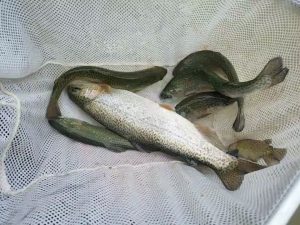
Photo: Kentucky Department Fish and Wildlife
The fisheries division of the Kentucky Department of Fish and Wildlife Resources recently added some bigger rainbow trout to its usual stockings at streams in three popular tourism destinations.
Areas receiving the upsized fish include the Middle Fork of Red River near Natural Bridge State Resort Park, East Fork of Indian Creek in the Red River Gorge National Geological Area and in Rock Creek in the Daniel Boone National Forest in McCreary County.
“We are trying to stock an average of 12-inch trout instead of the usual average of 9-inch trout,” said Tom Timmerman, Northeastern Fisheries District biologist for Kentucky Fish and Wildlife. “When we stock 12-inch average trout, some of them are larger.”
Crews stocked the Middle Fork of Red River and East Fork of Indian Creek April 4 and Rock Creek April 5. They placed 650 rainbow trout in the Middle Fork of the Red River and 850 trout in the East Fork of Indian Creek, with 100 of those fish in each stream of a larger size. Rock Creek received 2,075 trout with 275 of those fish of a larger size.
The increased size of the stocked trout is part of an effort to lure more anglers to these streams. “We want to make these destination streams and give someone incentive to come to Kentucky and trout fish the Red River Gorge area or Rock Creek,” said Justin Heflin, assistant fisheries biologist for the Northeastern Fisheries District. “If you are coming from a good ways, you want to catch a good fish.”
The stockings of larger trout will continue in October on these streams. “When we stock larger fish, it does slightly reduce the total number of trout stocked, but should not impact fishing success,” said Ron Brooks, director of Fisheries for Kentucky Fish and Wildlife. “We are limited on the number of big trout available and are concentrating on these three streams with these stockings.”
Anglers may keep up to eight rainbow trout a day from these waters from now until Sept. 30. There is no size limit for rainbow trout in these waters. Anglers keeping their catch must have the appropriate fishing license and trout permit. Trout permits are $10 and may be purchased wherever fishing licenses are sold, or bought online at fw.ky.gov.
These waters fall under special catch and release regulations for trout from Oct. 1 through March 31. During this fall/winter season, all trout caught must be released immediately.
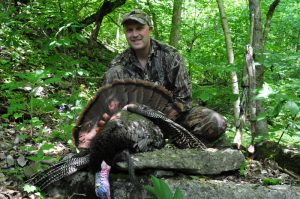
Photo: Kentucky Department Fish and Wildlife
Wildlife biologists conducting a new study want to examine at least 30 turkeys taken in Livingston and Crittenden counties during this weekend’s opener of the spring turkey season.
Zak Danks, turkey biologist for the Kentucky Department of Fish and Wildlife Resources, said concerns voiced by local hunters spurred the research.
“Folks in this area are saying they haven’t been seeing as many turkeys as in the past, and I can attest to that,” he said. “The recent downward trend in spring harvest in these two counties is puzzling, considering that in most counties, harvest – our best measure of overall abundance – has been stable or increasing.”
Biologists want to examine hunter-killed turkeys to check the body condition and look for parasites. Researchers also want to obtain samples of each animal’s blood, organs and other tissues to test for disease or other issues.
Participating turkey hunters can keep the meat, beard, spurs and tail fan. Kentucky Fish and Wildlife staff will breast out birds and answer questions from hunters.
Hunters willing to participate in the survey should take their turkeys to the inspection area at Tambco gas station, 354 West Main Street, in Salem, Ky. Kentucky Fish and Wildlife will staff the area from 8 a.m. to 6 p.m. (Central time) April 14-15.
Participating hunters must still check their birds either through the TELECHECK phone system (1-800-CHK-GAME), or online at fw.ky.gov.
“Right now, we have no evidence to suggest a disease issue or any specific threat,” said Danks. “Disease is one of many factors that make turkey populations fluctuate, along with habitat conditions, weather patterns, predators and hunting pressure, both legal and illegal.
Danks said voluntary participation by hunters allows will allow researchers to assess the baseline health of harvested birds, which is largely unknown to this point. “It’s a first step in what we hope can become a comprehensive research effort to inform our management of a resource so dear to local hunters and citizens,” he explained. “It also gives us a chance to hear from hunters directly, and to explain what we know and don’t know.”
Kentucky Fish and Wildlife plans to notify a number of hunters licensed in Crittenden and Livingston counties by mail or through email. Danks also is developing a turkey hunter survey to gather additional information from hunters.
For more information, see https://fw.ky.gov/Hunt/Pages/Spring-Turkey-Hunting.aspx, or call 1-800-858-1549 or 270-965-3921 ext. 110.
 Louisville Parks and Recreation is hosting a three-day family-friendly street festival and viewing party during the semifinals and finals of the World Cup soccer tournament on July 10-11 and July 15 in front of Metro Hall.
Clariant is a globally leading specialty chemicals company, based in Muttenz near Basel, Switzerland. Its North American headquarters are in Charlotte, North Carolina. Clariant employs several hundred people in Louisville, and last fall announced a partnership with Jefferson County Public Schools to provide funding for a STEM camp at the California Community Center.
“We are very appreciative of Clariant’s contributions to our city. They have been active, engaged corporate partners that show concern for Louisville and want to make the city a better place,” said Seve Ghose, Director of Parks and Recreation.
Louisville Parks and Recreation has secured a 17’ x 10’ HD screen to show the games in July in partnership with the local Fox affiliate, WDRB. Other sponsors include Al Dia newspaper, Aztec Flooring and WFPL Public Radio.
While the games are on, attendees will be able to enjoy fare from food trucks and vendors within the Fan Zone; a small-sided soccer field set up for youth games; a radar gun to gauge ball speeds, a juggling competition. As the event is meant to be family-friendly, no alcohol will be available at the event.
 Managing a deer herd across 120 counties is a science for the Kentucky Department of Fish and Wildlife Resources.
In some areas of the state, deer numbers are above desired levels. Overpopulation hurts herd quality, leading to smaller and less healthy deer. Too many deer also means increased habitat and crop damage. In other parts, particularly in areas of east Kentucky, biologists and hunters want more deer on the landscape.
“Hunting is the most effective way to manage the deer population,” Kentucky Fish and Wildlife Deer Program Coordinator Gabe Jenkins said. “Wildlife managers do so by adjusting seasons, bag limits and methods to achieve goals. We need hunters to take more does in Zone 1 counties.”
Changes to hunting regulations are sometimes necessary to work toward an ideal deer population, he added.
The Kentucky Fish and Wildlife Commission recommended a number of proposals at its March 23 meeting that address both ends of the spectrum.
The proposals accepted by commission members are the culmination of a three-year process of public input and scientific review. During this time, department staff compiled an extensive review of deer data, surveyed hunters, conducted numerous internal advisory group meetings, formed a deer working group of interested hunters to gather input and then discussed the proposals during public meetings of the commission’s wildlife committee and the full commission.
Jenkins will discuss the proposals during a special Facebook Live program moderated by Kentucky Afield television at 8 p.m. (Eastern time) Monday, April 9. Visit the Kentucky Afield Facebook page (www.facebook.com/KentuckyAfieldTV) to watch this program and submit questions.
Following are answers to some of the most frequently asked questions about the new deer hunting proposals.
Q: Why expand the modern gun deer season from 10 days to 16 days in Zones 3 and 4 counties when populations are low and many of these counties in east Kentucky were hit hard by last year’s epizootic hemorrhagic disease (EHD) outbreak?
Hunters have expressed to the department a strong desire to expand the modern gun season in Zones 3 and 4. Going from a 10- to 16-day season would provide them with more days afield and simplify regulations.
The department understands some are concerned about potential overharvest in these zones, especially after last year’s EHD outbreak. Some other modifications to harvest rules in Zones 3 and 4 were proposed to prevent overharvest and encourage population growth in the deer herd, yet still allow for a 16-day modern gun season.
Q: What else is changing for Zone 3?
In past seasons, hunters could harvest up to four deer (one antlered and three antlerless, or up to four antlerless deer total) in Zone 3. Two of the allowed four deer in Zone 3 could be taken with a gun.
The department wants to reduce the number of antlerless deer harvested with a gun in Zone 3 to prevent overharvest and encourage population growth. Under its proposal, hunters could still harvest up to four deer in Zone 3 but only one antlerless deer could be taken with a gun.
When a county moves from a Zone 4 to a Zone 3, the increase in antlerless harvest jumps. Reducing the number of antlerless deer that can be taken with a gun in Zone 3 will soften the transition when a county moves from a Zone 4 to a Zone 3.
Q: What else is changing for Zone 4?
The department has proposed a reduction in the Zone 4 bag limit, from four deer to two. Of those two, only one could be an antlerless deer. The statewide bag limit of one antlered deer still applies.
Adjusting the bag limit for antlerless deer will reduce the antlerless deer harvest in Zone 4 counties and foster quicker population growth than observed under the current regulations.
While the statewide deer permit would include up to four deer (see below), only two could be taken in Zone 4.
Q: What is changing with the statewide deer permit?
Currently, a hunter can harvest up to two deer with a statewide deer permit. The department has proposed raising that to four deer without raising the permit price for residents.
Hunters have indicated that buying an additional deer permit is a barrier to them taking additional deer. In the department’s 2015 deer hunter survey, the majority of respondents either supported or did not oppose this change, and said they would harvest more deer under this modification. Changing the statewide deer permit to four deer offers more opportunity and makes it more user friendly.
Hunters would still be limited to one antlered deer statewide.
Q: If the statewide deer permit is changing, how will it affect the additional deer permit?
In previous seasons, a hunter who wanted to harvest more than two deer needed to buy an additional deer permit. Each additional deer permit allowed the hunter to harvest two deer.
Due to the recommended increase with the statewide deer permit, and with less than 1 percent of hunters harvesting more than four deer each year, an overwhelming number will no longer need to buy an additional deer permit.
For those hunters who want to harvest more than four deer, the new additional deer permit proposed by the department would allow them to take up to 15 extra deer.
Zone bag limits apply. Hunters could only take two deer in Zone 4, four deer in Zone 3, four deer in Zone 2 and an unlimited number of antlerless deer in Zone 1. Hunters would still be limited to one antlered deer statewide.
Q: Why propose a Zone 1-only, modern gun season for antlerless deer in late September?
A Zone 1 designation means the deer population exceeds social or biological goals. This proposed season would be open in Zone 1 counties during the last weekend in September. Archery hunters could still hunt and harvest an antlered deer during this new season but would be required to wear hunter orange.
In an effort to reduce deer populations to acceptable levels in Zone 1 counties, more antlerless deer need to be harvested. Removing deer before acorns drop from oak trees will leave more food available for those remaining, resulting in healthier deer entering breeding season and over winter.
As for its possible effect on antlered deer during this weekend, bucks typically move at night and their patterns are unpredictable during daylight hours. An average of only 82 antlered deer are harvested during this timeframe in Zone 1 counties, the lowest of any weekend during the deer season.
Deer processors would be notified about this new season.
Q: Are these proposed changes effective immediately?
No. Legislative review is still required. The proposed administrative regulations will be filed with the Legislative Research Commission (LRC) by April 13. At that time, written comments on the proposed administrative regulation will be accepted through May 31. Written comments may be sent by email to fwpubliccomments@ky.gov or by regular mail to Mark Cramer, Department of Fish and Wildlife Resources, Arnold L. Mitchell Building, 1 Sportsman’s Lane, Frankfort, KY 40601.
Submitted comments will be thoroughly reviewed and responses provided in a Statement of Consideration after the public comment period. That document will be filed with the LRC.
 The National Wheelchair Basketball Association National Tournament returns to the Kentucky Exposition Center April 12-15, bringing 96 junior and adult division teams together to battle it out on the courts. The competition is estimated to generate $2.8 million in economic impact for the Louisville area.
The National Wheelchair Basketball Association (NWBA) athletes wheel into action on 12 courts located throughout South Wings B and C. Tournament hours are:
- Thursday, April 12 9:30 a.m.-11:30 p.m.
- Friday, April 13 7:30 a.m.-10 p.m.
- Saturday, April 14 7:30 a.m.-8 p.m.
- Sunday, April 15 7:30 a.m.-4 p.m.
The National Wheelchair Basketball Association was founded in 1948, with teams of veterans competing against one another. Today there are more than 200 NWBA teams and eight divisions of play exist: Junior Prep; Junior Varsity; Division I-III; Intercollegiate Men’s; Intercollegiate Women’s; and Women’s.
TICKETS Pre-sale through April 4/At the door:
- $26, adults all sessions/$32, adults all sessions
- $15, adults single session/$19, adults single session
- $10, children (age 11-18) all sessions/$12, children (age 11-18) all sessions
- $7, children single session/$10, children single session
Children 10 and under are free. To purchase tickets in advance, visit the website below. Parking at the Kentucky Exposition Center is $8 per vehicle and $20 per bus.
For more information and a tournament schedule, visit www.nwba.org/2018nwbt.

Credit: KY State Parks
Golfers can get a 20 percent discount off the normal rate at all Kentucky State Parks golf courses Monday through Thursday through May 24, 2018.
You can get the discount by reserving a tee time online at http://parks.ky.gov/golf/tee-times/
The discount does not apply to overnight golf packages.
The park system offers excellent play at courses across the state. Parks with courses in western Kentucky include Kentucky Dam Village, Lake Barkley, Mineral Mound, Pennyrile Forest, Barren River Lake and John James Audubon, a 9-hole course. Courses in central and southern Kentucky include My Old Kentucky Home, Lincoln Homestead, Dale Hollow Lake and General Burnside Island. Eastern Kentucky courses include Grayson Lake, Yatesville Lake and Pine Mountain.
For phone numbers and other information about golf at Kentucky State Parks, visit http://parks.ky.gov/golf/
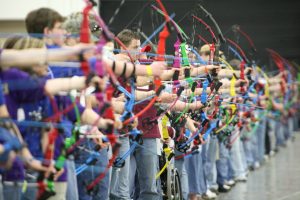 The largest field in the 17-year history of Kentucky’s National Archery in the Schools Program (NASP) state tournament produced impressive individual performances and an overall team title for Madison Central High School.
The event was held March 29-31 at the Kentucky Exposition Center in Louisville and drew a record 6,504 students from 396 schools across the state.
“The excitement this weekend was contagious. It was heartwarming seeing so many happy faces,” said Lisa Frye, state NASP coordinator for the Kentucky Department of Fish and Wildlife Resources. “Archery continues to grow in the schools across the state. The children absolutely love the sport. By the looks of all the parents and grandparents that I saw, I’d say they love archery, too.”
Elementary, middle and high school student archers competed for individual and team honors. After practice rounds, each competitor shot 15 arrows at bullseye targets from 10 meters and 15 more from 15 meters for a total possible score of 300.
Anderson County High School freshman Henry Thompson swept the boys’ overall titles in the Kentucky NASP state tournament and the newer Kentucky NASP/International Bowhunting Organization (IBO) 3D Challenge with a score of 298 in each.
The 3D Challenge differs from the traditional bullseye state tournament in that archers shoot at six lifelike foam targets depicting various game animals. The 3D targets are set in a diagonal line from 10 to 15 meters and the scoring rings are the same size and shape of the rings on standard NASP bullseye targets.
The girls division of the Kentucky NASP state tournament came down to a shootout between Simon Kenton High School sophomore Holly Snow and North Laurel Middle School seventh grader Savannah Philpot. They tied for first place with scores of 295. Snow won the tiebreaker and the girls division overall title.
Madison Central won the overall team title in the 2016 Kentucky NASP state tournament and this year finished ahead of Bullitt Central High School. Muhlenberg County High School, Henderson County High School and Lexington’s Lafayette High School filled out the top five.
Pulaski Northern Middle School and Morgantown Elementary won their respective divisions.
The top 10 seniors in the boys and girls divisions in the state tournament received $1,000 scholarships to apply to any post-secondary education.
Lincoln County High School freshman McKenzie Settles earned top individual honors in the girls division of the 3D Challenge. Anderson County High School won the 3D Challenge’s overall team title.
Complete state tournament results are available online at nasptournaments.org. Click on “Tournaments” then select “Kentucky” and “Completed This Season” from the dropdown menus.
The next step for many of the archers who competed in the state tournament is the 2018 NASP Eastern Nationals scheduled May 10-12 at the Kentucky Exposition Center.
