Saturday January 24, 2026
Local Connection
 Weather
 Traffic
 @LouisvilleDispatch
 @LouisvilleDisp
 Subscribe
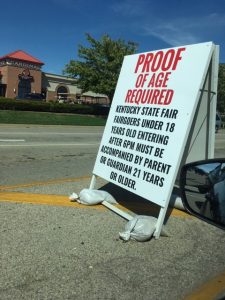 The Kentucky State Fair announced a new policy for minors attending the annual summer celebration.
Beginning Wednesday Aug. 21, fairgoers under 18 years old entering after 6 p.m. must be accompanied by a parent or guardian 21 years of age or older. Proof of age is required. IDs will be verified at the gate. In addition to this new policy, there will be increased lighting and law enforcement personnel during peak hours.
“The Kentucky State Fair is a family-friendly event and our facility’s goal is to ensure that fairgoers are able to enjoy a comfortable experience during the Fair each year. With this new policy and added security measures, we are continuing to enhance the Kentucky State Fair experience for all our guests,” said David S. Beck, President and CEO of Kentucky Venues.
The 2019 Kentucky State Fair runs through Aug. 25 at the Kentucky Exposition Center. For more information, visit www.kystatefair.org. Find the Fair on Facebook, Twitter and Instagram.
 The St. James Court Art Show has been ranked No. 1 on Sunshine Artist Magazine’s 2019 list of the 200 Best Fine Art & Design Shows in America.
“We are extremely excited about the honor of being selected number one,” said Howard Rosenberg, executive director of the St. James Court Art Show. “The credit really goes to all the people who work tirelessly throughout the year on the show. We must also give recognition to our family of artists who exhibit their work at our show and make it so very special.”
The annual list ranks the nation’s most profitable art and craft festivals based on subscribers’ reported sales in 2018. The 200 Best list is based entirely on revenue. Artists cast their votes after being asked by Sunset Artist Magazine to list the top 10 most profitable art and/or craft shows they exhibited at in 2018. They also indicated their level of gross sales at each event and noted whether they consider themselves to be fine artists or craftspeople for each one. The results were tabulated using a weighted scale based on four sales levels to ensure that all events can compete against each other fairly.
To see the complete 2019 Best list, click here.
The 63rd annual St. James Court Art Show takes place from 10 a.m. to 6 p.m. on Oct. 4 and 5 and from 10 a.m. to 5 p.m. on Oct. 6. Admission is free and the art show is a rain or shine event held in historic Old Louisville, home of the largest preserved districts of Victorian architecture in the United States. In addition to the plethora of local Kentucky artists, hundreds of artists travel to Louisville from all around the world to participate in the show. During this three-day event, guests will discover unique works of art in 17 artistic mediums, from clay to wood, and everything in between. Food and drink from local vendors will also be available for purchase.
For more information about the St. James Court Art Show, visit St.JamesCourtArtShow.com.
 Kentucky Labor Cabinet Secretary David Dickerson announced that the Cabinet’s Office of Inspector General has completed the investigation into whether Kentucky teachers engaged in an illegal work stoppage, also known as a “sick out,” during the 2019 session of the General Assembly. The investigation found that 1,074 teachers did violate Kentucky law, which clearly prohibits work stoppages.
KRS 336.050(2) gives the Cabinet the discretion to prosecute and assess civil penalties of up to $1,000 per person, per day of work stoppage on any violation of a labor law in the state of Kentucky. Dickerson noted that while no penalties will be assessed for violations in this specific instance, this investigation was necessary to ensure that public schools remain open during the upcoming school year and that similar work stoppages do not occur in the future.
“Kentucky law clearly prohibits public-sector employees from engaging in work stoppages that many teachers engaged in during the early months of 2019,” noted Dickerson. “Those teachers who participated in this concerted effort were in clear violation of the law, as noted by the Kentucky Education Association and recently affirmed by a federal court.”
In a clear and decisive victory for the Cabinet, United States District Judge Danny Reeves acknowledged that the Labor Cabinet had every right to investigate public school teachers for their conduct. “Kentucky statutes explicitly grant the Labor Cabinet the authority to prosecute and assess civil penalties against public employees, which includes public-school teachers who may have violated KRS Chapter 336,” Reeves stated. “Students are expected to attend classes. If they fail to do so without a valid excuse, their absence is duly-noted and appropriate action is taken. But the teachers at the center of this controversy expect[ed] different treatment.” A full copy of the Court’s Order can be found here.
“It is important to note what the Court explicitly stated,” added Dickerson. “Citizens of the Commonwealth have a strong and continuing interest in public schools remaining open during the school year. The purpose of the Cabinet’s investigation was to undertake a thorough investigation into conduct by some public school teachers and ensure that work stoppages do not happen again so that public schools will be able to fulfill their mission to educate the children of Kentucky. The Cabinet remains dedicated to that mission and will continue to monitor any future ‘sick outs’ closely for further violations of Kentucky labor law.”
“Let it be clearly understood that the grace extended in this instance will not be extended for future such proven violations,” said Dickerson. “The public cannot tolerate another illegal work stoppage in our schools. It is important for public school teachers to understand the level of seriousness that, by law, the Labor Cabinet must and will give to any future work stoppages. We dedicate ourselves to students and parents across the Commonwealth to make sure that this doesn’t happen again, and that our schools will remain open.”
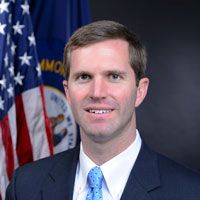 Following the recent devastating pipeline explosion that took the life of one Kentuckian in Lincoln County, Attorney General Andy Beshear wants greater scrutiny of the planned Louisville Gas and Electric Company (LG&E) Bullitt County Natural Gas Transmission Pipeline Project.
Beshear announced today that his Office of Rate Intervention filed a motion to intervene and expand the scope of a complaint case before the state’s Public Service Commission (PSC) that Bernheim Arboretum and Research Forest brought against LG&E over concerns surrounding its Bullitt County natural gas pipeline.
Intervening on behalf of Kentuckians, Beshear says the PSC should expand the matter to ensure the pipeline project meets safety, legal and regulatory compliance requirements, and address the tactics used and costs projected to secure and complete the pipeline.
“Given the recent tragedy in Lincoln County, I believe we must apply greater scrutiny to every pipeline project being proposed and constructed in our state,” Beshear said. “Kentuckians deserve to know that pipelines running across their property comply with the law and are as safe as possible.”
Beshear’s office noted recent decisions by the PSC concerning LG&E’s pipelines and safety practices, reminding the PSC of its “jurisdiction to regulate the safety of natural gas facilities in Kentucky.” The pipeline in Lincoln County was a large multi-state pipeline, and thus under federal jurisdiction. The Bullitt County pipeline, which will operate as part of LG&E’s transmission and distribution system, is entirely within the border of Kentucky and subject to PSC jurisdiction.
Beshear’s office is also concerned about complaints as to alleged tactics used to acquire the land for the pipeline. The complaint notes comments and statements made by the company that show “LG&E’s inappropriate use of its monopoly status to pressure” the remaining property owners to grant easements and right-of-ways, while threatening condemnation of their property.
Beshear’s office also notes that there is no evidence that the PSC has subsequently reviewed the numerous environmental permits LG&E is required to obtain for the project, and which the PSC required LG&E to file with it after receipt.
As the watchdog for consumers in matters relating to natural gas, water, sewer, electric and landline telephone rates, Beshear’s office further points out in its motions that the pipeline’s increasing cost warrants an expanded inquiry.
Beshear said the cost of the pipeline has increased nearly 50% in just two years and is currently estimated to cost $38.7 million.
The next steps in the case are determined by the PSC.
Under Kentucky law, Beshear’s office is responsible for representing the interests of Kentucky consumers before quasi-judicial and governmental ratemaking agencies. Over the past three and a half years, Beshear’s rate intervention team has helped Kentucky families avoid approximately $1.6 billion in proposed utility rate increases.
Over the past year alone, the office has taken on an unprecedented number of cases saving families in approximately 90 counties more than $113 million a year.
This spring, Beshear’s office also filed a friend-of-the-court brief with the Kentucky Supreme Court in support of low-income advocates having the ability to participate in utility rate cases. For nearly two decades, low-income advocates were granted participation in LG&E or KU rate cases before the PSC denied them earlier this year.
“If our families are being asked to pay more or are directly impacted by the actions of investor-owned utilities, I want to ensure their voices are heard,” Beshear said.
Beshear urges Kentuckians needing to file a utility complaint to do so by completing his office’s online form.
Gov. Matt Bevin today joined federal, state and local officials in Georgetown to announce $3,471,000 in Community Development Block Grant (CDBG) funding for housing rehabilitation projects across the Commonwealth.
These federal funds, allocated by the U.S. Department of Housing and Urban Development (HUD) and administered by the Kentucky Department for Local Government (DLG), will benefit 45 families in central, north, east and west Kentucky.
“We are excited to announce nearly $3.5 million in CDBG funding that will benefit families here in Georgetown and across the Commonwealth,” said Gov. Bevin. “Increasing safe, affordable housing is vital to strengthening our communities and promoting economic opportunity. We are grateful to our federal, state and local partners who will help us make these projects a reality for homeowners in Campbell, Christian, Hopkins, Perry and Scott counties.”
CDBG awards include:
- $804,000 to the Campbell County Fiscal Court for the rehabilitation of six vacant and dilapidated houses for sale to low- and moderate-income families,
- $791,000 to the City of Hazard (Perry County), for the acquisition and demolition of a shopping center to construct 15 new single-family homes,
- $366,000 to the City of Crofton (Christian County), for the reconstruction and rehabilitation of five homes for low- and moderate-income families,
- $510,000 to the City of Georgetown (Scott County), for the rehabilitation of eight homes in the Boston area, and
- $1,000,000 to the Hopkins County Fiscal Court for the reconstruction and rehabilitation of 11 homes for low- and moderate-income families.
Mayor Tom Prather noted the impact of today’s grant announcements, which took place in a ceremony at Georgetown City Hall.
“Georgetown is delighted to host Gov. Bevin for these important announcements! We are excited about efforts to improve our neighborhoods, and grants like the Governor announced today are critical to the success of each community represented,” he said.
Members of the community’s delegation to the General Assembly also celebrated the major CDBG funding awards.
“These critical projects are an excellent illustration of government agencies working together to improve communities in all corners of the Commonwealth,” said Senate Majority Floor Leader Damon Thayer, of Georgetown. “This investment will have a tremendous impact on the quality of affordable housing in Georgetown and in other communities across Kentucky. I’m grateful to Gov. Bevin and the Department for Local Government for their support of this project.”
“Increasing the available stock of affordable housing and improving our neighborhoods are two very important issues in the City of Georgetown,” said Representative Phillip Pratt, of Georgetown. “These grant awards provide a much-needed opportunity to revitalize our communities, and I’m grateful to Gov. Bevin and DLG Commissioner Sandy Dunahoo for coordinating these grants.”
The CDBG grant program, overseen by HUD, provides assistance to communities for use in revitalizing neighborhoods, expanding affordable housing and economic opportunities, providing infrastructure and/or improving community facilities and services. CDBG projects must comply with federal regulations, and funding is determined based upon project needs, reasonable costs, and overall effectiveness.
DLG is an arm of the Office of the Governor dedicated to supporting local officials and communities. To learn more about resources and opportunities available through DLG, visit http://kydlgweb.ky.gov.
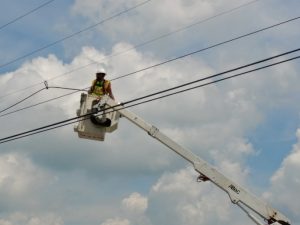 The Kentucky Communication Network Authority (KCNA), the agency responsible for overseeing the Commonwealth’s KentuckyWired fiber optic cable network project, finalized a bond sale of $102,090,000 last week.
The City of Williamsburg issued the bonds for the KentuckyWired Infrastructure Company. The Series 2019 municipal bonds were purchased by Morgan Stanley.
The majority of the proceeds—$93 million—will be used to fund the settlement agreement between KCNA and its primary contractor, NG-KIH Design Build LLC. The remainder will be held to fund project needs.
According to KCNA Interim Executive Director Deck Decker, KCNA was able to save millions of dollars through the structure of this deal and favorable market conditions. “KCNA was able to access a market with historically low rates to reap maximum benefit from this deal,” he said.
Construction of the KentuckyWired project is well over halfway complete, with more than 1,700 miles of the planned 3,000 miles of fiber cable placed so far. Construction is complete in the first section from Lexington to Louisville and Cincinnati, known as Ring 1A. Construction of Ring 1B, in Eastern Kentucky, is projected to be finished in early September.
KentuckyWired is a middle mile network, building high-speed fiber optic cable in all 120 counties, connecting government offices, universities, community colleges, state police posts, and state parks.
Along its 3,000-mile path, private companies can connect to the network and lease its fiber. This will enable private internet companies to expand their service farther into more rural areas. KentuckyWired will significantly enhance opportunities for education, healthcare, economic investment and job growth for Kentuckians.
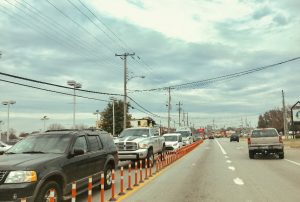 Crews on The New Dixie Highway Project are completing median construction on a critical, busy section of the roadway in the heart of Shively. The section between Herbert Avenue and Crums Lane, which includes Shively City Hall and the on-ramp to I-264, will have all lanes open and in their final configuration on Monday.
The opening of all four lanes in this section will be a significant improvement for drivers. For the past six months, there has been only one southbound lane on this busy section of roadway – which carries an estimated 60,000 vehicles a day. For about a month, there has also only been one northbound lane on that section.
As with the rest of the project, the final surfacing and landscaping is slated for completion during the spring and summer of 2020.
“We appreciate the patience of everyone who drives this section of highway,” said Project Manager John Callihan. “We drive it too, and we know it has been frustrating at times. But the result is a safer, more efficient roadway for all of us.”
Drivers should continue to stay alert to shifting work zones on Dixie Highway. In addition to the opening of lanes between Crums and Herbert, work crews will also be reopening lanes between Greenwood Road and Wells Drive as well as between Meyer Lane and Upper Hunters Trace.
Median work will shift to other locations, causing new lane closures between Gagel Ave. and Kendall Road. The existing lane closure between Blanton Lane and Meyer Lane will remain in place as work continues.
By installing medians, The New Dixie Highway Project is restricting mid-block left turns – and guiding drivers to turn at signalized intersections or designated U-turn points. Installing medians is both the most transformative part of The New Dixie Highway project – but also the most dangerous for workers because they will be working in the middle of the roadway with traffic on both sides. Video about the medians and about the use of U-turns on Dixie Highway are available on YouTube.
Medians are “non-mountable” so passenger vehicles cannot drive over them. Widths will vary with available space – with landscaping at key locations. While it may seem counter-intuitive to drivers, restricting mid-block left-turns creates not only a safer corridor, but a more efficient corridor. Some drivers will have to drive slightly further to reach their destination, but the improved efficiency and reduction in collision-related congestion will mean a better traffic flow for everyone.
The New Dixie Highway Project broke ground in December of 2017, and all the major components will be complete in December 2019.