Saturday December 6, 2025
Local Connection
 Weather
 Traffic
 @LouisvilleDispatch
 @LouisvilleDisp
 Subscribe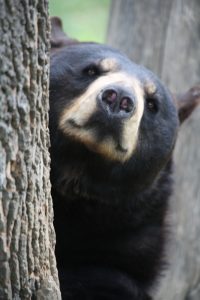
Photo: Kentucky Department Fish and Wildlife
Viewers of “Kentucky Afield” television picked up their phones and took to social media last weekend to submit more than 200 questions for the annual fall hunting call-in show.
Kentucky Department of Fish and Wildlife Resources wildlife biologists Gabe Jenkins and John Morgan, along with Sgt. Rufus Cravens of the department’s Law Enforcement Division, joined “Kentucky Afield” host Chad Miles for the hour-long show that aired live on Sept. 16 on Kentucky Educational Television. The panel could not get to all of the questions before the credits started rolling.
Below, Kentucky Fish and Wildlife personnel answered a handful of the questions that did not make it on-air. Viewers who missed the live show can watch a full replay on YouTube. Enter “KYAfield” in the search box on the YouTube homepage.
Will Kentucky Fish and Wildlife consider adjusting deer seasons due to the EHD (Epizootic Hemorrhagic Disease) outbreak? – Eddie from Morgan County
GABE JENKINS, Deer and Elk Program Coordinator, Kentucky Fish and Wildlife: We will not be implementing an emergency regulation to shorten or close deer season in 2017 in any county due to the EHD outbreak. We encourage folks to report all dead deer they find using our online reporting system.
After the outbreak has ceased, we will evaluate the number reported along with the harvest data from the 2017 season and make our recommendations for the 2018 season at the December meeting of the Fish and Wildlife Commission. Deer are prolific breeders, and the population will rebound within a couple years.
Lastly, if your area has experienced a severe die-off, I would encourage hunters to participate in some self-restraint and pass once you have taken enough deer to fill your freezer for the year.
How far west have elk traveled in Kentucky? – Wayne from Marion County
JENKINS: We receive reports of elk outside the elk zone almost every year. In the early years of elk restoration, we saw elk leave the elk zone more frequently. We’ve had reports of elk as far west as Lake Cumberland and one elk went to North Carolina. We have had elk harvested outside the elk zone in Bath, Carter, Laurel, Madison, Wayne and Wolfe counties.
What resources are available through Kentucky Fish and Wildlife to assist with wildlife habitat improvement? – Gary from Grayson
BEN ROBINSON, Wildlife Division Assistant Director, Kentucky Fish and Wildlife: Kentucky Fish and Wildlife is committed to assisting landowners with wildlife habitat improvement on their property. We employ more than 30 wildlife biologists who specialize in assisting private landowners with habitat management projects. From tips about improving food sources for deer and turkey to navigating cost share programs through the federal Farm Bill, we have someone available to assist you.
For more information, visit our web site at fw.ky.gov or call 1-800-858-1549 and ask for the phone number of your local private lands or farm bill biologist.
Does prescribed burning on private and public lands benefit wild turkeys? Where can I find more information? – Tony from Montgomery County
ROBINSON: Kentucky Fish and Wildlife considers prescribed fire an essential management tool for private landowners and publicly managed Wildlife Management Areas. Prescribed fires are carefully planned and managed by highly trained burn crews for containment to select areas.
We regularly use prescribed burning on grasslands and timbered areas to benefit a host of game and non-game species, including wild turkey.
Prescribed fire has many benefits. Fire removes old vegetation and stimulates new growth, providing a lush food source for wildlife. Fire promotes oak regeneration in our forests resulting in more acorns, a staple food source for many species. By removing dead vegetation, fire also creates bare ground, a necessity for bobwhite quail and other ground dwelling birds.
For more information on prescribed fire in Kentucky, visit the Kentucky Prescribed Fire Council’s website www.kyfire.org.
Why was bear season closed in McCreary County on public land? – David from McCreary County
JOHN HAST, Bear Program Coordinator, Kentucky Fish and Wildlife: Bear numbers are still low in McCreary County. Kentucky Fish and Wildlife’s philosophy on bear management is to allow as much hunter opportunity as the bear population will allow. What we may sacrifice in hunter opportunity in McCreary County for a few years will pay off when bears have a chance to grow within the county and expand more fully into surrounding counties, such and Pulaski and Rockcastle.
Great bear habitat lies just to the north of McCreary County within the Daniel Boone National Forest and it has the potential to provide a great place for bears and bear hunters in the future.
A population of bears is very slow in its growth and patience is necessary to see any big leaps in the season quota. You can rest assured that Kentucky Fish and Wildlife is actively monitoring bears in McCreary County in order to improve our population models. When the bear population is ready, hunters will once again be able to hunt public land.
 Automotive frame manufacturer Metalsa Structural Products Inc. will add 113 jobs at its Owensboro facility with a $36.5 million expansion to produce a new line of stamped and welded components.
“With three production facilities in the commonwealth, Metalsa stands as one of our largest automotive employers,” Gov. Bevin said. “We are grateful for this additional expansion and these new jobs. This will strengthen Kentucky’s economy and further propel us toward our goal of being the American center of engineering and manufacturing excellence. We welcome this growth and congratulate both Metalsa and the Owensboro community on their success.”
The $36.5 million will include investment in robotic welding cells, assembly line robots, infrastructure and building expansions to increase the facility’s square footage to accommodate the new production line and additional warehouse space. The expansion began this summer and hiring is for September 2018 through June 2019. Company leaders expect production to begin in March 2019.
In Kentucky, Metalsa currently employs about 2,700 people at three vehicle-frame facilities. It established the Owensboro facility in 1997, opened its Hopkinsville plant in 1989 and its Elizabethtown plant dates to 1994.
Established in 1956 as Manufacturas Metálicas Monterrey with a plant in Churubusco, Mexico, the company initially produced structures for the construction industry then began manufacturing automotive parts four years later. The company changed its name to Metalsa in 1980. Current products include frames and fuel tanks for light and commercial vehicles, among other items.
Kentucky’s automotive industry — a key sector of the commonwealth’s economy — employs more than 100,000 people at 500-plus facilities across the state. This year through August, the industry announced a dozen new locations or expansions totaling $3.9 billion in investments. Those are expected to create more than 3,100 full-time jobs.
Kentucky’s ideal location as a gateway between the nation’s two auto-production hotbeds offers suppliers the opportunity to produce components in a low-cost, right-to-work state and ship their products quickly and cost-effectively to assembly plants in Kentucky and across the Midwest and South.
Sen. Joe Bowen, of Owensboro, said the announcement will benefit the region for years to come.
“It is a great day when a company that already employs so many Kentuckians chooses to expand its operations in our city,” he said. “I am pleased that Metalsa chose to increase its investment in its Owensboro facility and I thank them for their dedication to our community.”
Rep. Suzanne Miles, of Owensboro, commended Metalsa on its commitment to the region and thanked those involved with landing the project.
“I want to congratulate Metalsa Structural Products on their expansion and thank them for their continued investment in the 7th District,” Rep. Miles said. “This expansion will create jobs for the Owensboro area and bring continued economic development to our region. Metalsa Structural Products has long been a successful corporate and community partner for Owensboro, and I want to applaud all those who made this investment possible.”
Owensboro Mayor Tom Watson said the company’s growth reflects the pro-business climate of the community.
“The City of Owensboro is proud and honored to be the site of Metalsa’s expansion,” Mayor Watson said. “The company’s commitment to Owensboro is a testament to our positive business environment, a highly-skilled workforce and superb quality of life. We look forward to working with this fine corporate citizen for many years to come.”
Daviess County Judge-Executive Al Mattingly welcomed news of the expansion.
“On behalf of the fiscal court and the citizens of Daviess County, I congratulate Metalsa on their expansion,” Judge Mattingly said. “This project will create high-wage jobs, and illustrates the company’s confidence in our workforce and community.”
To encourage the investment and job growth in the community, the Kentucky Economic Development Finance Authority (KEDFA) in June preliminarily approved Metalsa for tax incentives up to $3.5 million through the Kentucky Business Investment program. The performance-based incentive allows a company to keep a portion of its investment over the agreement term through corporate income tax credits and wage assessments by meeting job and investment targets.
In addition, Metalsa can receive resources from the Kentucky Skills Network. Through the Kentucky Skills Network, companies can receive no-cost recruitment and job placement services, reduced-cost customized training and job training incentives. In fiscal year 2016, the Kentucky Skills Network provided training for nearly 95,000 Kentuckians and 5,000 companies from a variety of industry sectors.
For more information on Metalsa, visit www.metalsa.com.
A detailed community profile for Daviess County can be viewed at http://bit.ly/DaviessCoKy.
Information on Kentucky’s economic development efforts and programs is available at ThinkKentucky.com. Fans of the Cabinet for Economic Development can also join the discussion on Facebook or follow on Twitter. Watch the Cabinet’s “This is My Kentucky” video on YouTube.

Credit: KY State Parks
Step back in time as Big Bone Lick State Historic Site returns to days long past during the 35th annual Salt Festival the weekend of Oct. 13-15.
The festival features demonstrations of pioneer living, frontier skills, traditions, and lifeways. Browse the crafters corner to see the many handcrafted items for sale and find lots of good eats at the food court. Enjoy folk and bluegrass music, listen to a storyteller, view prehistoric Ice Age artifacts, and observe a blacksmith working red-hot iron. See how salt was extracted from the waters of Big Bone, watch a flintknapper make a stone point, and discover how bison hair was spun into yarn.
While visiting the park, be sure to drop by the park’s museum and visitor’s center to see some of the “big bones.” A shuttle van will transport event-goers to and from the festival field to the center at regular intervals. Don’t miss seeing the bison herd, the park’s living link to Kentucky’s early history.
On Friday, Oct. 13, the park will host school groups. The cost is $2 per person. Schools interested in bringing classes to the festival should call the park at 859-384-3522.
Regular festival admission is $5 per person; children 5 and under are free.
For information about the park, visit http://parks.ky.gov/parks/historicsites/big-bone-lick/. Big Bone Lick State Historic Site is recognized as the birthplace of American vertebrate paleontology for its significant role in the development of scientific thought regarding extinction and the relationship between geology and paleontology the world over. The park is located 22 miles southwest of Covington on KY 338, off US 42/127 and I-71 & I-75. From I-75 north or south, take exit 175 to KY 338. From I-71 north or south, take exit 62 to 127N/42E to KY 338.
 The Kentucky Fuel Corporation properties in eastern Kentucky are no longer open to public hunting.
Kentucky Fuel’s hunting access agreement with the Kentucky Department of Fish and Wildlife Resources is no longer active, returning the property to private status.
The change occurred after publication of the 2017-18 Kentucky Hunting and Trapping Guide. Kentucky Fish and Wildlife has updated its online version of the guide to reflect this change. The guide is available at the department’s website, fw.ky.gov.
Hunters are asked to respect Kentucky Fuel Corporation private property and not trespass on it.
Kentucky Fish and Wildlife still has 20 areas open for public hunting in the southeast region of the state, including more than 100,000 acres for elk hunting. Maps and detailed information on each area are available online at fw.ky.gov.
 Unemployment rates fell in 32 Kentucky counties, stayed the same in three and rose in 85 counties between August 2016 and August 2017, according to the Kentucky Center for Education and Workforce Statistics (KCEWS), an agency of the Kentucky Education and Workforce Development Cabinet.
Woodford County recorded the lowest jobless rate in the Commonwealth at 3.5 percent. It was followed by Shelby County, 3.8 percent; Campbell, Fayette, Monroe, Oldham and Scott counties, 3.9 percent each; Jessamine County, 4 percent; and Boone, Kenton and Spencer counties, 4.1 percent each.
Magoffin County recorded the state’s highest unemployment rate at 15.4 percent. It was followed by Leslie County, 12.7 percent; Elliott County, 10.7 percent, Carter and Harlan counties, 10.5 percent each; Letcher County, 9.7 percent; Breathitt County, 9.3 percent; Lewis County, 9.2 percent; Owsley County, 9.1 percent; and Jackson County 9 percent.
Kentucky’s county unemployment rates and employment levels are not seasonally adjusted because of small sample sizes. Employment statistics undergo sharp fluctuations due to seasonal events such as weather changes, harvests, holidays and school openings and closings. Seasonal adjustments eliminate these influences and make it easier to observe statistical trends. The comparable, unadjusted unemployment rate for the state was 5.2 percent for August 2017, and 4.5 percent for the nation.
Unemployment statistics are based on estimates and are compiled to measure trends rather than actually to count people working. Civilian labor force statistics include non-military workers and unemployed Kentuckians who are actively seeking work. They do not include unemployed Kentuckians who have not looked for employment within the past four weeks. The data should only be compared to the same month in previous years.
Learn more about Kentucky labor market information at https://kcews.ky.gov/KYLMI.

Photo: Louisville Housing and Community Development
Louisville Creating Affordable Residences for Economic Success (CARES) and the Louisville Affordable Housing Trust Fund (LAHTF) will be jointly hosting four informational meetings regarding the upcoming round of funding available for these two sources. This round of funding is comprised of $14.5 million dollars and is designed to provide gap and/or bridge financing to developers building affordable workforce housing or incorporating affordable workforce housing into market rate projects.
CARES and LAHTF encourage adaptive re-use of vacant and abandoned properties, energy efficiency, universal design and mixed income projects integrating low-income housing.
Meetings will be held at the following dates, times and locations:
- September 27 at 10:00 am at Middletown Firehouse (108 Urton Lane)
- September 28 at 9:00 a.m. at Edison Center (701 W. Ormsby Lane)
- September 28 at 2:00 p.m. at Southwest Regional Library (3920 Dixie Highway)
- September 29 at 10:00 a.m. at South Central Regional Library (7300 Jefferson Boulevard)
For more information, please visit https://louisvilleky.gov/government/housing-community-development
 Mayor Greg Fischer today announced a $200 million economic development plan for about 35 underused acres in Butchertown that will be anchored by a 10,000-seat, 15-acre soccer stadium, allowing Louisville to compete for an MLS franchise.
“This is an exciting, worthwhile project that takes an underused, very visible swath of land and creates a vibrant new stadium district that builds on the momentum downtown, in Nulu and Butchertown,” the Mayor said. “This is a smart opportunity, and when smart opportunities to move our city forward come up, we’re going to grab them.”
(Listen to Mayor Greg Fischer Podcast segment about the development and stadium)
Louisville City Football Club (LCFC) will build the $50 million stadium and serve as developer of the overall project, which will include retail, a hotel and offices, built by private investment.
Louisville Metro Government’s sole investment is $30 million to purchase the land for the development and do brownfield remediation and public infrastructure improvements. The project is expected to increase hotel, restaurant and retail amenities nearby and create a “stadium district” where the soccer stadium, Louisville Slugger Field and the Yum! Center are all within blocks of each other, along the same line of sight.
The city’s $30 million portion will be covered by general obligation bond — $25 million to buy the land and $5 million as a contribution to brownfield remediation and public infrastructure.
No Metro tax dollars will be used for stadium construction. In fact, LCFC will pay $14.5 million back to the city over 20 years from sales of land, rent from leases of land, and stadium rent. In addition, if the stadium hits certain financial markers, the city has an opportunity to share in the upside of that growth, up to $2 million.
(See the factsheet about the development and stadium)
On behalf of Louisville City Football Club, Chairman and President John Neace, thanked Mayor Fischer and Louisville Forward “for their commitment to the growth of professional soccer in Louisville.
“Today marks another important step in our vision to be the best United Soccer League club in the country, with the ultimate goal of bringing Major League Soccer to Louisville,” Neace said. “We look forward to building a world-class soccer stadium and surrounding development that continues revitalization in the Butchertown neighborhood.”
With Metro Council approval, the city will work with LCFC on an application to the Kentucky Economic Development Finance Authority (KEDFA) for a mixed-use TIF for the project.
To be eligible for state participation in a TIF, the local applicant (the city) must have some financial participation in the project; in this case, the city’s participation would be the money spent on land acquisition, brownfield remediation and debt service of the bonds to pay for the land.
The city will not commit any of its local property tax revenues to be included in the TIF.
Construction of the project will comply with Metro Ordinance 37.75 with respect to minority, women and local participation goals: 20 percent minority participation, 5 percent women participation, with 75 percent of the work going to residents of the Louisville MSA.
A city-commissioned feasibility study confirmed that a soccer-specific stadium is needed to maintain and grown professional soccer in Louisville. The study called for a soccer-specific stadium, with the ability to hold 10,000 seats, to be built by 2020.