Wednesday December 17, 2025
Local Connection
 Weather
 Traffic
 @LouisvilleDispatch
 @LouisvilleDisp
 Subscribe
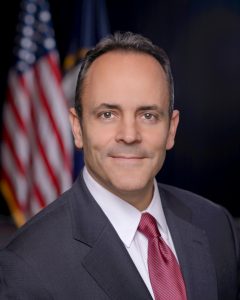 Kentucky placed second nationally in economic development projects per capita last year and first in the South Central region according to Site Selection magazine, Gov. Matt Bevin announced earlier this month.
The rankings – part of Site Selection’s annual Governor’s Cup awards – make 2016 the third consecutive year Kentucky has placed first or second in the per-capita competition. Numerous Kentucky metropolitan and micropolitan regions also placed on top-10 lists for their economic development achievements. As well, Kentucky ranked seventh nationally in total projects, beating out states of far greater size.
“Kentucky continues to distinguish itself as a top location for new business growth and expansion,” Gov. Bevin said. “The strong performance outlined in this report stands as further proof of this fact, ranking us among the top 10 states by total economic projects announced. This is a great achievement for a state much smaller than many of our competitors, and is a testament to the efforts of thousands of people. It is exciting to see what happens when city, county, regional, state and federal levels collaborate to attract growth in communities across the commonwealth. The incredible beauty, quality of life, work ethic and abundant opportunities in Kentucky are becoming increasingly well known, and the future is bright indeed.”
In addition to the state’s high ranking, Site Selection named five Kentucky communities among its Top 10 Metro Areas Ranking. These include the Northern Kentucky/Cincinnati region, which ranked fifth among areas with populations exceeding 1 million; Lexington, which ranked fourth for communities with populations between 200,000 and 1 million; and Bowling Green, Owensboro and Elizabethtown, which placed second, seventh and ninth, respectively, among metropolitan areas with fewer than 200,000 people.
Kentucky also ranked fourth in total projects in micropolitan areas and 11 of its communities placed on the magazine’s 2016 Top Micropolitans list, including:
- Bardstown – Nelson County, 7th
- Danville – Boyle and Lincoln counties, tied for 9th
- Mayfield – Graves County, tied for 18th
- Frankfort – Franklin County, tied for 32nd
- Richmond-Berea – Madison County, tied for 32nd
- London – Laurel, Knox and Whitley counties, tied for 51st
- Maysville – Mason County, tied for 51st
- Somerset – Pulaski County, tied for 51st
- Glasgow – Barren and Metcalfe counties, tied for 78th
- Madisonville – Hopkins County, tied for 78th
- Mt. Sterling – Bath, Menifee and Montgomery counties, tied for 78th
Additionally, Paducah earned 10th place in total projects in communities along the Mississippi River Corridor.
“Our local economic development partners statewide share credit for this success. Their dedication to a team approach helps make Kentucky such a strong player,” said Terry Gill, secretary of the Kentucky Cabinet for Economic Development. “Considering the showing by 11 of our micropolitans and five metros, Kentucky owns a winning formula for attracting, retaining and growing businesses. As we apply that formula in the coming years, we’ll continually hone our approach to maintain our leading edge.”
Last year, Kentucky announced more than 310 new location and expansion projects. Those are expected to create more than 16,000 jobs and over $3.1 billion in investment. Site Selection counts 231 of those projects toward its rankings. For inclusion in the magazine’s database, qualifying projects must meet one or more of these criteria: a minimum capital investment of $1 million, 20 or more new jobs created, and 20,000 or more square feet of new space.
Site Selection, an Atlanta-based publication, has awarded the Governor’s Cup annually since 1988 to the US state with the most new and expanded corporate facilities as tracked by the Conway Projects Database.
Corporate real estate analysts regard the rankings as an industry scoreboard. The magazine’s circulation reaches 48,000 executives in corporate site selection decision making.
The full rankings can be viewed at www.siteselection.com.
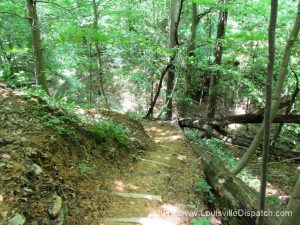 If you’re planning to enjoy the outdoors this year and go camping, make sure to try out a Kentucky State Park campground.
The parks have 30 campgrounds across the state. To help kickoff the camping season, the state parks will hold its annual “Camper Appreciation Weekend” on April 28-30, when campers can get two nights for the price of one.
Another camping discount offered during April is a two nights for the price of one Sunday through Thursday nights. Guests should use the discount code “Spring2017” when making online reservations to get the discount.
State park campgrounds are offering a variety of activities during Camper Appreciation Weekend. These include entertainment, arts and crafts, putt-putt golf, bonfires, movies, cookouts and nature programs.
All state park campgrounds have water and electric services with dump stations or sewer hookups, along with picnic tables and fire rings at each improved site and bath houses. Primitive sites are also available.
All campgrounds will be open March 31.
Check the Department of Parks web site at www.parks.ky.gov for more information on Camper Appreciation Weekend, including reservations. (For the Camper Appreciation Weekend, campers will be charged half price for the nights of April 28-29.)
Kentucky’s seasonally adjusted preliminary unemployment rate for February 2017 was down 0.1 percent from the January 2017 rate of 5.0 percent, according to the Office of Employment and Training (OET), an agency of the Kentucky Education and Workforce Development Cabinet.
The preliminary February 2017 jobless rate was 0.3 percentage points lower than the 5.2 percent rate recorded for the state in February 2016.
The U.S. seasonally adjusted jobless rate for February 2017 was 4.7 percent, according to the U.S. Department of Labor.
Labor force statistics, including the unemployment rate, are based on estimates from the Current Population Survey of households. It is designed to measure trends rather than to count the actual number of people working. It includes jobs in agriculture and those classified as self-employed.
In February 2017, Kentucky’s civilian labor force was 2,044,119 an increase of 18,982 individuals compared to the previous month. Employment was up by 19,092 and the number of unemployed decreased by 110.
“In February, our labor force increased by 0.9 percent,” said Kentucky Labor Market Information Director Kate Shirley Akers, Ph.D. “And over the last year, Kentucky’s employment has increased by 3.3 percent.”
In a separate federal survey of business establishments that excludes jobs in agriculture and people who are self-employed, Kentucky’s seasonally adjusted nonfarm employment increased by 1,900 jobs in February 2017 compared to January 2017.
“Overall, nonfarm employment has increased by 26,400 positions, or 1.4 percent from one year ago,” said Akers. “The largest month-to-month gain in jobs was in the construction sector.”
Nonfarm data is provided by the Bureau of Labor Statistics’ Current Employment Statistics program. According to this survey, five of Kentucky’s 11 major nonfarm North American Industry Classification System (NAICS) job sectors registered gains in employment, while six declined from the previous month.
The construction sector saw the largest month-to-month increase in February 2017, growing by 2,800 positions, or 3.5 percent, from a month ago. Since February 2016, this industry has added 4,700 jobs, growing by 6.1 percent.
Kentucky’s professional and business services also registered gains, increasing by 2,700 positions from January 2017. This sector has added 5,700 jobs, growing 2.6 percent, from February one year ago. This category includes establishments engaged in services that support the day-to-day activities of other organizations, including temporary employment services and payroll processing.
“The month to month gains in professional and business services was driven by growth in administrative and support and waste management and remediation services, which added 1,600 jobs, as well as increases in professional, scientific and technical services, which gained 1,000 positions,” said Akers.
Employment in the educational and health services increased by 800 jobs in February and has gained 4,100 positions over the year. This year to year increase was driven by job gains in health care and social assistance. Health care and social assistance jobs, which account for 12 percent of all nonfarm employment in Kentucky, increased by 1.7 percent from February 2016 to February 2017.
Employment in the other services sector, which includes repairs and maintenance, personal care services, and religious organizations, increased by 400 positions in February 2017 compared to a month ago. Over the year, the sector has added 1,000 positions, growing 1.5 percent.
The mining and logging sector added 100 jobs in February 2017 from a month ago. The industry has declined by 1,700 positions from a year ago.
Employment in the information sector declined by 100 positions in February 2017, but gained 1,100 from February one year ago. The industries in this sector include traditional publishing as well as software publishing; motion pictures and broadcasting; and telecommunications.
The leisure and hospitality sector lost 300 positions in February 2017 from a month ago. Since February 2016, the sector has added 700 jobs. This sector includes arts, entertainment, recreation, accommodation, and food services.
Kentucky’s manufacturing sector declined, decreasing by 500 positions from January 2017 to February 2017. Since February 2016, this sector has grown by 2.5 percent, expanding by 6,200 jobs.
The financial activities sector lost jobs in February 2017, declining by 500 positions from January 2017. This category includes establishments engaged in finance and insurance as well as real estate, rental and leasing. Since February 2016, however, the sector added 1,500 jobs, an increase of 1.6 percent.
Kentucky’s trade, transportation, and utilities also registered losses, decreasing by 1,200 positions over the month. However, since February 2016 the sector has added 5,700 positions, growing by 1.4 percent. This is the largest sector in Kentucky with over 400,000 jobs accounting for one-fifth of all nonfarm employment.
The government sector, which includes public education, public administration agencies and state-owned hospitals, decreased by 2,300 jobs in February 2017. The sector has lost 2,600 positions since last February.
Civilian labor force statistics include nonmilitary workers and unemployed Kentuckians who are actively seeking work. They do not include unemployed Kentuckians who have not looked for employment within the past four weeks.
Kentucky’s statewide unemployment rate and employment levels are seasonally adjusted. Employment statistics undergo sharp fluctuations due to seasonal events, such as weather changes, harvests, holidays and school openings and closings. Seasonal adjustments eliminate these influences and make it easier to observe statistical trends. However, because of the small sample size, county unemployment rates are not seasonally adjusted.
Learn more about the Office of Employment and Training at http://www.kylmi.ky.gov/
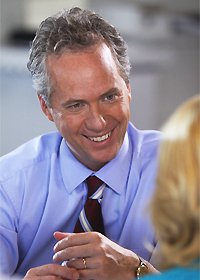 2017’s first CycLOUvia, the popular event showcasing alternative transportation, is returning to Three Points—Germantown, Schnitzelburg, and Shelby Park—on Saturday, May 13, Mayor Fischer announced last week.
The upcoming installment of CycLOUvia will move in a circular route through the Germantown, Schnitzelburg and Shelby Park neighborhoods, also known as Three Points, via Goss Avenue, Logan Street and Shelby Street.
“I am very happy to start another year of CycLOUvia,” Fischer said. “This unique event closes the streets to cars but opens them for fellowship and fun. I encourage young and old to ride and walk down our neighborhood streets and enjoy the small businesses that line them.”
Goss Avenue as well as Mary, Logan and Shelby Streets will be closed to vehicular traffic from 2-6 p.m. Many businesses along the corridor will be open and engaging participants, creating an atmosphere that is uniquely Louisville. More details on business involvement will follow closer to the event date.
This edition of CycLOUvia will take place during Better Blocks, a temporary intervention at Oak and Logan Streets that will create walkable destinations and stronger street design. Pop-up shops, vendors, public space, art, and programming are utilized to reinvigorate the neighborhood corridor.
“Center For Neighborhoods is excited to be partnering with Louisville Forward as Cyclouvia returns to Three Points,” Tom Stephens, Executive Director of Center for Neighborhoods, said. “Designed with Shelby Park residents, Better Block Shelby Park will activate Logan and Oak Streets with temporary streetscape improvements, public spaces, community entertainment, and activities – including CycLOUvia – to highlight the current and future possibilities for the residents and businesses in Shelby Park.”
CycLOUvia is designed to encourage more communities to close streets to cars and open them to people. This new route marks the tenth CycLOUvia event, with previous events held on Bardstown Road, West Broadway and Frankfort Avenue.
CycLOUvia is Louisville’s opportunity to experience transportation in a unique atmosphere, by walking, cycling, skateboarding, or dancing in the street. Streets account for a massive amount of public land in all cities. CycLOUvia repurposes these public spaces by temporarily replacing traditional vehicular traffic with pedestrian traffic.
During CycLOUvia, streets become paved parks where people of all ages, abilities, and socio-economic backgrounds can come to improve their mental, physical, and emotional health.
Since 2012, CycLOUvia events have attracted tens of thousands of people to neighborhoods across the city. CycLOUvia is a part of the Mayor’s Healthy Hometown Movement and promotes healthy lifestyles, alternative transportation, safety and economic development.
For more information, visit https://louisvilleky.gov/government/advanced-planning/cyclouvia

Photo from KDF
February days in the 60s make for crowded boat ramps and golf courses during a time of year usually spent indoors.
Everything, nature wise, seems a couple of weeks ahead of schedule. Buds show on lilac bushes, green grass already grows in bunches and the sound of lawn mowers permeates an afternoon backyard barbecue.
The rare winter temperatures may alter white bass spawning runs as well.
“With the weather pattern so far, I would be looking at the white bass getting going a little earlier than usual,” said Rob Rold, Northwestern Fisheries District biologist for the Kentucky Department of Fish and Wildlife Resources. “When we’ve had consecutive warm days, the white bass run up a bit into the headwaters above Nolin River Lake, but when it cools they go back down in the lake. They will do false runs until it gets right.”
Water temperatures are in the low 50s on Nolin River Lake, while other lakes such as Taylorsville Lake are flirting with water temperatures in the mid 50s.
“It should be getting close,” said David Baker, Central Fisheries District biologist for Kentucky Fish and Wildlife. “We are doing a creel survey on Herrington and the white bass are staging in the upper one-third of the lake, waiting for the next temperature spike. A good warm front with water temperatures getting into the upper 50s, they will start moving to the shoals in the upper lake of both Herrington and Taylorsville.”
Baker said Herrington gets the nod for size of white bass. “There are a lot of really big white bass in Herrington, many up to 14 inches long. For catching a big white bass, Herrington is better than Taylorsville,” he said. Taylorsville Lake produces numbers of white bass, but less size.
Anglers may access the upper section of Herrington Lake and Dix River via Bryants Camp Boat Ramp in Garrard County. Bank anglers may access the Salt River above Taylorsville Lake via River Road on the Taylorsville Lake Wildlife Management Area until the opening of spring turkey season April 15. Boaters use Van Buren Boat Ramp on Taylorsville Lake.
Nolin River Lake holds arguably the best white bass population in Kentucky.
Rold said the Cane Run area, known to locals as the “Three Fingers,” in the upper lake upstream to Broad Ford at the KY 1214 Bridge is usually where the white bass runs begin.
“The length of day really dictates when they will run, even if it is not the preferred water temperature,” Rold said. “They start staging around Cane Run. It is a bit early, but they will come on soon.”
Rold said bank anglers use the access at Bacon Creek for productive white bass fishing. “Go to Bacon Creek ramp and walk the bank up or down,” he said. “The Corps property goes all the way up past Broad Ford. At winter pool, Broad Ford is the first shoal on Nolin River upstream of the lake.”
The tailwaters downstream of the locks and dams on the lower Green River also provide excellent white bass fishing. “The water below Lock and Dam 1 at Spottsville, Lock and Dam 2 at Calhoun and Lock and Dam 3 at Rochester all have decent white bass,” Rold said. “The mouth of Pond River downstream of Calhoun at Jewel City has a big white bass fishery. They run up into Pond River.”
Anglers may access the mouth via a public boat ramp at Jewel City. The tailwater below Lock and Dam 2 has a boat ramp and limited bank access at the end of Second Street in Rumsey, across the river from Calhoun. The tailwaters below Lock and Dam 3 at Rochester offer excellent bank access just west of town on Boat Ramp Road via KY 70.
The smaller male white bass make the initial runs. You will catch many fish during this time, but most will be of similar size. You often catch fish on consecutive casts when the males are running.
“By the first weeks of April, the females show up and it is prime,” Baker said. “This is the best fishing of spring runs.”
Running white bass hit anything that resembles baitfish with abandon, one of the keys to their enduring popularity. When the spring white bass runs peak, nothing else compares to the furious fishing.
White, chartreuse or gray in-line spinners are hard to beat during the runs, but 2-inch white curly tailed grubs rigged on 1/16-ounce leadheads also produce many white bass. Anglers also suspend 1/32-ounce white and red, pink or yellow feather jigs from 18 to 24 inches deep under small bobbers and allow them to drift in the current. Some anglers tip the feather jigs with small crappie minnows to make them more attractive to white bass.
As the runs peak, small topwater propeller baits draw vicious strikes, but you get more consistent action with subsurface presentations.
The next long sustained warm front will get the white bass running. It is time for the most exciting fishing of the year. Remember to buy your fishing license. The new license year began March 1.
 Attorney General Andy Beshear announced that his Office of Rate Intervention is recommending that the Public Service Commission (PSC) hold LG&E and KU to approximately one-third of the increase requested in recently filed rate cases.
The utility companies are asking the PSC for a $210 million increase in annual revenues.
Beshear’s rate proposal incorporates the testimony of five experts, including an engineer, and asks the PSC to reduce the rate request by $142 million.
Beshear’s Office of Rate Intervention serves as a watchdog for consumers in matters relating to health insurance, natural gas, water, sewer, electric and telephone rates. Under Kentucky law, the office is responsible for representing the interests of Kentucky consumers before governmental ratemaking agencies, concentrating on utility cases before PSC.
“My office clearly understands the need for utility companies to maintain their infrastructure to better serve ratepayers,” Beshear said. “In this instance, we view the requested increase by the utility companies to be excessive and are asking the PSC to take the appropriate action so that any cost passed to consumers isn’t crippling.”
Beshear’s office is also recommending that the fixed customer charge remain the same with no additional increase and eliminate the fixed charge “gas line tracker rider.” The charge as originally proposed was for a one-time, short-term recovery for a specific project. Now the companies want to use the tracker for long-term projects to enable them to collect construction expenses from ratepayers between rate cases.
Beshear is also recommending the PSC reject the proposed smart meter deployment, which will cost customers more than $350 million over the life of the meters.
“After careful review of the filings in this case, we find little support that smart meter deployment will benefit the ratepayers in any way,” Beshear said.
Other recommendations by Beshear’s office include:
- Delaying a smart grid project.
- Requesting the PSC reduce proposed transmission spending in an attempt to keep costs for customers down.
- Recommending a much lower authorized return for shareholders than proposed by the company.
A public hearing on the matter is scheduled for May 2 at the PSC in Frankfort.
 A proposed liquor store on South Shelby Street will be the subject of an important community meeting hosted by Councilwoman Barbara Sexton Smith (D-4) and Councilman Pat Mulvihill (D-10) on Tuesday, March 21st.
“There have been concerns raised by many neighborhood residents and businesses as to how appropriate this proposed liquor store is for this area of District 4,” says Sexton Smith. “This meeting will be a chance for anyone to voice their concerns and hear how others feel about this proposal as we move forward.”
The proposed store would be located at 1496 South Shelby St. While the actual location is in District 4, it would be right across the street from District 10.
“We all want to see good economic development in our neighborhoods but is this proposed store the right kind of economic development,” says Mulvihill. “If there is opposition to this store, then we want to make sure everyone knows what the options are to keep it from happening.”
The neighborhood meeting is scheduled for Tuesday March 21, 2017 at St Elizabeth School Cafeteria. St Elizabeth is located in the 1020 block of East Burnett Ave, just about two blocks from the proposed liquor store.
For more information about the community meeting, contact Councilwoman Sexton Smith’s office at 574-1104 or Councilman Mulvihill’s office at 574-1110.
