Saturday January 24, 2026
Local Connection
 Weather
 Traffic
 @LouisvilleDispatch
 @LouisvilleDisp
 Subscribe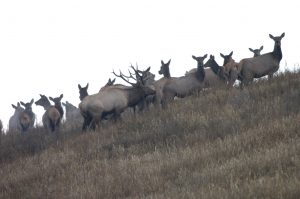
Elk photos from Starfire WMA Oct. 27, 2005. Photos taken by Dave Baker.
The Kentucky Fish and Wildlife Commission modified the elk voucher cooperator and elk restoration permit program and boating regulations at its quarterly meeting Sept. 8.
The Commission recommends all hunting, fishing and boating regulations for approval by the General Assembly and approves all expenditures by the Kentucky Department of Fish and Wildlife Resources. All recommendations must be approved by legislators before they become law.
In wildlife-related business, the Commission proposed modifying the point system used for the Voucher Cooperator Elk Permit and the Elk Restoration Permit programs in an effort to increase landowner participation. Commissioners voted to reduce the number of points needed by participating landowners to receive an elk permit. Commission members also recommended requiring elk guides to report elk wounded by clients.
In other wildlife-related business, commissioners proposed adding a third quota fox hunting field trail at Clay Wildlife Management Area (WMA) in Nicholas County for the last weekend in February. They also recommended changes to testing and permitting requirements for falconry.
In boating-related business, the commission recommended creating a maximum centerline length of 24 feet for monohull boats with seating for at least eight passengers on the following lakes: Guist Creek Lake in Shelby County, Cedar Creek Lake in Lincoln County, Lake Beshear in Caldwell and Christian counties and Lake Malone in Muhlenberg, Todd and Logan counties.
If approved by legislators, the boating regulation proposed at the meeting would take effect March 1, 2018.
The next Kentucky Fish and Wildlife Commission meeting is currently scheduled for 8:30 a.m. (Eastern time), Friday, Dec. 8, 2017. Meetings are held in Frankfort at Kentucky Fish and Wildlife headquarters, 1 Sportsman’s Lane. Commission meetings are open for the public.
 The Kentucky Fish and Wildlife Commission unanimously recommended today that the department increase prices for some resident Kentucky hunting and fishing licenses.
The Commission is the guiding body for the Kentucky Department of Fish and Wildlife Resources. It took the action during its September quarterly meeting. It will be the first resident license price increase in more than a decade, and the first increase of the senior and disabled sportsman’s licenses since their inceptions in 1999.
The Commission recommends all hunting, fishing and boating regulations for approval by the General Assembly and approves all expenditures by Kentucky Fish and Wildlife. All recommendations must be approved by legislators before they become law.
Kentucky Fish and Wildlife relies primarily on license sales and federal excise taxes from the sale of hunting and fishing equipment for its revenue. It does not receive state General Fund money, such as those derived from income taxes or property taxes. The Department manages more than 600,000 acres for public use and stocks nearly 10 million fish each year. Hunting, fishing, boating and wildlife watching generate an estimated $5.9 billion to Kentucky’s economy each year.
The Commission’s recommendation includes resident hunting licenses, fishing licenses, combination hunting/fishing licenses, senior and disabled sportsman’s licenses and joint fishing licenses for spouses.
“Periodic license price increases are necessary to keep pace with inflation and general costs of living,” said Commission Chairman Jimmy Bevins. “We usually project that an increase will last five years, but solid fiscal management historically has allowed us to make them last much longer.”
The Department’s last three resident rate changes happened in 1992, 1999 and 2007. License and permit fees for non-residents increased to help offset rising operational costs in 2014, but resident fees remained unchanged at the time.
Commission members said they took the action to help offset the rising costs of operating the Department’s three summer camps and the Salato Wildlife Education Center. In addition, increased revenue also will be utilized for increased conservation law enforcement efforts across the Commonwealth.
The three summer camps annually graduate more than 5,000 youth. The Salato Wildlife Education Center, located on the main Kentucky Fish and Wildlife campus, hosts more than 50,000 visitors each year.
“These programs are one main reason why Kentucky continues to see robust participation in hunting and fishing despite decreases seen in surrounding states,” said Kentucky Fish and Wildlife Commissioner Gregory K. Johnson. “Our children are our future sportsmen and sportswomen, and our future leaders.
“These license increases help the Department maintain a commitment and solid investment in outdoor education of our youth,” said Johnson. “Revenue also will support a more complete law enforcement presence across the state, and improved law enforcement recruitment and retention.”
“We operate almost entirely from user fees derived from hunting and fishing license sales, and federal excise taxes generated by the sale of hunting, fishing and shooting equipment and ammunition,” said Bevins. “Other Kentucky state agencies are largely funded by General Fund tax dollars.”
“The new rates for residents would not happen until the 2018 license year,” said Bevins, “so that means we will have made our last increase last for 11 years – more than twice the original projection.”
The Commission voted to increase a resident hunting license from its current $20 to $27, a resident fishing license from $20 to $23, a combination resident hunting/fishing license from $30 to $42 and the resident joint fishing license for spouses from $36 to $42.
Currently, the senior and disabled sportsman’s licenses provide $165 worth of licenses and permits for $5. A resident sportsman’s license cost $95.
Under the Commission action, the senior and disabled sportsman’s licenses would increase to $18. In 2007, Kentucky sold 90,184 of these licenses. Kentucky’s aging society caused that number to reach 120,426 by 2016, with that number projected to continue increasing.
“We surveyed senior and disabled license holders across Kentucky and had a strong response,” said Bevins. “Nearly three quarters said they would continue to purchase a license even if it was as much as $20.
“I believe the support from our seniors is a direct reflection of their own memories and experiences,” he said. “They remember when all deer hunting in Kentucky was prohibited prior to 1956 because there were very few deer, and when there were no wild turkey, elk or bears, or fish hatcheries to raise and stock fish.
“Today our fish and wildlife populations are healthy and abundant, and our management program is a national model. Our seniors know better than most that our conservation camps and school programs are helping to leave a better natural Kentucky for their children and grandchildren,” Bevins said.
The city has contracted with the local Falls Art Foundry to remove a vandal’s paint from the Castleman monument in Cherokee Park. The $8,200 contract includes the cost for paint removal and re-waxing of the monument.
Falls Art Foundry is a fine art, lost wax, casting and design facility located in the historic Portland neighborhood. It specializes in the production of expertly crafted bronze sculpture for public, private, gallery and museum presentation, and is a member of The National Sculpture Society and The American Institute for Conservation of Historic and Artistic Works.
A start date has not yet been determined, but once begun, the cleanup is expected to take about one week to complete.
The statue was vandalized on August 13. On August 14, paint removal methods were tested by Metro staff to determine the scope of work that would be required to remove the paint. Metro then consulted specialists with expertise in maintaining bronze sculpture on costs, timing, and methods.
After this vandalism occurred, Mayor Greg Fischer called for a review of the city’s public art inventory to develop a list of public artwork that could be interpreted to honor bigotry, racism and/or slavery. The Commission on Public Art will hold a public meeting on Sept. 6 from 4-7 p.m. in the Old Jail Auditorium (514 W. Liberty) to review and to discuss the artwork it believes merits further discussion and analysis.
Following the Commission’s meeting, the city will lead a public engagement effort to gather further input from the community. No decisions about the future of any public artwork will be made until after this public engagement process is complete.
Citizens may submit thoughts and comments on the city’s public art collection online at https://louisvilleky.gov/government/public-art/public-art-review and through Develop Louisville Facebook and Twitter accounts.
Written comments may also be mailed to Commission on Public Art, 444 S. 5th Street, Suite 600, Louisville, KY 40202.
New information about bear hunting this year in Kentucky is now available through the Department of Fish and Wildlife Resources’ website at fw.ky.gov.
The “Bear Hunting” section of the current Kentucky Hunting and Trapping Guide has been updated online to reflect a host of changes that took effect after the guide went to press earlier this summer. The two-page section also is available on its own through the department’s website.
The changes include the adoption of a three-zone approach to the management of the state’s bear population. Season dates and quotas vary by zone. There is a new muzzleloader season and nonresident hunters can now buy bear permits. Hunters also will find season dates, quotas and a map of the bear zones in the updated section.
Those without internet access can call Kentucky Fish and Wildlife at 1-800-858-1549 from 8 a.m. to 4:30 p.m. Eastern time on weekdays to request a mailed copy of the updated bear hunting section.
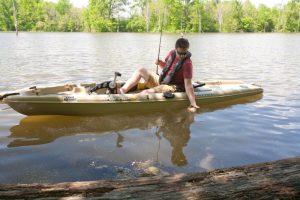
Photo: Kentucky Department Fish and Wildlife
The Kentucky Department of Fish and Wildlife Resources has opened more land for public use.
The properties are in Gallatin, Nicholas, Owen, Pulaski and Wayne counties.
Rockcastle River Wildlife Management Area (WMA) in eastern Pulaski County is the largest of the new WMAs and will offer hunters, anglers and wildlife watchers outstanding recreational opportunities.
The WMA abuts the Daniel Boone National Forest to the south and east. Two areas will remain closed while abandoned gas wells are being permanently sealed along Acorn-Ano Road and Buren Turner Road. No admittance signs, orange flagging and orange paint will mark the off-limits areas.
Visitors to Rockcastle River WMA will find it primarily forested. About 30 percent of the area is open land. Several ponds ranging from half an acre to almost 6 acres are scattered across the property. Daily creel limits on the WMA are 10 bluegill or other sunfish, four catfish, 15 crappie and one bass longer than 15 inches.
Rockcastle River WMA is not listed in the current Kentucky Hunting and Trapping Guide. It will be open for hunting under statewide regulations for squirrel and other game with some exceptions. The modern gun deer season will be open for two consecutive days starting the second Saturday in November. The area will be closed for all muzzleloader deer, grouse and bobwhite quail seasons.
No general fund tax dollars were used in the project.
- Meadow Creek WMA in Wayne County is another new offering in the Southeast Region.
The property is off KY 1619 about 20 minutes northeast of Monticello. The terrain is flat and much of the property is planted with new trees but there are mature woods along the property’s western edge.
Meadow Creek WMA is open for hunting under statewide regulations except the early muzzleloader deer and modern gun deer season are closed.
- Stephens Creek WMA in Gallatin County and a tract at John A. Kleber WMA add more opportunity in the Bluegrass Region.
Stephens Creek WMA is named after the creek that runs along its eastern boundary.
The area is mostly forested and features steep hillsides with some open ridgetops. Offering good populations of deer, turkey and squirrel, it will be open for hunting under statewide regulations, except the modern gun deer and October muzzleloader deer seasons are closed.
No general fund tax dollars were used for the project.
Conveniently situated just off U.S. 127 in southwest Owen County, the tract blends rolling hills and steep wooded hillsides. Cedar stands are interspersed with mixed hardwoods. There are some ridgetop fields and creek bottoms along Gills Branch.
Hunting regulations for the tract will match those in place for the rest of Kleber WMA.
The area boasts a robust deer population, so hunters can expect good deer hunting as well as opportunities for wild turkey. An abundance of oak and hickory trees should lend itself to plenty of enjoyable squirrel hunting. Parking areas are on County Line East Road and Gills Branch Road just off U.S. 127 about 15 minutes north of Frankfort.
- Clay WMA expands with the opening of the Kingsolver tract in Nicholas County. The tract is northeast of Carlisle and about 4 miles by car from the main unit of Clay WMA.
The Kingsolver tract is mostly forested but it also features some open-land habitat. Forested areas will be managed for a mixture of growth stages and beneficial composition with an emphasis on invasive species management. The open land habitat will be managed as early successional old-field habitat.
Hunting regulations for the tract will match those in place for the main tract of Clay WMA. However, it will be open during quota fox hunts and the pheasant hunt.
To reach the Kingsolver tract from Carlisle, follow KY 36 east for 1.5 miles then turn left on Scrubgrass Creek Road. Follow Scrubgrass Creek Road for about 1 mile. From Flemingsburg, follow KY 32 west for about 11 miles. Turn left onto Scrubgrass Creek Road. The property starts ½-mile on the left.
Maps and additional information for these areas and other public lands are available on Kentucky Fish and Wildlife’s website at fw.ky.gov. Click on the “Maps” tab on the department’s homepage and select “Wildlife Management Areas/Public Hunting Areas” from the list of links.
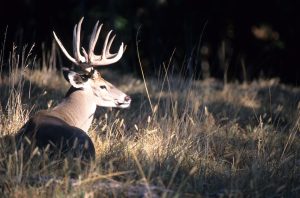 Epizootic Hemorrhagic Disease has been reported in white-tailed deer in several east Kentucky counties. The Kentucky Department of Fish and Wildlife Resources received confirmation from the Georgia- based Southeastern Cooperative Wildlife Disease Study Wednesday morning of a Kentucky deer with a strain of the disease.
“Epizootic Hemorrhagic Disease is not transmittable to people or pets,” Dr. Iga Stasiak, state wildlife veterinarian for Kentucky Fish and Wildlife. “However, we always recommend that hunters avoid eating venison from deer that were obviously sick.”
Epizootic Hemorrhagic Disease (EHD) is a viral disease transmitted to deer through the bite of a midge or gnat. The disease has been present in the United States for more than 60 years. Kentucky Fish and Wildlife receives and confirms EHD deer mortalities sporadically, with a small number of mortalities each year. Larger outbreaks tend occur every 5-7 years. Outbreaks cease at the first frost, which kills the biting bugs.
Gabe Jenkins, big game coordinator for Kentucky Fish and Wildlife, said small outbreaks of EHD also have been reported in the mountainous areas of Tennessee, West Virginia, Pennsylvania, Ohio and Virginia. Kentucky Fish and Wildlife is receiving a growing number of suspected cases.
“We’re monitoring this situation closely,” Jenkins said. “If we receive little rain between now and the first frost, the numbers could increase because deer are drawn to water. Midges breed along mud banks, so drought would concentrate the deer around larger bodies of water and make them more susceptible to infection.”
Deer can exhibit signs of illness within 24 to 72 hours after receiving a bite from an infected midge. Infected deer may appear sluggish and unresponsive to humans. EHD causes dehydration and fever in deer, which causes the animals to seek water. Infected deer are often found dead near bodies of water. Kentucky last had significant outbreaks of EHD in 2007 and 2012.
Anyone who finds a sick deer or a deer they suspect may have died from EHD is encouraged to report the finding to the Kentucky Department of Fish and Wildlife Resources. The department staffs a toll-free number weekdays from 8 a.m. to 4:30 p.m. (Eastern). The number is 1-800-858-1549.
Reports can also be emailed to info.center@ky.gov. Reports should include your name, contact information, county and date the deer was found, number of deer found and whether the deer is sick or recently deceased.
The Kentucky Department of Fish and Wildlife Resources is also urging hunters to report any observations of deer that appear to have died of natural causes.
EHD primarily affects white-tailed deer and is most noticeable during the late summer and early fall (August to October). For more information on this disease, visit the Kentucky Fish and Wildlife website at fw.ky.gov and search under the keyword, “EHD.”
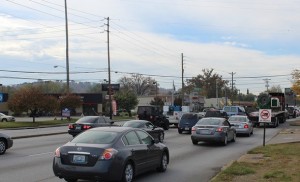
A long-awaited project to make a Watterson Expressway exit safer is underway, making travel into Shively and Dixie Highway more efficient and less hair-raising for drivers and pedestrians.
The construction is the first phase of an accelerated plan to improve safety and traffic efficiency throughout the Dixie Highway corridor – a comprehensive set of projects that will invest more than $50 million along the highway over the next two years in the city’s busiest highway.
Mayor Greg Fischer joined Congressman John Yarmuth and representatives from the Kentucky Transportation Cabinet and Metro Council to announce the beginning of the ramp realignment, and to preview the additional projects that will make the entire highway safer and easier to travel for both drivers and pedestrians.
“Traffic-choking designs like the current exit ramp make it difficult to get to our thriving businesses in south and west Louisville. This realignment will be a relief for every driver who travels in this area,” said Mayor Greg Fischer. “This project is the jump-start for a series of improvements that will transform Dixie Highway and our neighborhoods in the south and west.”
About the realignment project
The current exit from I-264 westbound onto northbound Dixie Highway is short, and funnels directly into Dixie Highway without a designated merge lane or stoplight. Traffic often backs up along the ramp as drivers wait to safely move onto Dixie.
The project will realign the I-264 westbound ramp to Dixie Highway (US31) north into a T-intersection, including a traffic signal to safely move vehicles off the exit. The southbound lanes of Dixie are unaffected by this project. A new sidewalk under the Watterson Expressway will be added later.
“This exit ramp is a white-knuckle journey for drivers, and it’s tricky for northbound Dixie vehicles to navigate as well,” said Matt Bullock, chief district engineer for the Kentucky Transportation Cabinet. “By improving this ramp, we’ll make arriving on Dixie Highway a safer, more welcoming experience for drivers and pedestrians.”
The realignment project will require the exit ramp to be closed for a total of nine consecutive days (including two weekends to limit traffic impacts). The contractor, Milestone, has not yet identified those closure dates. The $724,000 project is scheduled to be completed by November.
“The City of Shively is excited for the project to begin, and we are looking forward to the changes it will create for us and all of Dixie Highway,” said Shively mayor Sherry Conner. “We are thankful for all the support we have received from all parties – whether it was financial or moral, we appreciate it.”
More Dixie improvements to come
The ramp realignment is the first phase of a two-year construction plan for significant improvements throughout the corridor, called the New Dixie Highway Project. Those improvements will fuel transformation of a major economic corridor for southwest and west Louisville.
The New Dixie Highway Project is the first major construction project from Mayor Fischer’s “Move Louisville” initiative.
Fueled by a nearly $17 million federal TIGER grant, the New Dixie Highway Project will include new fiber-linked traffic signals, new concrete and landscaped medians, and a first-in-the-city bus rapid transit line from TARC to run between downtown and the Gene Snyder Freeway.
“The New Dixie Highway project is the largest concentrated investment in Louisville’s transportation network since we began the Ohio River Bridges Project,” Fischer said. “When complete, the new Dixie Highway will be safer for everyone, more efficient for motorists, more reliable for transit users and more enticing for business owners, consumers and investors.”
“This is another important step forward in making Dixie Highway safer and improving the commute for drivers and pedestrians alike,” said Congressman Yarmuth. “Transportation goes hand and hand with economic growth, so I’ll continue to work with federal, state, and local leaders to make sure we pursue every opportunity available to fund these critical projects.”
The project is currently up for bid through the Kentucky Transportation Cabinet, and construction may begin as early as this fall, with completion expected in December 2019.
Find more information about the project at www.TheNewDixieHighway.com or by following Facebook (search for The New Dixie Highway), and on Twitter @NewDixieHighway or Twitter @NewDixieHighway.
