Saturday January 24, 2026
Local Connection
 Weather
 Traffic
 @LouisvilleDispatch
 @LouisvilleDisp
 Subscribe
 It’s an opportunity to clean out the garage, the attic, and the basement of those things that have been collecting dust over the years and get them to a place where someone else might be able to use them, or where they can be safely disposed.
Councilman Bill Hollander (D-9) announces the Annual Responsible Recycling Event set for Saturday May 13th between 9:30am and 12:30pm at the Louisville Water Tower Park, 3005 River Road.
“This is a great way to remove those things in your home that could find new life by being recycled,” says Hollander. “Any Louisville Metro resident can help the environment and a variety of non-profits by simply bringing to one location what you no longer want or use and dropping it off for free.”
The Free Responsible Recycling Event is open to all Louisville Metro residents. It is easy to participate. Just gather what you would like to recycle, then drive up and drop your items off at the appropriate vendor. Businesses will not be allowed to participate at this event. A multitude of items will be accepted for recycling or reuse, including paper for shredding. New this year all items collected at Haz Bin will be accepted, and LMPD officers will be on-site to collect old expired and unused medications.
The following items will also be accepted:
- BATTERIES (rechargeable and non-rechargeable) Please have them separated
- TELEVISIONS (must work and may not be older than 10 years); no console and projection TVs accepted.
- COMPUTERS & ELECTRONICS (terminals, towers, laptops, printers, copiers, fax machines, scanners, VHS/DVD players, stereo, monitors)
- HANDHELD ELECTRONICS (cell phones, cell phone accessories, iPods, tablets, MP3 players)
- HAZARDOUS MATERIALS All items accepted at Haz Bin location – see attached flyer for complete list including oil based & latex paint, household chemicals – MUST have labels and no leaks, no containers larger than 5 gallons)
- HOUSEHOLD BUILDING SUPPLIES (cabinets, doors, flooring, windows, hardware, light/ceiling fans, lumber, roofing, siding, tools)
- HOUSEHOLD FURNITURE must be in good condition (NO mattresses, items with odors, water beds, baby cribs and accessories, entertainment centers, armoires for TVs/computers)
- HOUSEHOLD ITEMS (working appliances)
- MEDICAL SURPLUS ITEMS (walkers, wheelchairs, orthopedic items, diabetic supplies, ace bandages, gauze pads, canes)
- PERSONAL DOCUMENTS (shred on-site paper documents ONLY) Unable to take boxes or plastic bags and they must be taken away by participants.
- SHOES (new and gently used) Must be dry
For a complete list of accepted items, please visit louisvilleky.gov/district9. On the event page is a flyer with 7 attachments with detailed lists of accepted items from each organization.
If you have electronic items that are not accepted during this event, please review “electronics recycling” information on the flyer attachment. Residents may take electronics, including non-working older TVs, to the Louisville Waste Reduction Center, 636 Meriwether Avenue. These will NOT be accepted at the May 13 event.
“We have made it easy to get rid of things people no longer use, with no cost to bring in these items that will benefit others,” says Hollander. “If you have tried to find a way to dispose of those things you have around the house, then I encourage you to take advantage of this event.”
Among the vendors on hand: All-Shred, Commonwealth e-Waste, Habitat for Humanity, Louisville Metro Public Works, Supplies Overseas, and WaterStep.
Visit www.louisvilleky.gov/district9 for more information, or contact Councilman Hollander’s office at 574-1109.
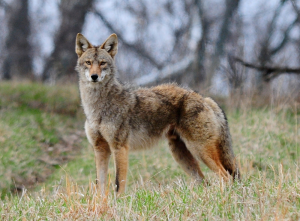
Photo: Kentucky Department Fish and Wildlife
An expansion from its historic range in the interior plains brought the coyote to Kentucky where as recently as the early 1970s sightings of these animals were still considered rare.
Coyotes are now common across the state but their presence in urban and suburban areas can surprise residents.
“People in cities like Los Angeles, Chicago and Denver have grown accustomed to seeing a coyote strolling through a city park,” said Laura Palmer, furbearer biologist with the Kentucky Department of Fish and Wildlife Resources. “In Kentucky, people are still getting used to seeing them in urban areas.”
Reports of coyote sightings in residential areas increase in the spring and early summer as coyotes breed and give birth to pups.
Since total eradication of coyotes is not possible, having a basic understanding about these wild animals, which can range in color from reddish to tan to grizzled gray and black, can ease concerns and limit potential conflicts.
“Coyotes are often misunderstood,” Palmer said. “Most do not bother people. Many times, people do not even know coyotes are living near their homes.”
Coyotes tend to be more active from dusk to dawn when living in close proximity to people. Even in populated areas, nature typically provides ample food. Mice, deer, voles, rabbits, raccoons, fruit and goose eggs can be part of a coyote’s diet.
“Coyotes typically shy away from human activity but they may take advantage of food around homes if natural prey is limiting, a coyote is injured or sick, or young have not learned to hunt effectively,” Palmer said.
Coyotes can lose their fear of humans if conditioned to depend on people for food, and conflicts can arise from people feeding them – either intentionally or unintentionally.
“Do not leave pet food outside and make sure garbage is secured,” Palmer said. “Discourage your neighbors from feeding feral cats, raccoons or coyotes themselves.”
She also recommends bringing bird feeders inside at night and removing seed that has fallen on the ground. Bird feeders attract animals that in turn attract coyotes. Plug any holes under fences, block access to crawl spaces and fence around gardens. Motion-activated lighting around the house can act as a coyote deterrent. Also, consider turning on outside lights and checking the yard for unwanted animals before letting a dog outside at night.
If you are concerned about pets being outside, keep them inside or kennel them when they are unattended, if possible. When walking a dog, use a short, non-retractable leash that is highly visible and vary your walking routine.
A coyote that does not flee upon encountering a person could be sick, injured or habituated to people. Do not panic if you see a coyote or one approaches you, Palmer said.
Coyotes are curious by nature and sometimes follow people or dogs to see what they are doing in their territories or to see that they do not get too close to their dens and pups, she said.
Other suggestions: Don’t approach a coyote or linger to snap photos or take video. Don’t turn your back on a coyote and don’t run. Running away can diminish the coyote’s fear of people and may trigger its chase instinct. Don’t harass a coyote if it is cornered, with pups or seems sick or injured. It’s best to back away slowly or try to scare it away with loud noises. Make yourself look bigger by waving your arms, widening your stance or waving a stick. Take a step or lunge toward the coyote to establish dominance. Throw a rock or a stick in its direction but not directly at it. Pick up small dogs and children. Keep scaring the coyote until it’s out of sight. It’s also a good idea to teach children to recognize coyotes, never approach one and scare them away.
If you happen upon what you suspect is a den, like a hollow tree or brush pile, slowly back away and leave the area. Coyotes are protective of their pups, which stay in the den with the mother for about three weeks and learn to hunt when they are eight to 12 weeks old. Family groups typically break up and disperse in late summer and early fall.
Understanding coyotes can reduce potential conflicts with them.
If your community has a Facebook page, consider sharing tips for coexisting with coyotes and deterring these animals from becoming too bold. One resource Palmer recommends is the website urbancoyoteresearch.com. Kentucky Fish and Wildlife’s website at fw.ky.gov also offers helpful information.
 As part of the 52 Weeks of Public Health campaign, the Kentucky Department for Public Health (DPH), within the Cabinet for Health and Family Services (CHFS), is calling on homeowners to help control mosquitoes by eliminating standing water from containers that can collect rainwater where insects breed.
“Everyone needs to do their part to help reduce the mosquito population,” said Hiram Polk Jr., MD, DPH commissioner. “As we are out in the garden getting ready for the growing season or after a rain shower, spend a moment or two thinking about other potential breeding areas for mosquitoes. Walk around your yard once a week or after a rain shower to see if there are any containers holding water and drain them.”
Female mosquitoes need only a teaspoon of water in which to lay eggs; can become an adult mosquito in just seven days; and have a lifespan of about two weeks. Mosquitoes will lay eggs in almost anything such as a bottle cap, a candy wrapper, folds of a plastic tarp or downspout, discarded tires, children’s toys or the seat of a riding lawn mower. Mosquitoes lay eggs on the walls of water-filled containers and the eggs stick like glue and remain attached until they are scrubbed off. The eggs can survive when they dry out up to 8 months. Once a week, empty and scrub, turn over, cover or throw out containers that can hold water.
Common household items that can be a home for mosquito larvae include buckets, garbage cans, tires, tarps, gutters and flexible downspout extensions, decks and porches, kiddie pools and pool covers, sand boxes, wagons and big plastic toys, planter saucers or planters without drainage holes, wheelbarrows, watering cans, bird baths, decorative ponds without fish and unscreened water barrels.
If you cannot eliminate or drain a breeding ground because it is too heavy to move, consider using a larvacide such as mosquito dunks containing a biological larvacide.
For more information about the mosquito proofing your yard to reduce mosquito populations, see this video featuring Dr. Anna Yaffee, CDC Epidemic Intelligence Service Officer, Kentucky Department for Public Health.
For further information visit the DPH website http://healthalerts.ky.gov/zika or the CDC website at www.cdc.gov/zika. Be sure to follow KYHealthAlerts on Twitter and DPH’s Zika mascot, Marty Mosquito, on Instagram, @martymosquito.
Throughout the planned 52 Weeks of Public Health promotion, DPH will spotlight a specific public health issue. Additional information about the campaign is available on the DPH website: http://chfs.ky.gov/dph/default.htm and will be posted on the CHFS Facebook page: http://www.facebook.com/kychfs where Kentuckians are encouraged to like and share posts among their networks of friends.

Photo: Kentucky Department Fish and Wildlife
The Kentucky Department of Fish and Wildlife Resources is extending the deadline to apply for a 2017 Kentucky elk hunt due to unexpected technical problems with the state-run computer network that processes applications. The deadline to apply for Kentucky’s elk hunts will now close at 11:59 p.m. (Eastern time) Wednesday, May 3.
Kentucky’s online application system shut down at 9:05 p.m. Sunday, April 30. It remained shut down past the midnight deadline for the elk drawing. Kentucky Fish and Wildlife officials extended the deadline for those who were unable to apply in the waning hours of the application period.
Those who applied prior to the network shutdown were not affected.
The application period normally ends at midnight, April 30. However, state regulation allows for this period to be extended if technical difficulties prevent applications from being accepted.
Hunters may apply only online at the Kentucky Fish and Wildlife website – fw.ky.gov. Those who previously applied for an elk hunt may confirm their application by checking the “My Profile” page on the website.
The elk lottery drawing for an elk permit is open to residents and non-residents.
 The Metro Waste Reduction Center at 636 Meriwether Avenue is closed due to equipment problems. We anticipate the facility will reopen on Tuesday, May 9. In the meantime, the following disposal facilities are available:
Rumpke
1101 W Oak St, Louisville, KY 40210
(502) 568-3800
Republic
4446 Poplar Level Rd, Louisville, KY 40213
(502) 638-9000
Waste Management
2673 Outer Loop, Louisville, KY 40219
(502) 966-0272
Anglers with a bit of salt in their hair remember fondly the venerable Sassy Shad, the paddle-tailed, shad-shaped soft plastic wonder that caught practically anything that swims.
In the fishing lure world, what is old oftentimes becomes new again. Over the last decade or so, the soft-plastic swimbait stormed the fishing world, looking remarkably like a Sassy Shad with refinements.
With softer, lifelike soft plastic formulations and more realistic color schemes that closely resemble shad or other baitfish along with salt and scent fused into the lure, the modern swimbait is one of the most versatile lures you can throw.
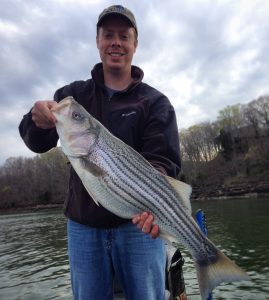
Photo: Kentucky Department Fish and Wildlife
“Anything looking to eat a baitfish will hit a swimbait,” said Chad Miles, host of the “Kentucky Afield” television show and swimbait expert. “I’ve caught everything from crappie to striped bass and all three species of black bass, smallmouths, largemouths and spotted bass on a swimbait.”
Spring through early summer is one of Miles’ favorite times to fish a swimbait for black bass. He had a great trip on Lake Cumberland last spring while filming an episode of “Kentucky Afield.” They caught several quality smallmouth bass, largemouth bass in the 5-pound range and Executive Producer Nathan Brooks caught a 37-inch striped bass.
A 4-inch white and silver swimbait rigged on a 3/8-ounce leadhead fooled them all. They caught most of their fish on secondary points in Difficulty and Harmon creeks.
“The fish are up shallow at this time of year,” he explained. “I downsize the weight of the leadhead to a 1/4-ounce and use no heavier than 3/8-ounce. You do not make a big splash on the cast with a lighter leadhead. It also allows you to keep the lure from getting hung on the bottom.”
Employ a steady retrieve and work a swimbait down sloping banks that fall off into deep water or across points in spring through early summer. These areas draw shad and other baitfish, what the swimbait emulates.
“The good thing about a swimbait is you can adjust your depth and speed, which you really can’t do with a crankbait,” Miles explained. “It is all about getting the right speed on the retrieve and adjusting it according to the aggressiveness of the fish.”
On deeper lakes, such as Dale Hollow, Lake Cumberland and Laurel River Lake, Miles used a nose-weighted swimbait hook and a solid body swimbait for bass. He rigs these swimbaits hook exposed, the way most anglers used to rig a Sassy Shad.
“I use the belly-weighted wide gap swimbait hook and a hollow body swimbait for shallow lakes with more cover such as Kentucky Lake or Lake Barkley,” Miles said. “This setup is weedless and works great over weedbeds or through cover for bass.”
In clear water, the natural shad color is hard to beat for swimbaits. White with silver flakes is also a good color. “In stained water, I like swimbaits with some chartreuse or orange in them,” Miles said. “In murky to muddy water, I don’t throw a swimbait. They are other lures much more effective than a swimbait in those conditions.”
Miles said resisting the temptation to set the hook when you first feel a bite is the most important aspect of fishing a swimbait. “Keep reeling through the strike and let the rod load up a bit before setting the hook,” he said. “If you set the hook immediately, you are pulling the swimbait away from the fish.”
A medium to medium-heavy power fast action baitcasting outfit spooled with 10- to 12-pound fluorocarbon line works well for handling swimbaits.
“You are throwing a good amount of weight with a swimbait,” Miles said. “You need a rod that can handle it.”
As the days lengthen and the water warms, Miles works 5- to 6-inch swimbaits over channel breaks, ledges and submerged humps just above the thermocline for big largemouth bass on Kentucky Lake and Nolin River Lake.
“The swimbait works well in summer for suspended bass that are hard to catch on anything else,” Miles said. He counts the swimbait down in the water column over likely fish holding structures such as ledges, humps or points that extend out into the lake. He retrieves his swimbait deeper on each cast until he finds fish.
In summer, anglers on lakes with flooded timber such as Lincoln County’s Cedar Creek Lake do well working swimbaits slow and deep for largemouth bass suspended in the flooded timber.
After the weather turns cold in fall, Miles falls back to fishing 3-inch swimbaits in the natural shad color for smallmouth and spotted bass.
You can watch Miles employ his excellent swimbait techniques on a productive spring day on Lake Cumberland from a segment filmed last April by clicking on the KY Afield tab at the top of the Kentucky Fish and Wildlife homepage at www.fw.ky.gov. Once on the “KY Afield” page, click on the link “Visit our Youtube channel,” then type “Fishing with Swimbaits on Lake Cumberland” in the search bar.
 Kentucky students and teachers were recognized April 27 for their accomplishments at the Kentucky Green and Healthy Schools (KGHS) program and the Kentucky National Energy Education Development (KY NEED) Project’s 10th annual Youth Summit and Awards Luncheon in Frankfort. KGHS is a program of the Kentucky Environmental Education Council (KEEC).
The event recognized students and their outstanding projects in promoting school and community health and environmental sustainability. Examples of student projects included: worm composting at Providence Montessori Middle School; updating an outdoor classroom with benches made of recycled plastic caps at Morton Middle School; and teaching peers about healthy eating choices at Kit Carson Elementary School. In the morning, students showcased their energy, health and sustainability school projects to their peers, teachers and leaders in education, industry and environmental fields. Kentucky Education Commissioner Dr. Stephen Pruitt was the event’s featured speaker.
More than 200 students and teachers participated and were recognized for their efforts. Carla Trisko of Morton Middle School in Fayette County was recognized as the KGHS Teacher of the Year. Additional KY NEED schools were also honored for their projects.
“We are extremely proud of the schools that completed KGHS projects. The students, with the support of their teachers, have made significant improvements to the environment in a variety of ways,” Billy Bennett, executive director of KEEC in the Kentucky Education and Workforce Development Cabinet. “We are also grateful to Commissioner Pruitt for speaking and taking part in today’s celebration of their efforts.”
The following eight KGHS schools received awards:
Kit Carson Elementary School in Madison County
Lloyd Memorial High School in Kenton County
Morton Middle School in Fayette County
Providence Montessori Middle School in Fayette County
Redwood Cooperative School in Fayette County
Pikeville High School in Pike County
Virginia Chance School in Jefferson County
West Hardin Middle School in Hardin County
For more information about KGHS, please visit http://greenschools.ky.gov/Pages/default.aspx.
