Tuesday December 16, 2025
Local Connection
 Weather
 Traffic
 @LouisvilleDispatch
 @LouisvilleDisp
 Subscribe
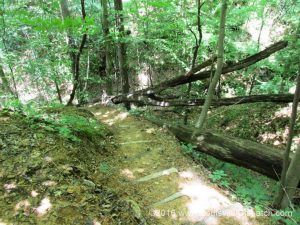 Romantic Valentine evenings await on February 13 and 14 at Jefferson Memorial Forest. For only $35, couples will be treated to a romantic candle-lit hike that ends with a view of Louisville’s lights from the scenic Manor House, where couples will enjoy hot beverages, rich hors d’ouvres and desserts, and the cozy warmth of a hearth.
“The natural beauty of Jefferson Memorial Forest is a great fit with Valentine’s Day,” said Rebecca Minnick, Program Manager at Jefferson Memorial Forest. “Couples can have a romantic evening by taking a stroll through the woods, then relaxing in front of the fire. We have many couples who have made this part of their Valentine tradition.”
Jefferson Memorial Forest is located near Fairdale, just 15 minutes from downtown Louisville. The evening begins at 7:00 p.m. and is expected to wind up by 10 p.m. The hike is on flat terrain, but closed-toe shoes with tread are recommended. Couples are also invited to bring flashlights to the hike for added visibility along the trails. Hikes meet in the Horine Reservation main parking lot at 12304 Holsclaw Hill Road, Fairdale KY.
To Register
Reservations must be made by Tuesday, February 7th. Call (502) 368-5404 or email the Forest at forest@louisvilleky.gov. In case of inclement weather, those registered should call the 368-5404 number for cancellation information.
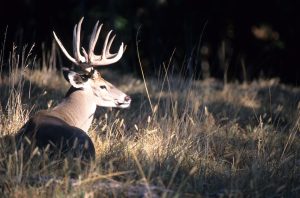 It’s often said these are the good old days for deer hunting in Kentucky, but for those of a certain age, or new to hunting, it’s all they have ever known.
The world was tip-toeing into a new millennium the last time Kentucky’s deer harvest did not break 100,000 for a season. The 2016-17 season cleared that mark and surpassed 130,000 for the fifth consecutive season.
Hunters combined to take more than 139,000 deer before the book closed Jan. 16 on one of the three best seasons on record in Kentucky. The only seasons with higher harvest totals were the 2013-14 and 2015-16 seasons.
“We’ve been harvesting a lot of deer and that’s a reflection of how many deer we have on the landscape,” said Gabe Jenkins, big game program coordinator with the Kentucky Department of Fish and Wildlife Resources. “The good thing is our quality is still up. I’ve talked to a lot of folks who saw a lot of nice deer harvested this season.”
The 2015-16 season produced new records at nearly every turn, including the overall harvest record. Archery hunters kept the trend going this past September by starting the 2016-17 season with a record opening weekend.
A slowdown ensued as unseasonably warm temperatures set in. High winds, an ample acorn crop and a full moon added to the challenge for early muzzleloader season in mid-October and the two-day take was down sharply from the previous year.
Cooler temperatures arrived for modern gun season in November and coincided with the peak of breeding activity across the state.
Hunters responded by checking 41,796 deer the first weekend of modern gun season and 102,848 for the modern gun season overall. Both figures were the second highest on record behind the 2015-16 season.
“I think the warm weather possibly shifted some early season hunters to later,” Jenkins said. “I’ll have to look at that when I start digging into the numbers. I would venture to say that a lot of folks who normally take deer in September and October didn’t and waited until November.”
For the first time in 18 seasons, Owen County did not lead the state in the number of deer taken. Pendleton County finished ahead of it.
Harvest totals in the northern Kentucky county have been on the upswing for several seasons, and the recent results bring added attention to the fact. Hunters there reported taking more than 3,200 deer this past season. Owen, Crittenden, Graves and Christian counties completed the top-five.
Hunters took more than 5,500 deer on public lands across the state, according to telecheck harvest results. Two areas of interest entering this past season were Big Rivers WMA and State Forest in Crittenden and Union counties and the new Rolling Fork WMA in Nelson and LaRue counties.
Kentucky Fish and Wildlife debuted a first-of-its-kind quota hunt for archery and crossbow deer hunting this past season at Big Rivers, which expanded in 2016 with the addition of the 841-acre Jenkins-Rich tract in Crittenden County.
“It was a pretty big move for us,” Jenkins said. “When we looked at this one, it wasn’t people shooting five or six deer. It was one person coming and shooting one deer, and it was a lot of people doing that. So it was strictly a numbers game.”
The action achieved the intended result: the deer harvest on Big Rivers was reduced by 38 percent this season.
Rolling Fork WMA came online this past September and allows modern gun hunting for deer. Of the 27 deer taken with a modern gun on the area, 19 were bagged on the more rugged LaRue County side of the property. A total of 32 deer – 15 male, 17 female – were taken on the WMA across all seasons.
Hunters reporting their harvest to Kentucky Fish and Wildlife through the telecheck process this past season were asked for additional information if they were checking male deer with or without antlers. Their answers will help biologists.
“We will be able to get a better feel for age-at-harvest more than we ever have,” Jenkins said. “It will allow us to analyze how we’ve been estimating in the past through our collections in the field compared to what our hunters are reporting. It will be beneficial to make those comparisons.”
Hunters who took a trophy deer this past season are encouraged to submit the necessary information for recognition in the trophy deer list that will appear in the next Kentucky Hunting and Trapping Guide. The deadline for submissions is May 1.
To be eligible, a hunter must have taken a white-tailed deer in Kentucky this past season that net scored 160 or higher typical or net scored 185 or higher non-typical going by the Boone and Crockett scoring system. The completed and signed score sheet along with a photo should be sent to Kentucky Hunting and Trapping Guide, #1 Sportsman’s Lane, Frankfort, KY 40601. Include the county in which the deer was taken and the equipment used to harvest the deer. Emailed submissions to info.center@ky.gov also are accepted.
Plans were filed last week for a $5 million redevelopment of Colonial Gardens in south Louisville.
The adaptive reuse project includes renovating the 7,000-quare-foot historic Colonial Gardens building, as well as adding two new, one-story buildings that will share a common patio and garden area.
Citizens sought successfully to designate the iconic Colonial Gardens building, located across from Iroquois Park, as a local landmark in 2008. The city purchased the property in 2013 to help foster its commercial redevelopment.
The site’s developer, Underhill Associates, is in talks with local restaurant groups to occupy the space on the corner of Kenwood Avenue and New Cut Road.
“Redevelopment will establish Colonial Gardens as a key anchor to south Louisville and Iroquois Park once again,” said Mayor Greg Fischer. “I applaud our south Louisville Metro Council members and Underhill Associates for their commitment to making this project a success.”
Construction is expected to begin on the property in mid- to late spring 2017.
To view renderings of the project provided by Architectural Artisans, visit http://portal.louisvilleky.gov/codesandregs/permit/detail?type=URBAN&id=17COA1007
Metro Council comments:
Metro Council President David Yates, District 25: “Too long has this historic site sat vacant. I look forward to the day when the people of south Louisville can again take pride in Colonial Gardens and the economic impact it will bring to our community.”
Councilwoman Marianne Butler, District 15: “The development of the Colonial Gardens corner not only improves the quality for life for residents, it also enhances your experience when you attend a show and/or movie at the amphitheater, and will spur development all along the corridor. I applaud and thank the Underhills for investing in south Louisville!”
Councilman Dan Johnson, District 21: “The restoration and reopening of Colonial Gardens is a top priority of mine, and I look forward to continuing my work with the administration to ensure this project is successful. When it opens, Colonial Gardens will not only restore a historic piece of the neighborhood, it could be the economic spark I have long advocated for in this area.”
Councilwoman Vicki Aubrey Welch, District 13: “It is so exciting that we are finally moving forward at this historical site, bringing long-awaited restaurants and jobs adjacent to Iroquois Park. My hope is that this will also spur other economic development along the New Cut/Taylor Boulevard Corridor.”
Councilman Rick Blackwell, District 12: “The combination of the re-vamped Colonial Gardens across from one of the city’s greatest concert venues, Iroquois Amphitheater, will be a win for south Louisville. This is another example of the positive momentum we have in the south and southwest, and we are excited to welcome people from all across Metro Louisville to see what we have to offer.”
The Louisville/Jefferson County Environmental Trust is hosting a workshop on land stewardship issues on Saturday, February 4, 2017 at Historic Locust Grove, 561 Blankenbaker Lane.
The U.S. Fish & Wildlife Service, the Nature Conservancy and others estimate that the annual cost of invasive plants and animals to the U.S. economy is $120 billion a year, with over 100 million acres (an area roughly the size of California) suffering from invasive plant infestations.
Compounding the problem is that these harmful invaders spread at astonishing rates. Such infestations of invasive plants and animals can negatively affect property values, agricultural productivity, water quality, public utility operations, tourism, outdoor recreation, and the overall health of ecosystems.
Kentucky and Louisville have their share of invasive plants which are evident essentially anywhere there is a patch of dirt – parks, school yards, street and highway rights-of-way, private yards, and vacant lots. The workshop will take a look at the problem and how various agencies, nonprofit organizations and individuals are addressing it.
Who should attend this workshop?
“Whether the land you care about is a small residential yard in the city, a suburban lawn, a working farm, a scenic estate or a public park, chances are there are invasive plants that detract from the ecological and historic integrity of the land. It can be a daunting task to tackle an invasive plant removal and landscape restoration project. This workshop will give you the resources, knowledge and inspiration to get started,” said Lisa Hite, planning manager for Louisville Metro Parks and Recreation.
Speakers will report on the latest research, lessons learned and future plans for invasive plant management, ecological restoration, healthy tree canopy and historic landscape management in Louisville’s Olmsted Parks, Locust Grove, the Jefferson Memorial Forest and other Metro Parks and Recreation Natural Areas, Bernheim Arboretum and Research Forest, the Parklands of Floyds Fork, Beargrass Creek State Nature Preserve, the Lower Howard’s Creek Nature and Historic Preserve in Clark County as well as several private properties.
All sessions will include discussion and practical considerations for landowners who have questions about how to improve their own piece of the earth or those who want to help the on-going work in public parks and preserves.
Cost of the workshop is $35 for regular attendees and $15 for students and includes a box lunch. Reservations are required by January 30. To download the registration form, click here. Please call (502) 574-PARK (7275) or e-mail brandi.hornbuckle@louisvilleky.gov for more information.
The Kentucky Department for Public Health (DPH), within the Cabinet for Health and Family Services (CHFS) is raising the influenza (flu) level in the state from “regional” to “widespread.” Widespread activity is the highest level of flu activity, which indicates increased flu-like activity or flu outbreaks in at least half of the regions in the state.
“With widespread flu activity reported in Kentucky, now is a good time to protect yourself and your family by getting a flu shot”, said Hiram C. Polk, Jr., M.D., commissioner of DPH. “We urge anyone who hasn’t received a flu vaccine, particularly those at high risk for complications related to the flu, to check with local health departments or other providers.”
The Centers for Disease Control and Prevention (CDC) Advisory Committee on Immunization Practices recommends flu vaccine for all individuals six months of age and older. However, the nasal spray flu vaccine should not be used because it has been shown to be ineffective. People who are strongly encouraged to receive the flu vaccine because they may be at higher risk for complications or negative consequences include:
• Children age six months through 59 months;
• Women who are or will be pregnant during the influenza season;
• Persons 50 years of age or older;
• Persons with extreme obesity (Body Mass Index of 40 or greater);
• Persons aged six months and older with chronic health problems;
• Residents of nursing homes and other long-term care facilities;
• Household contacts (including children) and caregivers of children aged ≤59 months
(i.e., aged aged • Household contacts and caregivers or people who live with a person at high-risk for complications from the flu; and
• Health care workers, including physicians, nurses, and other workers in inpatient and
outpatient-care settings, medical emergency-response workers (e.g., paramedics and
emergency medical technicians), employees of nursing home and long-term care
facilities who have contact with patients or residents, and students in these professions
who will have contact with patients.
Adequate supplies of flu vaccine are available for this year’s season. Vaccinations can be given any time during the flu season. The flu activity level is tracked weekly as part of the CDC national flu surveillance system.
“You should also follow the advice your parents gave you to prevent flu and other illnesses that tend to circulate at this time of year – wash your hands frequently, cover your mouth when you cough or sneeze and stay home when you’re sick,” concluded CHFS Secretary Vickie Yates Brown Gilsson.
Infection with the flu virus can cause fever, headache, cough, sore throat, runny nose, sneezing and body aches. Flu can be very contagious. For more information on influenza or the availability of flu vaccine, please contact your local health department or visit http://healthalerts.ky.gov.
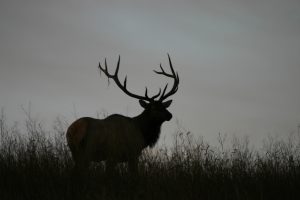 The Kentucky Fish and Wildlife Commission took another step toward its goal of increasing Kentucky’s elk population at a faster rate by proposing hunting season modifications and setting season dates at its Jan. 6 special-called meeting.
The commission recommends all hunting, fishing and boating regulations for approval by the General Assembly and approves all expenditures by the Kentucky Department of Fish and Wildlife Resources. All recommendations must be approved by legislators before they become law.
Kentucky’s free-ranging elk population is the nation’s largest east of the Rocky Mountains, but the commission is taking strides to grow it faster as a way to create more recreational opportunity.
The commission moved to compress the state’s hunting season by ending the season December 31. In doing so, it proposed moving Cow Firearms Hunt 2 (second week) from January to December immediately after Cow Firearms Hunt 1.
The commission also proposed the 2017 elk season dates:
Bull Archery:
Sept. 16 – 29; Oct. 14 – Dec. 8; Dec. 23 – 31
Bull Crossbow:
Sept. 23 – 29; Oct. 14 – Dec. 8; Dec. 23 – 31
Bull Firearms 1:
Sept. 30 – Oct. 6
Bull Firearms 2:
Oct. 7 – 13
Cow Archery and Crossbow:
Oct. 14 – Dec. 8; Dec. 23 – 31
Cow Firearms 1:
Dec. 9 – 15
Cow Firearms 2:
Dec. 16 – 22
The next regular Kentucky Fish and Wildlife Commission meeting will be 8:30 a.m. (Eastern time), Friday, March 17, 2017. Meetings are held at Kentucky Fish and Wildlife headquarters, located at 1 Sportsman’s Lane off U.S. 60 in Frankfort.
Metro Solid Waste Management Enforcement employees have acted and the first vehicle of 2017 caught in photographs illegal dumping has been impounded in the Portland Neighborhood.
Crews were able to locate this Ford Ranger pickup truck that was photographed on December 10th by one of the department’s surveillance cameras in the 3000 block of Bank Street.
“I applaud the employees of Solid Waste Management for their dedicated efforts to enforce the ordinance we passed on the Metro Council to impound any vehicle found illegally dumping on our streets and alleys,” says Councilwoman Cheri Bryant Hamilton (D-5), who represents the Portland area.
Solid Waste Enforcement tracked the vehicle down January 6 and had it impounded. The owner was fined $500 plus a $250 cleanup fee and an impound fee of about $250.
“The Metro Council continues to send a strong message that Solid Waste Management continues to enforce. To anyone who decides to illegally dump in Metro Louisville, you will be caught and it will be costly,” said Hamilton.
Some cameras were purchased with D5 Neighborhood Development Funds and are dedicated to sites in District 5. The cameras are moved periodically within the district so potential illegal dumpers should be aware that they too may be caught