Monday February 2, 2026
Local Connection
 Weather
 Traffic
 @LouisvilleDispatch
 @LouisvilleDisp
 Subscribe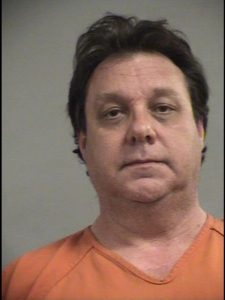
Photo: Attorney General Beshear’s Office
Attorney General Andy Beshear and his Cyber Crimes Unit today announced a Jefferson County man has been arrested for allegedly seeking sex with a minor.
Robert L. Tomlinson, 55, of Louisville, has been charged with one count of prohibited use of an electronic communication system for the purpose of procuring a minor for a sex offense, a Class D felony.
According to Beshear’s cyber investigators, Tomlinson became the subject of an investigation after seeking sex with a minor and asked for sexually explicit photos of a minor.
Beshear’s cyber investigators arrested Tomlinson April 5 in Louisville with the assistance of Louisville Metro Police and the United States Secret Service Electronic Crimes Task Force.
The work of the AG’s Cyber Crimes Unit, a division of the Department of Criminal Investigations, is part of Beshear’s core mission to keep sexual predators away from Kentucky’s families and children.
“The Attorney General is the chief advocate and protector of Kentucky families, and my office’s job is to ensure our communities are safe by taking off the streets anyone who would exploit children,” Beshear said. “I want to thank our cyber investigators, Chief Conrad and his officers, and the Secret Service for working on this case.”
Beshear’s work to prevent child abuse led to nearly 80 arrests, indictments and convictions of online child predators in 2016.
Tomlinson was transported to Louisville Metro Corrections where he remains on a $10,000 full cash bond. He is scheduled to appear in court April 14.
Beshear’s Cyber Crimes Unit partners with federal, state and local agencies to further their ongoing efforts in Operation Shielded Child, which targets those who would seek out children for sexual exploitation and those who promote the ongoing proliferation of child pornography.
 Secretary of State Alison Lundergan Grimes on Tuesday participated in the dedication of a memorial monument honoring fallen military service members and their families. Grimes and other state and city leaders led the ceremony to unveil the Gold Star Families Memorial Monument at Veterans Park in Lexington.
“Today, we honor the ultimate sacrifice of men and women who stood up and served courageously so that we could live freely,” said Grimes. “And we know that not only have these individuals sacrificed, but so have their families. For that, we are eternally grateful.”
The monument is the 18th of its kind in the nation and the third in Kentucky. The Hershel “Woody” Williams Congressional Medal of Honor Education Foundation assists communities in raising funds and establishing the monuments, including Lexington’s. Williams joined Grimes in the dedication.
As Secretary of State, Grimes has been a steadfast advocate for active military and veterans. Her recommendations to improve military voting resulting from a trip to the Middle East were made law as the first-ever Military Heroes Voting Initiative. The initiative led to a nationally-recognized portal which has successfully assisted thousands of Kentucky military and overseas citizens to cast ballots in elections.
In 2014, Grimes helped several veterans and advocates establish the Kentucky Veterans Hall of Fame, which honors Kentucky military veterans who have demonstrated exemplary military service as well as military/civilian service to their communities, state, and nation.
Grimes recently pushed for “Boots to Business” legislation in Kentucky’s General Assembly to help veterans start and grow businesses in Kentucky.
“As long as I am able, I will be fighting for those who have fought for us and the families of those who have died for us,” Grimes said.
 Kentucky students are much more media literate than they are given credit for, said Bighill media artist Bob Martin. Martin is a teaching artist in the media arts category in the Kentucky Arts Council’s adjudicated Teaching Artists Directory.
“They want to be witnessed. They have a lot to offer regarding how they see our society,” Martin said. “Just about every young person has a camera in their pocket. Storytelling through social media is a wonderful opportunity to engage them.”
Those opportunities will become plentiful with more media artists to share their knowledge and experience, he said. To achieve that, the arts council is looking for media artists to add to the council’s Teaching Artists Directory.
“Media, by definition, is the plural of medium, and it’s through using multiple media that are evolving, adapting and unfolding that we get our stories across,” Martin said. “It’s up to us to fill the need of students for media art instruction, and help young people engage critically with art through media.”
Martin, who works regionally in theater and film, has been a teaching artist in the directory for about three years. Bringing media arts lessons to Kentucky students through the residencies offered through the arts council’s Teaching Art Together program is a source of satisfaction for him, and he said he thinks his fellow media artists will find the same level of fulfillment.
“I believe in the state creating spaces for artists to be able to make a difference in their communities as performing or teaching artists,” Martin said. “It’s a valuable use of state resources to say we value artmaking, creation and creative visioning as an investment strategy. I appreciate participating in that.”
The application deadline for the Teaching Artists Directory is April 13.
For more information or to apply, visit the Teaching Artists Directory program page of the arts council website, or contact Jean St. John, arts council education director, at jean.stjohn@ky.gov or 502-892-3124.
The Kentucky Arts Council, the state arts agency, fosters environments for Kentuckians to value, participate in and benefit from the arts. Kentucky Arts Council funding is provided by the Kentucky General Assembly and the National Endowment for the Arts.
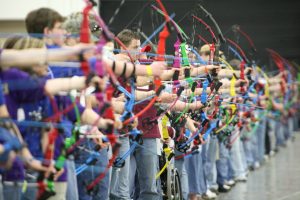 Trigg County High School emerged from the largest field in the 16-year history of the National Archery in the Schools Program (NASP) Kentucky state tournament to win the team competition on April 1 at the Kentucky Exposition Center in Louisville.
The two-day event drew a record 6,071 students from 295 schools across the state.
“The tournament was awesome,” said Lisa Frye, state NASP coordinator for the Kentucky Department of Fish and Wildlife Resources. “Over 6,000 smiling faces participating in a culminating event showcasing the skills they learned as part of their in-school NASP program. For most archers, it isn’t about competition. It’s all about participating together in a common sport.”
Elementary, middle and high school student archers competed for individual and team honors. After practice rounds, each competitor shot 15 arrows from 10 meters and 15 arrows from 15 meters for a total possible score of 300 points.
Lincoln County High School junior Roby Mullins won the boys’ overall title with a score of 298 and Hancock County High School sophomore Kayla Woodward won the girls’ overall title with a score of 296.
Trigg County’s overall team title was its fifth in the past six NASP Kentucky state tournaments. Madison Central High School and Lafayette High School finished second and third behind the Arrowcats in the high school division.
Pulaski Northern Middle School won the middle school division and Morgantown Elementary placed first in the elementary school division.
The top 10 seniors in the boys’ and girls’ divisions received $1,000 scholarships to apply to any post-secondary education.
Complete state tournament results are available online at nasptournaments.org. Click on “Tournaments” then select “Kentucky” and “Completed This Season” from the dropdown menus.
The next step for many of the archers who competed in the state tournament is the 2017 NASP Nationals scheduled May 11-13 at the Kentucky Exposition Center.
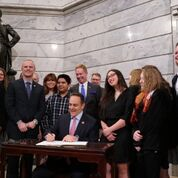
Last week, Gov. Matt Bevin ceremonially signed two pieces of recently enacted legislation that will improve the lives of children removed from their homes because of abuse or neglect.
House Bill 180 allows youth to be temporarily placed with non-relative adults who already have a significant emotional relationship with the child. House Bill 192 allows foster children to obtain their learner’s permits and driver’s licenses without the signature of their parent or guardian.
 “These new laws will help to restore some much-needed normalcy to the lives of Kentucky foster youth,” said Gov. Bevin. “But today is about more than simply restoring normalcy. It’s about respect. It’s about dignity. And it’s about creating opportunity.”
Rep. Addia Wuchner, chairwoman of the House Health and Family Services Committee and primary sponsor of HB 180, noted that her bill provides adults with a family-like relationship to children the chance to play a larger role in their lives and gives the Cabinet for Health and Family Services (CHFS) and the courts another—less traumatic—option when children have to be removed from their homes.
“We all grew up with someone—a coach, a neighbor, a teacher, a friend’s parent or neighbor whose positive influence on us helped to guide us into maturity,” said Rep. Wuchner. “Sometimes those individuals are just like family and the closest thing to parents that kids have. In circumstances when a child is removed from a home, they can be a saving grace—a stabilizer that keeps a child from entering foster care and a series of tough transitions. ‘Fictive kin,’ as they are called, can be lifesavers. I am extremely proud that Gov. Bevin has such a commitment to Kentucky’s children, and I appreciate his support in signing this bill into law and his efforts to strengthen all families of the Commonwealth.”
Rep. Larry Brown, who was primary sponsor of HB 192, said that for too long, learning to drive has been one of many obstacles foster children face.
“At the point they are in out-of-home care, foster children have gone through so much trauma,” said Rep. Brown. “This new law will make life easier for them as they can apply for their driver’s licenses just like any other teenager. Foster kids have been asking for this for years. Thankfully, this legislature and this administration are listening to them.”
CHFS, the agency that administers the state’s adoption and foster care programs, says that almost 8,000 children are in state custody; and of these, more than 6,000 are in a foster care placement.
Cabinet Secretary Vickie Yates Brown Glisson noted that these new laws are part of the state’s overall commitment to transforming adoption and foster care programs.
“Gov. and First Lady Bevin are leading the charge to make life better for vulnerable children in Kentucky,” said Sec. Glisson. “We are truly all working together as a team to ensure all children in the Commonwealth are safe, cared for and loved.”
Glenda Wright, a former foster child and current president of Voices of the Commonwealth (an advocacy group of both present and former foster youth) said that she knows firsthand the struggles to fit in as a foster child.
“As a child without a permanent family, you already feel remarkably different from the other kids,” said Wright. “These new laws can give children in out-of-home care both the sense of security that comes from a loving home and the promise of independence that comes with growing up. I appreciate Gov. Bevin and the legislators who made these new laws a reality.”
Gov. Bevin has pledged to improve the state’s adoption and foster care system by mobilizing a network of nonprofits, faith-based organizations and loving families through his “Open Hearts/Open Homes” initiative.
For details about how you can become a foster or adoptive parent or to obtain general information, please visit adopt.ky.gov or contact the Commonwealth at openhearts@ky.gov or 1-800-232-KIDS (5437).
Now that the Kentucky-based teams are no longer in the NCAA basketball tournament, the Final Four isn’t nearly as exciting, and somewhat depressing, to watch.
The best cure for any bruised feelings left by March Madness is to get out in early April and chase largemouth bass. A huge largemouth bass shaking its head vigorously trying to throw your white spinnerbait soothes any broken basketball heart.
Water temperatures range from 52 degrees at Lake Cumberland in the east to 58 degrees on Kentucky Lake in the west. In other words, it is prime time.
“With water temperatures in the mid-50s, the big female largemouth bass are staging,” said Jeff Ross, assistant director of Fisheries for the Kentucky Department of Fish and Wildlife Resources. “They are moving from their deeper winter locations to spawning locations in the shallows. They definitely work their way shallow in stages, but a cold front can push them back for a short period.”
At this time of year, the male largemouth bass move shallow first to build nests, followed by the female bass to lay their eggs.
“Recently, I caught a lot of largemouth bass, but they were all small male bass,” said Easton Copley, aquatic education program coordinator for Kentucky Fish and Wildlife. “When you look at their lips, they were roughed up and bloodied. They looked like they had lipstick on them from making spawning beds.”
Copley recommends looking for those staging areas to catch the large female largemouths. Female largemouth bass stage where large mud flats drop-off into deeper water. This is especially true on smaller state-owned lakes.
“At this time of year, I am not looking for numbers of bass,” Copley explained. “I am fishing for big females.”
Ross said to hit the secondary points or ledges near shallow water on the larger reservoirs, such as Kentucky Lake or Barren River Lake. “When the females hit those secondary points in spring, they are pretty close to spawning,” he said.
Copley said when water temperatures climb to 60 degrees, the larger female bass move into their shallow water spawning areas. “I look for rocky banks and transitional banks from rocky to mud,” he said. “If you can find a laydown tree on this kind of bank, all the better.”
Copley throws a variety of lures when spawning bass are up shallow. “I’ve caught a lot of bass on a square-billed crankbait in the Sexy Shad color,” he said. “I also catch quite a few on jigs. Black and blue is my go-to jig color for lakes with some color to the water. In clear water, I like the Cumberland Craw color for my jigs at this time of year.”
White spinnerbaits with a white and chartreuse trailer also draw strikes from shallow spring largemouth bass.
“When the bite gets tough, I pull out a Shakey head with a black and blue 7-inch straight-tailed worm,” Copley said.
Anglers who plan to release their catch need to release the female largemouth bass back to the same area during the spawn. “Take a photo and get them back in the water as soon as possible so they can get back to their spawning,” Copley said. “They are full of eggs.”
Kentucky anglers have oodles of options to catch spring largemouth bass. Check the 2017 Fishing Forecast
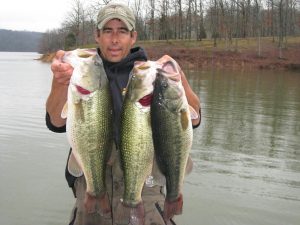
Photo: Kentucky Department Fish and Wildlife
for productive largemouth bass lakes near you.
Copley’s favorite lake is south-central Kentucky’s Green River Lake. He also likes 784-acre Cedar Creek Lake in Lincoln County. “Guist Creek Lake near Shelbyville has lots of big fish, but can be tough to fish because of high fishing pressure,” he said.
Kentucky Lake and Lake Barkley ranked number 4 in the Southeast Region for 2016 on Bassmaster Magazine’s Best Bass Lakes in the Country rankings. These lakes offer arguably the best chance in Kentucky to catch largemouth bass 4 pounds and larger
“We have many lakes where you don’t need a 20-foot bass boat to catch a big bass,” Ross explained. “Our smaller state-owned lakes, such as Kincaid Lake in northern Kentucky and Lake Malone in western Kentucky, are trophy largemouth bass lakes. Both of these lakes have excellent facilities for anglers at Lake Malone State Park and Kincaid Lake State Park. Beshear Lake, mainly located inside Pennyrile State Forest in western Kentucky, is always a big bass producer. Cranks Creek Lake in southeastern Kentucky also has some huge bass in it.”
The Final Four may be a bummer for Kentuckians this year, but warm days and trophy largemouth bass will put the NCAA tournament in the rearview mirror.
Remember to buy your 2017-2018 fishing license if you haven’t already.
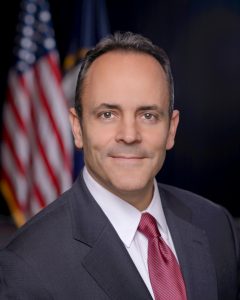 On Monday, Gov. Matt Bevin restored the right to vote and hold public office to certain offenders who have completed their respective sentences and have applied for restoration of their civil rights.
The orders exclude individuals convicted of violent or sex crimes, bribery or treason.
“We have always been a nation of second chances,” said Gov. Bevin. “The criminal justice system should not exist solely to punish offenders, but also to rehabilitate and assimilate them back into society. Through this executive action, we are empowering men and women with the opportunity to become contributing members of our communities. Restoring the voting rights of certain low-level offenders is a significant step towards achieving this goal. There will be many more such opportunities granted in the months and years ahead.”
While the orders restore the right to vote and hold public office, they do not restore any other civil right, including but not limited to the right to receive, possess or transport in commerce a firearm or serve on a jury.
The Bevin Administration has initiated groundbreaking criminal justice reform efforts aimed at removing barriers for offenders to successfully reenter society.
In 2016, Gov. Bevin signed into law historic felony expungement legislation that gives non-violent felony offenders who have paid their debt to society a second chance. House Bill 40 allows Kentuckians convicted of certain Class D felonies—who have paid their debt to society, have stayed out of trouble as required by the law, and have shown that they are indeed trying to get back on track—to erase their criminal records and obtain a second chance at jobs, housing, and other opportunities sometimes denied felons.
Also, this past February, Gov. Bevin issued an executive order that removes questions about criminal history from the initial application for state jobs in the executive branch. The Fair Chance Employment Initiative means that applicants will not be required to check the box for criminal convictions on the initial state application, a policy in line with twenty-four states and more than 150 cities and counties across the nation.
Individuals who are interested in applying for restoration of their civil rights may do so by obtaining a form at any Probation and Parole office, or by contacting the Department of Corrections at 502-782-2248 or online at corrections.ky.gov, and returning the form to the address listed.