Wednesday December 17, 2025
Local Connection
 Weather
 Traffic
 @LouisvilleDispatch
 @LouisvilleDisp
 Subscribe
For the first time in more than 25 years, Metro Parks and Recreation will be operating youth baseball and softball leagues at Wyandotte Park in south Louisville for children ages 6-18. Sign-ups are available online now at this link. Tee ball ($20 entry fee) will be available for children ages 6 and under.
Softball and baseball league ($40 entry fee) divisions are as follows: ages 7-8, 9-10, 11-12, 13-14, 15-16 and 17-18. In addition to the cost of joining the league, entry fees cover the cost of the uniform and rental of a glove if necessary.
“We’ve had a successful partnership with Major League Baseball through the RBI (Reviving Baseball in Inner Cities) program, and offering leagues through our department is the next step in growing the sport in the city of Louisville,” said Metro Parks and Recreation Director Seve Ghose.
Player sign-ups will take place through March 4 online and at three Metro Parks and Recreation Community Centers; Cyril Allegier, Southwick and South Louisville. Practices will begin the week of March 20, and games will begin on Saturday, April 10 at Wyandotte Park. In addition, Metro Parks and Recreation is seeking volunteer coaches for league teams.
Those interested in participating should call Steve Edwards at (502) 744-0498.
“We’re hoping to find enthusiastic role models who will mentor the players, teach them fundamentals and how to be team players,” Ghose said. “We’re hoping an abundance of kids sign up, but the league will only be successful if we have a good number of coaches willing to take on the challenge.” For more information, see the attached flier or click on this link (includes a testimonial from a past volunteer coach). https://louisvilleky.gov/government/parks/louisville-metro-parks-and-rec…

Earlier this week, Jefferson County Public Schools (JCPS) Superintendent Dr. Donna Hargens announced that students from duPont Manual High School took honors in the recent U.S. Chess Federation 2016 National K-12 Grade Championships. Several students earned individual honors and two teams from Manual placed third in the overall competition.
“I am extremely proud of what our students accomplished and the manner in which they represented our JCPS family in their recent national competition,” Dr. Hargens said. “What our students accomplished is impressive, and I congratulate them on their victories.”
Team Awards:
- Third place – 12th grade championship (Matthew McDonald, Keenan Bilyeu, Tommy Phan and Binu Godage)
- Third place – 10th grade championship (Michael Harris, Will Workman, Ruchira Sumansekara, Vidu Godage and Jackson Murray)
Individual Awards – 12th grade championship:
- Matthew McDonald – 10th place overall
- Keenan Bilyeu – Second place<1400 Rating
- Binu Godage – Second place<1200 Rating
- Tommy Phan – Second place<1000 Rating
Individual Awards – 10th grade championship
- Will Workman – First place<1400 Rating
The duPont Manual chess team has also won the state championship for three consecutive years and earned six titles since 2005.
Gov. Matt Bevin has signed into law seven historic bills sent to his desk by the Kentucky General Assembly, following a record-setting first week of work in Frankfort.
The legislation includes transformative measures protecting the lives of unborn children, positioning the Commonwealth for economic growth, strengthening the University of Louisville’s governing structure and establishing a new era of transparency for public servants.
“This is truly a new day in Kentucky, as our General Assembly has worked in an unprecedented manner to advance the people’s business,” said Gov. Bevin. “It is an honor for me to sign into law these historic pieces of legislation that protect our most vulnerable, guarantee important freedoms for workers and set our Commonwealth on a course for unparalleled opportunity and prosperity.”
Pro-life legislation includes Senate Bill 5 (protecting children after 20 weeks of gestation) and House Bill 2 (requiring an ultrasound before a pregnancy is terminated).
Pro-business measures include House Bill 1 (providing right-to-work guarantees to all Kentucky workers), Senate Bill 6 (paycheck protection for employees of labor organizations) and House Bill 3 (repealing prevailing wage requirements for public works projects).
Senate Bill 12 authorizes a fresh start for the University of Louisville board of trustees, and Senate Bill 3 opens state legislator pensions to public scrutiny for the first time.
All of these laws contain emergency clauses and thus, take effect immediately.
Important Notice: Please be advised that House Bill 2, the Ultrasound Informed Consent Act, as passed by the Kentucky General Assembly, was signed by Governor Matt Bevin and became effective on Monday, January 9, 2017. This bill requires a signed form before a patient can have an abortion.
The link to the form is here: http://chfs.ky.gov/NR/rdonlyres/246DB74A-7FAA-4C73-A971-BC2EA7C8FA4A/0/HB2form.pdf.
For more information on House Bill 2 use this link: http://www.lrc.ky.gov/record/17RS/HB2.htm
Fairdale High School continues to hit benchmarks needed to shed its priority label, according to a state audit report made available last week.
The Kentucky Department of Education Two-Day Progress Monitoring Review looked at multiple reports and data, in-school observations and interviews to give the priority school feedback on improving student performance over the preceding two years. The report also outlined strategies to raise student achievement and improve conditions that support student learning.
Overall, the review team gave the school high marks for its curriculum, instructional design and assessment practices, rating it a 3 on a scale of 4 in 11 of 12 separate categories.
“I am not surprised by these positive external reviews,” said Jefferson County Public School (JCPS) Superintendent Dr. Donna Hargens. “The work happening at Fairdale is an example of what priority schools can do with the right leadership and right support. This is a school keeping students at the center of all decision-making, with all staff contributing on the continuous improvement journey.”
“I’m tremendously proud of our entire Fairdale High School family and the improvements that continue to be made,” said Brad Weston, JCPS assistant superintendent for Area 2 who served as principal of the school until last November. “This reflects not just how well the school is doing academically, but really how well we’re doing in recruiting, hiring and retaining dedicated teachers and staff.”
Brandy Corbin, Fairdale’s principal, said expectations for her students and staff are high – and the report shows both are hitting the right marks. “I see the dedication and work that happens every single day at Fairdale, and to see it reflected in an independent review is rewarding,” she said.
The report cited just one area as an improvement priority – teachers engaging students in learning. Dr. Marco Munoz, director of Priority Schools, said that’s an area that continues to challenge schools across the country. But he noted that Vision 2020, the district’s strategic plan, places an emphasis on deeper learning. “With that focus and direction, we have a clear road map on how we can engage kids and have ownership of the learning,” he said.
The report also indicated the school had satisfactorily addressed an improvement priority identified in the 2014-15 Internal School Review for Fairdale, related to developing and documenting common grading and reporting policies.
Schools in priority status are reviewed every two years by KDE. Fairdale received the shorter, two-day review which focused on the AdvancED Standard 3, Teaching and Assessing for Learning, because of its positive gains in recent years. A copy of the report is attached.
January is National Radon Action month. The Louisville Metro Department of Public Health and Wellness wants you to know the dangers of radon and encourages you to test your home. The department is offering free radon test kits while the supply lasts. You can request a kit online by clicking this link: https://louisvilleky.wufoo.com/forms/qoixf410qzn3z/ or by calling 574-6650.
Radon is a colorless, odorless radioactive gas that is naturally found in soil. It can enter the home through small cracks in the home’s foundation and can cause lung cancer through prolonged exposure. Radon is the second leading cause of lung cancer in the United States, behind smoking, and the leading cause of lung cancer among non-smokers, causing between 15,000 and 22,000 lung cancer deaths each year.
The entire state of Kentucky is at high risk for radon exposure with about 40 percent of homes estimated to have unsafe levels. The only way to know if radon exists at dangerous levels in your home is to test for it.
“We encourage everyone to test their homes for radon, “said Dr. Joann Schulte, director of the Louisville Metro Department of Public Health and Wellness. “People can’t see or smell radon so they may be unaware that it might exist at dangerous levels in their homes and be exposing them to deadly health effects.”
The lung cancer risk factors of tobacco smoke and radon are related. More radon-related lung cancers occur in individuals with a history of exposure to tobacco smoke. If you smoke and your home has high radon levels, your risk of lung cancer is especially high.
Lung cancer is the second most commonly diagnosed cancer in the United States, with the highest mortality rate of any cancer. Kentucky has the highest incidence rate of lung cancer in the nation with a rate of 93.4 per 100,000 compared to the national average of 59.4. The death rate from lung cancer in Kentucky is 69.5 per 100,000 compared to the national average of 43.4. In Louisville our lung cancer incidence and mortality rates are also well above the national average. According to the Kentucky Cancer Registry the incidence rate of lung cancer in Louisville is 94.8 per 100,000 compared to 59.4 nationally. The death rate is 61.7 compared to 43.4 nationally.
.Here are a few tips to help prevent radon in your home:
- Stop smoking and discourage smoking in your home.
- Smoking significantly increases the risk of lung cancer from radon.
- Increase air flow in your house by opening windows and using fans and vents to circulate air.
- Natural ventilation in any type of house is only a temporary strategy to reduce radon.
- Seal cracks in floors and walls with plaster, caulk, or other materials designed for this purpose.
- Seek a qualified contractor to help remove the radon from your home. Mitigation costs generally range from $1,200 to $2,500 depending on the size and foundation of the home. Consult the Kentucky Association of Radon Professionals or the American Association of Radon Scientists and Technologists National Radon Proficiency Program to locate approved contractors near you.
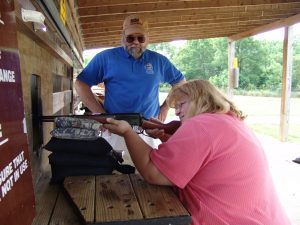 Lots of hunters receive a new rifle over the holidays or take advantage of the subsequent sales to add to their collection.
The impulse is to immediately dash off to the shooting range. Fighting back that urge and instead taking time to familiarize yourself with your new rifle is a good first step toward safe and responsible ownership.
Because the mechanics and features of rifles can vary by model and manufacturer, it’s best to approach this getting-to-know-you phase without any preconceived notions. The safety mechanisms on three popular hunting rifles illustrate the sometimes small, but not insignificant, differences between models.
“The Remington 700 has a two-position safety lever on the side of the action. The Model 70 has a three-position lever that is attached to the rear of the bolt. The Ruger bolt guns have a tang safety that is behind the bolt and on the top of the pistol grip,” said Bill Balda, hunter education supervisor with the Kentucky Department of Fish and Wildlife Resources. “These are all good places to put safeties, but this is an example of how manufacturers produce little differences in their rifles.”
The owner’s manual is a logical starting point. It will detail the main parts of the rifle and offer step-by-step instructions for safely operating and maintaining the rifle. If the booklet is missing, contact the manufacturer or check the company’s website for a downloadable copy.
Balda suggests tightening the action screws, sling studs, scope mount and scope rings and giving a newly acquired rifle a thorough first cleaning.
“When you clean it, you should strip it down to basic components,” he said. “I would use the manual when disassembling it for the first time. I would not take the bolt apart unless I absolutely had to. You should not take the firearm out of the stock unless it’s fallen into a big puddle or been in a heavy downpour and you need to get moisture out of it. Ninety-nine times out of 100 you do not need to take the rifle out of the stock.”
At home, practice handling your unloaded gun. A firm grip with your shooting hand will help better control the rifle and makes the trigger pull feel lighter, Balda said. Work the action, focusing on a fluid motion. Dummy rounds can be excellent training aids. Most common modern centerfire rifles can be dry-fired without harming the rifle but check the manual. Pulling the trigger should be a smooth, straight-back motion.
These movements become second nature through repetition.
“This is a very safe and economical way to learn the basics of shooting a good shot, which are sight alignment, trigger control and follow through,” Balda said.
For scoped rifles, boresighting is an excellent way to get “on paper” and expedite the sighting-in process at the range. This can be accomplished with the aid of a laser boresighter. Another method for a bolt action rifle with a scope starts with securing the unloaded rifle in a gun vise and removing the bolt. Place a dot on the wall or pick out an object like a light switch. Look through the receiver end toward the muzzle and move the gun until you can see your aiming point through the barrel. Then, look through the scope and adjust until the aiming point is aligned in the crosshairs.
“This is not a zero,” Balda said. “But it helps you get closer to a zero with less ammo.”
When you’re confident with your knowledge base and are ready to visit the shooting range, consider investing in ammunition from a few different manufacturers that match your rifle’s caliber. Don’t be shy about asking the sales associate or a mentor for recommendations.
If you plan to utilize a tube range maintained by Kentucky Fish and Wildlife, bring along eye and hearing protection, targets and either tape or a staple gun to affix targets to the backdrops down range. Invite an experienced shooter to join you. Their feedback can be invaluable.
Balda recommends starting the sighting-in process at 25 yards and focusing on technique. Shoot groups of three to determine the type of ammunition that your rifle shoots best. This is the time to zero-in your scope.
“When you’re shooting, and you should use a rest, what’s really important is that you hold the rifle the same way,” Balda said. “A lot of people like to just lay the rifle across the top of a sandbag and let it recoil freely. Any change of pressure in your shooting hand will change the recoil pattern.
“The rifle starts to move before the bullet clears the muzzle. So if you’re not holding it down the same way, there’s no guarantee that it will be in the same place for each shot. This frustrates a lot of people. They have this big group and they say, ‘This rifle doesn’t shoot.’ Maybe it doesn’t but it probably does. It’s just a technique problem.”
Be a deliberate and safe shooter and follow all the guidelines for the range. Should any mechanical problems crop up with your new rifle, call it a day and contact a gunsmith or the manufacturer.
“Most of the problems with accuracy that people encounter when sighting-in a rifle are due to technique,” Balda said. “It’s not that the barrel doesn’t shoot or the ammo is bad or the sights weren’t tight. It’s usually technique. You need to hold the rifle securely each and every time. Put your head on the same place on the stock in order to get the right sight alignment and pull that trigger smooth and straight to the rear.”
Spending time getting to know your new rifle builds familiarity and trust. But it’s only part of becoming a safe, responsible hunter.
Hunter education courses are offered online and in-person throughout the state. Licensed hunters born on or after Jan. 1, 1975 are required to successfully complete the course. A one-year, one-time only exemption card is available for hunters unable to complete coursework by the start of a season.
Consult Kentucky Fish and Wildlife’s website at fw.ky.gov for more information and to enroll in a hunter education course.
As temperatures drop and the risk for carbon monoxide poisoning increases, Kentuckians are urged to be aware of the dangers of carbon monoxide (CO) poisoning due to improper use of heating or cooking devices.
Items such as kerosene or propane gas stoves and ovens have been used as alternative heat sources indoors, sometimes with tragic results. Since these devices emit a colorless, odorless gas called carbon monoxide as a by-product, improper use can lead to severe cases of carbon monoxide poisoning. The Kentucky Department for Public Health (DPH), which is part of the Cabinet for Health and Family Services (CHFS) advises Kentuckians to follow these steps taken from guidelines issued by the National Center for Environmental Health to prevent carbon monoxide poisoning:
- Don’t use a generator, charcoal grill, camp stove or other gasoline or charcoal-burning device inside your home, basement or garage or outside near a window.
- Don’t run a car or truck inside a garage attached to your house, even if you leave the door open.
- Don’t use a fireplace that isn’t properly vented.
- Don’t heat your house with a gas oven.
Be sure to carefully follow manufacturers’ instructions for kerosene heaters, making sure the wick is set at the proper level and is clean. Ensure your kerosene heater is only operated in a well-vented area. Kerosene heaters require 1-K grade kerosene fuel and fuel should be clear, not colored or cloudy. To avoid the risk of fire, place kerosene heaters several feet away from all furniture, curtains, paper, clothes, bedding and other combustible materials. Infants, small children and pets should be kept away from heaters to avoid serious burns.
Seek immediate medical attention if you suspect carbon monoxide poisoning and are experiencing symptoms of carbon monoxide poisoning. Early symptoms include headache, nausea, vomiting and fatigue. Carbon monoxide poisoning is treatable.
Install a battery-operated carbon monoxide detector in your home and replace the battery when you change the time on your clocks each spring and fall for daylight savings time. If the detector sounds, leave your home immediately and call 911. On average, carbon monoxide detectors should be replaced about every five years.
“Carbon monoxide is a colorless and odorless gas that can be deadly and should be taken seriously,” said Hiram C. Polk, Jr. M.D., commissioner, Kentucky Department for Public Health (DPH). “We urge Kentuckians to take steps to prevent exposure to carbon monoxide such as allowing adequate ventilation to prevent carbon monoxide poisoning and avoiding fire hazards.”
If you are experiencing symptoms of carbon monoxide poisoning, call 911 or contact the Poison Control hot line at (800) 222-1222.
More information about carbon monoxide poisoning can be found on the Centers for Disease Control and Prevention’s website.