Saturday January 31, 2026
Local Connection
 Weather
 Traffic
 @LouisvilleDispatch
 @LouisvilleDisp
 Subscribe
 Mayor Greg Fischer announced today that a public-private partnership to help people who are visually impaired find points of interest in Louisville will expand, thanks to a $250,000 grant from the James Graham Brown Foundation.
The Indoor Explorer program, which is operated by the American Printing House for the Blind and created in partnership with the city’s Office for Civic Innovation, places low-power Bluetooth beacons in public buildings that feed information about amenities and points of interest to an app called Nearby Explorer.
People who are visually impaired will use this information to independently find their way through and around the public buildings to find features, such as an airline ticket counter at the airport.
“The American Printing House for the Blind is a nationally recognized leader in innovation, and so is Louisville Metro Government — so this is a natural partnership,” Mayor Fischer said. “This program will expand opportunities for citizens and visitors with vision loss, and is another example of big ideas becoming a reality in Louisville through collaboration, good thinking and hard work.”
The grant will fund the installation of low-power Bluetooth beacons inside additional public buildings, expanding the uses of the Nearby Explorer app for independent travel, employment, civic engagement, tourism, education, dining, recreation, shopping and more. The beacons will also improve indoor navigation — which is limited under current technology — for app users who are blind and visually impaired.
“We are energized by Mayor Fischer’s commitment to making APH’s vision of a world where people who are blind or visually impaired can work, learn and live without barriers a reality here in Louisville,” said APH President Craig Meador. “Working together we have the opportunity to show the world what a truly welcoming community looks like by making Louisville the most accessible city for people who are blind and visually impaired.”
The project aligns with Louisville Metro’s Smart City initiatives, which also include the Waze app for traffic notifications, collaboration with the app IFTTT, and the LouieLab civic innovation space in downtown Louisville.
 Secretary of State Alison Lundergan Grimes on Thursday, Hunger Action Day, announced the launch of the Commonwealth of Kentucky Bowl, a statewide competition that challenges Kentucky’s local and county government offices to donate food and funds to aid Kentucky families suffering from hunger.
The Office of the Secretary of State, Kentucky Association of Food Banks (KAFB), the Kentucky Council of Area Development Districts (KDADD), and the Kentucky Association of Food Banks partnered to create the competition.
“One in four Kentucky children don’t always know where their next meal will come from,” said Grimes. “We have to do better, we must do better. That’s why we are partnering with the Commonwealth’s Area Development Districts and the Kentucky Association of Food Banks to help us feed Kentucky’s kids and their families as we approach the winter and this holiday season.”
The inaugural campaign will run from October 16 through October 27.
“Our goal is to raise $50,000 in honor of the 50th anniversary of the state legislation that created the Area Development Districts,” said Mayfield Mayor Teresa Rochetti-Cantrell, who is co-chair of the KCADD. “The campaign, with the support of local and county government offices across our Commonwealth, will help provide families with the food they need to thrive.”
Every $1 donated through the completion will return $8 or more in food to the community.
Grimes will make visits to each of the area development districts over the next few weeks to discuss the vital need for hunger relief in Kentucky. She has been a champion for solving Kentucky’s hunger issues since she took office in 2012 and before she was elected to public office. She is a longtime volunteer at the Salvation Army, serving the Thanksgiving meal at her local service center every year. She also has served on the board of God’s Pantry Food Bank in Lexington.
Proceeds and goods generated from the competition will directly aid the members of the KAFB – an organization that distributes over 58 million meals to 1 in 7 Kentuckians annually in partnership with a network of 800 local charitable feeding organizations. Its members serve all 120 counties in Kentucky.
Tamara Sandberg, executive director of KAFB, said, “We all have a role to play in ending hunger in Kentucky and we’re grateful that our elected officials are rising to the challenge.”
The Area Development District that raises the most food and funds will win the Commonwealth of Kentucky Cup.
More information on the Commonwealth of Kentucky Bowl is at kafb.org/commonwealthbowl/. #HelpFeedKY
 Attorney General Andy Beshear and West Virginia Attorney General Patrick Morrisey are calling on health insurance companies to assist in finding workable solutions to the nation’s opioid epidemic.
Beshear and Morrisey, who will officially make the announcement at 1:30 p.m. today in West Virginia, are joining with 36 other state attorneys general to press health insurance companies to adopt a financial incentive structure for the use of non-opioid pain management techniques when viable for chronic, non-cancer pain.
The AGs are reaching out to insurance companies to promote non-opioid pain management alternatives that may not be currently covered at the same level as prescription opioids.
“Nearly 80 percent of heroin users first become addicted through prescription pills,” Beshear said. “If we can reduce opioid prescriptions and use other forms of pain management treatment, we will slow or even reverse the rate of addiction.”
Beshear said the issue is not a Republican or Democratic issue, and thanks AG Morrisey for continuing his nonstop efforts to work with the Kentucky Office of Attorney General to find workable solutions to the opioid epidemic.
Kentucky, like West Virginia, is facing the challenge of “our lifetime” with its drug epidemic, Beshear said, who joined Morrisey and Ohio Attorney General Mike DeWine last year for an addiction summit in West Virginia.
“We have to ensure that financial incentives, or a lack thereof, for the provision of certain items and services do not contribute unintentionally to this deadly problem,” Morrisey said.
Insurance companies can play an important role in reducing opioid prescriptions and making it easier for patients to access other forms of pain management treatment, the AGs said.
“Simply asking providers to consider providing alternative treatments is impractical in the absence of a supporting incentive structure,” the AGs said. “All else being equal, providers will often favor those treatment options that are most likely to be compensated either by the government, an insurance provider or a patient paying out-of-pocket.”
The AGs want to create a dialogue with the entire insurance industry concerning its incentive structure along with state insurance commissioners in an effort to identify best practices.
Beshear is co-chair on the National Association of Attorneys General Substance Abuse Committee.
Beshear’s participation in this initiative is the latest effort in his ongoing work to address the opioid crisis in Kentucky.
In August, he launched the Kentucky Opioid Disposal Program, the state’s first initiative to allow Kentuckians to safely dispose of opioid medications at home. The program has the potential to dispose of more than 2.2 million unused opioids.
In June, Beshear announced that his office intends to file multiple lawsuits against drug manufacturers, distributors and retailers where there is evidence that they contributed to the opioid epidemic by illegally marketing and selling opioids to Kentuckians.
To support this litigation, Beshear issued a request for proposal (RFP) for legal services to assist the Commonwealth in multiple lawsuits and to ensure that Kentucky tax dollars are not used for the costs of the litigations.
The AG’s office previously settled a $24 million lawsuit with Purdue Pharma regarding OxyContin. Beshear’s office has provided $8 million from that settlement directly to 15 substance treatment centers across Kentucky.
From a different drug company settlement, the office dedicated $2 million to expand and enhance Rocket Docket programs that expedite drug cases, generate significant cost savings and allow select defendants rapid access to substance abuse treatment.
Beshear is currently working with local law enforcement and community leaders to host substance abuse awareness forums across the state. The office has also been instrumental in numerous drug related arrests, including working with federal authorities on arresting a fentanyl dealer whose drugs had killed several Kentuckians.
Bordering state AGs participating in this effort include Illinois, Indiana, Missouri, Virginia and West Virginia.
As part of the 52 Weeks of Public Health campaign, the Kentucky Department for Public Health (DPH) within the Cabinet for Health and Family Services (CHFS), is celebrating Newborn Screening Awareness Month by promoting awareness about the importance of early screening for Kentucky babies.
“Early intervention with the new mother and baby is critical to provide care and support for the best outcome,” said CHFS Secretary Vickie Yates Brown Glisson. “The Cabinet is working hard across disciplines to develop these systems.”
The Newborn Screening Program is a population-based service, provided by DPH that provides testing for developmental, genetic and metabolic disorders in newborn babies, allowing steps to be taken before symptoms develop.
“The importance of these metabolic screenings for newborns in Kentucky cannot be overstated,” said Connie Gayle White, M.D., senior deputy commissioner at DPH. “For many children, early screening can literally mean the difference between a full, healthy life and one spent battling a debilitating condition. It can even mean the difference between life and death in some cases.”
Newborn screening detects conditions not visible at birth and ensures life-saving treatment can begin as soon as possible. Most of these illnesses are very rare, but can be treated if caught early. The types of newborn screening tests done vary from state to state, but all 50 states have reported screening for at least 26 disorders on an expanded and standardized uniform panel.
In Kentucky, newborn screening is required by law. A blood specimen is obtained by heel stick from the newborn at the birthing facility between 24-48 hours after birth. The specimen is sent to the Kentucky Division of Laboratory Services for processing and abnormal findings are reported to the Newborn Screening Program.
Kentucky’s Newborn Screening Program uses a metabolic panel screening for 53 disorders which includes: congenital, hypothyroidism, cystic fibrosis, abnormalities in  hemoglobin i.e. sickle cell, and disorders in the metabolism of carbohydrates, amino acid, organic acids, fatty acids, and lysosomes. When a diagnosis is confirmed, treatment is initiated through the administration of drugs, hormones or dietary adjustments.
Even if a baby is not born in a hospital, it is critical that they be tested within the first 24-48 hours after birth. Over 50,000 newborn screenings are conducted annually in the state of Kentucky. In 2016, 141 newborns tested were positively diagnosed as a result of the initial newborn screening. In addition to blood tests, screening for hearing loss and critical congenital heart disease (CCHD) are highly recommended for all Kentucky babies.
To learn more about the benefits of the Kentucky Newborn Screening Program, please visit the Kentucky Department for Public Health or the Centers for Disease Control & Prevention website.

Credit: KY State Parks
Students from nine more Kentucky schools are taking field trips to a Kentucky State Park this fall thanks to a transportation grant from the Kentucky State Parks Foundation.
The KSPF’s “Inside Out Education” initiative allows schools to seek the grants that enable students to learn about the environment, history or culture at a Kentucky State Park. The recent round of grants brings the total number of students served to 3,919 with 56 grants awarded.
“We’re very proud that more students are having the opportunity to experience the outdoors at a Kentucky State Park with the help of these grants,” Parks Commissioner Donnie Holland said. “These students will get to see history and the environment up close.”
The nine schools and parks they plan to visit are:
Beechgrove Elementary, Kenton County, Big Bone Lick State Historic Site
Madison County High School, Madison County, Carter Caves State Resort Park
Daniel Boone Elementary, Madison County, Waveland State Historic Site
Frayser Elementary, Jefferson County, Old Fort Harrod State Park
Owensboro Middle School, Owensboro, John James Audubon State Park
Muhlenberg County High School, Muhlenberg County, Pennyrile Forest State Resort Park
Muhlenberg County High School Muhlenberg County, Jefferson Davis State Historic Site
Longest Elementary School, Muhlenberg County, John James Audubon State Park
Longest Elementary School, Muhlenberg County, Wickliffe Mounds State Historic Site
The Muhlenberg County school trips are made possible by a grant from the Felix E. Martin Jr. Foundation.
For 2018 spring/summer consideration, applications are due March 1, 2018. For more information, visit: http://www.kentuckystateparksfoundation.org/about/inside-out-education/
For more information about Kentucky State Parks, visit: www.parks.ky.gov
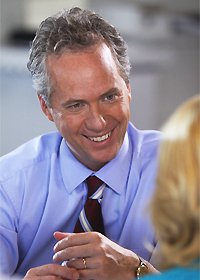 On the eve of an important ACC football showdown between the University of Louisville and Clemson University, Mayor Greg Fischer of Louisville and Mayor J.C. Cook III of Clemson are putting a friendly wager on the line: Bourbon.
Mayor Fischer is putting up a collection of small bottles from Louisville distilleries — Angel’s Envy, Old Forester, Evan Williams, Mitchter’s, Kentucky Peerless, Bulleit Bourbon, Rabbit Hole and Jim Beam — while Clemson’s wager is a bottle of Six & Twenty, from a South Carolina artisan distillery owned by two Clemson grads.
Its five-grain bourbon is made with all South Carolina grown grains, Mayor Cook said. “As mayor of Clemson, I am proud to say both our football team and our South Carolina bourbon will bring their A-game to the table,” he said.
Though Clemson has won all three games played since U of L joined the ACC, Mayor Fischer is extremely confident about his team’s chances.
“I look forward to trying a sip of my Six & Twenty winning after the Cards win, although I still have my doubts about any bourbon that’s not made in Kentucky,” he said. “I may just save it to celebrate when our quarterback, Lamar Jackson, wins his second Heisman.”
Mayor Cook said he’s looking forward to the game, which has drawn ESPN’s “College GameDay” back to Louisville for the second consecutive season.
Louisville vs. Clemson “has become one of the most exciting rivalries in football, and it’s so great to see how the Louisville fans welcome us with such hospitality,” he said. “We may have to start naming this the Friendly Bowl.”
Attorney General Andy Beshear today joined with 33 attorneys general to send a letter demanding that Equifax take immediate steps to strengthen customer protections and improve services to the nearly 143 million people impacted by the massive data breach.
“I share Kentuckians frustration surrounding this data breach and that is why I am asking Equifax to move quickly to alleviate unnecessary confusion and improve customer service,” said Beshear. “The victims of a data breach should never have to pay to freeze their credit, nor should they have to face inadvertently signing up for a costly program instead of the free service.”
In the letter, Beshear demands Equifax stop using its own data breach as an opportunity to sell services to victims, and specifically requests the company disable fee-based credit monitoring services and reimburse customers for any fees they have paid to other credit reporting agencies for a credit freeze.
Beshear said in the wake of the data breach, Equifax is asking customers to visit their website where they can enroll in a free credit monitoring service – yet, the website also offers customers a fee-based credit monitoring service, thereby causing confusion and creating the potential for a customer to incur unnecessary fees.
General Beshear has demanded that Equifax resolve this issue by disabling information that leads to the fee-based services until the sign-up period for the free service has ended.
Beshear said Equifax has also agreed to waive credit freeze fees for customers, but the other two credit bureaus, which are not responsible for the breach, Experian and Transunion, continue to charge fees. The attorneys general are asking Equifax to take steps to reimburse consumers who incur these fees as a result of the breach.
The letter also relays consumer complaints expressing difficulty locating the Equifax breach hotline number and long wait times reaching customer service. In response, the AGs ask Equifax to properly staff the hotline and make it available 24 hours a day.
Earlier this week, Beshear issued a Scam Alert to help make Kentuckians aware of the Equifax data breach, and provided instructions on how to sign up for the free credit monitoring service and guidance on how to avoid and respond to identity theft.
Beshear wants Kentuckians to know that his office will continue to monitor the company’s response and asks Kentuckians to take immediate steps to closely monitor their credit and report any suspicious credit activity to his office’s Security Breach hotline, 855-813-6508.