Thursday January 22, 2026
Local Connection
 Weather
 Traffic
 @LouisvilleDispatch
 @LouisvilleDisp
 Subscribe
They are a service organization of dedicated people who every year host a delicious event that helps various programs in the community.
That is why three members of the Louisville Metro Council are encouraging everyone to come out to the Valley Women’s Club Annual Soup Supper and Bake Sale on Friday, February 3rd.
“The Valley Women’s Club began a great tradition with this supper many years ago,” says Councilwoman Cindi Fowler (D-14). “Their work is far reaching in our community and this supper helps them raise the money they need to continue their charity work.”
“Come out for food and fellowship while supporting the Valley Woman’s Club. This group works hard to promote and fund scholarships and other worthy causes,” says Councilwoman Vicki Aubrey Welch (D-13).
“The Valley Women’s Club deserves our thanks for helping people throughout our community,” says President David Yates (D-25). “I encourage everyone to support this great organization. Those who come out to this supper know nothing is better than warm soup on a cold winter night.”
The Annual Soup Supper and Bake Sale will get underway from 5:00pm to 7:00pm at the Sun Valley Community Club on Bethany Lane. The menu will include all you can eat assorted soups, cornbread, crackers, dessert and beverages.
Ticket prices are $6.00 for Adults and $4.00 for children 10 and under. Tickets can be purchased at the door.
Florists, hair stylists, photographers, caterers, and the many other types of vendors it takes to make a wedding come to life will gather Sunday, Jan. 22, at the Sawyer Hayes Community Center at E.P. “Tom” Sawyer State Park to showcase their wares. The event is sponsored by the Louisville Wedding Network.
Anyone interested in these services is encouraged to attend the free, public event, which is slated from 2 p.m. to 4 p.m. at 2201 Lakeland Road in the Louisville park.
The trade show will feature the many types of talent, products and services required to pull off a successful wedding, according to Tiffany Emerson, sales representative for the property.
Sawyer Hayes Community Center is a wedding venue set in 580 acres of parkland that plays host to dozens of local weddings each year, Emerson said.
“We set the stage for the best day of your life and are thrilled to welcome the vendors who are our business partners in this work,” she said.
The Louisville/Jefferson County Environmental Trust is hosting a workshop on land stewardship issues on Saturday, February 4, 2017 at Historic Locust Grove, 561 Blankenbaker Lane.
The U.S. Fish & Wildlife Service, the Nature Conservancy and others estimate that the annual cost of invasive plants and animals to the U.S. economy is $120 billion a year, with over 100 million acres (an area roughly the size of California) suffering from invasive plant infestations.
Compounding the problem is that these harmful invaders spread at astonishing rates. Such infestations of invasive plants and animals can negatively affect property values, agricultural productivity, water quality, public utility operations, tourism, outdoor recreation, and the overall health of ecosystems.
Kentucky and Louisville have their share of invasive plants which are evident essentially anywhere there is a patch of dirt – parks, school yards, street and highway rights-of-way, private yards, and vacant lots. The workshop will take a look at the problem and how various agencies, nonprofit organizations and individuals are addressing it.
Who should attend this workshop?
“Whether the land you care about is a small residential yard in the city, a suburban lawn, a working farm, a scenic estate or a public park, chances are there are invasive plants that detract from the ecological and historic integrity of the land. It can be a daunting task to tackle an invasive plant removal and landscape restoration project. This workshop will give you the resources, knowledge and inspiration to get started,” said Lisa Hite, planning manager for Louisville Metro Parks and Recreation.
Speakers will report on the latest research, lessons learned and future plans for invasive plant management, ecological restoration, healthy tree canopy and historic landscape management in Louisville’s Olmsted Parks, Locust Grove, the Jefferson Memorial Forest and other Metro Parks and Recreation Natural Areas, Bernheim Arboretum and Research Forest, the Parklands of Floyds Fork, Beargrass Creek State Nature Preserve, the Lower Howard’s Creek Nature and Historic Preserve in Clark County as well as several private properties.
All sessions will include discussion and practical considerations for landowners who have questions about how to improve their own piece of the earth or those who want to help the on-going work in public parks and preserves.
Cost of the workshop is $35 for regular attendees and $15 for students and includes a box lunch. Reservations are required by January 30. To download the registration form, click here. Please call (502) 574-PARK (7275) or e-mail brandi.hornbuckle@louisvilleky.gov for more information.
For the first time in more than 25 years, Metro Parks and Recreation will be operating youth baseball and softball leagues at Wyandotte Park in south Louisville for children ages 6-18. Sign-ups are available online now at this link. Tee ball ($20 entry fee) will be available for children ages 6 and under.
Softball and baseball league ($40 entry fee) divisions are as follows: ages 7-8, 9-10, 11-12, 13-14, 15-16 and 17-18. In addition to the cost of joining the league, entry fees cover the cost of the uniform and rental of a glove if necessary.
“We’ve had a successful partnership with Major League Baseball through the RBI (Reviving Baseball in Inner Cities) program, and offering leagues through our department is the next step in growing the sport in the city of Louisville,” said Metro Parks and Recreation Director Seve Ghose.
Player sign-ups will take place through March 4 online and at three Metro Parks and Recreation Community Centers; Cyril Allegier, Southwick and South Louisville. Practices will begin the week of March 20, and games will begin on Saturday, April 10 at Wyandotte Park. In addition, Metro Parks and Recreation is seeking volunteer coaches for league teams.
Those interested in participating should call Steve Edwards at (502) 744-0498.
“We’re hoping to find enthusiastic role models who will mentor the players, teach them fundamentals and how to be team players,” Ghose said. “We’re hoping an abundance of kids sign up, but the league will only be successful if we have a good number of coaches willing to take on the challenge.” For more information, see the attached flier or click on this link (includes a testimonial from a past volunteer coach). https://louisvilleky.gov/government/parks/louisville-metro-parks-and-rec…

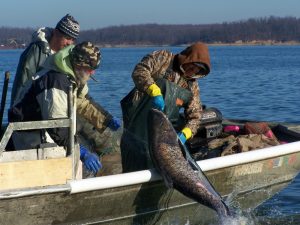 The end of the year is a time for reflecting on the past 12 months and envisioning the possibilities for the new year.
Officials with the Kentucky Department of Fish and Wildlife Resources recently previewed what’s ahead in 2017.
From firming up long-range plans for the restoration of ruffed grouse in Kentucky and management of the state’s black bear population to expanding the popular Fishing in Neighborhoods (FINs) program and releasing thousands of rare mussels into the wild, a common theme stretches across the Fisheries and Wildlife divisions. Conserving fish and wildlife habitats and populations and expanding opportunities for hunters, anglers and others are top priorities.
In Fisheries, Asian carp will continue to be a major focus. Commercial harvest is an effective tool for large-scale removal of the invasive fish and Fisheries director Ron Brooks said a multi-year effort to help the Asian carp processing industry expand in Kentucky is expected to bear fruit in 2017.
“We’ve been working on this for about two years and it’s finally coming around,” he said.
The department has been working with fish processors, commercial fishermen, legislators, government agencies and businesses to find ways to make a greater dent in the Asian carp population.
The proposed system would train new commercial fishermen how to harvest Asian carp and assist commercial fishermen already harvesting Asian carp while reducing costs and delays for processors, Brooks said.
“We’re reaching out to help the Asian carp-harvesting industry meet its needs and hopefully lead into expansion of their businesses, all to get rid of Asian carp,” he said. “We’re focusing a lot of our efforts on Kentucky and Barkley lakes because we believe we can have an immediate impact there. We’re trying to ensure our sportfish species aren’t taken out.”
Elsewhere in Fisheries, a long-term project to increase forage and improve fishing opportunity at Cave Run Lake will wrap up in 2017. The project focused on the Ramey’s Creek and Warix coves in 2016. Department personnel added around 1,000 trees, 500 pallet structures, 150 bucket stake attractors, 10 wooden cable spools and 50 plastic pipe trees. A map showing the locations of these fish attractors is available online at fw.ky.gov. Type “Cave Run Lake Fish Habitat Improvement Project” into the search box on the homepage.
The popular Fishing in Neighborhoods (FINs) program is adding five new lakes to its lineup: Flemingsburg Old Reservoir in Fleming County, Kess Creek Park Lake in Graves County, Leary Lake in Grant County, Logan Hubble Park Lake in Lincoln County and Rotary Park Lake in Hickman County. The addition of these lakes brings the number of FINs lakes to 43 across the state.
Anglers can start planning now where they want to fish and for what species in with the new Fishing Forecast for Kentucky’s major fisheries. The 2017 edition is available on the department’s website by clicking on the “Fish” tab and choosing “Forecast” from the dropdown menu. The annual compilation highlights new, expanding and improving fisheries across the state.
Deer hunters in Kentucky have enjoyed another successful season in 2016.
“We’re going to end up in the top 5 in terms of our overall harvest total,” said Steve Beam, Wildlife Division director for Kentucky Fish and Wildlife. “We’re producing tremendous numbers of trophy quality bucks. At the same time, our herd is healthy. Things continue to be wonderful.”
At its December meeting, the Kentucky Fish and Wildlife Commission voted to expand opportunities for youth and muzzleloader deer hunters on several wildlife management areas in 2017. The 2017-18 Kentucky Hunting and Trapping Guide, due out in July, will note these and any other pertinent changes.
John Hast was a biologist in the department’s deer and elk program before taking over as coordinator of its bear program in January 2015. He anticipates having a draft of a long-range management plan for Kentucky’s black bear population ready in 2017.
“We’ve been doing in-house research since bears returned to the state,” Hast said. “We just completed the project that’s going to provide our foundation for management for the next 15 years.
“A management plan, to me, gives me an opportunity to summarize all of that data and put it in one spot and distill it out and translate it. The plan will set forth what we’ve got but also what we’re going to be doing in the near future to refine things.”
Also in 2017, expect to hear more from the department about wild pigs in Kentucky, Beam said.
“We have re-evaluated and are in the process of increasing our efforts on wild pig eradication, working with landowners and cooperating with our partners,” he said.
In the department’s Wildlife Diversity program, led by coordinator Sunni Carr, biologists plan to conduct a statewide survey of osprey nesting locations and also start a loggerhead shrike banding project in the hopes of learning more about the migration and causes of decline for the species.
Additionally, the statewide survey for eastern whip-poor-wills and chuck-will’s-widows will be expanded to examine trends for Kentucky’s night birds. The department’s Center for Mollusk Conservation (CMC) plans to release endangered pink muckets in Kentucky for the 10th year. There are now several thousand of these mussels at more than 23 locations.
The department’s website provides a wealth of information about the work being done by each of these divisions. While there, consider purchasing a 2017-18 hunting and fishing license. The new license year starts March 1.
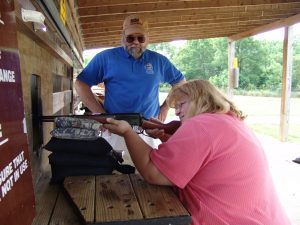 Lots of hunters receive a new rifle over the holidays or take advantage of the subsequent sales to add to their collection.
The impulse is to immediately dash off to the shooting range. Fighting back that urge and instead taking time to familiarize yourself with your new rifle is a good first step toward safe and responsible ownership.
Because the mechanics and features of rifles can vary by model and manufacturer, it’s best to approach this getting-to-know-you phase without any preconceived notions. The safety mechanisms on three popular hunting rifles illustrate the sometimes small, but not insignificant, differences between models.
“The Remington 700 has a two-position safety lever on the side of the action. The Model 70 has a three-position lever that is attached to the rear of the bolt. The Ruger bolt guns have a tang safety that is behind the bolt and on the top of the pistol grip,” said Bill Balda, hunter education supervisor with the Kentucky Department of Fish and Wildlife Resources. “These are all good places to put safeties, but this is an example of how manufacturers produce little differences in their rifles.”
The owner’s manual is a logical starting point. It will detail the main parts of the rifle and offer step-by-step instructions for safely operating and maintaining the rifle. If the booklet is missing, contact the manufacturer or check the company’s website for a downloadable copy.
Balda suggests tightening the action screws, sling studs, scope mount and scope rings and giving a newly acquired rifle a thorough first cleaning.
“When you clean it, you should strip it down to basic components,” he said. “I would use the manual when disassembling it for the first time. I would not take the bolt apart unless I absolutely had to. You should not take the firearm out of the stock unless it’s fallen into a big puddle or been in a heavy downpour and you need to get moisture out of it. Ninety-nine times out of 100 you do not need to take the rifle out of the stock.”
At home, practice handling your unloaded gun. A firm grip with your shooting hand will help better control the rifle and makes the trigger pull feel lighter, Balda said. Work the action, focusing on a fluid motion. Dummy rounds can be excellent training aids. Most common modern centerfire rifles can be dry-fired without harming the rifle but check the manual. Pulling the trigger should be a smooth, straight-back motion.
These movements become second nature through repetition.
“This is a very safe and economical way to learn the basics of shooting a good shot, which are sight alignment, trigger control and follow through,” Balda said.
For scoped rifles, boresighting is an excellent way to get “on paper” and expedite the sighting-in process at the range. This can be accomplished with the aid of a laser boresighter. Another method for a bolt action rifle with a scope starts with securing the unloaded rifle in a gun vise and removing the bolt. Place a dot on the wall or pick out an object like a light switch. Look through the receiver end toward the muzzle and move the gun until you can see your aiming point through the barrel. Then, look through the scope and adjust until the aiming point is aligned in the crosshairs.
“This is not a zero,” Balda said. “But it helps you get closer to a zero with less ammo.”
When you’re confident with your knowledge base and are ready to visit the shooting range, consider investing in ammunition from a few different manufacturers that match your rifle’s caliber. Don’t be shy about asking the sales associate or a mentor for recommendations.
If you plan to utilize a tube range maintained by Kentucky Fish and Wildlife, bring along eye and hearing protection, targets and either tape or a staple gun to affix targets to the backdrops down range. Invite an experienced shooter to join you. Their feedback can be invaluable.
Balda recommends starting the sighting-in process at 25 yards and focusing on technique. Shoot groups of three to determine the type of ammunition that your rifle shoots best. This is the time to zero-in your scope.
“When you’re shooting, and you should use a rest, what’s really important is that you hold the rifle the same way,” Balda said. “A lot of people like to just lay the rifle across the top of a sandbag and let it recoil freely. Any change of pressure in your shooting hand will change the recoil pattern.
“The rifle starts to move before the bullet clears the muzzle. So if you’re not holding it down the same way, there’s no guarantee that it will be in the same place for each shot. This frustrates a lot of people. They have this big group and they say, ‘This rifle doesn’t shoot.’ Maybe it doesn’t but it probably does. It’s just a technique problem.”
Be a deliberate and safe shooter and follow all the guidelines for the range. Should any mechanical problems crop up with your new rifle, call it a day and contact a gunsmith or the manufacturer.
“Most of the problems with accuracy that people encounter when sighting-in a rifle are due to technique,” Balda said. “It’s not that the barrel doesn’t shoot or the ammo is bad or the sights weren’t tight. It’s usually technique. You need to hold the rifle securely each and every time. Put your head on the same place on the stock in order to get the right sight alignment and pull that trigger smooth and straight to the rear.”
Spending time getting to know your new rifle builds familiarity and trust. But it’s only part of becoming a safe, responsible hunter.
Hunter education courses are offered online and in-person throughout the state. Licensed hunters born on or after Jan. 1, 1975 are required to successfully complete the course. A one-year, one-time only exemption card is available for hunters unable to complete coursework by the start of a season.
Consult Kentucky Fish and Wildlife’s website at fw.ky.gov for more information and to enroll in a hunter education course.
 For thousands of local children – and quite a few adults, too – sledding is a highlight of the winter season. Metro Parks wants to remind the public it will open hills in seven parks for sledding from 9 a.m. to 11 p.m. on days when snow accumulation reaches 2-3 inches.
Metro Parks has selected its best and safest sledding hills in the area. As long as the sledding hills maintain adequate snow coverage, they will remain open. Park users are asked to avoid sledding when hills are closed. Sledding on slopes that lack appropriate snow depth will cause turf damage that must be repaired in the spring.
The rule of thumb for determining if enough snow accumulation has occurred is that if you see blades of grass poking through the snow cover; it’s not deep enough to sled safely. Sledding when parks employees have not posted the “open” sign, and at all other times, comes at your own risk.
DESIGNATED SLEDDING HILLS:
- Cherokee Park (Baringer Hill, intersection of Alexander Road and Scenic Loop)
- George Rogers Clark Park (1024 Thruston Avenue, behind playground, near McKinley Avenue)
- Joe Creason Park (1297 Trevilian Way, behind Metro Parks administration building)
- McNeely Lake Park (6900 Cooper Chapel Road, near Korean War Memorial)
- Tyler Park (1501 Castlewood Avenue, on Tyler Park Drive side of park)
- Charlie Vettiner Park (5550 Charlie Vettiner Park Road, near Easum Road entrance)
- Iroquois Golf Course (1501 Rundill Road)
SLEDDING RULES:
- Sledding is permitted on designated sledding hills when the “Sledding Hill Open” sign is displayed.
- Sledding hills will be open daily from 9 a.m. to 11 p.m. as long as there is adequate snow to protect slopes; all sledding hills will close at 11 p.m.
- Park vehicles only in regular parking areas to protect your car from damage.
- No vehicles are permitted off the pavement in any park.
- No alcoholic beverages are permitted at any time.
- Those who use the designated sledding hills are doing so at their own risk. Bonfires will not be permitted at Metro Parks’ sites, and sledders are urged to carry a cell phone in the event of an emergency.
SLEDDING SAFETY TIPS:
- Only use devices designed for sledding.
- Wear appropriate clothing – loose ends or flaps can easily get caught.
- Sleds should contain a number of riders appropriate for the designated device during each descent.
- Dress in layers, so you can remove one layer without risking frostbite. Several thin layers are warmer than one bulky layer.
- Make sure you’re with someone who knows your name and can contact family in an emergency; parents should remain with their children.
- Don’t drink alcohol before sledding – it impairs your ability to use good judgment and causes the body to lose heat more rapidly.
- Check your path for trees and other objects before starting your descent.
- Don’t sled head-first or standing up. Good visibility is necessary during your descent. Don’t face backwards, and make sure your vision isn’t obscured by hats and scarves.
- When climbing the hill, stay to the sides. Don’t climb in the sledding path. It’s important to remember that slopes can become very crowded during peak times.